How I Learned to Write in Rhyme: The Craft Behind The Rabbit in the Moon
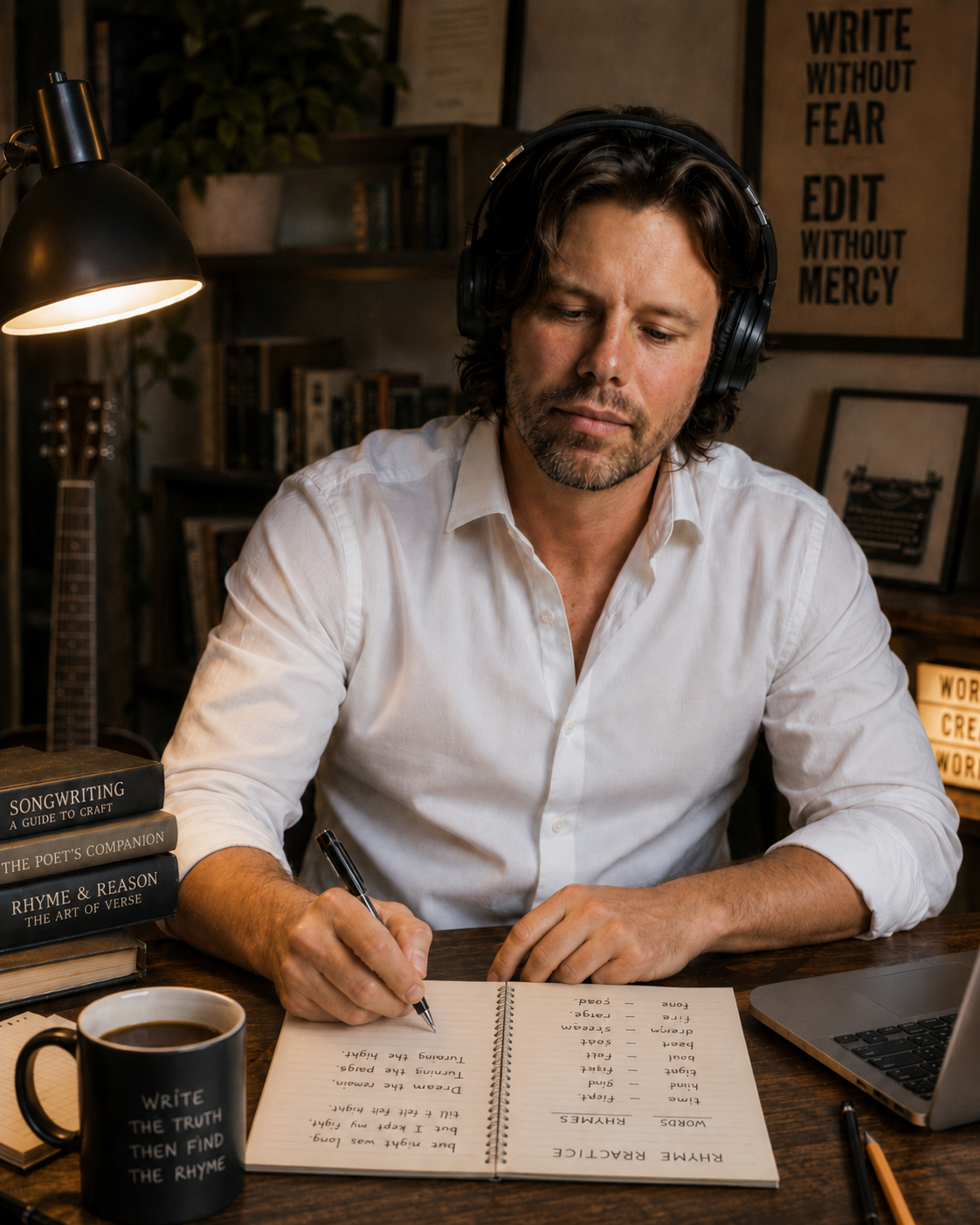
Writing in rhyme is not just finding words that sound alike. It is rhythm, restraint, structure, music, and emotional timing.
I thought writing a rhyming children’s book would be easier than it was.
That is the most honest place to begin.
When I was younger, I had the idea for Yabbit the Rabbit, and I knew I wanted the story to rhyme. It felt obvious to me at the time. Children love rhythm. Bedtime stories often have a musical quality. Rhyme seemed warm, memorable, and perfectly suited for a hesitant little rabbit whose courage needed to unfold gently.
But wanting to write in rhyme and knowing how to write in rhyme are very different things.
In 2004, I spent a summer on a beach in San Diego trying to write what would eventually become part of Yabbit’s world. I had the idea. I had the character. I had the emotional connection. I had a notebook, time, and the confidence of someone who did not yet understand how difficult the craft really was.
The furthest I got was one line:
“Yabbit the Rabbit had a bad habit.”
That was it. One line.
Not a story. Not a rhythm. Not a finished page. Just one little line sitting there in the sand, wearing a tiny paper crown and pretending to be a book.
Looking back, I do not think the problem was a lack of imagination. The problem was that I had not respected the craft yet. I thought because it was a children’s book, it would somehow be simple. I thought rhyme was mostly about matching sounds at the end of a sentence.
I was wrong. Rhyme is not simple. Good rhyme only feels simple when the writer has done the hard work quietly.
The first mistake was thinking rhyme meant “cute”
This is one of the biggest mistakes people make when they think about rhyming children’s books. They assume rhyme means cute.
A bouncy ending. A sing-song phrase. A little jingle that makes the page feel playful. That can be part of it, but it is not enough. Rhyme without rhythm becomes clumsy. Rhyme without story becomes a trick. Rhyme without emotional purpose can start to feel like the book is showing off instead of serving the child.
Children are very good at feeling when a story is moving naturally and when the writer is dragging the sentence by the ears just to make two words rhyme.
That was the lesson I had to learn.
A rhyming picture book is not a poem stapled to illustrations. It still needs character, conflict, pacing, emotional movement, and a reason for the reader to turn the page. The rhyme cannot be the whole engine. It has to support the engine.
For The Rabbit in the Moon, that meant the rhyme had to support Yabbit’s hesitation, Snail’s persistence, the deepening night, and the emotional feeling of trying anyway. It had to feel musical without becoming silly. It had to feel gentle without becoming sleepy in the wrong places. It had to carry courage without sounding like a motivational poster wearing bunny ears.
That balance took time.
Why rhyme felt right for Yabbit
Even after that early failure, I never lost the feeling that Yabbit’s story belonged in rhyme.
The reason was not just tradition. It was emotional.
Yabbit is a hesitant character. He pauses. He thinks. He feels the size of what is in front of him. His courage does not arrive in one grand leap. It comes slowly, through rhythm, repetition, support, and one tiny brave hop at a time.
Rhyme naturally understands that kind of movement.
A good rhyming story has a pulse. It lets the child feel what is coming, then gives them the comfort of arrival. It creates expectation and release. It lets a child hear language as music before they analyze language as meaning.
That matters in a bedtime picture book.
At night, children often need a story that helps the day soften. Rhyme can do that beautifully when it is handled with care. The rhythm becomes part of the comfort. The repeated sound becomes a small promise. The child begins to feel that the story knows where it is going.
For a hesitant child, that feeling can be powerful. A predictable rhythm can make an uncertain journey feel safer. The story may move into darkness, fear, or doubt, but the language still holds the child’s hand.
That is what I wanted for The Rabbit in the Moon.
I had to learn that meter matters
The moment I started taking rhyme seriously, I realized the hard part was not rhyme.
The hard part was meter.
Rhyme is the sound match. Meter is the rhythm underneath it. It is the pattern of stressed and unstressed beats that tells the line how to move. If the rhyme is the sparkle at the end, meter is the skeleton holding the body upright.
Without meter, rhyme limps.
A line may technically rhyme with another line, but if the rhythm is uneven, the read-aloud stumbles. The parent has to work too hard. The child hears the bump. The page loses its flow.
That was one of the most important lessons I learned while writing The Rabbit in the Moon. I could not just find rhyming words and hope the story would sing. I had to read every line out loud. Then read it again. Then cut a word. Then move a phrase. Then change a verb. Then realize the line was still wrong and start over.
Writing in rhyme became physical.
I had to hear it in my mouth, not just see it on the page. If a line looked good but sounded awkward, it was not finished. If the rhyme worked but the rhythm broke, it was not finished. If the sentence only existed to reach the rhyme, it was not finished.
That last one is especially important.
In a rhyming children’s book, the story should never feel like it is being held hostage by the rhyme.
Why I chose an ABCB rhyme scheme
For The Rabbit in the Moon, I eventually chose an ABCB rhyme scheme.
That means the second and fourth lines rhyme, while the first and third lines do not have to rhyme. For me, that structure gave the story the right amount of music without making every page feel too predictable or crowded.
AABB rhyme can be wonderful, but it can also become heavy if every pair of lines snaps shut too quickly. For Yabbit, I wanted more breathing room. The story needed to feel like a journey, not a chant. ABCB gave me space to build an image, move the emotion, and still give the child the satisfaction of rhyme landing at the end.
It also helped keep the bedtime feeling.
The rhyme arrives, but it does not bang a spoon on the table every two seconds. It comes like a soft footstep. Enough structure for the child to feel the music. Enough space for the story to breathe.
That was important because The Rabbit in the Moon is not only trying to entertain. It is trying to help children feel fear, uncertainty, support, and courage in a safe way.
The rhyme needed to serve that emotional purpose.
I studied rhyme outside children’s books
One of the more unusual parts of my process is that I did not only study rhyming picture books.
I listened to hundreds of hours of Eminem.
That may sound unexpected for a bedtime picture book about a hesitant rabbit, but it helped me understand something important about rhyme: rhyme is not only about the final word. It can live inside the line. It can bend rhythm. It can create momentum. It can carry emotion through sound.
I was not studying subject matter. I was studying control.
Internal rhyme. Slant rhyme. Pacing. Breath. Surprise. How a phrase can turn. How sound can build tension. How rhythm can make a line feel inevitable.
Obviously, a children’s picture book and a rap verse are completely different forms. They have different audiences, different responsibilities, and very different emotional rooms. But the craft lesson still mattered: great rhyme often sounds effortless because the artist has complete control of the rhythm underneath it.
That changed the way I worked.
I stopped thinking only about end rhymes and started listening to the entire line. I began to care more about movement, not just matching. I wanted the words to feel like they belonged together before the rhyme confirmed it.
That made the writing stronger.
Research gave the story depth before rhyme gave it music
Before I returned to writing Yabbit seriously, I also knew the story needed more than rhyme.
It needed a world.
I studied mythology, especially moon stories and symbolic journeys, because I wanted Yabbit’s task to feel larger than an ordinary errand. I explored animal symbolism because every creature in the story needed a reason to be there. Snail could not simply be cute. Owl could not simply be wise because owls are always wise. Wolf, Bat, the Loons, and the nighttime world all needed emotional purpose.
That research mattered because rhyme can make a shallow story sound polished for a moment, but it cannot give the story a soul.
The emotional arc had to come first.
Who is Yabbit?
What does he fear?
Why does the journey matter?
What does Snail represent?
Why is the moon important?
What does courage mean in a child’s world?
Once those questions became clearer, the rhyme had something to carry.
That is when the writing began to feel different. The rhymes were no longer decoration. They were part of the path.
For more on how mythology and moonlight shaped Yabbit’s world, read: https://www.yabbitrabbit.com/parent-resources/creating-world-of-the-rabbit-in-the-moon
Humility became part of the craft
Writing The Rabbit in the Moon taught me that humility is not a soft quality.
It is a working tool.
When I was younger, I thought passion would be enough. I had a character I loved and a story connected to my mother. I thought emotional importance would carry the work. But caring deeply about a story does not automatically make the writing strong.
That was hard to admit.
To write the book well, I had to become willing to be bad at the thing first. I had to accept that my first attempt was not precious. I had to cut lines I liked. I had to rewrite stanzas that were almost there. I had to admit when a rhyme was clever but wrong. I had to listen to the rhythm instead of defending the sentence.
That is one of the strange gifts of rhyme.
It does not let you hide for long.
If a line is off, you can hear it. If a stanza is bloated, you can feel it. If the emotion is forced, the rhythm starts wearing a fake mustache. The work tells on you.
That can be frustrating, but it is also useful. Rhyme forced me to become more disciplined. It forced me to ask whether every word was earning its place.
That discipline made the book better.
The best rhyme sounds inevitable
When rhyme works, the reader should not feel the writer sweating.
The line should feel natural. The rhyme should feel earned. The child should be able to fall into the rhythm without noticing the machinery underneath it.
That is much harder than it looks.
A weak rhyme often announces itself. It says, “Look what I found!” A strong rhyme disappears into the story. It gives the child pleasure without pulling them out of the moment.
That became one of my tests while writing The Rabbit in the Moon.
If the rhyme drew attention away from Yabbit’s feeling, I changed it. If the rhyme made the sentence sound unnatural, I changed it. If the rhyme forced the character to say something he would not say, I changed it. If the rhyme was technically correct but emotionally wrong, I changed it.
The story had to come first.
That is the part of rhyming picture books that people sometimes miss. The rhyme may be the most obvious feature, but it should not be the loudest thing in the room. The emotion should be louder. The character should be louder. The child’s experience should be louder.
Rhyme is there to carry the feeling, not steal the chair.
Why rhyme helps children remember a story
Children often remember rhythm before they remember exact meaning.
That is one of the reasons rhyme can be so powerful in a picture book. A repeated sound gives the child something to hold. A musical line can become familiar after only a few readings. The child begins to anticipate the word, the beat, the turn.
That anticipation is part of the joy.
It is also part of early language development. Rhyme invites children to hear how words sound, not just what words mean. They begin to notice that moon and soon have a relationship, that night and light speak to each other, that language has pattern and play inside it.
For a bedtime story, that matters because the rhythm becomes part of the comfort. The child is not only following a plot. They are being carried by sound.
That is one reason I wanted The Rabbit in the Moon to rhyme. Yabbit’s journey deals with fear and hesitation, but the rhythm gives the child a steady thread through it. Even when the story moves into uncertainty, the language offers shape.
The child can feel that the story is still holding together.
Sometimes that is exactly what a child needs.
Rhyme had to match the emotional pace of Yabbit
Yabbit’s courage does not happen all at once.
That meant the rhyme could not rush him.
In some stories, rhyme can create bounce and speed. For Yabbit, I needed it to create movement without pressure. The rhythm had to feel like progress, but not panic. It had to let the story walk, pause, look around, listen, and continue.
That is a very different kind of rhythm.
A hesitant child knows the feeling of time stretching before a hard beginning. The moment before trying can feel enormous. I wanted the rhyme to respect that space. If the story moved too quickly, it would betray Yabbit. If it moved too slowly, it would lose the child.
The craft challenge was finding the right pace.
That meant every stanza had to do emotional work. Some lines needed to carry wonder. Some needed to carry worry. Some needed to carry the quiet persistence of Snail. Some needed to let the moon feel far away and still possible.
Rhyme gave the book music, but pacing gave it heart.
What I would tell someone writing a rhyming picture book
I would tell them to take rhyme seriously.
Do not choose rhyme because you think it will make the book easier. Choose rhyme because the story needs music, memory, rhythm, and emotional flow. Then be ready to do the work.
Read your lines out loud until you are tired of your own voice. Then read them again tomorrow, because tomorrow your ear will tell you the truth. Watch where you stumble. Listen for the places where the sentence is serving the rhyme instead of the story. Cut the extra words. Replace the lazy rhymes. Do not mistake cleverness for feeling.
Study meter. Study structure. Study read-aloud pacing. Study picture books that rhyme beautifully and ask why they work. Study songs and poetry too, because rhythm lives in many rooms.
Most of all, protect the child’s experience.
A child does not care how proud you are of a rhyme. They care whether the story carries them. They care whether it feels good to hear. They care whether they want the book again tomorrow night.
That is the real test. Not whether the rhyme impresses another writer. Whether the child wants to return.
How learning rhyme changed me as a writer
Learning to write The Rabbit in the Moon in rhyme changed the way I think about writing.
It made me more patient. It made me more exact. It taught me that a small word can change the weight of a line. It taught me that music and meaning have to work together. It taught me that a children’s book can be simple without being easy.
That may be the biggest lesson. Simple is not the same as easy.
A good picture book may have fewer words than a novel, but every word has to carry more weight. There is less room to hide. The rhythm has to work. The emotional arc has to work. The page turns have to work. The read-aloud has to work. The illustrations and words have to leave space for each other.
Rhyme made all of that more demanding.
It also made the finished book feel more alive.
When I finally found the rhythm of Yabbit’s story, it felt like I had discovered the heartbeat that had been missing since that San Diego beach in 2004. The character had been there. The idea had been there. My mother’s phrase had been there.
But the rhythm had not arrived yet.
When it did, the story could finally move.
Why this matters to The Rabbit in the Moon
The Rabbit in the Moon is a rhyming picture book because Yabbit’s story needed to feel like something a child could hear, remember, and carry.
The book is about fear, hesitation, persistence, support, and one tiny brave hop. Those are big emotional ideas for young children. Rhyme helps make them feel smaller, softer, and more memorable.
It gives the story a bedtime quality. It helps the language settle into the room. It lets children anticipate sound, follow rhythm, and feel courage arrive in a way that does not rush them.
That is why I am grateful I failed the first time.
If I had finished the book in 2004, I do not think it would have become the story it needed to be. I had not lived enough. I had not studied enough. I had not learned enough humility. I had not yet understood how much time, memory, and my mother’s voice would shape the final book.
The early failure was not wasted. It was the first unfinished beat in a much longer rhythm.
For more on how the words and illustrations were shaped together, read: https://www.yabbitrabbit.com/parent-resources/editing-the-rabbit-in-the-moon
Buy the Book
If you are looking for a beautifully illustrated rhyming picture book that helps children face fear, hesitation, and uncertainty, The Rabbit in the Moon belongs on your shelf.
Yabbit is not fearless. He pauses. He worries. He needs time. Snail brings steadiness, persistence, and quiet support. Together, they help children understand that courage does not have to arrive all at once. It can begin with one tiny brave hop.
The rhyme in The Rabbit in the Moon was crafted to make the story musical, memorable, and comforting as a read-aloud. For parents, teachers, grandparents, and counselors, it offers language children can return to when beginning feels hard.
The Rabbit in the Moon is a meaningful investment in your child’s emotional growth.
FAQs
Is it hard to write a children’s book in rhyme?
Yes. Writing a children’s book in rhyme is much harder than many people expect. The writer has to balance rhyme, meter, story, emotion, pacing, and read-aloud flow. A rhyme that works technically can still fail if the rhythm feels awkward or the story sounds forced.
Why did KD Schnee write The Rabbit in the Moon in rhyme?
KD Schnee chose rhyme because Yabbit’s story needed rhythm, warmth, and a bedtime read-aloud quality. The book deals with hesitation, fear, support, and courage, and rhyme helps make those big feelings feel more musical, memorable, and safe for children.
What rhyme scheme does The Rabbit in the Moon use?
The Rabbit in the Moon uses an ABCB rhyme scheme, where the second and fourth lines rhyme. This gives the story musical structure while still allowing the language and emotional pacing to breathe.
Why does rhyme work well in picture books?
Rhyme can help children hear the music of language. It supports rhythm, memory, anticipation, and read-aloud pleasure. When rhyme is written well, it can make a story feel comforting and easier for children to return to again and again.
What is the biggest mistake writers make with rhyme?
One of the biggest mistakes is forcing the story to serve the rhyme. In a strong rhyming picture book, the rhyme should support the story, not control it. If a line sounds unnatural just to reach a rhyme, the child will feel the stumble.
Can rhyme help children with early literacy?
Rhyme can support early literacy because it helps children notice and play with the sounds inside words. Rhyming stories can build listening, sound awareness, memory, and enjoyment of language.
Is The Rabbit in the Moon a good read-aloud book?
Yes. The Rabbit in the Moon was written as a rhyming bedtime picture book with a strong read-aloud rhythm. Its rhyme, illustrations, and emotional story are designed to help children feel connected, comforted, and brave enough to take one tiny brave hop.