If homework is turning into a daily standoff, start with one small move: ask your child, “What’s the first move?” Then help them do only that (open the folder, write their name, read the first question).
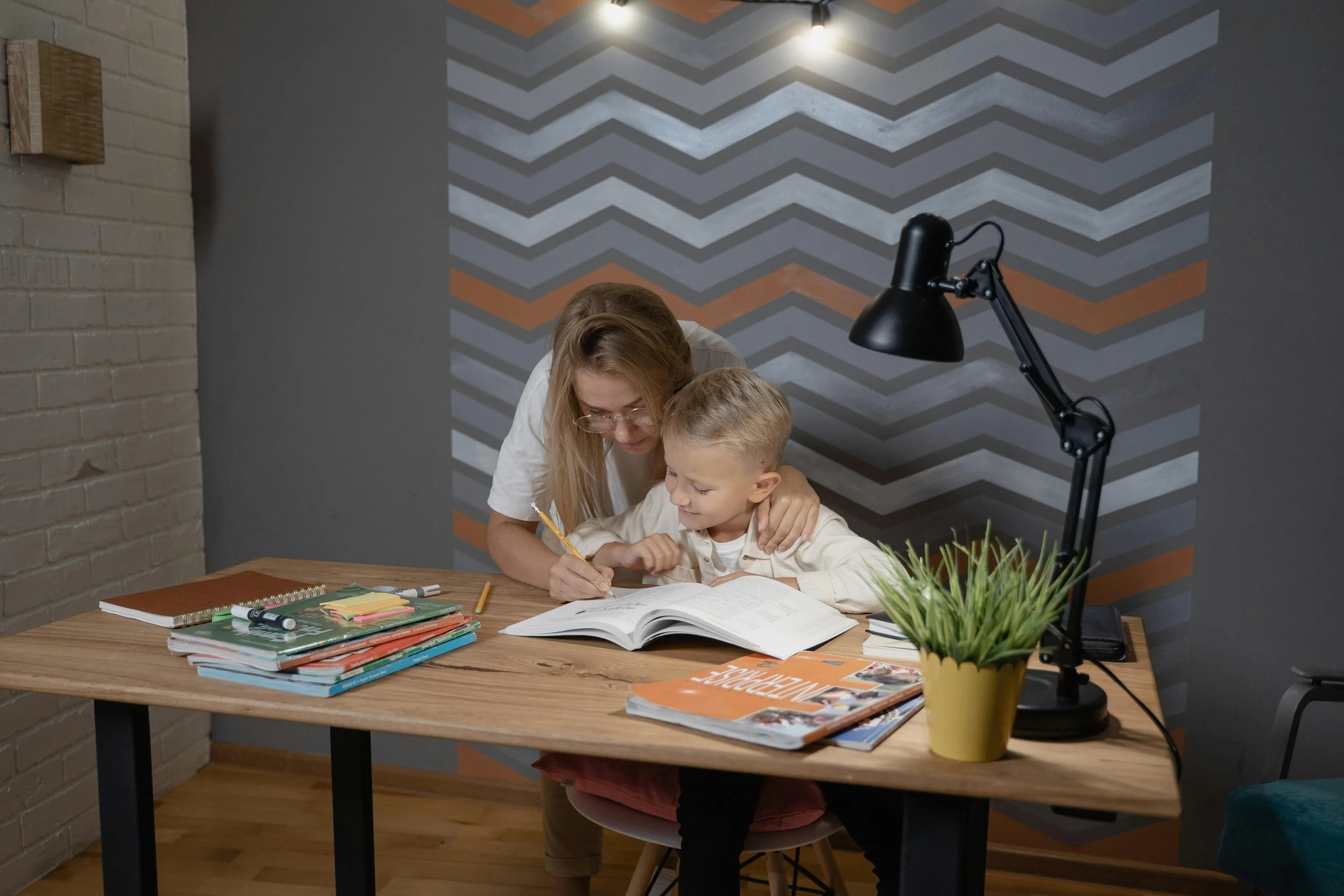
Start is the win. Tiny steps build trust.
Why homework avoidance happens (and why pressure backfires)
Homework avoidance usually isn’t laziness. It’s often protection.
When a task feels too big, too unclear, or too risky (fear of getting it wrong, fear of disappointing you, fear of feeling “behind”), the brain tries to escape the discomfort. That can look like:
“I don’t care” (but they do)
“I forgot” (sometimes true, often overwhelmed)
Meltdowns, defiance, bargaining, stalling
Sudden hunger, bathroom trips, “I can’t find a pencil”
Pressure tends to pour fuel on the same fear that started the avoidance. Your job isn’t to win a debate. Your job is to shrink the task until the brain can approach it.
The goal: cooperation, not compliance
Homework success is not a character test. It’s a skills + nervous system test.
You’re building three invisible muscles:
Clarity: “What exactly am I doing?”
Confidence: “Can I do the first piece?”
Control: “Do I have a say in how I start?”
When those three are present, power struggles fade.
A parent-friendly framework: Calm, Choice, Chunk
Use this order. Not because it’s cute, but because it works with how the brain re-engages.
1) Calm (lower the heat)
State what you see without a verdict.
Try: “This feels like one of those nights where starting feels hard.”
2) Choice (give a small lane of control)
Offer two acceptable options you can live with.
Try: “Do you want to start at the table or the couch?”
3) Chunk (make it tiny)
Turn homework into a first move that’s almost too easy.
Try: “Let’s just open it and write your name. Then we’ll decide what’s next.”
This is not letting them “get away with it.” This is making starting possible.
The “No Power Struggle” script (use it verbatim)
Here’s a script you can keep in your pocket.
Step 1: Name the feeling + protect connection
“Looks like homework is feeling heavy tonight. I’m on your team.”
Step 2: Ask for the first move (not the whole assignment)
“Don’t tell me how you’ll finish. Just tell me the first move.”
Step 3: Offer a tiny menu of starts
Pick one:
“Two minutes, then we pause.”
“One problem only.”
“Setup only: papers out, name on top.”
Step 4: End on time (this builds trust)
If you promised two minutes, stop at two minutes.
This teaches: Starting is safe. Adults keep their word. My brain can approach.
What to say when your child refuses (without escalating)
You’re aiming for firm + warm.
When they say: “No. I’m not doing it.”
Try: “Okay. We’re not fighting. We are choosing a first move. You pick: name on top or reading the first question.”
When they say: “I can’t.”
Try: “You can’t do the whole thing right now. That makes sense. Let’s do the smallest version.”
When they say: “You do it.”
Try: “I won’t do it for you, but I will sit with you while you start.”
When they melt down:
Try: “You’re not in trouble. Your brain is stuck. We’ll pause, then we’ll do one tiny step.”
If you want a deeper understanding of how big feelings hijack behavior (and how to respond without shame), this may help: https://www.yabbitrabbit.com/parent-resources/big-feelings-in-children-how-to-help-your-child-cope
Set up the environment so “starting” is easier
These are small changes with big leverage.
Create a “start station”
A consistent spot with pencils, charger, paper, and the one folder they need most. Less searching = less avoidance.
Use a visible timer (but don’t weaponize it)
Timer is a container, not a threat: “We’re doing 5 minutes, then a break.”
Sit nearby (co-regulation matters)
Many kids can start if your calm presence is near. You don’t have to teach. You just have to anchor.
If homework is a recurring battleground, look for the hidden blockers
Avoidance repeats when a blocker repeats. Common ones:
Task confusion: they don’t know what the question is asking
Skill gap: reading, writing, math foundation is shaky
Perfectionism: fear of doing it “wrong”
Executive function overload: planning and sequencing is hard
Fatigue: after-school depletion is real
If avoidance is a pattern across many situations, not just homework, it can help to understand the “hesitation” mechanism more broadly:
https://www.yabbitrabbit.com/parent-resources/psychology-of-hesitation-in-children-yabbit-the-rabbit
Repair after a hard night (this is where progress sticks)
Even good parents get pulled into the storm sometimes. Repair is powerful.
Try this:
“Last night got tense. I’m sorry for my tone. I care more about us working together than winning. Tonight we’ll do it differently: first move, then tiny steps.”
That one sentence builds safety. Safety builds starting.
Invest in your child’s emotional growth
If your child relates to feeling stuck before starting, The Rabbit in the Moon is a story built around tiny brave steps, hesitation, and steady courage. It’s designed to give kids language for “I’m scared to start” without labeling them as fragile or difficult.
If it helps, read it together and ask one question afterward: “What was Yabbit’s first move?” That question turns a bedtime story into a repeatable skill.
(And if you’ve already read it and it helped your family, a quick review makes a real difference, because it helps other parents find the same support.)
FAQs
Is homework avoidance normal?
Yes. It’s common, especially when kids feel tired, unsure, or worried about doing it wrong. The key is responding in a way that lowers pressure and increases clarity.
Should I take away screens or privileges if they refuse homework?
Sometimes boundaries help, but punishment alone often increases stress and avoidance. Start with structure: a small “first move,” a timer, and a predictable routine. Save consequences for repeated patterns after you’ve addressed overwhelm and confusion.
What if my child truly doesn’t understand the homework?
Then the goal is not “push through.” The goal is “identify the blocker.” Ask: “Which part is confusing?” and aim for one clarifying step (email the teacher, check the instructions, do one example together).
How long should homework time be for elementary kids?
It varies by school and child. A good guideline is short bursts with breaks. Many kids do better with 10 minutes work / 2 minutes break, repeated, rather than one long stretch.
What if homework becomes a nightly meltdown?
Treat it as a nervous system problem first. Pause, regulate, then return to a tiny step. If it persists, talk with the teacher about workload, clarity, and whether there are underlying skill gaps or attention/executive function issues.
Is it okay to sit with my child while they work?
Yes. For many kids, your calm presence helps their brain stay online. You’re not “doing it for them.” You’re providing co-regulation so they can start and persist.
How do I help my child become independent over time?
Independence grows from repeated successful starts. Use the same script nightly: first move, tiny chunk, stop on time. Then slowly reduce your involvement: sit nearby, then check in every few minutes, then let them start alone.