If your child freezes before trying something new, start tonight with one sentence: “What’s the first move?” Then help them do only that first move.
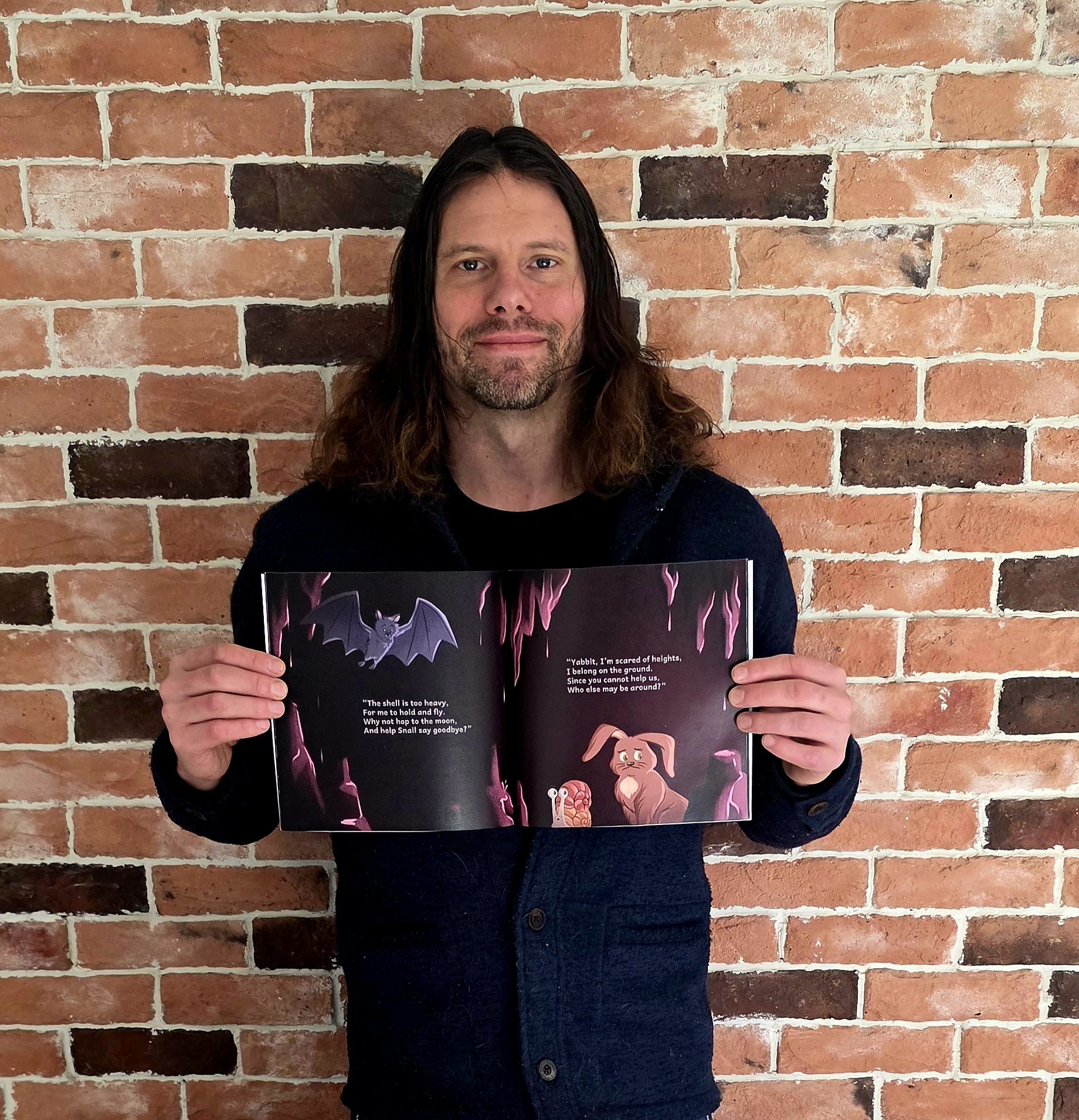
A local story with a universal message: starting small is still starting.
Where this story began (and why it matters to parents)
The Woodstock Independent recently shared the story behind The Rabbit in the Moon and why “tiny brave steps” became the spine of the book.
Here’s the one-line summary of the book’s purpose, in the paper’s words: “The story follows a hesitant young rabbit named Yabbit who is learning to take small brave steps.”
That sentence matters because it names what so many families live with: the child who can do it, but can’t start.
Not because they’re stubborn. Not because they’re “lazy.” Often because their brain is trying to protect them from the feeling of being overwhelmed, exposed, or unsure.
When a task feels big, the brain looks for an exit. My work as a parent-psychology storyteller is about giving families a different route: a first move that’s small enough to be safe.
How hesitation shows up (even in “good kids”)
Hesitation is often a form of self-protection. Kids avoid what triggers discomfort: uncertainty, evaluation, comparison, the fear of doing it wrong, the fear of disappointing you.
And here’s the part parents rarely get told: avoidance can look like attitude.
“I don’t care.”
“This is stupid.”
“I’m not doing it.”
Tears, shutdown, bargaining, stalling.
But underneath, it’s often a nervous system saying: Too much. Too fast.
If you want a deeper breakdown of what hesitation is (and what it isn’t), this post is a helpful companion: https://www.yabbitrabbit.com/parent-resources/psychology-of-hesitation-in-children-yabbit-the-rabbit
The parenting move that changes everything: stay close, shrink the step
Pressure tends to expand the fear. Closeness and clarity shrink it. When your child is hesitant, you don’t have to fix the whole situation. You’re aiming for three things:
Connection: “I’m with you.”
Clarity: “Here’s the first move.”
Control: “You get a small choice.”
That’s why “tiny brave steps” work. They give the brain a doorway it can actually walk through.
A simple script you can use this week
Try this (verbatim):
1) Name what you see, without judgment
“This feels like one of those moments where starting is hard.”
2) Offer closeness (not a lecture)
“I’m here. We’re not fighting.”
3) Ask for the first move
“What’s the first move?”
4) Give a tiny menu of starts
“You pick one:
A) open the page
B) write your name
C) read the first line”
5) Stop on time
If you promised two minutes, stop at two minutes. The point is to build trust: starting is safe.
For language that helps when big feelings are driving the whole moment, this post can help you respond without shame or escalation: https://www.yabbitrabbit.com/parent-resources/big-feelings-in-children-how-to-help-your-child-cope
Read the feature
Accessible PDF copy : https://www.yabbitrabbit.com/s/The-Woodstock-Independent-Yabbit-the-Rabbit.pdf
(For reference, the paper details the book’s Bull Valley roots, the “yeah-but” origin of Yabbit’s name, and the personal legacy behind finishing the story.)
FAQs
Is hesitation the same as anxiety?
Not always, but they’re often neighbors. Hesitation can come from anxiety, perfectionism, skill gaps, or simply uncertainty about what to do first.
Why does my child avoid things they’re actually good at?
Because “good at it” doesn’t cancel fear. Kids can still dread evaluation, comparison, or the possibility of being wrong. Avoidance protects their sense of competence.
What do I do when my child says “I don’t care”?
Assume it’s a shield first. Try: “You don’t have to care about it. Just tell me the first move.” Caring often returns after the brain feels safer.
Should I push through the resistance so they learn discipline?
Discipline grows best after repeated successful starts. Start with a tiny first move, keep it calm, and build consistency. Pressure can teach compliance, but it often increases avoidance.
How small is “tiny” when my child is really stuck?
Smaller than you think. “Open the folder.” “Put the pencil on the paper.” “Read one sentence.” Tiny is not childish. Tiny is accessible.
What if this keeps happening across many situations?
That usually means the pattern is bigger than the task. Look for executive function overload, perfectionism, or a nervous system that needs more co-regulation. A consistent “first move” script helps you spot the common denominator.