This post is a “behind the story” companion to the TribLIVE feature that introduced The Rabbit in the Moon to new readers. Click and read the original TribLIVE story first (and share it if it moved you).
Read the full TribLIVE feature story here: https://triblive.com/local/valley-news-dispatch/childrens-book-inspired-by-alle-kiski-valley-mothers-love-for-her-son/
Most books begin as an idea. The Rabbit in the Moon began as a relationship.
When I was a kid, I was the kind of child who hesitated at the edge of new things. My mother, Barbara, knew that pushing harder wasn’t the answer. She believed in something quieter: staying close, holding my hand, and helping me take one small step at a time into whatever felt unknown.
That “tiny brave step” message is the spine of this story, and it’s also the reason this book exists in the first place.
The Phrase That Started It All
As a child, I had a reflex whenever something felt unfamiliar: “Yeah, but…” It was my way of trying to talk my way out of discomfort.
Adults often hear a child’s hesitation and assume it’s attitude. But what I’ve learned, as a parent-minded storyteller, is that hesitation is usually a signal: a nervous system asking, “Is it safe to begin?”
That’s why Yabbit isn’t written as a “perfect brave” character. He’s written as a real one.
The Moment the Story Became Non-Negotiable
Years later, when I received a phone call that my mother’s health was rapidly declining, I realized something that changed the way I see courage forever: adults still hesitate too. Losing a parent will do that.
That was the moment I stopped thinking of this as a “someday” project and started treating it like an act of devotion. My mother’s love didn’t just shape my childhood. It shaped the mission of this book.
The One Sentence From TribLIVE I Want Families to Hear
TribLIVE described the heart of the message in a way I’ll never forget:
“The book isn’t a clinical guide but a gentle message of courage when life asks you to do the hard thing before you feel ready,” Sammartin (KD Schnee) said.
That’s it. That’s the promise.
Not a diagnosis. Not a lecture. A story that meets families in the moments that feel big.
Why Yabbit Works for Kids (and Why It Quietly Works for Adults Too)
In the story, Yabbit the Rabbit avoids. He worries. He would rather hide than try. He’s not “bad.” He’s overwhelmed by the size of the unknown.
And that’s exactly why kids connect to him. Because most children don’t need to be told “be brave.” They need to be shown that bravery can be small, imperfect, and still real.
If your family is navigating big emotions, this post supports the same foundation:
https://www.yabbitrabbit.com/parent-resources/big-feelings-in-children-how-to-help-your-child-cope
If your child hesitates at the edge of new experiences, this post is the deeper psychology: https://www.yabbitrabbit.com/parent-resources/psychology-of-hesitation-in-children-yabbit-the-rabbit
Mexico City, a Coffee Shop, and the Right Illustrator
One of the most meaningful parts of this journey is how human it stayed.
I live in Mexico City, and finishing this story was about honoring my mother’s original spark, even when Alzheimer’s had taken so much from her memory.
When it came time to find an illustrator, I mentioned the project to my friend Sandy in a local coffee shop. A simple conversation turned into the exact connection I needed, and that’s how I found Rod Lazo. As for Sandy, she became the books translator from English to Spanish.
Rod didn’t just “draw pictures.” He translated emotion into color, mood, and pace, which matters when you’re writing for bedtime and fear and tenderness.
A Quick Note on Sharing This Story (Respect for Reporting)
This post is intentionally original and written as a companion, not a repost.
If you’d like the reporting, the details, and the journalist’s (JoAnne Harrop) full narrative, please read the TribLIVE piece directly (linked above). That’s the right way to support the work and avoid duplicate-content issues.
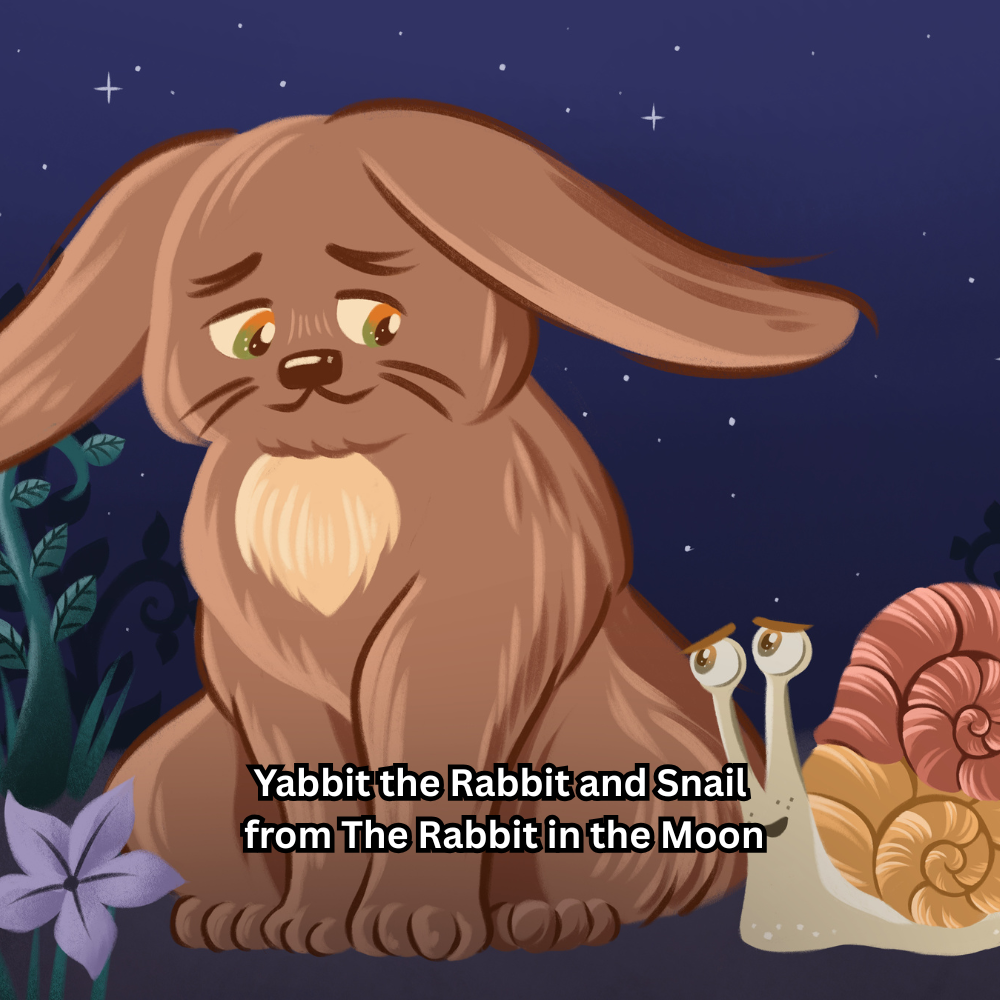
Tiny brave steps are how courage begins, for kids and grown-ups.
Invest in the Book
If your child hesitates, worries about “what ifs,” or struggles with new things (especially at bedtime), The Rabbit in the Moon was written for your family.
It’s a story you can return to when your child’s heart feels wobbly, and when you need a gentle script that says: bravery can be small.
Barnes & Noble: https://www.barnesandnoble.com/w/the-rabbit-in-the-moon-kd-schnee/1148812250
FAQs
1) What inspired The Rabbit in the Moon?
It was inspired by my childhood hesitation, my mother’s encouragement through “tiny brave steps,” and the realization that adults hesitate too.
2) Who created the character Yabbit originally?
My mother created the character when I was young, and I carried it forward into a finished story.
3) Who illustrated the book?
Rod Lazo illustrated the book and developed the characters and color mood across the pages.
4) Why does the story resonate with adults too?
Because avoidance and hesitation don’t disappear with age, adults often just hide it behind busyness or perfectionism.
5) What age is The Rabbit in the Moon for?
It’s written as a picture book for young children, but many families experience it as a shared “whole family” keepsake.
6) What’s the core message of the book?
Courage isn’t loud or flashy. It grows quietly, and it starts with one small step.
7) Where can I read the original feature story?
Use the prominent TribLIVE link near the top of this post.