If your child hesitates before trying, avoids new situations, melts down at the starting line, or says “I can’t” before anything has even begun, it is easy to feel pulled in two directions at once.
One part of you wants to protect them. Another part of you worries that if you make things easier, they will stay stuck. That tension lives in a lot of families.
Parents do not want to push too hard. But they also do not want fear quietly running the show.
This is where many people reach for the wrong tool. They reach for bigger encouragement, stronger pep talks, or more pressure. They say things like, “You’ll be fine,” “Just do it,” or “There’s nothing to be scared of.”
But hesitant kids usually do not need a bigger speech. They need a smaller first step. That is what I mean by a Tiny Brave Hop.
A Tiny Brave Hop is not a grand act of confidence. It is not a dramatic breakthrough. It is one manageable move toward the thing that feels hard. Small enough that the child can tolerate it. Meaningful enough that it still counts as movement.
This is one of the most important mindset shifts parents can make. We do not build courage in hesitant children by demanding leaps. We build it by helping them survive smaller beginnings.
That is how real bravery grows.
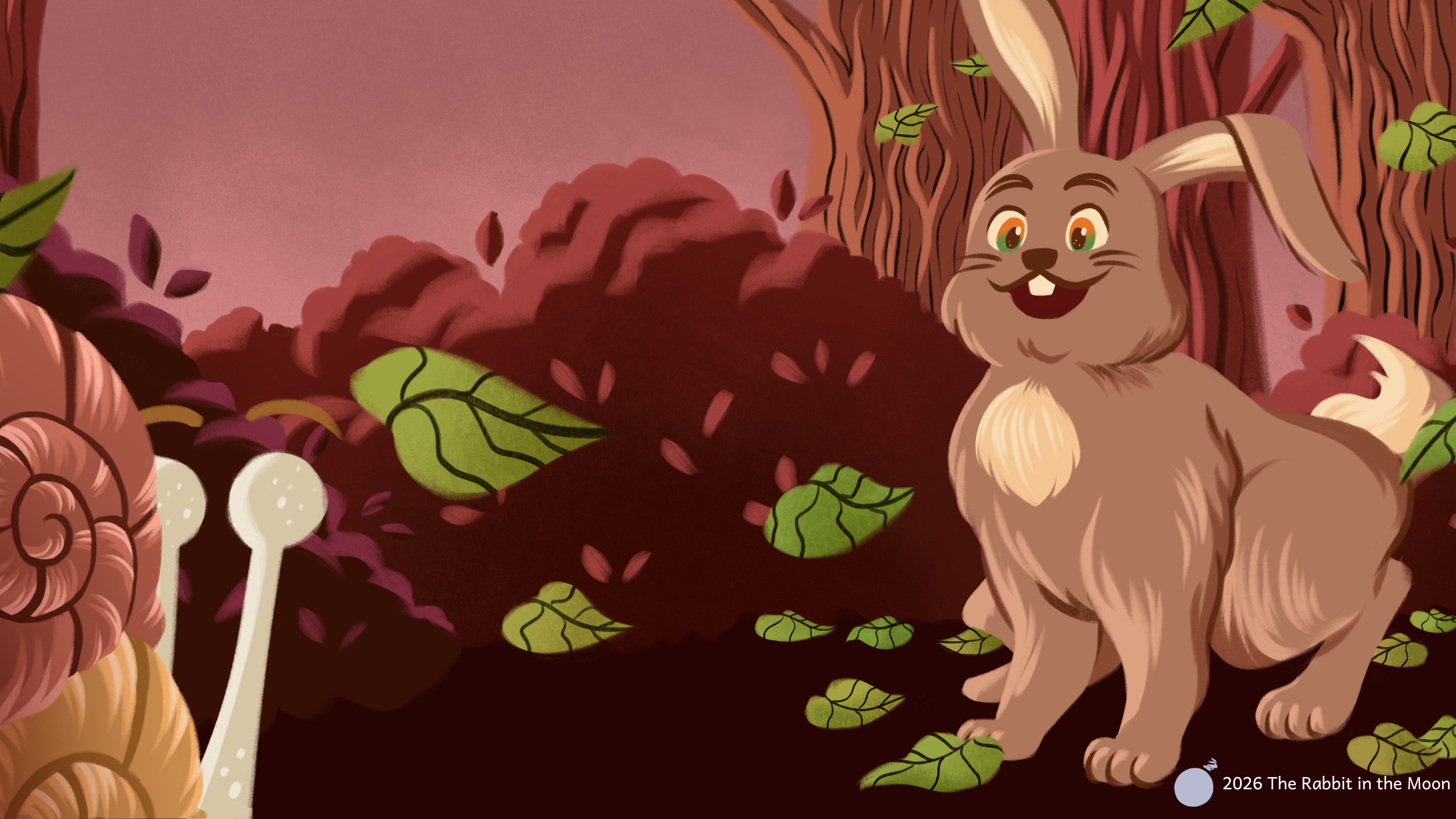
Snail meets Yabbit the Rabbit.
Why big brave leaps often backfire
Adults love the language of bravery. Children live inside the feeling of it. That difference matters.
When a task feels small to an adult, walking into class, trying a new food, saying hello to another child, joining a group game, sleeping in their own bed, it can still feel enormous to a child whose nervous system reads the moment as risky.
That child is not being dramatic. They are having a real experience of threat, uncertainty, embarrassment, exposure, or overwhelm.
So when we respond with a giant expectation, we often make the moment worse.
A leap is too much when the body is already saying no.
A hesitant child who is flooded by fear is not in a good place for grand goals.
Pressure can turn the task into a test.
The bigger the emotional spotlight, the harder it becomes to begin.
Failure at a too-big step creates more fear for next time.
If a child keeps being asked to do something beyond what they can tolerate, they collect evidence that the situation is unsafe.
That is why Tiny Brave Hops matter so much. They give the child a way to move forward without requiring them to feel fearless first.
The goal is not to erase fear in one moment. The goal is to teach a child, over and over, “I can feel unsure and still take one small step.”
What a Tiny Brave Hop actually is
A Tiny Brave Hop is a first move made small enough that a hesitant child can approach it without shutting down. That is the heart of it. Not “Join the whole game.”
Maybe:
Watch the game for thirty seconds.
Stand near the group.
Kick the ball once.
Say one word.
Stay for two minutes.
Not “Sleep alone all night.”
Maybe:
Lie in bed with the light dimmed.
Stay in the room for three minutes without calling out.
Choose one comfort object and one calming phrase.
Practice the first five minutes of bedtime differently.
Not “Be confident.”
Maybe:
Ask one question.
Raise one hand.
Try one bite.
Walk through the doorway.
Touch the new thing once.
Tiny Brave Hops work because they change the emotional math. Instead of asking a child to conquer the whole mountain, we give them one stone to step on.
That is a much more teachable experience.
And over time, children do not just complete these steps. They internalize something deeper:
”I can begin before I feel completely ready.”
”I can survive small discomfort.”
”I can do hard things in pieces.”
That is resilience.
The Tiny Brave Hops framework
Parents often ask me, “What do I actually do in the moment?”
Here is the framework I trust most.
Start where the fear is still speakable
If your child is already in full meltdown, the step is too late or too big. Tiny Brave Hops work best when you catch the moment early enough that your child can still hear you, borrow your calm, and consider one small option.
That means watching for the earlier signs:
clinging
stalling
sudden silliness
arguing
flat refusal
quiet withdrawal
the face that says the body is already pulling back
The earlier you respond, the more usable the step becomes.
Shrink the task until it feels almost too small
Parents often worry they are making it too easy. Usually, they are still making it too big.
A good Tiny Brave Hop should feel modest. Maybe even unimpressive. That is fine. We are not trying to impress anyone. We are trying to create a successful first rep.
If your child cannot do the step, shrink it again. If they can do it but it still clearly stretches them, you are probably in the right zone.
Stay close enough for your child to borrow calm
Many hesitant children regulate through connection before they can regulate independently. That means your presence matters.
Sometimes the Tiny Brave Hop is not just “try the thing.” Sometimes it is “try the thing while I stand beside you.” Or “try the thing while holding my hand.” Or “try the thing while knowing exactly where I will be.”
That is not weakness. That is skill-building.
Children do not become independent because we withdraw too quickly. They become independent because safety gets repeated enough times that the nervous system learns a new story.
Praise the attempt, not the outcome
This part is enormous. If you only celebrate when the child fully succeeds, you accidentally teach them that partial bravery does not count.
But partial bravery is often where the real growth happened. A better response sounds like this: “I saw how hard that felt, and you still tried one part.”
That sentence teaches something powerful:
Trying matters.
Beginning matters.
Movement matters.
This is how you keep the child’s attention on courage rather than performance.
Repeat before you raise the bar
Parents understandably want progress. Fast.
But resilience is built more like layering paint than flipping a switch.
A Tiny Brave Hop often needs repetition before the next step feels truly stable. That repetition is not wasted time. It is how the child’s body learns, “This is hard, but it is survivable.”
That is when you know the hop is doing its work.
What Tiny Brave Hops look like in real life
The framework becomes much more useful when families can see it in everyday moments.
School drop-off
A big leap would be: “Walk in happily and stop crying.”
A Tiny Brave Hop might be:
Walk to the door with your backpack on.
Carry the folder inside.
Say hello to the teacher.
Stay for one minute before clinging escalates.
Practice the doorway, not the entire morning.
The point is not to “win school” in one day. It is to build a calmer relationship with the start.
Joining a playground or group activity
A big leap would be: “Go play with those kids.”
A Tiny Brave Hop might be:
Watch the game together.
Stand near the group.
Hold the ball.
Ask one question.
Try one turn.
Many hesitant kids want to join long before they can join. Tiny Brave Hops honor that gap without leaving the child stranded in it.
Trying a new food
A big leap would be: “Eat the whole thing.”
A Tiny Brave Hop might be:
Let it stay on the plate.
Touch it with a fork.
Smell it.
Taste it.
Take one tiny bite and spit it out if needed.
That is still movement. Still resilience. Still practice.
Bedtime fears
A big leap would be: “Sleep alone and stop calling me.”
A Tiny Brave Hop might be:
Choose one brave bedtime phrase.
Keep the door cracked instead of open.
Stay in bed for two calm minutes after lights out.
Practice one short separation with a planned check-in.
For many children, bedtime courage is built in inches, not speeches.
Sports, lessons, or performance moments
A big leap would be: “Participate like everyone else.”
A Tiny Brave Hop might be:
Wear the uniform.
Enter the room.
Hold the instrument.
Stand on the field.
Practice one motion.
When parents see bravery this way, the moment becomes much easier to coach. If your child often refuses new things before they begin, this companion post goes deeper into that exact pattern: https://www.yabbitrabbit.com/parent-resources/help-child-refuses-to-try-new-things
What to say when your child is on the edge of “I can’t”
Language matters most at the exact point where the child is about to shut the door. This is not the moment for a lecture. It is the moment for a sentence they can actually use.
Here are the kinds of phrases that help:
“You do not have to do all of it. What is one small part?”
“This feels big right now. Let’s make it smaller.”
“You can be nervous and still try one tiny hop.”
“You do not need to feel fully ready. You just need a first move.”
“Let’s find the step your body can handle.”
Notice what these phrases do. They do not argue with the fear. They do not shame the hesitation. They do not inflate the moment.
They translate courage into something reachable.
That is why I prefer the language of hops. It feels lighter. Smaller. More child-sized. It suggests movement without demanding a leap the child cannot yet make.
Why books belong in this toolkit
If you want to become an authority on child anxiety, you cannot talk only about behavior in the moment. You also have to talk about the emotional tools that prepare children before the moment arrives.
That is where books matter.
The right story can do something adults often cannot do in real time. It can slow fear down enough for a child to understand it. It can make a child feel seen without making them feel singled out. It can give a family shared language that returns later, right when it is needed.
That is why children’s books for anxiety matter.
That is why picture books about overcoming fear matter.
That is why SEL books for hesitant kids matter.
A good story becomes more than entertainment. It becomes rehearsal.
Children see a character hesitate. They watch the hesitation not become the end of the story. They experience a pattern: fear, pause, support, next step, growth.
That pattern matters. It teaches that hard feelings are not final. That bravery does not have to be loud. That beginning small still counts.
And that is exactly why books belong in a conversation about tools for childhood resilience. Resilience is not built only in big public moments. It is also built in the quiet places where children rehearse meaning, language, and possibility.
If you want the fuller case for why stories matter so much in emotional development, this internal post is the strongest companion read:
https://www.yabbitrabbit.com/parent-resources/why-picture-books-are-good-for-children
How to use a picture book as a resilience tool
Many parents read a helpful book and stop there. The stronger move is to use the story as a bridge.
Read before the hard moment, not only after it.
A child is often more open to brave language at bedtime, during quiet connection, or in a relaxed afternoon than they are in the middle of a stressful event.
Ask one useful question.
Not ten. One.
“What was the tiny brave step?”
That is enough to start reflection.
Borrow the language later.
When the real moment comes, the story can return.
“This is one of those tiny brave hop moments.”
Keep the story from becoming pressure.
The book is a tool, not a measuring stick.
We do not say, “Yabbit did it, so why can’t you?”
We say, “Remember how bravery started small?”
That difference is everything.
Where The Rabbit in the Moon fits in
I never want parents to feel that a book alone solves anxiety. It does not. But the right book can become part of a child’s emotional toolkit in a very real way.
The Rabbit in the Moon was written for children who hesitate, worry, avoid, freeze, or need bravery to feel smaller than the adults around them sometimes imagine. It was built around a truth I care about deeply: courage is not the absence of fear. It is movement in the presence of it.
That is why the language of tiny brave steps matters so much in this world. For a hesitant child, bravery rarely begins with a roar. It begins with a first move that feels survivable.
That is what makes a book useful in this category. Not just that it is sweet, but that it gives children and adults language they can actually carry back into life.
The mistakes caring parents make most often
The parents I trust most are not the ones who never misstep. They are the ones willing to adjust.
These are the mistakes I see most often.
Making the step too big.
If the child keeps failing at the start, the answer is often not more insistence. It is a smaller hop.
Trying to reason a child out of fear.
Fear does not respond well to debate. It responds better to calm, structure, and doable action.
Praising only success.
If you celebrate only the polished result, you miss the courage that happened earlier.
Turning hesitation into identity.
A child is not “the shy one,” “the dramatic one,” or “the anxious one” in the middle of a hard moment. Describe the experience, not the child.
Raising the bar too fast.
One good rep does not always mean the nervous system is ready for the next ten.
These are not signs that a parent is failing. They are simply reminders that courage grows best in careful soil.
What progress actually looks like
One reason parents get discouraged is that they expect bravery to look neat. It usually does not.
Progress may look like:
less arguing before the event
a faster recovery after backing away
trying for ten seconds instead of zero
standing nearby instead of fully leaving
asking for help instead of shutting down
saying “I can try” once, even if the child still needs support
That is progress.
A lot of resilience work is subtle before it becomes obvious. The child who once melted down at the doorway may now pause there, breathe, and enter two minutes later. That is not small. That is growth.
We miss a lot of courage when we only count the big visible wins.
When to get extra support
Not every hesitant child needs professional help. Many simply need time, repetition, and better tools.
But it is worth getting extra support when fear or avoidance is consistently interfering with daily life in a bigger way, school attendance, sleep, friendships, family functioning, or participation in ordinary experiences.
That is not a sign that you overreacted. It is a sign that you are paying attention.
Parents do not lose authority by asking for help. They model wisdom.
The Rabbit in the Moon is a meaningful investment in your child’s emotional growth
If your child needs courage to feel smaller, calmer, and more reachable, The Rabbit in the Moon was written for exactly that emotional territory.
It is not meant to replace good parenting, patient support, or real-life practice. It is meant to strengthen them. To give your child language for hesitation, and give you a story you can return to when a brave beginning needs a gentler doorway.
And if the book helps your family, one honest review helps another parent find the right support at the right time.
FAQs
What is a Tiny Brave Hop?
A Tiny Brave Hop is one very small step toward something that feels hard. It is designed to be manageable enough for a hesitant child to tolerate while still counting as real movement.
How do Tiny Brave Hops help anxious kids?
They lower the emotional cost of beginning. Instead of demanding a giant act of bravery, they teach children to approach fear in smaller, survivable pieces.
What if my child still says no to the tiny step?
That usually means the step is still too big, the moment came too late, or the child needs more connection before action. Shrink the step again and focus on regulation first.
Are children’s books for anxiety actually useful?
Yes, when they are used well. The best children’s books for anxiety help kids feel seen, build emotional language, and rehearse courage before the next hard moment arrives.
What kinds of picture books help hesitant children most?
The strongest picture books about overcoming fear usually normalize hesitation, avoid shaming, and show courage developing through small believable steps rather than instant confidence.
Are SEL books for hesitant kids enough on their own?
Usually not on their own. But they can be powerful tools when paired with calm parenting, repeated practice, and small real-life opportunities to try.
What are the best tools for childhood resilience?
The best tools for childhood resilience usually include emotional safety, predictable support, small achievable challenges, usable language, and repetition. Stories can be a valuable part of that toolkit when they help children practice courage in a way that feels real.