Why The Rabbit in the Moon’s Illustrations Help Children Read Feelings Before Words
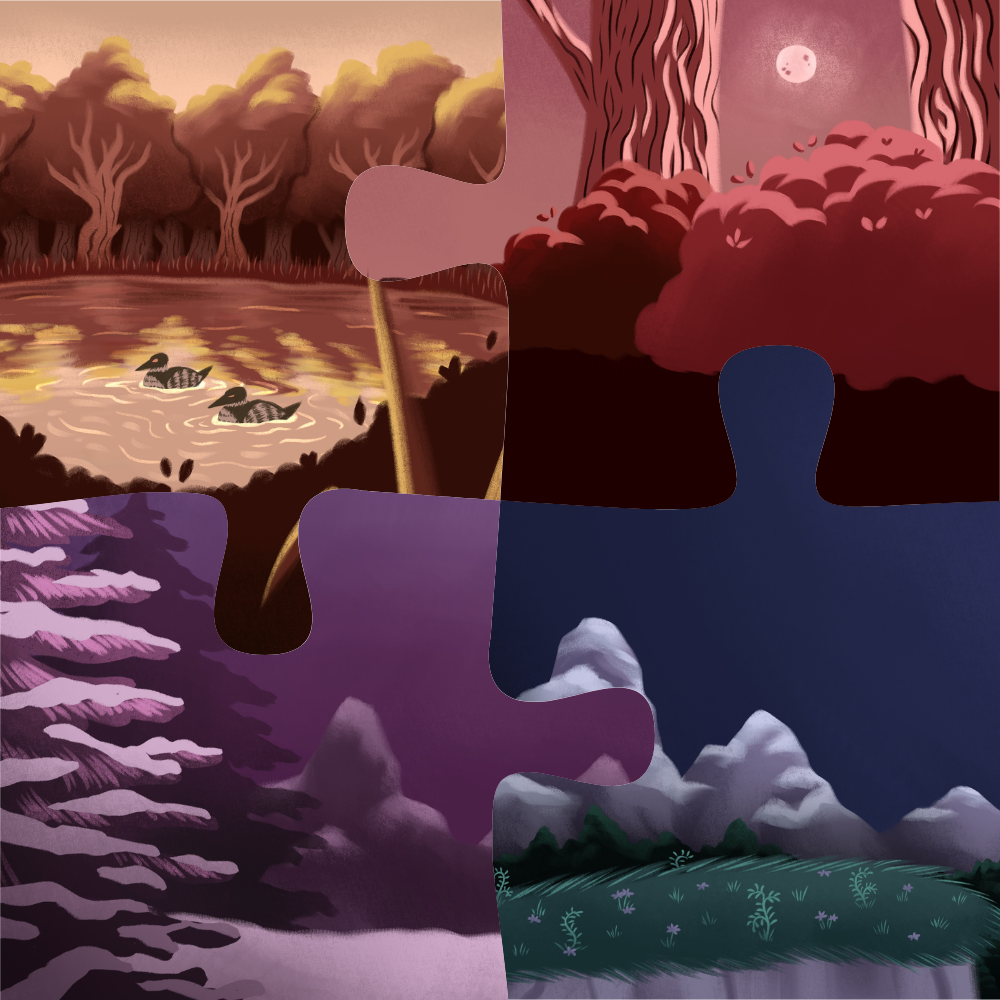
In The Rabbit in the Moon, color is not just decoration. It helps children feel the emotional journey from sunset uncertainty to nighttime courage.
Children often understand a feeling before they can explain it.
That is one of the reasons picture books matter so much.
A young child may not be able to say, “I feel anxious because the room is dark and I do not know what will happen next.” They may not be able to explain hesitation, uncertainty, worry, overwhelm, or courage. But they can look at a page and feel the shift.
They can see the sky getting darker.
They can notice Yabbit’s expression.
They can feel the difference between warm sunset colors and the deeper blues and purples of night.
They can understand that something is changing before they have the language to describe it.
That is why the illustrations in The Rabbit in the Moon were never meant to be decoration. They were designed to help children read emotion visually. The colors, shadows, expressions, and atmosphere all work together so a child can feel the story before they can fully talk about it.
That matters because big feelings often arrive before words do.
Children read pictures before they read feelings out loud
Before children can explain emotions clearly, they often read them through the body.
They notice a face.
They notice distance.
They notice whether someone is alone or supported.
They notice whether a place feels open, hidden, warm, or uncertain.
They notice when the colors change.
A child may not say, “This scene feels more emotionally intense,” but they can lean closer. They can point. They can ask why it is darker. They can say Yabbit looks scared, worried, small, quiet, or brave.
That is the power of picture book illustration. It gives children a way into feelings without forcing them to define everything first.
In The Rabbit in the Moon, the visual story helps children understand what Yabbit is carrying. He is not simply walking through a pretty landscape. He is moving through an emotional one. The world around him changes as the feeling changes, and young readers can sense that shift.
For a child who hesitates before trying, that visual language is especially important. It says, “This feeling has a shape. This moment can be noticed. You are not the only one who has felt something big before beginning.”
The color journey was intentional
The attached image shows one of the clearest choices we made in the book: the color arc.
The story begins with warmer sunset tones. There is softness there. The world still feels open. The day has not disappeared, but something is beginning to shift. That is why the first panel works so well for When Big Feelings Begin. The color does not scream fear. It simply tells the child, something is changing.
Then the palette deepens.
The second panel moves into redder, heavier twilight. The shadows grow. The moon appears. The world starts to feel less familiar. This is the visual language of When Shadows Start to Grow, and children understand that feeling instinctively. They know what it is like when the room, the hallway, or the backyard looks different than it did a few minutes ago.
By the third panel, purples and darker tones begin to take over. This is where imagination starts filling the space. Children often do this at night. A coat becomes a shape. A sound becomes a question. A shadow becomes something to worry about. The scene does not need to explain that in a paragraph. The color does the emotional work.
Then the final image settles into deep night. The blues are richer. The opening feels almost like a threshold. The world feels bigger, quieter, and more unknown. This is When Night Feels Biggest.
That progression was not accidental. It was created to help children feel how worries can grow as the light changes, and how courage can still begin inside that darker space.
Color helps children feel the story safely
One of the difficult things about writing for young children is that you want to respect the feeling without overwhelming the child.
If a book about fear becomes too frightening, the child may close down. If it becomes too soft, the child may not recognize the real feeling. The balance matters.
Color helps create that balance.
In The Rabbit in the Moon, the darker scenes are not meant to scare children. They are meant to validate something many children already know: night can make feelings louder. Shadows can make imagination busier. The unknown can feel bigger when the world gets quiet.
But the color is still beautiful. The images invite the child to stay with the story. That is important. A child is not being thrown into fear. They are being guided through it.
That is part of what makes the illustrations emotionally useful. The book gives children just enough darkness to recognize the feeling, and enough beauty to feel safe looking at it.
Yabbit’s expressions help children notice hesitation
Yabbit matters because he gives hesitation a face.
A child who freezes before joining a group, trying a sport, answering a question, or walking into a new room may not understand what is happening inside them. They may simply feel stuck. Adults may see the behavior, but the child feels the pressure.
Yabbit helps bridge that gap.
When children see Yabbit pause, wonder, or look uncertain, they are not being told, “This is anxiety.” They are simply seeing a character in a feeling they may recognize. That distance matters. It lets children notice hesitation without feeling exposed.
A parent can ask, “How does Yabbit look here?” or “Does this part feel easy or hard?” That is much softer than saying, “Why are you acting scared?” The picture lets everyone look at the feeling together.
That is how emotional language begins. Not with a lecture, but with noticing.
If you want a practical guide to choosing books that help children feel seen in this way, this companion post pairs naturally with the ideas here: https://www.yabbitrabbit.com/parent-resources/how-to-choose-picture-book-hesitant-child
Snail gives the child something steady to see
Yabbit shows the pause. Snail brings steadiness.
That visual relationship is important because children need to see that bravery does not always happen alone. A child who is afraid to begin often borrows calm from someone nearby: a parent, teacher, friend, sibling, coach, counselor, or character.
Snail is persistent and determined, but he is not loud about it. He does not erase Yabbit’s hesitation. He does not replace Yabbit as the brave one. He helps balance him.
Visually, that gives children something very useful: a picture of support that does not shame the feeling.
A child can look at Yabbit and understand, “He feels unsure.” Then they can look at Snail and understand, “Someone is still with him.” That is a powerful combination for a young reader.
It teaches a quiet truth: support is not the opposite of courage. Sometimes support is how courage begins.
The illustrations make tiny brave hops easier to understand
“Be brave” can feel too big for a child.
A child may not know what bravery is supposed to look like. They may imagine bravery as being loud, fearless, fast, or certain. If that is what bravery means, many hesitant children quietly decide they are not brave.
The illustrations in The Rabbit in the Moon help change that.
They show that courage can be small. Courage can be a pause followed by one step. Courage can happen in a dark place. Courage can happen while a character still looks unsure. Courage can happen with help nearby.
That is the meaning behind a tiny brave hop.
The phrase becomes easier for children to understand because the pictures give it shape. They see the world getting bigger and darker, and they see the journey continue anyway. They see that courage does not wait for the feeling to disappear.
It moves with the feeling.
That is a much more useful kind of bravery for children who hesitate.
Nighttime images meet children where worries often grow
Many children hold themselves together during the day and unravel a little at night.
At bedtime, the room gets quiet. The light changes. A parent steps away. Imagination wakes up and starts tapping on the windows of the mind. Worries that were small at lunch can feel much larger after dark.
That is why The Rabbit in the Moon uses a nighttime emotional landscape.
The book does not pretend night is only peaceful. It understands that night can feel beautiful and enormous at the same time. That combination is honest. It gives children a story world that feels close to their own experience.
The attached image shows that progression clearly. Sunset begins the feeling. Twilight deepens it. Imagination fills the dark. Night becomes the biggest emotional space.
Then the story does what children need stories to do.
It does not leave them there.
It helps them keep going.
Why visual emotional literacy matters
Visual emotional literacy is not a phrase most parents use at bedtime, and that is fine. Nobody needs to tuck their child in while announcing a graduate seminar in picture-book semiotics.
But the idea matters.
Children learn to read feelings by seeing them, naming them, and connecting them to what happens next. Picture books give them a gentle place to practice. The page holds the feeling still long enough for the child to notice it.
A child can look at Yabbit and begin to understand hesitation. They can look at Snail and begin to understand persistence. They can look at the changing colors and begin to understand that feelings can grow, shift, and move.
That is emotional learning.
It does not feel clinical. It feels like storytime. But underneath the story, the child is building a way to understand themselves and others.
For more simple ways to use picture books to build feeling language at home or in the classroom, read:
https://www.yabbitrabbit.com/parent-resources/emotional-literacy-activities-for-picture-books
The art helps parents talk without over-explaining
Parents do not always need the perfect words.
Sometimes the picture gives you enough.
You can pause on a page and say, “This part feels darker.” You can ask, “What do you think Yabbit is feeling?” You can point to Snail and say, “He is still there with him.” You can notice the sky, the shadow, the moon, the path, the distance, the expression.
Those small observations are often better than a long speech.
Children do not need every storytime to become a lesson. They need a safe adult, a meaningful story, and space to notice. The illustrations give parents a way to begin those conversations gently, without turning the child into the subject of the conversation too quickly.
That is one of the reasons picture books can reach children when direct advice cannot.
The child is not being corrected. They are being invited to look.
Why The Rabbit in the Moon’s illustrations matter
The illustrations in The Rabbit in the Moon matter because they do emotional work.
They help children see hesitation before it is explained.
They help children feel the shift from safety to uncertainty.
They help children understand how night can make worry feel bigger.
They show that support can stay close even when the path feels hard.
They make courage visible in small, child-sized steps.
That is what I wanted from this book. Not art that simply decorated the words. Art that carried part of the meaning.
Because children do not experience stories only through language. They experience them through color, rhythm, expression, atmosphere, and the emotional weather of the page.
When those elements are done with care, a picture book becomes much more than something to read.
It becomes something a child can feel.
How to read the illustrations with your child
You do not need to analyze every page. That would make bedtime feel like homework wearing pajamas.
Keep it simple. Ask one gentle question at a time.
“What do you notice?”
“How does this color feel?”
“Does this part feel calm, worried, or brave?”
“Where is Yabbit looking?”
“Who is close to him?”
“What changed from the last page?”
“What tiny brave hop might come next?”
Then let your child answer in their own way. They may point. They may say one word. They may say something unexpected. They may not answer at all. That still counts. Children often absorb story meaning quietly before they can return it in words.
The goal is not to get the “right” answer. The goal is to help your child practice noticing.
Why this makes the book useful beyond bedtime
A visually rich book can become part of family language.
Later, when your child hesitates before a hard moment, you can say, “This feels like the page where the shadows were getting bigger.” Or, “This is a Yabbit pause.” Or, “Who helps you feel steady like Snail?”
That is where a book becomes useful beyond the shelf.
The story gives the family images to return to. The colors become emotional memory. The characters become shorthand. The tiny brave hop becomes something a child can imagine when real life asks for courage.
That is why the illustrations matter so much. They are not only there to make the book beautiful, although beauty matters too. They help the child carry the story into the next hard moment.
And that is the kind of picture book I believe children deserve.
The Rabbit in the Moon is a meaningful investment in your child’s emotional growth.
If you are looking for a picture book that helps children understand feelings before they can fully explain them, The Rabbit in the Moon belongs on your shelf.
Yabbit gives children a character who pauses, worries, and still moves toward courage. Snail offers steady persistence. The illustrations use color, atmosphere, and expression to help young readers feel the emotional journey from hesitation to one tiny brave hop.
For parents, teachers, grandparents, and counselors, The Rabbit in the Moon offers more than a bedtime story. It gives children visual language for fear, uncertainty, support, and the brave little beginnings that help confidence grow.
FAQs
Why are illustrations important in picture books?
Illustrations help children understand story, emotion, relationship, and meaning before they can explain everything in words. A child can read a face, a color shift, a shadow, or a character’s body language long before they can give a full explanation of the feeling.
How do The Rabbit in the Moon’s illustrations help children understand feelings?
The illustrations show Yabbit’s hesitation, Snail’s steadiness, and the emotional shift from sunset to night. Children can feel when the story becomes more uncertain, darker, quieter, or braver, even if they do not yet have the words for those emotions.
Why did The Rabbit in the Moon use color to show emotion?
Color helps children feel the emotional movement of the story. Warm sunset colors introduce the beginning of big feelings, deeper twilight tones show worry growing, and darker night colors help children understand when fear or uncertainty feels biggest.
Can children understand emotions through pictures before words?
Yes. Young children often notice emotional cues visually before they can explain them verbally. They can point to a worried face, a dark scene, or a helping character and begin to understand what is happening emotionally.
How should parents talk about picture book illustrations during storytime?
Keep it simple. Ask questions like, “How does this color feel?” or “What do you think Yabbit is feeling here?” You do not need to turn the book into a lesson. One gentle observation can help your child build emotional language.
Is The Rabbit in the Moon a good bedtime picture book?
Yes. The story’s nighttime setting, emotional color arc, and gentle message make it especially useful for bedtime. It helps children sit with worry, hesitation, and uncertainty while also showing that courage can begin with one tiny brave hop.
What makes The Rabbit in the Moon’s artwork different?
The artwork is designed to carry emotional meaning, not just decorate the story. The changing colors, shadows, expressions, and atmosphere help children feel the journey from hesitation to courage in a way that is visual, gentle, and child-friendly.