When adults search for SEL books, they often say they want stories about feelings. That is true, but it is incomplete.
For hesitant kids, the real need is more specific. They do not just need a book that names emotions. They need a book that helps them do something with the emotion once it arrives. They need stories that understand the child who pauses, hangs back, stalls, avoids, or quietly freezes right before the moment that matters.
That is a different kind of book. A truly useful SEL read-aloud for hesitant kids does not just say, “Feel your feelings.” It helps a child recognize what fear feels like, understand that hesitation is not failure, and imagine one manageable next step.
That is where a great read-aloud becomes more than a story.
It becomes shared language.
It becomes a classroom tool.
It becomes something a counselor can return to.
It becomes something a parent can borrow in the hallway, at bedtime, in the car, or at the edge of a hard moment.
That is the shelf I care about here.
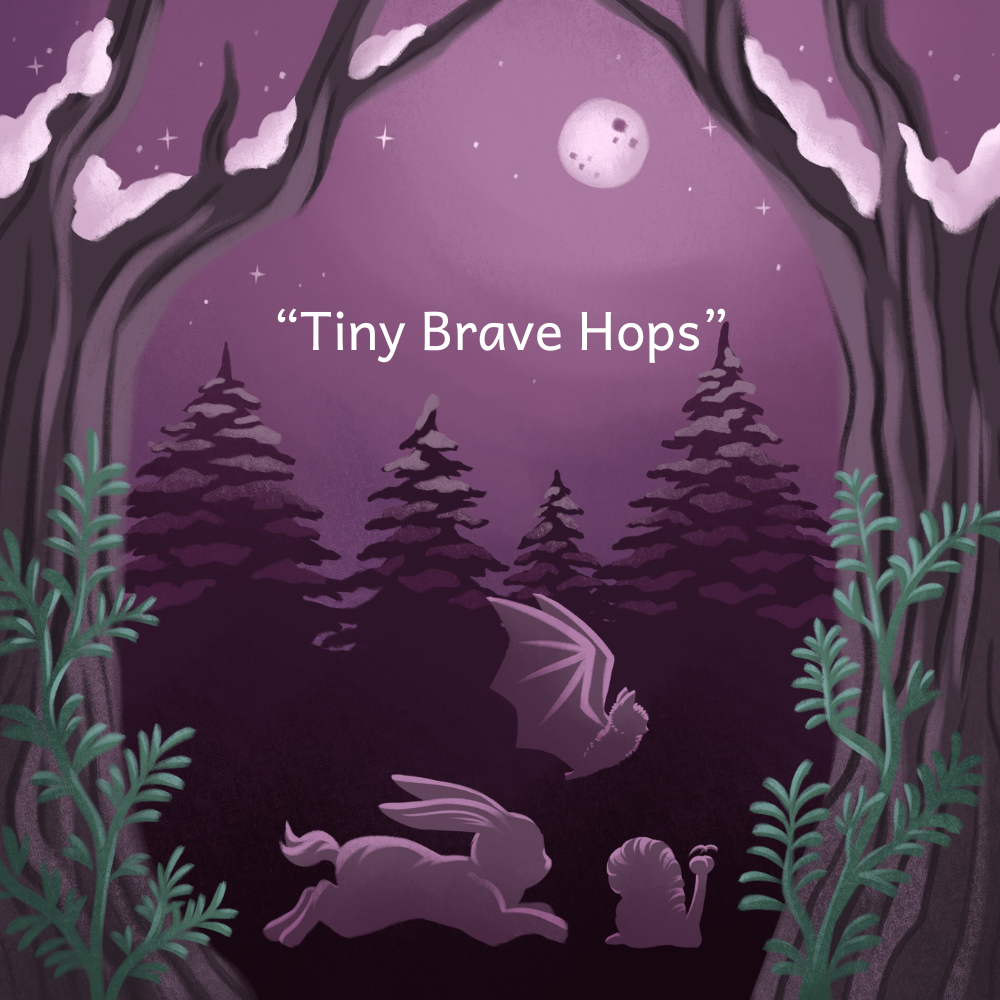
A brave story often begins before the brave act. Here, Yabbit, Snail, and Bat set out to find Wolf, showing children that courage does not always look loud. Sometimes it looks like moving forward together, even when the path still feels uncertain.
Why hesitant kids need a different kind of SEL book
Not every child who struggles is loud about it.
Some children melt down.
Some argue.
Some refuse.
Some suddenly have a stomachache.
Some go quiet and disappear inside the moment.
Hesitant kids are often misunderstood because their struggle can look like unwillingness when it is really overload. Adults see the delay, but not always the internal traffic jam underneath it.
That is why a strong SEL book for a hesitant child needs to do more than promote kindness or confidence in the abstract. It has to speak to the emotional mechanics of hesitation itself.
It has to help a child think:
“This feeling is real.”
“This does not mean something is wrong with me.”
“I do not have to do the whole thing at once.”
“I can start smaller than that.”
That is where the best books separate themselves from average ones.
What makes an SEL read-aloud actually helpful
In schools and homes, I think adults often overestimate inspiration and underestimate usefulness. A useful SEL read-aloud for hesitant kids usually does four things well.
It recognizes the child honestly.
The child needs to see a version of their own pause on the page.
It lowers shame.
The best books do not make hesitation look silly, weak, or dramatic. They make it understandable.
It offers repeatable language.
Good SEL books leave behind phrases adults can actually reuse.
It points toward action without rushing the child.
That is the hard balance. Not pressure. Not passivity. Guidance.
That is why I like books that help children move from a giant emotional blur toward one small, brave step. If you want the parent-side framework that pairs best with this kind of read-aloud, this is one of the strongest companion guides already live on your site:
https://www.yabbitrabbit.com/parent-resources/how-to-help-your-child-take-tiny-brave-hops
15 SEL books for hesitant kids that are actually useful
This is not a generic classroom list. These are books I would reach for when a child struggles with trying, entering, speaking up, joining in, risking mistakes, or moving forward before they feel perfectly ready.
1. The Rabbit in the Moon
If I were choosing one book for the hesitant child specifically, this is where I would begin.
And yes, I am including my own book transparently because it directly belongs in this conversation.
What makes The Rabbit in the Moon stand out is that it does not flatten bravery into a personality trait. It does not divide children into “brave kids” and “scared kids.” It understands a more emotionally honest reality: a child can want to move forward and still hesitate when the moment feels too big.
That is the daily emotional territory of many hesitant kids.
Yabbit is not a problem child. He is not a weak child. He is a child whose pause needs to be understood properly. That alone makes the book useful in ways many broader SEL titles are not. It gives teachers, counselors, and parents a cleaner lens on what hesitation actually is.
It is also especially strong because it turns courage into something small and usable. Not a speech. Not a personality makeover. A first move.
That is why it deserves to stand out on this list.
2. The Rabbit Listened
This is one of the best books for emotional accompaniment. Some hesitant kids cannot move until they feel emotionally joined first. This book understands that beautifully.
3. Jabari Jumps
A strong choice for children who want to do the thing and still keep backing away from the edge of it. It captures anticipatory hesitation with unusual accuracy.
4. The Thing Lou Couldn’t Do
Excellent for children whose hesitation is tangled up with embarrassment, uncertainty, or fear of not doing something well.
5. The Magical Yet
A strong process-based book for children who need help shifting from finality to growth. It is especially helpful when hesitation and perfectionism overlap.
6. After the Fall
A very good resilience read-aloud for children who hesitate not just before the first try, but before the next try after something already went badly.
7. Ruby Finds a Worry
A useful book when a child’s hesitation is driven by worry they cannot quite name. Making the feeling visible often lowers the temperature.
8. Wemberly Worried
Still one of the most useful books for children whose minds rush ahead of them, especially before school, social events, or unfamiliar routines.
9. What Do You Do With a Problem?
Helpful for children who mentally inflate the hard thing until the anticipation feels bigger than the actual event.
10. Giraffes Can’t Dance
This one stays valuable because many hesitant kids are not afraid of the task alone. They are afraid of doing it while being seen.
11. The Koala Who Could
A strong fit when hesitation shows up as resistance to change, routine disruption, or fear of the unfamiliar.
12. The Kissing Hand
Especially useful when hesitation is driven by separation distress. Teachers and counselors can use it as part of school-entry emotional support.
13. Llama Llama Misses Mama
A practical read-aloud for children whose hesitation spikes in classroom transitions, school drop-off, or new environments.
14. A Little SPOT of Anxiety
A more concrete feelings-based tool that works well for younger children who benefit from emotions being named clearly and visually.
15. The Day You Begin
An important book for children whose hesitation is social, identity-based, or tied to feeling different in a group.
Why The Rabbit in the Moon belongs near the top of this list
There are many good SEL books. There are fewer that truly understand hesitation. That distinction matters.
A broad SEL book may help children talk about feelings. That is worthwhile. But teachers, counselors, and parents often need something more specific for the child who is not simply emotional, but stuck at the threshold.
That is where The Rabbit in the Moon becomes unusually practical.
It helps adults see hesitation without labeling the child. It helps children recognize themselves without feeling reduced to a problem. And it turns bravery into a small, repeatable behavior instead of a giant demand.
That is why it fits this list so well. It is not simply an SEL book in the broadest sense. It is an SEL book for the exact child many adults struggle to understand correctly.
If you want the classroom-side companion piece already on your site, this is the strongest internal match: https://www.yabbitrabbit.com/parent-resources/best-picture-books-for-classroom
How teachers can use these books without turning storytime into a lecture
Teachers do not need a complicated discussion guide every time. In fact, hesitant kids often respond better when the adult does less, not more.
Read the book. Pause once or twice. Then ask one strong question:
“What was the hard part for the character?”
or
“What was the first brave step?”
That is enough. That question gives students a way to think about fear, hesitation, and action without making the conversation feel clinical. It also gives the class shared language that can travel into the week.
That is what good SEL instruction does. It moves from page to practice.
How counselors can use these books in small groups or one-to-one support
Counselors often need books that open a child up without cornering them. That is one reason picture books work so well.
A hesitant child may not want to talk directly about themselves at first. But they may be very willing to talk about Yabbit, Jabari, Ruby, or Lou. That bit of distance matters. It lowers defensiveness.
The strongest move is usually not overprocessing the book. It is using the story as a mirror.
“What felt familiar?”
“What made that moment hard?”
“What could the character say to themselves next time?”
That gives the child a safer doorway into their own experience.
How parents can use read-alouds to build real-life courage
Parents often make one understandable mistake: they read the book and stop there. The better move is to let the book become family language.
Read it when the child is calm. Read it again later. Then, when the real moment appears, borrow the story.
“This feels like a Yabbit moment.”
“What is the tiny brave part?”
“You do not have to do all of it. What is the first move?”
That is how books become tools.
And that is also how authority gets built with families and educators. Not by recommending books in the abstract, but by understanding what each book is good for and how it should actually be used.
The Rabbit in the Moon is a meaningful investment in your child’s emotional growth
If your child or student tends to hesitate before trying, freeze at the threshold, or need bravery made smaller and more reachable, The Rabbit in the Moon is the book on this list I would begin with first.
It was written for exactly that emotional territory.
It gives children a story that understands their pause, and it gives adults calmer, more useful language for helping them begin.
FAQs
What are the best SEL books for hesitant kids?
The best SEL books for hesitant kids are the ones that help children recognize fear, reduce shame around hesitation, and imagine one manageable next step. Books like The Rabbit in the Moon, Jabari Jumps, The Thing Lou Couldn’t Do, and The Rabbit Listened are especially strong in that lane.
What makes a picture book good for counselors and school support staff?
A good counselor picture book gives children emotional distance, lowers defensiveness, and opens conversation without making them feel singled out. The best ones are specific enough to feel real, but gentle enough to feel safe.
Are SEL books actually useful for hesitant children?
Yes. When chosen well, SEL books help hesitant children name what they are feeling, recognize that their hesitation is understandable, and borrow better language for brave first steps.
What should teachers ask after reading an SEL book?
Usually one or two questions is enough. “What was the character feeling?” and “What was the first brave step?” are two of the most useful questions because they connect emotional awareness to action.
How is The Rabbit in the Moon different from broader SEL books?
Its strength is specificity. It focuses on the emotional space between fear and action, which makes it especially useful for children who hesitate before trying rather than children who simply need a general feelings book.
Can parents use classroom-style SEL books at home?
Absolutely. Many of the best SEL books work in both settings. At home, they help parents create calm language and emotional recognition. At school, they create shared language and discussion.
What if a child’s hesitation is intense or interfering with daily life?
Books can be very helpful tools, but if hesitation or anxiety is affecting sleep, school attendance, eating, friendships, or daily functioning, it is wise to talk with a pediatrician or qualified mental health professional.