When parents go looking for picture books about courage for kids, there is usually a real child behind the search.
Maybe your child wants to join the soccer team but freezes when practice begins. Maybe they love the idea of swimming until their toes reach the edge of the pool. They may be afraid to make a mistake in front of classmates, walk into a birthday party where everyone else already seems comfortable, sleep without you nearby, speak up when something feels wrong, or try again after the first attempt went badly.
Adults often picture courage after something impressive has happened. Childhood courage usually starts much earlier.
It can happen in the pause before entering the classroom. The first mark on a blank sheet of paper. The decision to climb one rung higher. The moment a child admits, “I’m nervous,” and stays anyway.
That is the kind of courage I look for in picture books.
The strongest books do not divide children into brave kids and scared kids. They give fear, hesitation, embarrassment, uncertainty, frustration, and self-doubt somewhere to exist without letting those feelings decide how the story has to end.
A child does not have to become fearless. Sometimes courage is simply the next small move.
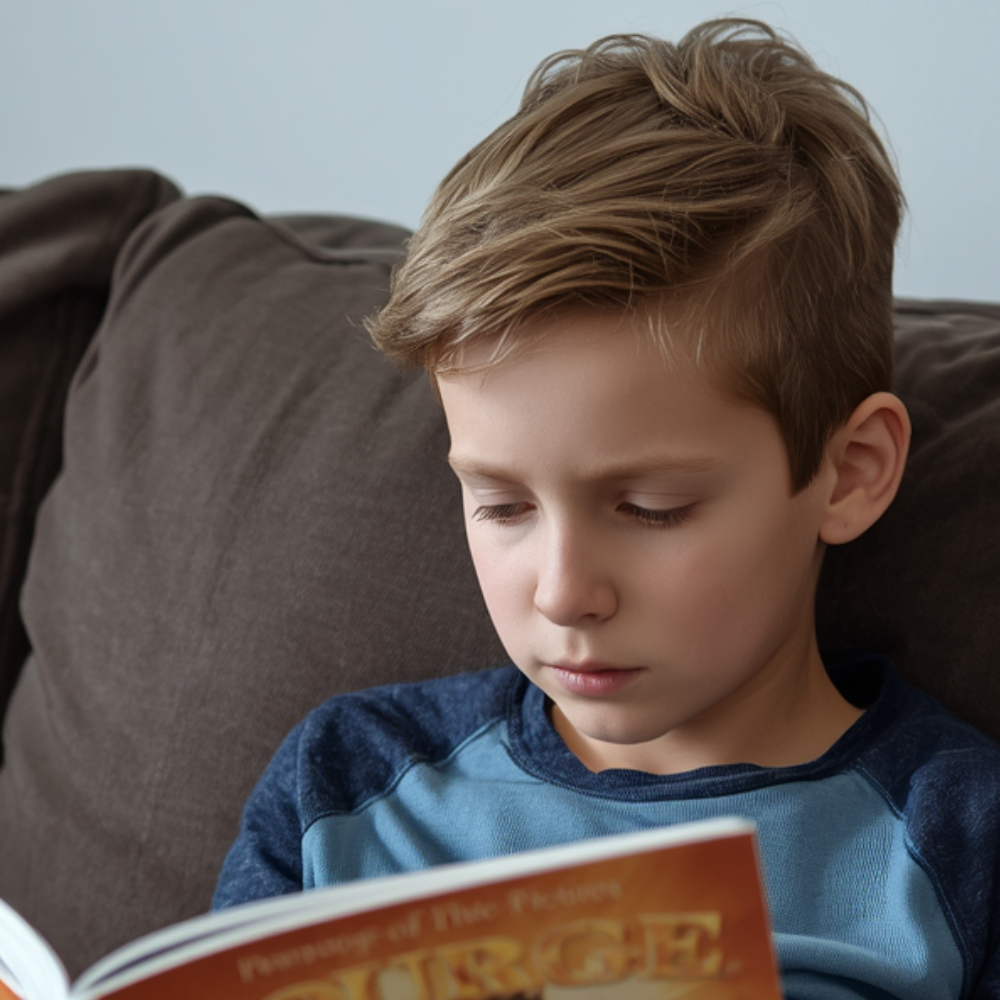
Picture books about courage for kids can give families a gentler way to talk about fear, hesitation, mistakes, and the first small step forward.
Quick Answer: What Are the Best Picture Books About Courage for Kids?
The best picture book about courage depends on where your child gets stuck.
For a child who hesitates before beginning, The Rabbit in the Moon, Jabari Jumps, The Thing Lou Couldn’t Do, and The Dot are especially useful. For children who struggle after mistakes or setbacks, try After the Fall, The Most Magnificent Thing, or The Magical Yet. For social courage and belonging, The Day You Begin and The Proudest Blue offer a different kind of bravery. The Smallest Girl in the Smallest Grade helps open a conversation about speaking up for someone else.
That distinction matters because courage is not one skill.
One child may race down a giant slide and then refuse to answer a question in class. Another may happily perform onstage but panic when asked to spend the night at a friend’s house. A child can be confident in one part of life and deeply hesitant in another.
Rather than asking, “Is my child brave?” I think a more useful question is: Where does my child need courage right now?
What Courage Actually Looks Like in Childhood
Courage gets distorted when we make it too heroic.
For a young child, courage may mean walking through the preschool door after clinging to your leg. For another, it is tasting something unfamiliar, admitting they broke something, asking another child to play, trying a new sport, reading one sentence aloud, or returning to the bicycle after a fall.
Some of these actions look tiny from the outside. They may not feel tiny from inside the child.
That is why I prefer thinking of courage as something children practice, rather than something they either possess or lack. A child can feel nervous and still act courageously. They can ask for help and still be brave. They can watch first. They can need someone beside them. They can try one part instead of the whole thing.
They can even decide that today’s brave step is smaller than the adult hoped. None of that makes the courage less real.
This is also where courage differs from confidence. Confidence often sounds like, “I think I can do this.” Courage becomes especially important when the child is not so sure.
Sometimes courage has to go first, and confidence catches up later.
What Makes a Picture Book About Courage Actually Helpful?
The first requirement is easy to overlook: it has to be a good story.
Children are remarkably good at detecting a lesson wearing a costume. If every character, joke, conflict, and plot turn exists only to deliver an adult-approved message about bravery, the book may be admirable without ever becoming a book a child loves.
After story comes emotional honesty.
I look for books that allow a character to be afraid without making fear embarrassing. I look for hesitation that makes sense, adults or friends who support without taking over, mistakes that do not become catastrophes, and courage that happens through actions a real child can imagine.
I am especially wary of the instant transformation: three pages of fear, one pep talk, and suddenly the character charges forward without another doubt. Real children are usually more complicated.
They approach. Retreat. Watch. Ask questions. Bargain. Try one piece. Decide they need another minute. Come back later.
There is courage in that process too.
15 Picture Books About Courage for Kids
These books do not all teach the same version of bravery. That is intentional. A useful courage bookshelf should make room for trying, recovering, persisting, belonging, speaking up, accepting help, facing change, and beginning before you feel completely ready.
1. The Rabbit in the Moon by KD Schnee
Best for: hesitation, fear of starting, trying something that suddenly feels too big
I am putting my own book first, and I want to be transparent about why.
The Rabbit in the Moon was not written to solve every kind of childhood fear. It was written for a very specific emotional moment: the child who wants to do something until the moment of actually beginning arrives.
That is Yabbit’s territory.
Yabbit agrees to help Snail, but once the size of the journey becomes real, hesitation takes over. He worries. He stalls. The challenge feels much larger from the place where he has not yet started.
Many children know that feeling immediately. Soccer sounded exciting at registration. The birthday party sounded fun yesterday. Sleeping in the new bed seemed like a wonderful idea at lunchtime. Then the moment arrived.
Yabbit does not become a different rabbit in order to move forward. Snail’s persistence and support help him find a way to begin.
That is the central idea behind the story:
Courage is not being fearless. It is taking one small, brave hop forward.
2. Courage by Bernard Waber
Best for: understanding that bravery can happen in ordinary life
Some courage books focus on one frightening situation. Bernard Waber takes a wider view.
Courage helps children notice that bravery is not reserved for emergencies, heroes, or enormous challenges. It can appear in ordinary decisions and small uncomfortable moments.
That makes the book particularly useful for conversation because parents can begin noticing courage after the story is over. Instead of asking a child to prove that they are “brave,” you can point to something they did and say, “That took courage.”
One turns bravery into a personality test. The other helps a child recognize a capacity they can continue practicing.
3. Jabari Jumps by Gaia Cornwall
Best for: wanting to try something and becoming afraid when the moment arrives
Jabari has decided he is ready to jump from the diving board. Then he sees the ladder, the height, the water below, and the distance between deciding and doing becomes very real.
That emotional timing is why Jabari Jumps works so well.
His father stays close without humiliating him or turning the jump into a test of character. Jabari gets space to feel what he feels while still moving toward the thing he wants to do.
Children who genuinely want to participate but become nervous at the last moment may recognize themselves here.
Wanting to do something and being afraid to do it can exist at exactly the same time.
4. The Thing Lou Couldn’t Do by Ashley Spires
Best for: children who avoid something because they may not be good at it
Lou is adventurous until her friends decide to climb a tree.
She has never climbed one before.
Suddenly, Lou develops an impressive collection of reasons why climbing the tree may not be necessary after all. The humor works because the avoidance is recognizable. Children, and adults for that matter, can become excellent attorneys for the defense when something threatens to expose what we cannot yet do.
This is a useful picture book for children who protect themselves from failure by refusing to begin.
It gently opens the space between “I can’t do this” and “I have never done this before.”
Those are very different sentences.
5. Brave Irene by William Steig
Best for: persistence when the hard part comes after you have already started
Not all courage happens at the beginning.
In Brave Irene, Irene sets out through terrible weather to deliver a gown while her mother is ill. The journey demands determination long after the first step has been taken.
That makes Irene useful on a courage bookshelf because children also need stories about continuing.
Starting the hike takes one kind of bravery. Continuing after you are cold, tired, frustrated, or wishing you had stayed home asks for another.
Persistence is not always glamorous. Sometimes it is courage after the novelty has worn off.
6. After the Fall by Dan Santat
Best for: trying again after something frightening or painful has already happened
Many books about bravery build toward a frightening event.
After the Fall begins afterward.
Humpty Dumpty has already fallen. He has been repaired, but the experience changed how he feels about heights. That gives children a way to explore something adults sometimes underestimate: the event may be over while the fear remains.
A fall from a bicycle, a difficult performance, an embarrassing mistake, a bad first day, or a frightening experience can travel forward into the next attempt.
Courage after something has gone wrong is different from courage before anything has happened.
This book understands that beautifully.
7. The Most Magnificent Thing by Ashley Spires
Best for: perfectionism, frustration, and staying with something that is not working yet
Some children begin easily. The difficult part arrives when reality fails to match the picture in their head.
That is the emotional territory of The Most Magnificent Thing.
The young inventor knows what she wants to create, but making it proves far messier and more frustrating than imagining it. Anyone who has watched a child tear up a drawing, abandon a Lego creation, or declare a project “ruined” after one mistake will recognize the gap.
The courage here is not dramatic.
It is staying in relationship with something imperfect long enough to see what might happen next.
8. The Dot by Peter H. Reynolds
Best for: fear of starting and the belief that “I’m not good at this”
A blank page can be enormous when a child believes whatever they put on it will reveal whether they are talented.
Vashti says she cannot draw. Her teacher does not answer with a grand speech about confidence. She invites Vashti to make a mark.
That small beginning is the book’s great strength.
Adults often assume children need confidence before they act. The Dot quietly suggests that sometimes the order runs the other way. The child acts first. Confidence develops because something has finally begun.
For a hesitant child, one mark can be more useful than ten minutes of encouragement.
9. The Magical Yet by Angela DiTerlizzi, illustrated by Lorena Alvarez Gómez
Best for: “I can’t,” new skills, and frustration with not being good immediately
“Yet” is a tiny word doing serious work.
There is a meaningful difference between “I can’t do this” and “I can’t do this yet.” The second statement does not guarantee success or pretend the task is easy. It simply refuses to declare the story finished too early.
Children spend much of childhood being beginners. They learn to read, write, swim, ride, draw, catch, climb, speak in groups, solve problems, make friends, and manage emotions while being understandably imperfect at nearly all of it first.
Learning requires some tolerance for not being good yet.
That tolerance takes courage.
10. The Day You Begin by Jacqueline Woodson, illustrated by Rafael López
Best for: belonging, entering unfamiliar groups, and feeling different
There is courage in climbing a diving board.
There is another kind in walking into a room where you are convinced everyone else belongs more naturally than you do.
The Day You Begin understands that quieter social courage.
Children may feel different because of language, culture, family, food, appearance, experience, ability, temperament, or simply the mysterious childhood conviction that everybody else received instructions they somehow missed.
The story does not demand instant confidence. Connection grows through the smaller acts of sharing, listening, and allowing another person to know you.
For children facing a new classroom, group, or social environment, that can be powerful.
11. The Proudest Blue by Ibtihaj Muhammad with S. K. Ali, illustrated by Hatem Aly
Best for: identity, dignity, and staying true to something meaningful when others react badly
A courage bookshelf should not treat every act of bravery as conquering a private fear.
Sometimes courage is social.
Sometimes another person is the source of the difficulty.
In The Proudest Blue, Faizah watches her older sister Asiya wear her hijab to school and sees both its beauty and the reactions it brings from others.
The story expands the conversation beyond “being brave enough to try.” Children also need stories about holding onto identity, dignity, family, values, and self-respect when fitting in would be easier.
That is a different form of courage, and an important one.
12. The Koala Who Could by Rachel Bright, illustrated by Jim Field
Best for: change, unfamiliar situations, and children who prefer things to stay predictable
Kevin likes his life exactly where it is.
Many children will understand.
When adults encounter resistance to change, we can become so focused on the resistance that we miss what predictability provides. Familiar routines feel safer because the child already knows the rules.
The Koala Who Could gives that feeling some respect before asking its character to move.
That order matters. Children are far more open to a story about change when the story does not spend its first half making them feel silly for wanting things to stay familiar.
13. The Smallest Girl in the Smallest Grade by Justin Roberts, illustrated by Christian Robinson
Best for: speaking up, noticing unfairness, and moral courage
Courage is not always about doing something that frightens us personally.
Sometimes it is about noticing what is happening to someone else and deciding not to look away.
Sally sees teasing, pushing, and everyday unkindness that others overlook. Eventually she speaks up.
That makes this book valuable because children need examples of moral courage too. Standing up for another person carries a different risk from climbing a ladder or entering a classroom. The danger may be social: Will people listen? Will they laugh? Will I stand out?
The bravest person in a room is not always the loudest or the biggest.
Sometimes it is the person who noticed.
14. I Am Courage by Susan Verde, illustrated by Peter H. Reynolds
Best for: naming different forms of courage in clear, child-friendly language
Most books on this list allow children to discover courage through a character and plot.
I Am Courage takes a more direct approach.
It explores trying, asking for help, getting back up, speaking up, and moving forward, giving children explicit language for the idea itself.
I would use it alongside narrative books rather than instead of them. Stories let children watch courage happen to somebody else before anyone asks them to apply the lesson personally. A more direct book can then help them put words around what they have already seen.
Both approaches have value.
15. The Rabbit Listened by Cori Doerrfeld
Best for: emotional safety, accepting support, and understanding that bravery does not always mean immediate action
This may be the least obvious courage book on the list.
That is exactly why I want it here.
Taylor experiences something painful, and one animal after another arrives with an idea about what should happen next. The rabbit listens.
Adults understandably praise children when they bounce back, try again, push through, or get moving. Those actions can require courage. But so can admitting something hurt. Crying. Asking someone to stay. Allowing yourself not to know what comes next.
Support is not the opposite of courage.
Needing another person nearby does not cancel bravery.
If our definition of courage only counts the moments when a child moves quickly past difficult feelings, the definition is too small.
[INSERT IMAGE HERE]
Image ALT text: Selection of children’s picture books about courage, bravery, trying new things, mistakes, belonging, and persistence.
SEO-forward image caption: The best courage books for children cover more than fear. They can explore beginning, failure, change, belonging, persistence, speaking up, and accepting support.
Which Courage Book Is Right for Your Child?
Instead of choosing the book with the word brave on the cover, begin with the moment where your child tends to get stuck.
If beginning is the hardest part:
Start with The Rabbit in the Moon, Jabari Jumps, The Thing Lou Couldn’t Do, or The Dot.
If mistakes or setbacks shut everything down:
Try After the Fall, The Most Magnificent Thing, or The Magical Yet.
If your child struggles with change:
Try The Koala Who Could.
If the challenge is belonging or entering a group:
Try The Day You Begin.
If courage involves identity or staying true to yourself:
Try The Proudest Blue.
If your child needs help speaking up for someone else:
Try The Smallest Girl in the Smallest Grade.
If your child needs comfort and emotional presence before they can move:
Try The Rabbit Listened.
The closer the emotional problem in the story comes to the child’s actual experience, the less explaining you usually need afterward. That is often a very good sign.
Why The Rabbit in the Moon Approaches Courage Differently
I do not think The Rabbit in the Moon is the right courage book for every child in every situation. That is worth saying clearly.
If a child is experiencing bullying, I would reach first for a book that directly explores speaking up, safety, and peer relationships. If a child is struggling with cultural identity or belonging, books such as The Proudest Blue or The Day You Begin may meet that particular experience more directly. If a child is scared because something already went badly, After the Fall may be the better starting point.
My book does not need to win every category to have a strong reason to exist. I know where Yabbit belongs. He belongs with the child who wants to move forward but cannot quite get started.
That child may say, “I can’t.” They may say, “Maybe tomorrow.” They may suddenly decide they never wanted to do the activity in the first place.
They may bargain with impressive creativity. Or they may simply freeze.
From the outside, the adult sees a small first step. From inside the child, that first step can suddenly feel as large as the moon.
Yabbit understands that feeling because he experiences hesitation from the inside. Snail brings persistence and steadiness, but he does not replace Yabbit as the hero of his own growth. Yabbit still has to move.
He just does not have to become fearless first.
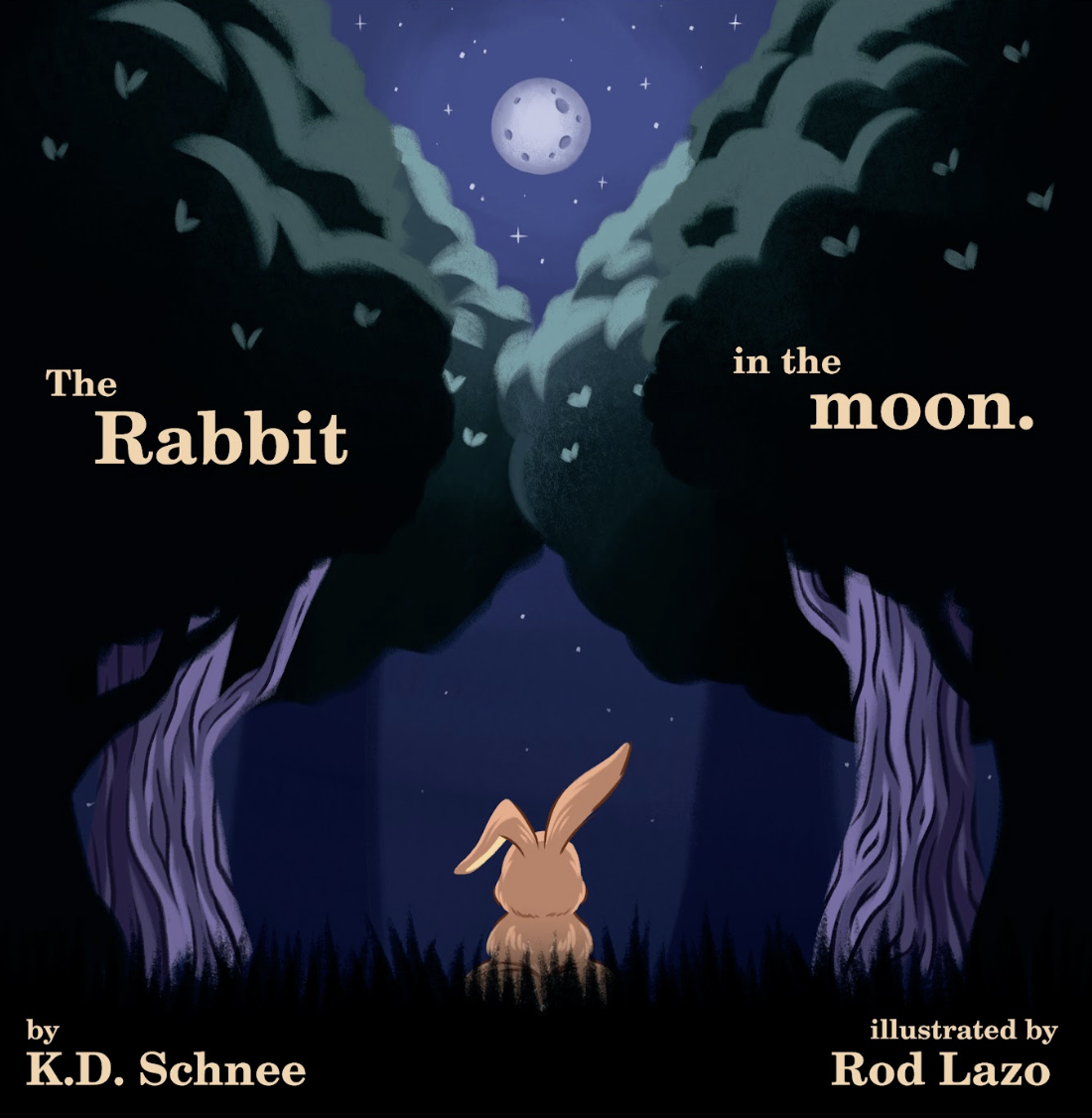
In The Rabbit in the Moon, Yabbit represents the child who wants to try but hesitates at the beginning, while Snail offers steady support along the journey.
How to Read a Courage Book Without Turning Storytime Into a Lesson
When adults buy a picture book because it addresses something their child is struggling with, there is a temptation to squeeze every possible lesson out of it. Children notice.
You do not need to stop every few pages and ask how the character is feeling. You do not need to finish Jabari Jumps the night before swim class and announce that Jabari is obviously a metaphor for your child. Let the book be a story first.
Let your child laugh at something you thought was serious. Let them study the illustrations. Let them interrupt. Let them decide their favorite character is the least educational one. Let them disagree with you.
A book has a better chance of becoming emotionally useful if the child is allowed to own part of the experience. Afterward, one good question is often enough: “Where do you think the brave part was?” That question leaves room for more than one answer.
Perhaps the brave part was climbing the ladder. Perhaps it was admitting fear. Perhaps it was asking for help. Perhaps it was coming back after a mistake. Perhaps it was making the first mark.
Later, when a similar moment appears in real life, the story gives your family shorthand.
“This feels a little like Jabari’s ladder.”
Or:
“What would one tiny brave hop look like here?”
For the full parent framework behind that language, read How to Help Your Child Take Tiny Brave Hops: https://www.yabbitrabbit.com/parent-resources/how-to-help-your-child-take-tiny-brave-hops
That is when a courage book becomes more than a story about somebody else. It becomes language your family can carry with you.
What to Say When Your Child Is Scared to Try
“Be brave” is well intentioned, but it gives a child very little information about what to do next. A child who is standing at the edge of something frightening usually does not need a larger pep talk. They need the task translated into something manageable.
Try:
“You don’t have to do the whole thing. What is one small part?”
“It makes sense that this feels new. We can start smaller.”
“You can watch first.”
“You can be nervous and still take one step.”
“Do you want me to stay beside you while you begin?”
“I noticed that you tried even though you weren’t sure.”
These phrases do not pretend fear is absent. They also do not hand fear complete control of the decision. That middle ground matters.
If this pattern shows up often in your family, the companion guide How to Help a Child Who Refuses to Try New Things goes deeper into refusal, avoidance, “I can’t,” and how to make the first step smaller.
Why Small Courage Matters
Adults measure the size of an action from the outside. Children experience its size from the inside.
Walking ten feet into a classroom may not look impressive. Neither does putting one foot in the swimming pool, raising one hand, staying at the birthday party for ten more minutes, tasting one bite, or standing close enough to watch other children play.
But courage cannot be measured only in feet, minutes, or visible accomplishments. Sometimes a very small action required a very large internal effort.
That is the thinking behind the Tiny Brave Hop Method. When the whole challenge feels overwhelming, the goal is not to convince a child that the challenge is actually tiny. The goal is to find a first step that truly is.
The pool may still feel scary. The classroom may still feel unfamiliar. The mistake may still be embarrassing.
The child simply discovers that they do not have to solve the entire problem in one move. That experience can become evidence:
I started.
I stayed.
I tried something.
I can do the next part when I’m ready.
That is how courage begins to turn into confidence.
When Fear Needs More Than a Picture Book
Picture books can give children language, recognition, reassurance, and a way to rehearse difficult experiences through story. They are not a substitute for professional help when fear or anxiety is significantly interfering with a child’s everyday life.
Occasional childhood fears are common, and children often need reassurance and support while they learn how to handle unfamiliar or frightening situations. Adults should take those fears seriously without ridiculing the child or simply pressuring them to “be brave.”
If fear is persistent, intense, or regularly interfering with school, sleep, friendships, family routines, or ordinary activities, talk with your child’s pediatrician or another qualified professional.
Authoritative external resource:
American Academy of Pediatrics / HealthyChildren.org, Fears & Phobias in Children: How Parents Can Help
Buy The Rabbit in the Moon
If your child wants to try but sometimes freezes when the moment actually arrives, The Rabbit in the Moon was written with that child in mind. Yabbit is not fearless, and I never wanted him to be.
He hesitates. He worries. He feels the size of the journey before he has taken the first step. With Snail beside him, he discovers that courage does not require becoming the boldest rabbit in the forest.
It requires a beginning. For parents, grandparents, teachers, and caregivers, the story leaves behind language that can travel into everyday life: What is the tiny brave hop?
Not the entire journey. Just the part that gets us moving.
FAQs About Picture Books About Courage for Kids
What are the best picture books about courage for kids?
The best courage book depends on the challenge a child is facing. The Rabbit in the Moon and Jabari Jumps are strong choices for children who hesitate before beginning. After the Fall helps children think about trying again after something went wrong. The Dot and The Most Magnificent Thing are especially useful for fear of mistakes or not being good enough, while The Day You Begin explores social courage and belonging.
How do picture books help children develop courage?
Picture books let children watch another character encounter fear, hesitation, mistakes, uncertainty, or social pressure from a safe distance. A child can see what helped the character, notice the small action that changed the situation, and borrow that language later when a similar moment happens in real life.
Does being courageous mean a child is not afraid?
No. Fear and courage can exist together. A child can be nervous about entering a classroom, jumping into a pool, reading aloud, meeting someone new, or trying something unfamiliar and still take a courageous step. Courage is often most visible precisely because something feels difficult.
What is the difference between courage and confidence for children?
Confidence is often the belief that you can handle something. Courage becomes especially useful when that certainty is missing. A child may have little confidence about a new experience and still be willing to take one small step toward it. Repeated experiences of doing that can gradually help confidence grow.
Which picture books are best for a child who is afraid to try new things?
For fear of beginning, start with The Rabbit in the Moon, Jabari Jumps, The Thing Lou Couldn’t Do, or The Dot. These books all understand, in different ways, that the first step can be harder than the activity itself.
Should I read a courage book right before a scary event?
Sometimes, but it is often better to introduce emotionally useful books during a calm moment first. That lets the child enjoy the story without feeling that it has been assigned because something is “wrong.” Later, when the difficult moment arrives, you can gently bring back familiar language or a character without turning the book into pressure.
Final Thought
I do not think the goal is to raise children who are never afraid. Childhood contains too many firsts for that: first classrooms, first friendships, first mistakes, first performances, first nights away, first failures, first moments of realizing that other people are watching.
Fear will sometimes arrive. Hesitation will too. The more useful question is what a child learns can happen next.
A good picture book can show them that they are allowed to pause. They are allowed to need help. They are allowed to begin imperfectly. They are allowed to take a step that looks small to everybody else.
And they do not have to wait until they feel fearless. Sometimes courage begins exactly where they are, with one tiny brave hop forward.