What to Do First When Your Child Refuses to Try Something New
If your child refuses to try new things, the first move is not more pressure. It is making the first step feel smaller and safer.
A child who says “no,” hides behind you, cries before an activity, or says “I can’t” may not be trying to be difficult. They may be overwhelmed by uncertainty, afraid of making a mistake, or unsure what will happen next.
One tiny brave hop to try today: Pick one new thing and shrink it. Instead of asking your child to join, perform, finish, or succeed, ask for one tiny step: watch for 30 seconds, touch the object once, stand closer, try for five seconds, or choose where to begin.
That small beginning matters. For hesitant children, bravery often starts before anyone else can see it.
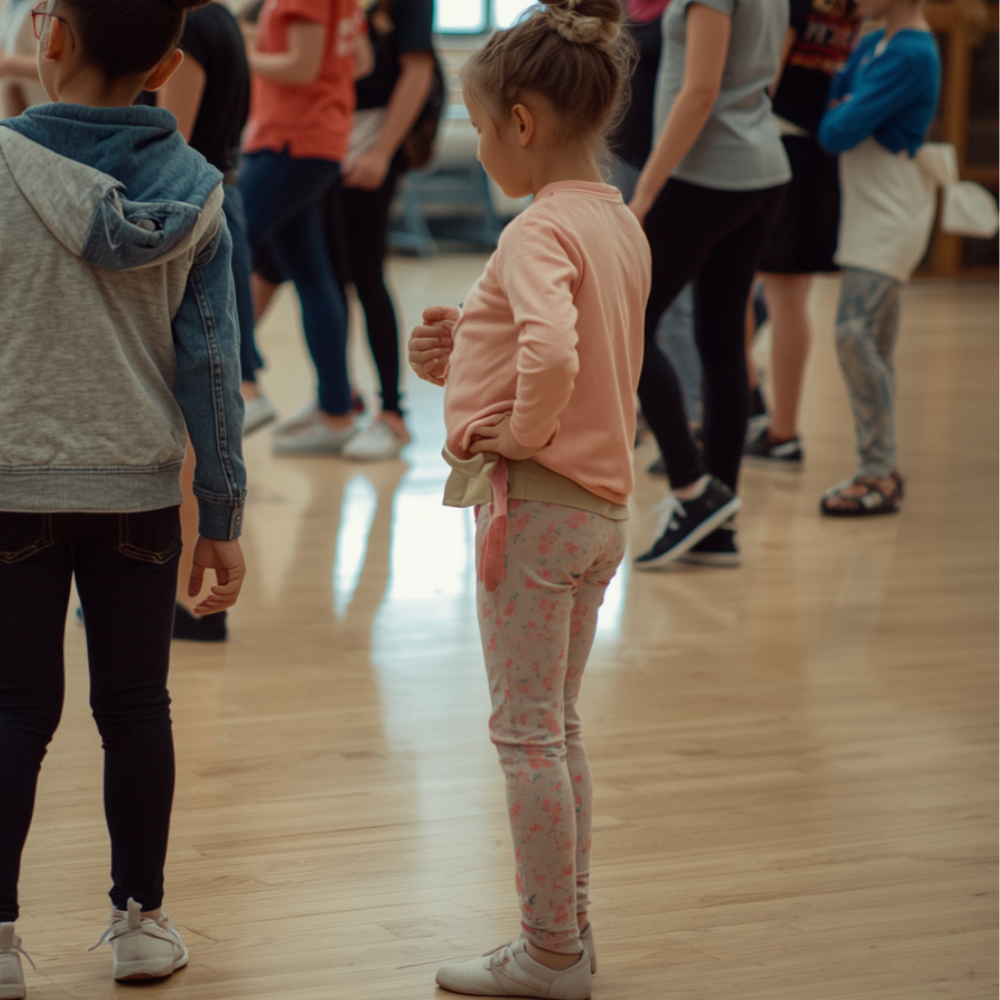
Sometimes the first brave hop is not joining right away. Sometimes it is moving a little closer.
Quick Answer
When a child refuses to try something new, treat the refusal as a signal, not a character flaw. Stay calm, name what may feel hard, shrink the task into one tiny brave hop, and praise the attempt instead of the outcome.
A child does not always need a bigger push. Often, they need a smaller doorway.
Why Some Children Refuse to Try New Things
Many children refuse new things even when part of them wants to participate. They stand at the edge of the playground. They watch the group instead of joining. They stall, negotiate, cry, cling, or say “I can’t” before they have tried.
To an adult, this can look like stubbornness. To the child, it may feel like protection.
Common reasons include:
Fear of making a mistake
Fear of being watched or judged
Not knowing what will happen next
Feeling overwhelmed by noise, crowds, or new surroundings
Perfectionism: “If I cannot do it right, I do not want to do it”
A past experience that felt embarrassing or too hard
A big imagination that jumps straight to the worst-case scenario
The refusal is often the visible part. Underneath it is the feeling: This feels too big.
That is why “just try it” often does not work. The child is not standing in front of a simple task. They are standing in front of a mountain their body has already decided is dangerous.
What Refusal Can Look Like Before the Word “No”
Refusal often begins before your child says anything.
You may notice:
Stalling: “One more minute”
Repeated bathroom trips
Asking the same question over and over
Clinging to your leg
Watching other children but not moving closer
Getting irritable right before the activity
Looking tired, frozen, or blank
Saying “I can’t” before trying
These early signs are important because they give you a chance to help before your child is fully overwhelmed.
Once a child is flooded, logic rarely lands. A long explanation can feel like more noise. A calm, short sentence works better.
Try:
“This feels new. We can make the first step smaller.”
That sentence does two jobs at once. It names the problem and offers a path forward.
What Not to Say When a Child Refuses
Most parents mean well. But some common responses accidentally add more pressure.
Try to avoid:
“You’ll be fine.”
“Just do it.”
“There’s nothing to be scared of.”
“Look, everyone else is doing it.”
“You’re being shy.”
“Why are you making this so hard?”
“If you don’t try, we’re leaving.”
A child who already feels unsafe may hear these phrases as: My fear is wrong, and now I am alone with it.
That does not mean you let avoidance run the house. It means you change the order.
First: safety.
Then: one small step.
Then: confidence.
What to Say Instead
Here are better phrases to keep in your pocket.
When your child freezes:
“This feels big right now. Let’s find one small way to begin.”
When your child says, “I can’t”:
“You do not have to do the whole thing. Let’s try one tiny brave hop.”
When your child is afraid of being watched:
“We can watch first. Then you can decide where to stand.”
When your child wants to quit immediately:
“You can stop after five seconds. First, let’s practice starting.”
When your child makes a mistake:
“I saw you try even though it felt hard. That counts.”
These phrases work because they do not argue with the fear. They give the fear somewhere smaller to go.
The Tiny Brave Hop Method for New Things
The Tiny Brave Hop Method is simple: make the first step small enough that your child can begin without feeling swallowed by the whole task.
You can learn more about the method here: https://www.yabbitrabbit.com/parent-resources/how-to-help-your-child-take-tiny-brave-hops
Here is how to use it when your child refuses to try something new.
1. Notice the freeze
Before correcting the behavior, notice the hesitation.
Say:
“This feels new.”
“Your body looks unsure.”
“You are watching first.”
This helps your child feel seen without being labeled.
Avoid turning the moment into an identity:
“You’re shy.”
“You’re dramatic.”
“You always do this.”
The goal is to name the experience, not define the child.
2. Shrink the task
A new thing may feel enormous because your child thinks they have to do the whole thing right away.
Shrink it.
Instead of:
“Go play with them.”
Try:
“Let’s stand near the game and watch one turn.”
Instead of:
“Try the class.”
Try:
“Let’s walk inside and look around for two minutes.”
Instead of:
“Say hi.”
Try:
“Wave while I stand next to you.”
A tiny brave hop should be specific, doable, and low-pressure.
3. Offer two acceptable choices
Choices restore a sense of control.
Try:
“Do you want to watch first or stand next to me?”
“Do you want to try now or in two minutes?”
“Do you want to hold my hand or stand beside me?”
“Do you want to touch it once or look at it first?”
The key is that both choices still move gently toward the new thing.
4. Stay beside them
Some children do not need a speech. They need your steady presence.
Lower your voice.
Get close to their level.
Use fewer words.
Let your calm do some of the work.
Try:
“I’m right here.”
“We can go slowly.”
“You do not have to be ready for the whole thing.”
The child borrows your steadiness before they can find their own.
5. Praise the attempt, not the result
This may be the most important part.
Do not wait for success to praise bravery.
Say:
“I saw you move closer.”
“You watched even though you felt nervous.”
“You tried for five seconds.”
“You started. That was brave.”
When children learn that trying counts, they are more willing to try again.
Tiny Brave Hop Examples for Real Life
At the playground:
Instead of “Go play,” try “Let’s stand near the slide and watch one child go down.”
At sports practice:
Instead of “Get out there,” try “Let’s touch the ball once, then take a break.”
At a birthday party:
Instead of “Say hi to everyone,” try “Let’s wave to one person from here.”
At school drop-off:
Instead of “You’re fine,” try “Let’s walk to the door together and take one breath.”
At bedtime:
Instead of “There’s nothing to worry about,” try “Let’s name the worry, then choose one brave bedtime step.”
The pattern is always the same: do not demand the whole mountain. Find the first foothold.
How Picture Books Can Help Hesitant Children
Picture books give children emotional distance. A child may not be ready to say, “I am scared to try,” but they can notice when a character feels unsure.
That is why stories can be powerful for hesitant kids. They let children practice bravery through someone else first.
After reading, ask simple questions:
“Where did the character feel unsure?”
“What helped them take the next step?”
“Did they have to feel ready before they started?”
“What tiny brave hop could we try tomorrow?”
For more read-aloud ideas, you can also explore: https://www.yabbitrabbit.com/parent-resources/picture-books-about-overcoming-fear-first-brave-step
How The Rabbit in the Moon Helps
The Rabbit in the Moon was written for children who pause before they begin.
Yabbit the Rabbit is not fearless. He worries. He hesitates. He feels the size of the task before him. That matters because many children do not see themselves in characters who leap instantly into action.
Snail brings a different kind of strength. He is persistent, determined, and steady. He does not erase Yabbit’s hesitation. He helps balance it.
Together, Yabbit and Snail show children that courage does not have to look loud. It can begin with one tiny brave hop.
For a child who refuses to try new things, that message is deeply useful: You do not have to become fearless first. You can begin small.
The Rabbit in the Moon gives families a shared language for those moments when a child is stuck at the edge of something new and needs help finding the first step.
When to Push and When to Pause
Parents often wonder: Am I helping my child, or am I letting avoidance win?
The answer usually lives in the middle. You do not need to force the whole activity. You also do not need to remove every challenge.
Instead, ask:
Is my child overwhelmed or simply uncertain?
Can I make the first step smaller?
Can I stay nearby without taking over?
Can we practice this in a lower-pressure way?
Did my child move even one inch toward the new thing?
Progress may look tiny from the outside. But for a hesitant child, tiny progress is not tiny. It is the doorway.
FAQs
Is it normal for children to refuse to try new things?
Yes. Many young children hesitate with new activities, unfamiliar people, transitions, and situations where they might make a mistake. The goal is not to shame the refusal. The goal is to help the child feel safe enough to begin.
Should I force my child to try?
Forcing can backfire if the child already feels overwhelmed. A better first step is to shrink the task. Ask for one tiny brave hop, such as watching, standing closer, touching the object, or trying briefly.
What does “I can’t” really mean?
Sometimes “I can’t” means “I feel overwhelmed.” Treat it as information. Instead of arguing, try: “You do not have to do the whole thing. Let’s find one small way to start.”
How do I help without encouraging avoidance?
Validate the feeling while still inviting movement. You might say, “This feels hard, and we can still take one small step.” That keeps compassion and courage in the same room.
What if my child melts down every time we try something new?
Start earlier and smaller. Look for pre-meltdown signs like stalling, clinging, or irritability. Practice tiny steps in low-pressure settings before expecting your child to participate fully.
How long does it take for a child to get comfortable?
It depends on the child and the situation. Some children need repeated exposure before they feel safe. Watching first, standing nearby, and trying briefly can all be part of real progress.
When should I seek extra help?
If refusal or avoidance regularly interferes with school, sleep, friendships, family life, or everyday routines, it may be helpful to speak with a pediatrician, child therapist, or qualified professional.
Final Thought
A child who refuses to try new things is not always saying, “I do not want to.”
Often, they are saying, “This feels too big.”
Your job is not to make fear disappear in one perfect parenting moment. Your job is to help your child find the next small step.
One tiny brave hop. Then another. That is how beginning begins.