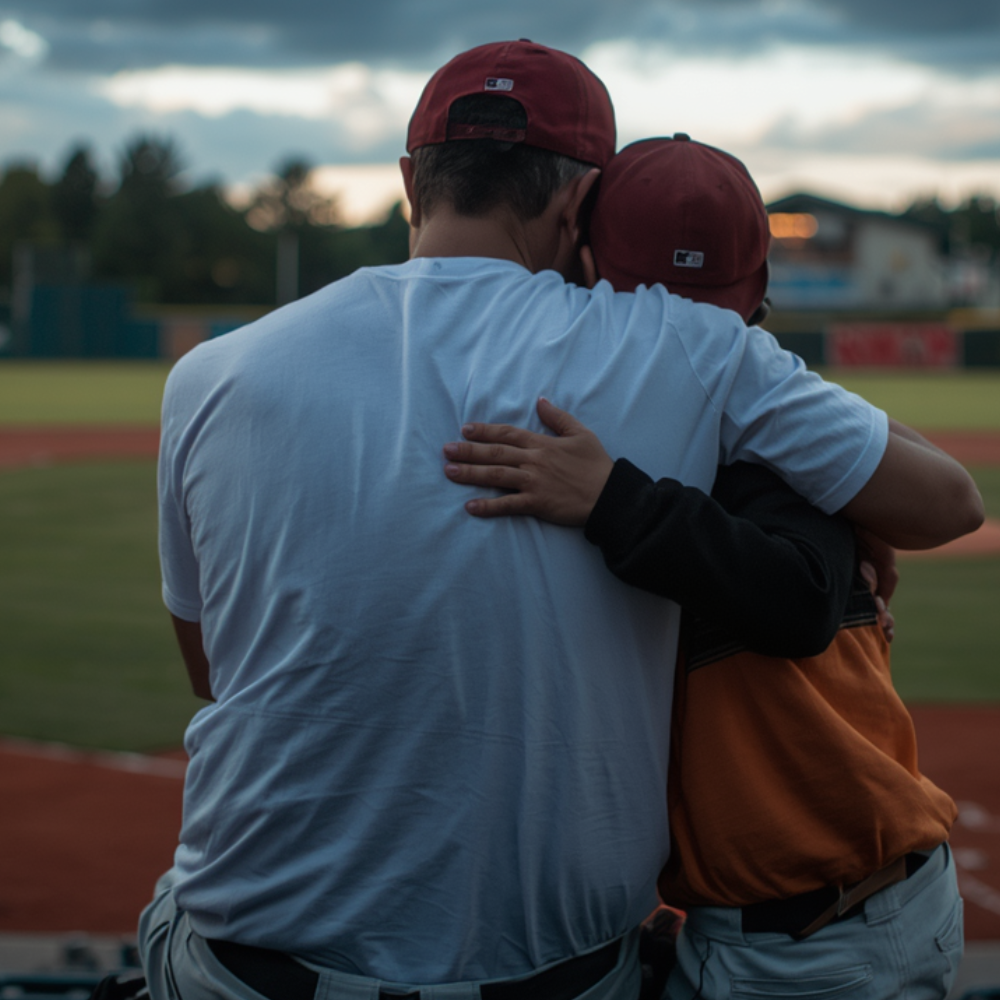
A hard loss can feel enormous to a young child. The right support helps them learn that disappointment is not the end of the story.
Disappointment is one of those childhood feelings adults sometimes underestimate. Not because we do not care. Most parents care deeply. But because from the adult side, the problem can look small.
The blue cup is gone.
The friend cannot come over.
The team lost.
The drawing did not turn out right.
The party ended.
The toy broke.
The answer was no.
The plan changed.
To us, it may be a moment. To a child, it can feel like the whole sky changed color.
That is why disappointment is such an important emotional skill. A child who can handle disappointment does not stop feeling sad, frustrated, embarrassed, or angry. That is not the goal. The goal is something better: the child learns that a hard feeling can be felt, named, carried, and moved through.
That is exactly why The Rabbit in the Moon belongs on a family’s shelf.
Not because it gives children a speech about disappointment. It does something more useful. It lets children sit beside Yabbit in the emotional space where many children get stuck: the pause after something feels too big.
And then it shows them that one tiny brave hop can still happen.
Disappointment is not just sadness
Disappointment has its own shape. Sadness is often about loss. Anger is often about unfairness. Worry is often about what might happen next.
Disappointment is what happens when hope runs into no. A child expected one thing, and life handed them another. They wanted the snack, the win, the invitation, the turn, the perfect drawing, the easy goodbye, the instant success, the yes.
They did not get it. That gap between what they hoped for and what actually happened can feel enormous.
This is why children do not always respond to disappointment in ways that make sense to adults. They may cry harder than expected. They may lash out. They may shut down. They may say, “I don’t care,” when they care very much. They may refuse to try again because trying again means risking that feeling a second time.
That is not weakness. It is a child meeting one of life’s hardest emotional truths: Sometimes things do not go the way we wanted. And we still have to find the next step.
Why many children need stories to process disappointment
A disappointed child is often not ready for advice right away.
If you say, “It’s not a big deal,” they may feel misunderstood.
If you say, “You’ll be fine,” they may hear, “Stop feeling that.”
If you say, “That’s life,” you may be telling the truth, but it is not usually the truth that helps in the moment.
Children need emotional safety before perspective. They need to feel understood before they can recover. That is where picture books become powerful.
A story gives the feeling some distance. The child does not have to talk directly about their own disappointment yet. They can watch a character struggle first. They can notice, wonder, object, laugh, worry, and soften without feeling put on trial.
This is why The Rabbit in the Moon works so well for disappointment. It does not make the child perform a lesson. It simply gives them Yabbit.
And Yabbit knows what it feels like to pause.
Yabbit helps children feel seen without feeling exposed
Some children do not announce disappointment clearly.
They hesitate. They avoid. They stall.
They become quiet. They act like they no longer care. They refuse to keep going because the feeling underneath is too large to explain.
Yabbit gives those children a character they can recognize without having to say, “That is me.”
He is cautious. He wonders. He worries.
He feels the size of what is ahead. He does not move forward because someone tells him to snap out of it. He moves forward because the next step becomes small enough to take.
That matters.
A lot of books about bravery make courage look loud. Yabbit makes courage feel usable. He shows children that bravery can begin after hesitation, after worry, after uncertainty, and yes, after disappointment too.
A child who feels crushed by a letdown may not need to hear, “Be brave.” They may need to hear, “This is hard, and you can still take one tiny brave hop.” That is a very different kind of help.
Snail shows children what persistence looks like after a letdown
Snail is one of the reasons The Rabbit in the Moon works so well as a disappointment book.
Snail is persistent and determined. He has a purpose. He keeps going.
But he does not replace Yabbit. He does not bulldoze Yabbit’s hesitation. He does not make Yabbit wrong for needing time. He balances him.
That balance is important for children. When a child is disappointed, adults can accidentally move too far in one direction. We either over-comfort and make the disappointment the whole story, or we rush the child toward “moving on” before they feel ready.
Snail offers a better model. He keeps the journey alive.
That is what we want for children after disappointment. Not denial. Not instant cheerfulness. Not pretending the letdown did not hurt.
We want them to learn that the story is not over. Something can be hard, and the next step can still exist.
The book gives parents language they can actually use
A strong children’s book does not end when the cover closes. It gives the family language.
That is one of the quiet strengths of The Rabbit in the Moon. It gives parents, teachers, and counselors a simple phrase they can carry into real life:
Tiny Brave Hop
That phrase is useful because disappointment often makes the next step feel too large.
A child loses the game and does not want to play again.
Tiny brave hop: help put the ball away.
A child does not get invited and wants to hide.
Tiny brave hop: name the feeling and choose one comforting thing to do.
A child’s drawing does not look right and they want to rip it up.
Tiny brave hop: pause before deciding what happens next.
A child hears “no” and melts down.
Tiny brave hop: take a breath with a parent nearby before problem-solving.
The phrase does not shame the child. It does not ask them to leap over the feeling. It simply gives them a small way forward.
If your child often feels overwhelmed by big emotions, this companion guide may help: https://www.yabbitrabbit.com/parent-resources/big-feelings-in-children-how-to-help-your-child-cope
Why The Rabbit in the Moon is especially helpful for sensitive letdowns
Some children recover quickly from disappointment. Others carry it longer.
They replay what happened. They blame themselves. They wonder why it did not work out. They compare themselves to others. They say they will never try again because trying again feels like opening the door to another letdown.
These are the children who often need more than a quick pep talk. They need a story that respects the emotional weight of trying.
The Rabbit in the Moon does that beautifully because the story is not built around a perfect hero. Yabbit’s uncertainty is part of the emotional truth. He does not begin with easy confidence. He has to find courage in small pieces.
That is exactly what many disappointed children need to practice.
Not “I am fine.”
Not “I do not care.”
Not “Nothing bothers me.”
Something more honest: “I feel disappointed, and I can still take the next small step.”
That is a skill children can use for years.
What disappointment teaches, when adults handle it well
Disappointment is uncomfortable, but it is also one of childhood’s great teachers.
It teaches flexibility.
It teaches patience.
It teaches recovery.
It teaches that feelings rise and fall.
It teaches that not getting what we wanted is not the same as being unloved, unsafe, or incapable.
But children do not learn those lessons just because disappointment happens. They learn them when an adult helps the feeling become understandable. That is the work.
We do not need to erase every letdown. We do not need to fix every no. We do not need to make childhood frictionless.
We need to help children discover that disappointment can be survived without shame. That is where The Rabbit in the Moon earns its place.
Yabbit does not teach children to avoid hard feelings. He helps them see that hard feelings do not have to stop the journey.
What to say when your child is disappointed
When disappointment hits, start smaller than you think. A disappointed child usually does not need the whole lesson right away. They need a steady adult and a sentence that makes the feeling less lonely.
Try language like this:
“You really wanted that to happen.”
“That is disappointing. I understand why you feel upset.”
“We do not have to fix the feeling right away.”
“This is a hard moment, not the whole story.”
“What would be one tiny brave hop from here?”
That last question is where the Yabbit language becomes practical. It helps children move from stuck to supported. It does not demand that they feel better. It simply asks, “What is the smallest next thing we can do?”
That is often enough.
How to use The Rabbit in the Moon after a letdown
You do not need to turn the book into a formal lesson. In fact, it is usually better if you do not. Read it when your child is calm. Let the story be a story. Let Yabbit and Snail do their quiet work.
Then later, when disappointment shows up in real life, borrow the language.
You might say:
“This feels like a Yabbit moment.”
“I wonder what Snail would do next.”
“You do not have to solve the whole feeling. Just one tiny brave hop.”
“The story is not over yet.”
That is the whole point. The book becomes a shared emotional map. Not a lecture. Not a behavior chart. A map.
And when a child has a map, the feeling is not quite as scary.
How this is different from a book about failure
Disappointment and failure are related, but they are not the same. Failure often means the child tried and something did not work.
Disappointment can happen even when the child did nothing wrong. The park is closed. The friend is sick. The answer is no. The plan changed. The party ended. The child wanted something that did not happen.
That is why disappointment deserves its own conversation. A child learning to handle failure may need courage to try again. A child learning to handle disappointment may first need help accepting reality without feeling crushed by it.
Those are different emotional muscles. If your child is specifically afraid to try again after a painful experience, this companion post may be a better next read: https://www.yabbitrabbit.com/parent-resources/books-for-kids-afraid-to-try-again-after-failing
But if your child struggles when life does not match what they hoped for, The Rabbit in the Moon offers something deeply useful: a story about continuing with heart.
Why this book belongs on a family shelf
Parents are not just looking for beautiful books. They are looking for books they can return to when real life gets hard. That is why The Rabbit in the Moon stands out.
It gives children a character who hesitates without being labeled.
It gives families language for courage that does not require fearlessness.
It gives parents a way to talk about hard feelings without turning the child into the problem.
It gives teachers and counselors a story for the emotional pause before action.
It gives disappointed children a quiet truth: the hard feeling can be part of the journey, not the end of it.
That is what makes it one of the best books for kids learning to handle disappointment. Not because it promises children they will always get what they want. Because it helps them believe they can keep going when they do not.
Why choose The Rabbit in the Moon?
If your child struggles with disappointment, hesitation, big feelings, or the hard first step after something does not go their way, The Rabbit in the Moon belongs on your shelf.
Yabbit is not fearless. He pauses. He worries. He needs time. But with Snail’s steady persistence beside him, he learns that courage does not have to arrive all at once.
It can begin with one tiny brave hop. For parents, teachers, and counselors, The Rabbit in the Moon offers more than a bedtime story. It gives children language for fear, letdowns, persistence, and the brave little steps that help them continue after disappointment.
The Rabbit in the Moon is a meaningful investment in your child’s emotional growth.
FAQs
What is a good book for kids learning to handle disappointment?
The Rabbit in the Moon is a strong choice for children learning to handle disappointment because it helps children understand hesitation, hard feelings, and the courage to take one small step forward. It does not shame children for feeling unsure. It gives them language for continuing after a difficult moment.
How does The Rabbit in the Moon help children with disappointment?
The story helps children see that a hard feeling does not have to end the journey. Yabbit’s hesitation gives children a character who understands fear and uncertainty. Snail’s persistence shows that steady movement is still possible, even when the feeling is big.
Is disappointment a big feeling for kids?
Yes. Disappointment can feel very big for young children because it happens when something they hoped for does not happen. A child may cry, shut down, get angry, or refuse to try again. Those reactions often mean the feeling is too large for them to process alone.
What should I say when my child is disappointed?
Start by naming the feeling without rushing to fix it. You might say, “You really wanted that to happen,” or “That is disappointing. I understand why you feel upset.” Once your child feels understood, you can ask, “What would be one tiny brave hop from here?”
Is The Rabbit in the Moon only for anxious children?
No. The Rabbit in the Moon is especially helpful for anxious, hesitant, or overwhelmed children, but its message is broader. It is a story for any child learning that courage does not mean feeling fearless. Courage can begin with one small step after fear, uncertainty, or disappointment.
Can teachers use The Rabbit in the Moon to talk about disappointment?
Yes. Teachers can use the story to talk about trying, waiting, not getting the result you hoped for, and taking a next step after a hard feeling. It works well for classroom conversations about emotional resilience, persistence, and social emotional learning.
What age is The Rabbit in the Moon best for?
The Rabbit in the Moon is especially useful for young children, including preschool and early elementary readers, but older children can also connect with its emotional message. The idea of a “tiny brave hop” is simple enough for young children and meaningful enough for families, teachers, and counselors to return to often.