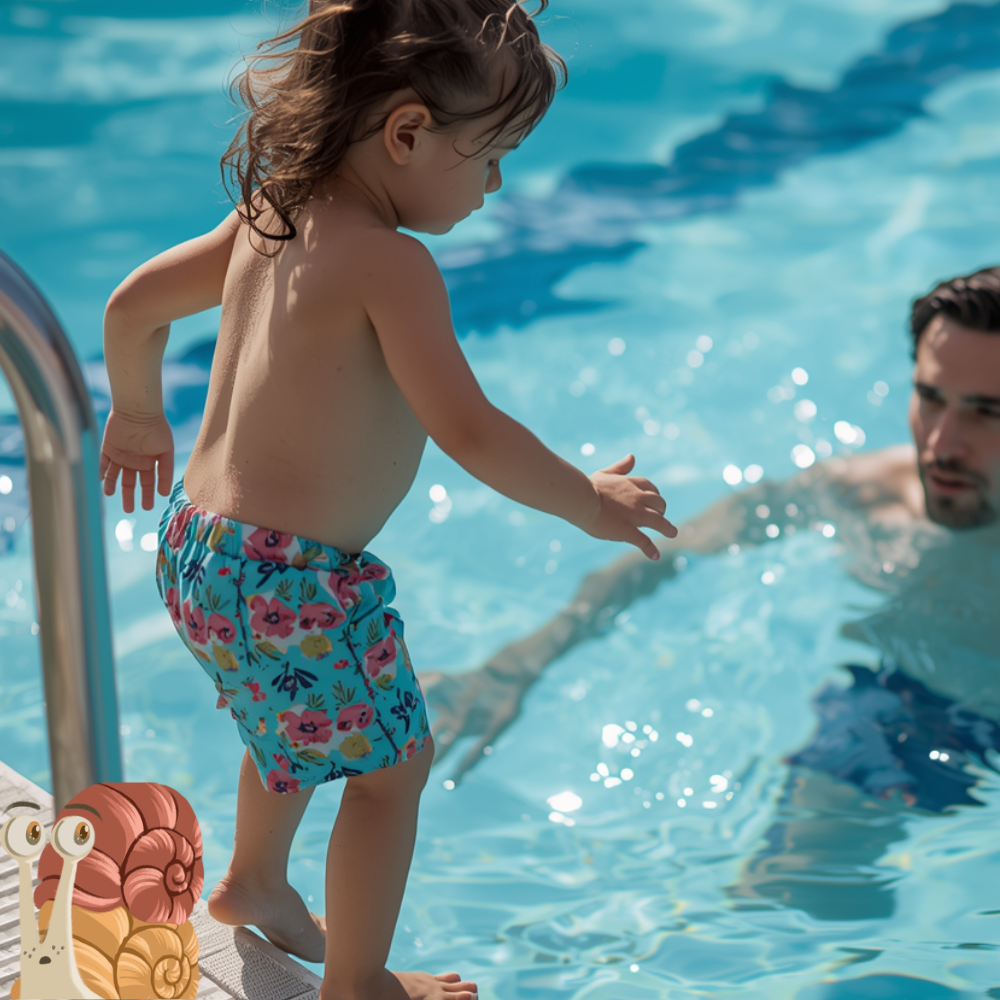
A tiny brave hop does not always look dramatic. Sometimes it looks like pausing at the edge, feeling unsure, and still letting someone steady help you begin.
When adults hear the phrase “coping skills,” we often picture something formal: breathing exercises, calm-down charts, emotion cards, therapy worksheets, or a quiet corner with soft cushions and a timer. Those tools can be useful. But for a young child, coping usually begins in a much smaller, more ordinary place.
It begins when a child feels something big and does not know what to do with it.
A child freezes before walking into the classroom. A child shuts down when the drawing does not look right. A child clings at goodbye, refuses to try, hides behind “I can’t,” or turns frustration into tears before they even understand what happened inside them. In those moments, a coping skill is not a fancy technique. It is the bridge between the feeling and the next possible step.
That is why The Rabbit in the Moon works so well as a story for coping skills. It does not lecture children about emotional regulation. It gives them Yabbit, a character who understands the pause before courage. Then it gives them Snail, a steady companion who helps the journey keep moving without shaming the hesitation.
Coping skills are not only calming down
A lot of children are taught coping skills as ways to calm down. Take a breath. Count to five. Squeeze your hands. Think happy thoughts. Those can help, but they are not the whole picture. Sometimes a child does not only need to calm down. Sometimes they need to understand what is happening inside them.
That is an important distinction. A child who freezes before trying may not be disobeying. A child who avoids the first step may not be lazy. A child who says, “I don’t want to,” may really be saying, “This feels too big, and I do not know how to begin.”
A good coping skill helps a child move from overwhelm to awareness. It gives them a way to pause, notice the feeling, name the feeling, and choose one next action that is small enough to survive. That is different from asking a child to make the feeling disappear.
The goal is not to produce a perfectly calm child. The goal is to help a child feel something difficult and still discover, “I can take one small step from here.”
Why stories teach coping skills so naturally
Stories work because they do not put a child on the spot. A child can watch a character feel scared, worried, disappointed, unsure, or overwhelmed without immediately having to say, “That is me.” That little bit of distance matters. It gives the child room to recognize the feeling safely.
This is why picture books are so useful for parents, teachers, and counselors. They make invisible emotional moments visible. A face, a pause, a journey, a mistake, a dark path, a friend nearby, these things help children understand feelings before they have the language for them.
In The Rabbit in the Moon, Yabbit’s hesitation gives children a clear emotional mirror. He is not being difficult. He is not broken. He is facing something that feels big. Children understand that because they live it all the time. They may not have the words “anxiety,” “avoidance,” or “emotional regulation,” but they know what it feels like when their body says, “Not yet.”
That recognition is the beginning of coping.
Yabbit teaches the first coping skill: pause
The first thing Yabbit gives children is permission to pause.
That might sound small, but for many children, it is enormous. Adults often rush the pause because we are worried about the behavior. We want the child to go in, speak up, try again, say goodbye, answer the question, join the group, or finish the task. We see the destination. The child feels the wall in front of them.
Yabbit helps children understand that a pause is not failure. A pause can be the moment where courage begins gathering itself. It is the space where a child starts to notice: something feels big right now.
That is a coping skill. Before a child can name a feeling or choose a next step, they need a moment to stop being swept away by it. They need a second where the feeling becomes something they can notice instead of something that completely takes over.
When parents borrow this language, it can sound simple: “This feels like a Yabbit pause.” That phrase is softer than “Why won’t you do it?” It gives the child dignity. It also gives the adult a calmer doorway into the moment.
Yabbit helps children name the feeling without shame
Children do not always know what they feel. They may say they are mad when they are scared. They may say they are tired when they are overwhelmed. They may say they do not care when they are disappointed. That is not dishonesty. It is development.
A story like The Rabbit in the Moon helps because it lets parents name the feeling near the child, not at the child. Instead of saying, “You are anxious,” which can feel too direct or too heavy, a parent can say, “Yabbit looks unsure here,” or “This part feels big to him.”
That kind of language is useful because it does not label the child. It labels the emotional moment.
Over time, children begin borrowing those words. Unsure. Worried. Scared. Stuck. Not ready yet. Those words matter because a feeling with a name is easier to hold than a feeling that arrives as a blur. Once a child can say, “I feel nervous,” the nervousness is no longer the whole room. It becomes something in the room.
For a deeper companion guide on using picture books to build feeling language, this post pairs naturally with the approach here:
https://www.yabbitrabbit.com/parent-resources/emotional-literacy-activities-for-picture-books
Snail teaches the second coping skill: steady persistence
Yabbit is the emotional mirror, but Snail is the movement.
That balance is one of the reasons The Rabbit in the Moon is such a strong coping-skills story. Snail is persistent and determined, but he does not erase Yabbit’s hesitation. He does not shame him, rush him, or replace him. He keeps the journey alive.
Children need that model. A coping skill is not only what a child does alone inside their own head. Sometimes coping is relational. A child borrows steadiness from someone nearby until they can find a little steadiness of their own.
That is what Snail represents. He is the presence that says, “We can keep going,” without making the child feel wrong for finding it hard. For parents, teachers, and counselors, that is the posture worth remembering. Be steady without becoming forceful. Be encouraging without making the child perform confidence they do not feel yet.
Snail shows children that persistence does not have to be loud. It can be patient, loyal, and small enough to follow.
The tiny brave hop is a coping skill children can actually use
The phrase “tiny brave hop” is not just a sweet idea. It is practical language for a child who feels stuck.
A big instruction can overwhelm a child. “Go make a friend.” “Take the test.” “Clean your room.” “Say goodbye.” “Try again.” “Stop worrying.” Those instructions may be reasonable from the adult side, but they can feel impossible from the child’s side if the feeling is already too large.
A tiny brave hop shrinks the demand.
Instead of joining the whole game, the child stands closer. Instead of completing the whole worksheet, the child reads the first question. Instead of sleeping through the whole night alone, the child practices the first calm minute after lights out. Instead of trying again with full confidence, the child makes one small mark on the page.
That is coping. Not because the child suddenly feels fearless, but because the child learns that forward movement can be made small. The nervous system does not need a grand speech. It needs one doable step.
For a deeper guide to this method, use this companion post: https://www.yabbitrabbit.com/parent-resources/how-to-help-your-child-take-tiny-brave-hops
Why this matters for anxious, hesitant, and overwhelmed children
Some children seem to move through the world with an easy “let’s try it” energy. Other children need more time. They watch first. They ask more questions. They imagine what could go wrong. They feel the size of a moment before they can enter it.
Those children do not always need more pressure. Often, they need a better pathway.
That is where The Rabbit in the Moon becomes more than a bedtime story. It gives families a shared emotional map. Yabbit represents the pause. Snail represents steady persistence. The tiny brave hop becomes the path between the two.
This matters because many children are not resisting growth. They are resisting a step that feels too large. Once adults understand that, the whole tone changes. We stop asking, “How do I make my child stop hesitating?” and start asking, “How do I make the next step feel safe enough to try?”
That shift is where real emotional support begins.
What parents can say after reading The Rabbit in the Moon
The best coping-skills books are the ones that keep working after the story ends. The Rabbit in the Moon gives parents language they can use later, in the small, ordinary moments where children need emotional help most.
You might say, “This feels like a Yabbit pause. Let’s notice what feels big.” That helps the child slow down without feeling accused. You might say, “I wonder what one tiny brave hop would be.” That keeps the focus on one next step instead of the whole mountain. You might say, “Snail keeps going slowly. We can go slowly too.” That gives the child a model of persistence that does not feel like pressure.
Those phrases work because they are not lectures. They are little bridges back to the story. A child who loves a character can often accept language from that character more easily than advice from an adult in the heat of the moment.
That is the hidden gift of a good picture book. It gives the family a shared vocabulary, and shared vocabulary lowers the emotional temperature.
What The Rabbit in the Moon teaches that a coping chart cannot
Coping charts can be helpful. So can breathing exercises, emotion wheels, and classroom calm-down tools. But a chart usually tells a child what to do. A story helps the child understand why it is hard to do it.
That is the difference.
The Rabbit in the Moon does not reduce the child to a behavior. It respects the emotional moment underneath the behavior. Yabbit’s hesitation makes sense. Snail’s persistence makes sense. The journey matters because courage is not presented as an instant personality trait. It is presented as something a child can practice in tiny, human steps.
For anxious or hesitant children, that distinction can be everything. They do not need to be told that calm children behave better. They need to feel that someone understands the moment before they are calm, before they are ready, before they believe they can do it.
That is where Yabbit meets them.
How to use the book as a coping-skills tool
You do not need to turn The Rabbit in the Moon into a lesson plan. In fact, it will probably work better if you do not. Read it first as a story. Let your child enjoy the characters, the journey, the images, the rhythm, and the emotional warmth of the book.
Then, later, begin using the language gently. During a hard moment, try connecting back to the story with one simple phrase. “This is a tiny brave hop moment.” “Yabbit needed time too.” “What would Snail do next?” The goal is not to explain the entire message every time. The goal is to help the child remember a pattern they already understand.
Over time, that pattern becomes portable. A child who has heard the story enough times may start to understand: I can pause. I can name what feels big. I can take one small step. I do not have to feel ready to begin.
That is the kind of coping skill children can carry into school, friendships, bedtime, disappointment, mistakes, and the hard little thresholds that appear every day.
Why The Rabbit in the Moon is one of the best stories for teaching coping skills
The strongest coping-skills stories do not make children feel like a project. They make children feel seen.
That is what The Rabbit in the Moon does. It gives children a character who hesitates without being mocked, a companion who persists without pushing too hard, and a phrase that turns courage into something small enough to try. For families, that combination is powerful because it turns an abstract skill into a lived emotional experience.
A child does not leave the story with a clinical definition of coping. They leave with something better. They leave with Yabbit, Snail, and the idea that one tiny brave hop counts.
That is why the book belongs on the shelf of parents, teachers, and counselors who want to help children manage fear, worry, hesitation, and big feelings without shame. It is not trying to make children fearless. It is helping them learn what to do when fear is present.
And honestly, that is the skill most of us need.
Yabbit the Rabbit is an investment in your child’s emotional growth
If your child freezes, hesitates, avoids starting, struggles with big feelings, or needs a softer way into courage, The Rabbit in the Moon belongs on your shelf.
Yabbit does not begin as a fearless hero. He pauses. He worries. He needs time. But with Snail’s steady persistence beside him, he learns that courage does not have to arrive all at once. It can begin with one tiny brave hop.
For parents, teachers, and counselors, The Rabbit in the Moon offers more than a bedtime story. It gives children language for coping with fear, uncertainty, disappointment, pressure, and the hard first step into something new.
FAQs
What is a good picture book that teaches coping skills to kids?
The Rabbit in the Moon is a strong picture book for teaching coping skills because it helps children understand the emotional moment before action. Through Yabbit’s hesitation and Snail’s persistence, children learn how to pause, notice what feels big, and take one tiny brave hop forward.
How does The Rabbit in the Moon teach coping skills?
The story teaches coping skills through character and action rather than instruction. Yabbit shows children that pausing is not failure. Snail shows them that steady persistence matters. The phrase “tiny brave hop” gives children practical language for taking one small next step when something feels overwhelming.
What coping skills can young children learn from stories?
Young children can learn to pause, name feelings, ask for help, try one small step, recover after mistakes, and continue after disappointment. Stories help because the child can watch a character practice these skills safely before trying them in real life.
Is a tiny brave hop a coping skill?
Yes. A tiny brave hop is a child-friendly coping skill because it makes the next step smaller. Instead of asking a child to solve the whole problem, it helps them choose one manageable action: answer one question, stand closer, make one mark, say one word, or try one small part.
Is The Rabbit in the Moon only for anxious children?
No. The Rabbit in the Moon is especially helpful for anxious, hesitant, or overwhelmed children, but its message is useful for any child learning how to face hard moments. Every child needs language for fear, courage, persistence, and emotional recovery.
Can teachers use The Rabbit in the Moon for social emotional learning?
Yes. Teachers can use The Rabbit in the Moon to talk about hesitation, courage, persistence, feelings, and first steps. It works well as a classroom read-aloud because Yabbit and Snail give students a shared language for moments when something feels difficult but still possible.
What age is The Rabbit in the Moon best for?
The Rabbit in the Moon is especially useful for young children, including preschool and early elementary readers. The emotional message is simple enough for younger children to understand and meaningful enough for parents, teachers, and counselors to revisit often.