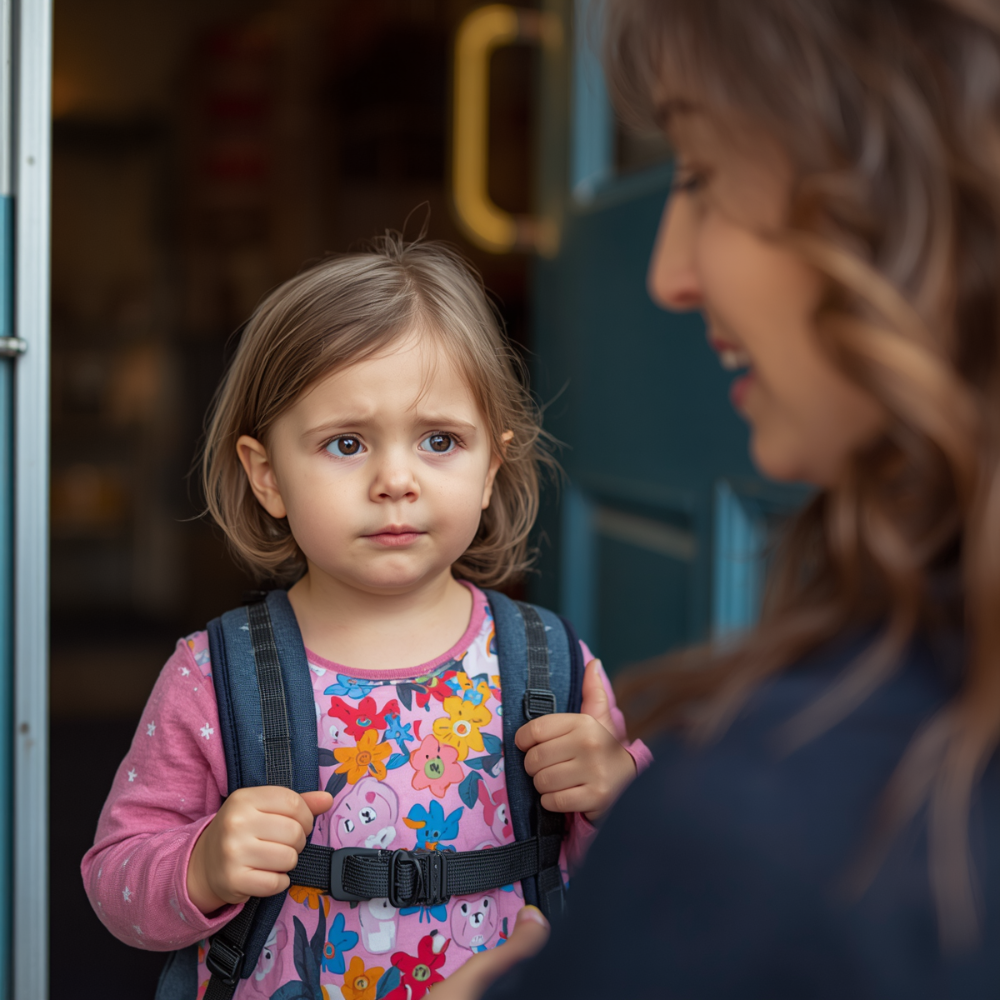
For some children, goodbye is not a small moment. It is the hardest part of the day.
Some children do not struggle with goodbye because they are stubborn. They struggle because goodbye feels too big.
The classroom door. The daycare cubby. The babysitter arriving. The bedroom light turning off. The moment a parent says, “I’ll be back soon,” and the child’s whole body seems to answer, “But soon is not now.”
That is separation anxiety in its most ordinary form. Not always dramatic. Not always loud. Sometimes it is clinging. Sometimes it is crying. Sometimes it is asking the same question again and again.
Are you coming back?
How long will you be gone?
What if I miss you?
What if I need you?
What if I cannot feel okay without you?
For adults, the separation may be predictable. We know the child is safe. We know pickup is at 3:00 pm. We know bedtime is not abandonment. We know the babysitter is kind.
But young children do not experience time, safety, and emotional distance the way adults do. To them, separation can feel less like a schedule and more like a cliff edge.
That is why the right picture book can help. A good story does not shame the child for needing closeness. It gives the goodbye a shape.
It shows the child that love can stay close even when bodies are apart. It helps parents borrow language when the hard moment comes. If your child struggles with separation, choose books that make goodbye feel safer before asking the goodbye to become easier.
Why separation anxiety feels so big to young children
Young children live close to their attachment figures. That closeness is not weakness. It is how children learn safety.
So when a parent leaves, even for a normal and loving reason, the child may not only be reacting to the event. They may be reacting to the feeling of distance itself.
That feeling can show up in different places:
Preschool drop-off.
Daycare.
Grandparent visits.
Babysitters.
Bedtime.
Sleepovers.
A parent going to work.
A parent leaving the room.
The first day of school.
A new routine after a break.
The hard part is that adults often focus on the logistics.
You will be fine.
I will be back after lunch.
You like your teacher.
You did this yesterday.
Those facts matter. But they do not always reach the feeling. A child in separation anxiety usually needs two things at once: reassurance that the parent returns and a tiny next step that helps the child move through the goodbye.
If your child’s separation anxiety shows up as refusal at the school door, party, practice, or transition point, this script-based guide pairs well with the books below: https://www.yabbitrabbit.com/parent-resources/big-transitions-what-to-say-when-child-wont-go
What the best separation anxiety books give a child
The best books for separation anxiety do not simply say, “Don’t worry.” That is usually too thin for the child who is already worried. The strongest books give children something sturdier:
A return pattern
The grown-up leaves, the child feels the feeling, and the grown-up comes back.
A connection object or ritual
A kiss in the hand, an invisible string, a repeated phrase, a small brave routine.
A way to understand time apart
The child learns that goodbye is not forever.
A character who feels the same thing
This is often the quiet magic. The child feels less alone because the story knows.
A tiny next step
The book helps the child move from “I cannot do this” to “I can do this one small part.”
That is the shelf we are building here. Not books that force independence. Books that make independence feel emotionally safe enough to practice.
The books I would put on this shelf first
This list is for the young child who struggles with goodbye.
The child who cries at preschool drop-off.
The child who asks if you will come back.
The child who wakes at night and needs to know you are still there.
The child who can be brave, but only after the separation feels small enough.
1. The Rabbit in the Moon
KD Schnee
The Rabbit in the Moon belongs on this shelf because separation anxiety is often about the space between fear and the next small step.
Yabbit knows that space.
He is cautious. He hesitates. He feels the size of what is ahead before he can move toward it. That matters for a child who struggles with goodbye, because separation can feel like a task too big for their small body to carry all at once.
The book does not tell children to stop being afraid. It gives them a softer way to understand courage.
And Snail is essential. Snail is persistent and determined. He balances Yabbit’s hesitation without replacing it. He helps the journey keep going without making Yabbit feel wrong for needing time.
That is exactly what many young children need in separation moments. Not a demand to be instantly brave. Not a rushed goodbye. A steady presence, a small next step, and the repeated message that courage can begin very small.
Best for: children who hesitate before separation, anxious bedtime readers, families who want language for tiny brave hops, fear, and emotional safety.
2. The Kissing Hand
Audrey Penn, illustrated by Ruth E. Harper and Nancy M. Leak
The Kissing Hand is one of the classic separation-anxiety books for a reason. Chester Raccoon does not want to go to school. His mother gives him a simple ritual: a kiss in his hand that he can carry with him when they are apart.
That ritual is the power of the book.
Young children often need something concrete. Love is abstract. Time is abstract. “I’ll be back later” is abstract. But a kiss in the hand gives the child a physical reminder of connection.
For children starting preschool, kindergarten, daycare, or a new routine, this book can become part of the goodbye itself.
Best for: school drop-off, preschool anxiety, children who need a goodbye ritual, first-day transitions.
3. Llama Llama Misses Mama
Anna Dewdney
Llama Llama Misses Mama speaks directly to the child who feels lonely after a parent leaves. Llama’s first day of school feels unfamiliar. New toys, new teacher, new children, new rhythm. He misses Mama, and the book gives that missing real space.
That is important.
Many children are rushed through missing. Adults want to reassure them quickly, which makes sense, but the child may need to feel understood before they can rejoin the room. This book helps children see that missing someone and having a good day can both be true.
Best for: preschool separation, daycare drop-off, children who miss a parent during the day, first school experiences.
4. Owl Babies
Martin Waddell, illustrated by Patrick Benson
Owl Babies is beautifully simple and emotionally precise.
Three baby owls wake to find their mother gone. They worry. They wait. They imagine. And then she returns.
That return is the whole architecture of the book.
For very young children, this kind of pattern matters. The book does not overcomplicate the feeling. It lets children experience the fear of absence and the relief of reunion inside a safe story.
It is especially useful for children who ask, “Where are you?” or “When are you coming back?” because the answer is not just spoken. It is shown.
Best for: toddlers, preschoolers, bedtime separation, children who worry when a parent leaves the room.
5. The Invisible String
Patrice Karst, illustrated by Joanne Lew-Vriethoff
The Invisible String gives children a metaphor they can keep.
Two children are scared during a storm and want their mother. She explains that people who love each other are connected by an invisible string, even when they are apart.
For children who can understand metaphor, this book can be deeply reassuring. It gives a child an image for connection that travels with them into school, bed, visits, and goodbyes.
The important thing is to use it gently. Some younger children may still need concrete rituals too, but for many kids, the invisible string becomes a phrase the whole family can share.
Best for: children who miss parents or grandparents, bedtime anxiety, school separation, children who like emotional metaphors.
6. Bye-Bye Time
Elizabeth Verdick, illustrated by Marieka Heinlen
Bye-Bye Time is practical, simple, and especially helpful for toddlers and preschoolers.
Some separation-anxiety books are emotional stories. This one is more of a step-by-step support tool. It names the goodbye, gives the child reassurance, and shows that goodbyes have a rhythm.
That makes it useful for very young children who need repeated, predictable language.
A child who struggles at daycare drop-off may not need a complex plot. They may need the same calming structure again and again: goodbye happens, feelings happen, play happens, grown-ups come back.
Best for: toddlers, daycare drop-off, children who need simple routines, first separations.
7. I Love You All Day Long
Francesca Rusackas, illustrated by Priscilla Burris
This book gives young children exactly the reassurance many of them are asking for underneath the tears:
Will you still love me when we are apart? The answer is yes. I Love You All Day Long helps children understand that a parent’s love does not pause during school, daycare, errands, or time apart. It continues through the day.
That message is simple, but for young children it can be very powerful. Especially for children who need to know that love remains active even when the parent is not visible.
Best for: preschoolers, children missing a parent during the day, morning goodbyes, reassurance before school.
8. Mama Always Comes Home
Karma Wilson, illustrated by Brooke Dyer
Mama Always Comes Home is built around the reassurance anxious children often need most.
The parent returns. Again and again, the story reinforces that separation is temporary. This is useful because young children often need repetition before reassurance becomes believable.
The title itself can become a family phrase.
“Mama always comes home.”
“Daddy always comes back.”
“Grown-ups come back.”
A phrase like that can be more useful than a long explanation in the middle of a hard goodbye.
Best for: toddlers and preschoolers, children who need repeated reassurance, daycare and babysitter separations.
9. When Mama Comes Home Tonight
Eileen Spinelli, illustrated by Jane Dyer
This book is helpful for children whose parent works outside the home or is away during the day.
Instead of focusing only on the goodbye, it builds anticipation around reunion. That matters because some children need a picture of what comes after the separation, not just reassurance during the separation.
The book creates a soft emotional bridge between now and later.
When Mama comes home, there will be closeness again. There will be touch, routine, comfort, and return.
For working parents, this can be a tender and practical choice.
Best for: children of working parents, evening reunion routines, children who need help picturing the return.
10. Wemberly Worried
Kevin Henkes
Wemberly Worried is not only about separation anxiety, but it belongs on this shelf because many children who struggle with goodbye also worry about everything surrounding the goodbye.
What if school feels strange?
What if the teacher is different?
What if no one talks to me?
What if I do not know what to do?
Wemberly is a child-shaped worry cloud, and Kevin Henkes gives her worry warmth without mocking it. This book helps children see that worry can come along for the first day and still not ruin the day.
Best for: preschool and kindergarten worry, children who anticipate problems, anxious first-day readers.
11. The Pigeon HAS to Go to School!
Mo Willems
This book is funny, but underneath the comedy is a very real emotional pattern.
The Pigeon does not want to go to school. He asks questions. He protests. He imagines everything that could go wrong. He tries to control the situation with panic and argument.
Many parents know that performance.
For children who can handle humor around anxiety, this book makes school fear feel less lonely and less heavy. It can help children laugh near the fear without feeling laughed at.
It is not a pure separation-anxiety book, but it works well for children whose separation fear is tied to school uncertainty.
Best for: school anxiety, children who ask many “what if” questions, kids who respond well to humor.
12. The Goodbye Book
Todd Parr
The Goodbye Book is broader than school or daycare separation. It is about the feelings that come when someone leaves.
That makes it useful when a child’s separation anxiety is part of a larger struggle with absence, change, or missing someone.
Todd Parr’s style is direct and emotionally accessible. The book names feelings plainly, which can help young children understand that sadness, worry, anger, and missing are all normal parts of goodbye.
For separation anxiety, this book works best as a feelings-language companion rather than a specific drop-off tool.
Best for: children learning to name goodbye feelings, bigger separations, family changes, emotionally direct conversations.
How to read separation anxiety books so they actually help
The mistake many adults make is waiting until the hardest moment to introduce the idea.
A child who is sobbing at drop-off may not be ready for a new concept. That is not the teaching moment. That is the support moment.
Read separation books when your child is calm. Read them at bedtime, on the couch, in the afternoon, on a weekend, before the new routine begins. Let the story become familiar before you need it.
Then, when the goodbye comes, you are not inventing language from scratch. You are returning to language the child already knows.
Use the character first.
“Chester felt nervous about school.”
Name the pattern.
“Mama left, the owls felt worried, and then Mama came back.”
Create one family phrase.
“Love stays close.”
“Grown-ups come back.”
“One tiny brave hop.”
Keep the goodbye short and warm.
Long goodbyes can accidentally teach the child that separation really is dangerous.
Let reunion matter.
When you come back, name it: “I came back, just like I said.” That helps build trust in the pattern.
What to say during a hard goodbye
In the hardest moment, fewer words are usually better.
A child in separation anxiety is not asking for a lecture. They are asking for safety.
Try phrases like:
“This goodbye feels hard. I know.”
“You are safe, and I am coming back.”
“First tiny brave hop: hang up your backpack.”
“Your teacher will help you, and I will see you after lunch.”
“Love stays close, even when bodies are apart.”
“I am leaving now, and I will come back when I said I would.”
That last one matters. If you say you are leaving, leave warmly and confidently. Lingering often feels loving to the parent, but it can make the child’s alarm ring longer.
Calm is not cold. Calm is leadership.
When separation anxiety shows up at bedtime
For many families, separation anxiety does not end after school drop-off.
It returns at night. A child who handled the day may suddenly need one more hug, one more question, one more check, one more glass of water, one more reason for you to stay.
This does not mean the child is manipulating you. It may mean nighttime makes distance feel bigger. The room gets quiet. The body slows down. The imagination wakes up and starts tapping little spoons against the inside of the moon.
A bedtime separation book can help, but the routine around it matters too.
Keep the story calm.
Use the same closing phrase.
Make the final check predictable.
Avoid restarting the whole bedtime every time your child calls you back.
If bedtime anxiety is the main struggle in your house, this companion post gives you a broader book list for anxious nights:
https://www.yabbitrabbit.com/parent-resources/calming-bedtime-picture-books-for-anxious-children
Why The Rabbit in the Moon belongs in a separation anxiety book stack
The Rabbit in the Moon is not a book that says goodbye is easy.
That is why it works.
It understands that brave moments often arrive before a child feels ready. It understands the pause before movement. It understands the way fear can make a simple next step feel enormous.
For a child with separation anxiety, that emotional space matters.
The story gives families a way to talk about courage without forcing independence too quickly. Yabbit shows children that hesitation is not failure. Snail shows them that persistence can be steady and kind. Together, they give children language for the small brave movement that comes after fear.
That is the heart of separation work.
Not “stop missing me.”
Not “be brave already.”
Not “you’re fine.”
Something better:
You can miss me and still take one tiny brave hop.
You can feel nervous and still begin the day.
You can trust that love stays close, even when goodbye feels big.
Invest in your child
If your child struggles with goodbye, bedtime separation, school drop-off, or the brave first step into a new routine, The Rabbit in the Moon belongs on your shelf.
Yabbit is not fearless. He hesitates. He worries. He needs time. But with Snail’s steady persistence beside him, he learns that courage does not have to arrive all at once.
It can begin with one tiny brave hop.
For parents, teachers, and counselors, The Rabbit in the Moon offers more than a bedtime story. It gives children language for fear, hesitation, separation, emotional safety, and the small brave steps that help hard moments feel possible.
The Rabbit in the Moon is a meaningful investment in your child’s emotional growth.
FAQs
What are the best books for separation anxiety in young children?
Some of the best books for separation anxiety in young children include The Kissing Hand, Llama Llama Misses Mama, Owl Babies, The Invisible String, Bye-Bye Time, I Love You All Day Long, Mama Always Comes Home, Wemberly Worried, and The Rabbit in the Moon. The best choice depends on where your child struggles most: daycare, preschool, bedtime, school drop-off, or general time apart.
How can books help a child with separation anxiety?
Books help by giving the child a safe story before the hard moment arrives. A child can watch a character miss a parent, feel scared, wait, and reunite. That pattern helps separation feel more predictable. It also gives parents simple language to reuse during goodbye.
What should I say when my child cries at drop-off?
Keep your words warm, short, and steady. Try: “This goodbye feels hard. You are safe, and I am coming back.” Then give one small next step, such as hanging up a backpack, holding the teacher’s hand, or walking to the door. Long explanations often make the goodbye harder.
Should I sneak away if my child has separation anxiety?
Usually, no. Sneaking away may stop the crying in the moment, but it can make separation feel less predictable. A short, loving, confident goodbye is usually better. The child learns that you say goodbye, you leave, and you come back when you said you would.
Is separation anxiety normal in preschoolers?
Yes, separation anxiety is common in young children, especially during new routines, preschool, daycare, bedtime, or transitions after a break. The goal is not to shame the child for needing closeness. The goal is to help them practice separation with safety, predictability, and small brave steps.
Is The Rabbit in the Moon a good book for separation anxiety?
Yes, especially for children who hesitate, worry, or need courage made smaller. The Rabbit in the Moon helps children understand that bravery does not mean feeling fearless. Through Yabbit and Snail, children see that fear can be met with patience, persistence, and one tiny brave hop.
When should I get extra help for separation anxiety?
Consider extra support if separation anxiety causes ongoing school refusal, intense daily distress, sleep disruption, frequent stomachaches, panic, or major family disruption. A pediatrician, school counselor, teacher, or child therapist can help you understand whether your child needs more support beyond books and routines.lways does.