Children’s Books About Difficult Topics: Stories That Help Kids Feel Safe Talking About Hard Things
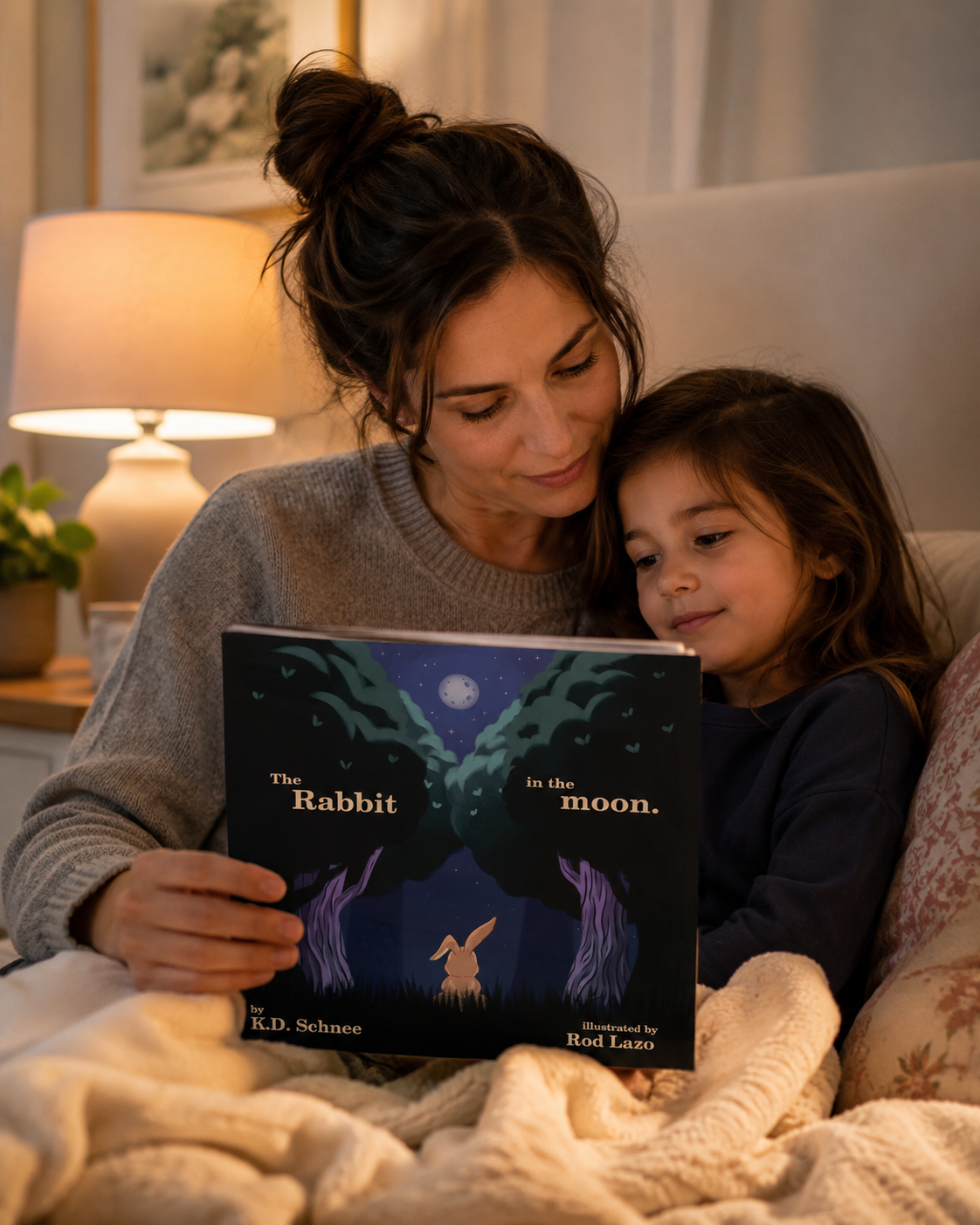
The right story does not force a hard conversation. It gives a child a safe place to begin.
The best children’s books about difficult topics help kids feel safe enough to notice, name, and talk about hard things without being rushed, frightened, or shamed.
That is the simple answer.
Children may need books about grief, illness, divorce, fear, anxiety, moving, separation, bullying, mistakes, disappointment, death, doctor visits, school worry, or a family change they did not choose. The right book does not pretend the hard thing is easy. It gives the child a character, image, phrase, or story path that makes the feeling easier to approach.
For young children, hard topics often arrive before language. A child may not know how to say, “I am afraid something will change,” or “I miss someone,” or “I do not understand why everyone is sad.” They may become quiet, clingy, angry, silly, tired, avoidant, or suddenly very interested in a completely unrelated sock.
A good book gives the feeling a doorway.
What makes a children’s book good for difficult topics?
A good children’s book about a difficult topic should be honest, gentle, age-appropriate, emotionally safe, and built around a real story instead of a lecture. That last part matters.
Children do not usually need a book that sounds like an adult explanation with illustrations attached. They need a story they can enter. They need a character to care about, a feeling they can recognize, and enough emotional distance to look at the hard thing without feeling trapped inside it.
A strong book about a difficult topic does not throw a child into the deepest water on page one. It lets the child approach slowly. It gives room for confusion, sadness, worry, anger, hesitation, and questions. It also gives some kind of support: a parent, friend, teacher, animal, routine, memory, helper, or small brave action.
The best books do not promise that everything becomes perfect. They show that hard things can be talked about, carried, and met with care.
Why are difficult topics hard for children to talk about?
Difficult topics are hard for children because they often involve feelings bigger than their vocabulary.
A young child may understand that something has changed, but not why. They may feel loss before they understand death. They may sense adult sadness before anyone has explained illness. They may know a goodbye feels wrong before they can understand separation, divorce, deployment, or a family transition.
Adults sometimes ask children to explain feelings that even adults struggle to name. “What’s wrong?” can be a loving question, but it can also be too large. A child may not know what is wrong. They may only know that their body feels strange, the room feels different, or the grown-ups sound quieter than usual.
That is where books can help.
A story lets a child talk beside the topic instead of directly under it. The child can say, “That character looks sad,” before saying, “I am sad.” They can ask, “Where did the grandfather go?” before asking the bigger question. They can point to a page when words are still hiding in the tall grass.
Books do not make hard things simple. They make hard things shareable.
Should children’s books about hard topics be direct or symbolic?
The answer depends on the child, the topic, and the moment.
Some children need direct language. If a family member has died, a child may need clear, honest words about death, not only soft metaphors. If a child is going to the hospital, they may need to know what will happen in plain, calm language. If parents are separating, the child may need simple reassurance about what changes and what stays.
Other children need symbolic language first. A story about a rabbit, snail, moon, storm, bridge, shadow, or tiny brave hop can help a child approach a feeling from a safer distance. Symbol does not mean avoidance. It means the story gives the child a way to feel before they are ready to explain.
The best books often know how to use both. They are clear enough to be trustworthy and gentle enough to be bearable.
That balance is part of what makes picture books powerful. A child can hear the words, study the illustrations, and decide how close they are ready to come.
What difficult topics can picture books help with?
Picture books can help children talk about many hard things, including grief, death, illness, fear, anxiety, divorce, moving, separation, doctor visits, school worry, bullying, loneliness, disappointment, perfectionism, making mistakes, and feeling different.
That does not mean one book should cover everything. In fact, it usually should not. A book about grief has a different job than a book about school anxiety. A book about doctor visits has a different job than a book about divorce. A book about fear of the dark has a different emotional temperature than a book about losing a grandparent.
The question for parents is not, “What is the best book about hard things?”
The better question is, “What hard thing is my child trying to understand right now?”
A child facing a medical appointment may need preparation and control. A child grieving may need memory, honesty, and permission to feel. A child worried about school may need a smaller first step. A child facing change may need to know what is ending, what is beginning, and what will stay steady.
The right book begins with the real child in front of you.
How can books help children feel safe talking about hard things?
Books help children feel safe by holding the hard topic outside the child for a moment.
That distance is not cold. It is protective.
When the difficult thing belongs first to a character, the child does not have to confess, defend, explain, or perform. They can look. They can notice. They can ask. They can disagree. They can stay quiet. They can come back later.
This is especially important for children who feel things deeply or hesitate before beginning. If a parent comes straight at the feeling with too many questions, the child may shut down. But if the parent starts with the story, the child has more control.
You might say, “This part feels sad,” and keep reading. Or, “Yabbit looks unsure here,” and let the page sit. Or, “Snail is staying close,” and let the child decide whether to respond.
A story can make a hard conversation feel less like a spotlight and more like a small lamp on the table. That is often enough to begin.
What should parents look for in books about grief or loss?
Books about grief or loss should be honest, tender, and careful with language.
Children need clarity. They also need comfort. A book about death should not be so vague that it creates confusion, but it also should not be so harsh that it overwhelms a young child. The best grief books make room for sadness, memory, love, questions, and the strange way grief can come and go.
A child may not grieve in a straight line. They may cry one minute and ask for a snack the next. They may return to the same question again and again. They may not seem sad until later. They may play out the loss with toys or ask something that sounds blunt because they are trying to understand.
A good book can help the adult stay steady too.
In The Rabbit in the Moon, grief is part of the emotional soil of the story. Snail’s grandfather has passed, and the journey to place his shell on the moon gives children a symbolic way to feel love, memory, loss, and courage without being lectured. The story does not turn grief into a lesson pasted on top of the page. It lets the journey carry it.
That is how hard topics often reach children best: through story, beauty, and a feeling they can return to.
What should parents look for in books about anxiety or fear?
Books about anxiety or fear should help children feel recognized without making the fear larger.
A child who worries does not need a story that piles on every possible danger. They need a story that says, “This feeling is real, and you are not alone inside it.” The book should help the child notice the feeling, name it gently, and imagine one small next step.
Fear books are strongest when they respect the child’s experience. A child afraid of the dark does not need to be told the fear is silly. A child nervous about school does not need a book that insists school is always fun. A child scared of trying does not need instant confidence in book form.
They need a story that understands the pause before the step.
That is why Yabbit matters. He gives children a character who hesitates without being shamed. He shows that courage does not mean having no fear. It can mean taking one tiny brave hop while the feeling is still there.
That idea is small enough for a child to use.
What should parents look for in books about change and family transitions?
Books about change should help children understand what is changing, what is staying, and who will help.
This is true whether the change is a move, new school, new sibling, new caregiver, divorce, bedtime shift, parent travel, illness in the family, or a routine that no longer looks the way it used to. Children often struggle when the shape of life changes faster than their sense of safety can catch up.
A good transition book does not force excitement. It does not say, “This new thing is wonderful, so stop being sad.” Instead, it gives children permission to miss the old thing while slowly approaching the new one.
That is a much more honest form of comfort.
Parents can use simple language after reading: “Something is changing, and we are going to make the next step small.” Or, “You can miss the old thing and still try one part of the new thing.” Those sentences let a child have more than one feeling at once.
Many difficult topics are really transition topics underneath.
A before and after. A known thing and an unknown thing. A doorway.
What should parents avoid in books about difficult topics?
Parents should avoid books that shame the child, rush the feeling, overexplain the lesson, or make the hard topic scarier than it needs to be.
Some books mean well but talk down to children. Some explain too much. Some solve grief, anxiety, fear, or family change so quickly that the emotional arc feels false. Some use metaphors that are beautiful for adults but confusing for children. Some books are really written to reassure the parent, not to help the child.
That last one is important. A book about a difficult topic should serve the child’s emotional understanding first.
I would also be careful with books that introduce more fear than the child already has. If your child is not worried about a certain detail, the book may not need to hand it to them wrapped in dramatic ribbon. Children are imaginative. Their minds can build whole theaters from one sentence.
The best books are honest without being heavy. Gentle without being vague. Useful without being preachy.
How should parents read books about hard topics?
Read slowly, and do not turn the book into an interrogation.
A difficult-topic book should not feel like a surprise therapy session at bedtime. Children can feel when an adult is using a story to pry open a feeling. The better approach is to let the story be a story first.
Start with the character. Ask one gentle question, not twelve.
“What do you notice?”
“How do you think the character feels?”
“Who is helping?”
“What changed?”
“What made the next step smaller?”
Then keep reading.
Some children will talk immediately. Some will stay quiet. Some will bring it up three days later while eating cereal. That does not mean the book failed. Children often carry stories around privately before they use them out loud.
For more on reading picture books in a way that builds meaning without turning storytime into a quiz, read: https://www.yabbitrabbit.com/parent-resources/how-to-read-picture-book-with-your-child
What should parents say after reading a hard-topic book?
After reading, say less than you want to say.
That may be the hardest part for a loving parent. We want to help, explain, protect, repair, reassure, and wrap the child in a soft emotional burrito. But after a difficult book, children often need space as much as they need words.
Try a simple sentence.
“That was a big feeling in the story.”
Or:
“I’m here if you want to talk about it.”
Or:
“That character had a hard thing to understand.”
Or:
“We can come back to this book again.”
If your child asks a question, answer honestly and briefly. If you do not know the answer, it is okay to say, “I’m not sure, but we can think about it together.” Children do not need adults to be perfect encyclopedias of sorrow and courage. They need us to be steady, truthful, and willing to stay in the conversation.
Sometimes the best response after a hard book is presence. Not a speech. Presence.
How do children show that a hard-topic book is helping?
A book may be helping even if your child does not say, “Mother, this literature has improved my emotional processing.”
Children are rarely so convenient.
A child may ask to read the book again. They may point to one page. They may talk about the character instead of themselves. They may use one phrase from the story later. They may play out the topic with toys. They may ask the same question more than once. They may become a little quieter after the book, not because it harmed them, but because they are thinking.
Look for signs of connection, not instant resolution.
Did the child stay with the story?
Did they seem curious?
Did they recognize a feeling?
Did they accept one small phrase?
Did the book give your family language you can use later?
That last question matters. A good book about a difficult topic does not solve the hard thing. It gives the family a way to talk when the hard thing returns.
How can teachers and counselors use books about difficult topics?
Teachers and counselors can use picture books to open group conversations without putting one child on display.
This is especially useful in classrooms where children may be navigating many different experiences: loss, separation, new siblings, moves, illness, friendship struggles, bullying, anxiety, mistakes, or fear of trying. A book gives the group a shared story. The class can talk about what the character felt, who helped, what changed, and what small next step was possible.
The key is to avoid making any one child the example.
A teacher should not say, “This book is for Liam because his parents are divorcing,” or “This story is for Sofia because she cries at drop-off.” The book belongs to the group. The language belongs to the group. That is what makes it safe.
A classroom script might be:
“Sometimes stories help us talk about feelings that are hard to explain.”
That sentence lets every child enter at their own distance. No spotlight required.
How does emotional literacy help with difficult topics?
Emotional literacy helps children understand difficult topics because it gives them words, images, and choices for what is happening inside.
A child cannot always change the hard thing. They may not be able to undo a move, bring someone back, stop a divorce, skip a medical appointment, or make nighttime fear vanish. But they can slowly learn to name what they feel, ask for help, understand what stays steady, and take one small next step.
Books help because they give emotions a visible shape.
A character can look sad, worried, angry, unsure, lonely, brave, or relieved. A page can feel dark, crowded, warm, quiet, safe, or uncertain. A child can notice all of that before they are ready to say, “This is happening to me.”
For more ways to help children use picture books to notice and name feelings, read: https://www.yabbitrabbit.com/parent-resources/emotional-literacy-activities-for-picture-books
Difficult topics become less lonely when children have language for them. Not adult-perfect language. Child-true language.
How does The Rabbit in the Moon help children approach hard things?
The Rabbit in the Moon helps children approach hard things by turning loss, hesitation, support, and courage into a story they can feel.
Yabbit is not fearless. He pauses before the journey. He feels the size of what is ahead. Snail brings steadiness, persistence, and love shaped by memory. The moonlit path lets children sit with something tender without being overwhelmed by it.
That is one reason I believe so deeply in story-based support.
A child can hear “trying is brave,” but they may understand it more fully when they see Yabbit take the next small step. A child can be told that love and memory matter, but they may feel it more gently through Snail’s journey. A child can be told to be brave, but the phrase “one tiny brave hop” gives bravery a size they can actually imagine.
The book does not tell children, “Here is how to handle grief, fear, and uncertainty.” It gives them a story where those feelings can live safely for a while. That is often how children begin.
What if a child asks a hard question during the book?
If your child asks a hard question, pause and answer the question they actually asked.
Not the entire topic. Not the ten-year version. Not the adult essay that starts forming in your chest because you love them and suddenly feel the weight of the universe.
Just the question.
If a child asks, “Did he die?” answer honestly and simply. If they ask, “Will you die?” answer with warmth and truth in an age-appropriate way. If they ask, “Why did they move?” or “Why is she sick?” or “Will that happen to me?” stay calm and answer what you can.
Children often ask one small question at a time because that is all they can hold. Let that be enough.
You can always say, “That is a really good question. Let’s talk about it together.” You can also say, “I do not know exactly, but I will not leave you alone with the question.”
That kind of honesty builds trust.
When should parents seek more support?
Books can help children approach difficult topics, but they should not be asked to do every job alone.
If a child is experiencing intense distress, ongoing sleep disruption, repeated physical symptoms, major behavior changes, persistent sadness, panic, school refusal, withdrawal, aggression, or difficulty functioning after a hard event, parents should talk with a pediatrician, school counselor, therapist, or other qualified professional.
A book can be part of support.
It can give language. It can make a feeling less frightening. It can help a child talk. It can help a parent begin. But some experiences need more than a family read-aloud, no matter how beautiful the story is.
Getting help is not a failure of the book or the parent. It is one of the bravest things adults can model: when something is too big to carry alone, we ask for support. That is a tiny brave hop too.
How do you choose the right book for your child?
Choose the book that matches your child’s real question, not just the category on the cover.
If your child is grieving, choose a book that handles loss with honesty and tenderness. If your child is anxious, choose a book that makes worry nameable without making it bigger. If your child is facing change, choose a book that explains what is changing and what stays steady. If your child is afraid to try, choose a book that makes courage smaller.
Then read a few pages before sharing it with your child.
Ask yourself:
Does this book respect the child’s feeling?
Does it use language my child can understand?
Does it give support without pretending the hard thing is easy?
Does it leave room for questions?
Does it feel like a story, not a lecture?
Does it give us a phrase or image we can use later?
If the answer is yes, the book may belong on your shelf. If the book feels too heavy, too vague, too frightening, or too eager to solve everything, set it aside. The right book should feel like a handrail, not a floodlight.
Why stories help kids feel safe talking about hard things
Stories help children feel safe because they give hard things a shape.
A feeling that once lived unnamed in the body can become a character, a page, a question, a journey, a moon, a shell, a shadow, a helper, or one tiny brave hop. That shape matters. Children can return to it. They can point to it. They can ask about it. They can use it when life brings the feeling back.
The goal is not to make childhood free of difficult topics. None of us can do that. The goal is to give children language, connection, honesty, and support when difficult topics arrive.
A good children’s book does not close the conversation. It opens it gently. And sometimes, for a child, gentle is the only doorway that works.
Buy the Book
If you are looking for a children’s book that helps children approach hard feelings through story, beauty, and courage, The Rabbit in the Moon belongs on your shelf.
Yabbit is not fearless. He pauses. He worries. He feels the size of the journey ahead. Snail brings steadiness, persistence, and love shaped by memory. Together, they help children understand that courage does not have to arrive all at once. It can begin with one tiny brave hop.
For parents, grandparents, teachers, counselors, and caregivers, The Rabbit in the Moon offers more than a bedtime story. It gives children language for hesitation, support, loss, persistence, uncertainty, and brave little beginnings.
It is a meaningful investment in your child’s emotional growth and a gentle story to return to when life brings questions too big for one conversation.
External Resource
For more on how families and educators can use picture books to support children’s social and emotional conversations, NAEYC offers a helpful overview here: https://www.naeyc.org/node/5366
FAQs
What are the best children’s books about difficult topics?
The best children’s books about difficult topics are honest, gentle, age-appropriate stories that help children understand hard feelings without shame or fear. Look for books with a clear emotional arc, supportive characters, and language your child can use later.
Can picture books help children talk about grief, illness, or family change?
Yes. Picture books can help children approach grief, illness, family change, and other hard topics by giving the feeling a story shape. A child may talk about a character first before talking directly about themselves.
Should books about hard topics be sad?
They can be tender or serious, but they should not overwhelm the child. A good book about a hard topic makes room for sadness while still offering connection, support, memory, courage, or a small next step.
How do I know if a difficult-topic book is right for my child?
Read it first. Ask whether the book is honest, understandable, emotionally safe, and matched to your child’s age and current experience. If it introduces fears your child does not have or feels too heavy, choose a gentler book.
Is The Rabbit in the Moon a book about difficult topics?
Yes. The Rabbit in the Moon gently carries themes of loss, memory, hesitation, support, and courage through Yabbit and Snail’s moonlit journey. It helps children understand that hard feelings do not have to stop the story.
How should I read a book about a hard topic with my child?
Read slowly, start with the character, and ask one gentle question at a time. Avoid turning the book into a quiz or lecture. Let your child talk, stay quiet, point, ask questions, or return to the story later.
When should I seek professional help instead of relying on books?
Seek support if your child’s distress is intense, persistent, or interfering with sleep, school, eating, friendships, family life, or daily functioning. Books can support emotional language, but they do not replace professional care.