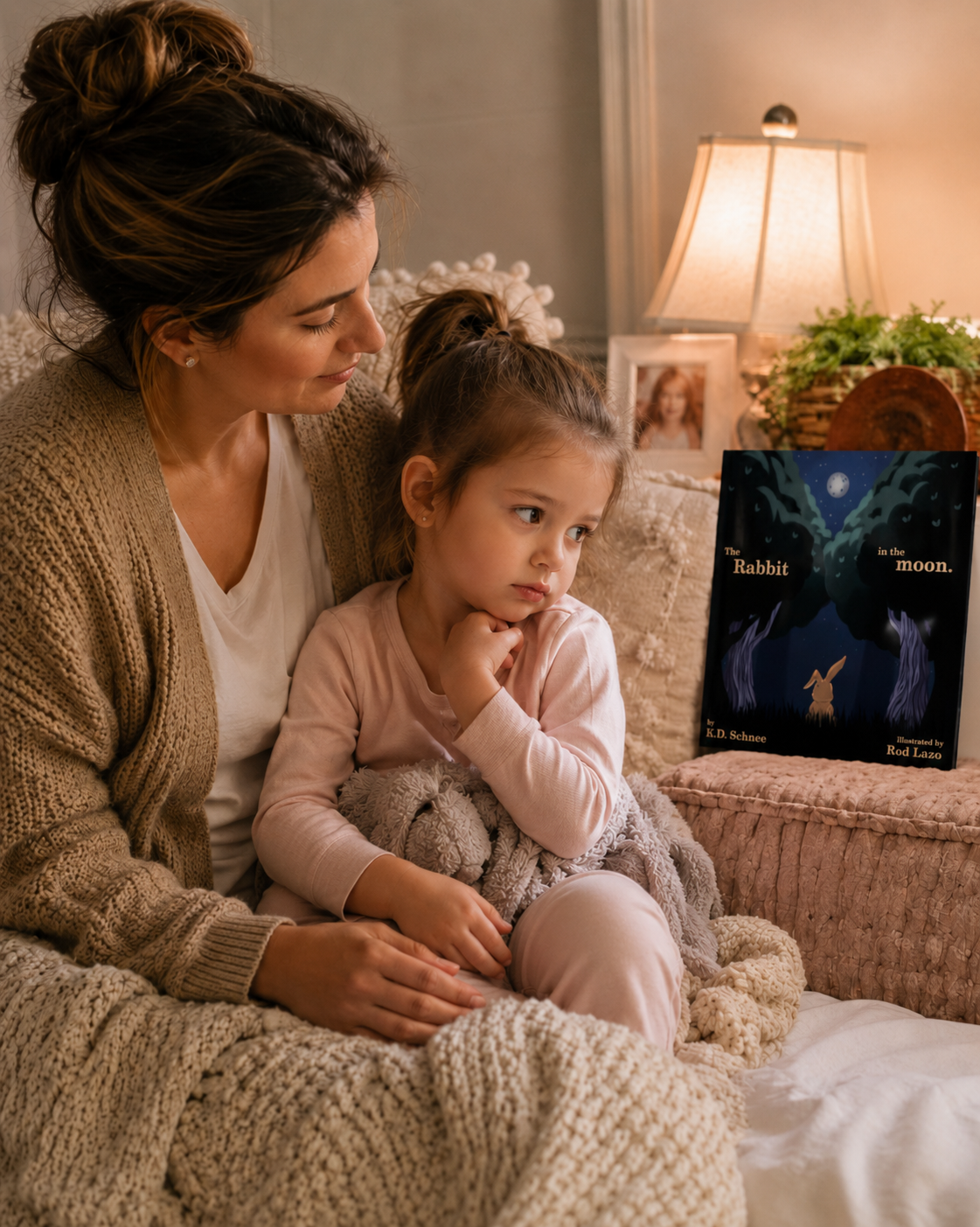
A reluctant reader does not always need a bigger reading goal. Sometimes they need a smaller, safer way back into the story.
The best way to encourage reluctant readers is to lower the pressure around reading and make books feel easier, warmer, and more worth returning to.
That may sound simple, but it changes the whole conversation.
When a child does not want to read, adults often move quickly into fixing mode. We buy more books, make charts, set timers, correct every skipped word, ask comprehension questions, or explain why reading matters. Those things can come from love, but they can also make a child feel as if every book is another little test waiting on the couch.
Many reluctant readers are not rejecting stories. They are rejecting pressure.
Some children think reading is hard. Some think books are boring because they have not found the right kind yet. Some would rather be read to than read alone. Some are tired by the end of the day. Some avoid books because mistakes feel embarrassing. Some love stories, but not the way adults keep asking them to prove they understood every page.
As the creator of Yabbit the Rabbit and The Rabbit in the Moon, I think a lot about children who hesitate before beginning. Reading can become one of those beginning moments. The child may want to like books, or may want to be the kind of kid who reads easily, but the first step feels too big. That is where parents can help.
Not with force. With a better doorway.
What is a reluctant reader?
A reluctant reader is a child who avoids reading, resists books, says reading is boring, struggles to start, or only reads when an adult requires it.
That does not mean the child has one single problem. “Reluctant reader” is a label adults use, but underneath it there may be many different stories. One child may find decoding difficult. Another may read well but prefer screens. Another may only like nonfiction. Another may feel embarrassed reading aloud. Another may associate books with correction, schoolwork, or being compared to a sibling.
Before trying to solve reluctance, it helps to ask a quieter question: what is this child protecting themselves from?
They may be protecting themselves from feeling slow. From getting words wrong. From being bored. From disappointing an adult. From sitting still too long. From a book that feels too babyish. From a book that feels too hard. From a routine that has lost all its warmth.
Once you understand that, the goal becomes clearer. You are not trying to drag a child into reading. You are trying to remove the obstacle that made books feel unsafe, dull, or heavy in the first place.
Why do some children resist reading?
Children resist reading for different reasons, and the reason matters.
Some children resist because reading feels difficult. The page may require more effort than adults realize, especially if the child is still building fluency, attention, vocabulary, or confidence. A child who has to work hard on every line may not experience the story as pleasure yet. They experience it as labor with a bookmark.
Other children resist because reading has become too connected to performance. They are asked to sound out, summarize, answer questions, read longer, read faster, choose a harder book, or move on from picture books before they are ready. None of those goals are wrong by themselves, but if every reading moment becomes a measuring moment, books lose their invitation.
Some children resist because they have not found books that match their actual interests. Adults may offer sweet, worthy, award-winning stories while the child wants sharks, moon phases, silly animals, construction trucks, soccer, jokes, graphic novels, mysteries, or a book with a cover that looks less like homework in disguise.
There are also children who resist because screens, busy schedules, and tired evenings have made books harder to choose. The book is not the enemy. It is simply the quieter object in a very loud room.
The first mistake parents make with reluctant readers
The first mistake is turning reading into a battle for identity.
Parents understandably worry. They think, “My child does not like reading,” and the sentence starts to feel enormous. Suddenly every book refusal feels like a sign of the future. Will they fall behind? Will they struggle in school? Will they miss the joy of stories? Will they become an adult who only reads parking signs and cereal boxes?
That worry can make adults push harder.
The problem is that children feel the push. A reluctant reader may already feel unsure, bored, embarrassed, or resistant. When an adult adds urgency, the child may dig in deeper. Not because they are trying to be difficult, but because reading now feels emotionally expensive.
A better first move is to protect the relationship between the child and books. Before you worry about pages, minutes, levels, or logs, ask whether reading still feels like something your child can approach without bracing for correction.
The goal is not to win one reading session. The goal is to help the child believe books can still belong to them.
How do you encourage a reluctant reader without pressure?
Start by making the reading moment smaller and more pleasant.
That may mean reading aloud while your child simply listens. It may mean looking at the pictures first. It may mean reading one page, not one chapter. It may mean choosing a funny book instead of the “important” one. It may mean letting your child reread an old favorite even if you, the adult, are spiritually ready to launch that book into the nearest cloud.
Children often return to books through comfort before challenge. Familiar books, picture books, rhyming books, joke books, comics, nonfiction, audiobooks, and short read-alouds can all be part of the path back. The point is to lower the threat level around reading so the child can experience a book without feeling trapped inside a task.
Try saying, “Let’s just read the first page,” or “You can listen while I read,” or “Choose one picture you want to talk about.” Those are not tricks. They are invitations with smaller doors.
A reluctant reader does not always need more discipline.
Sometimes they need a gentler start.
Why choice matters so much
Choice matters because children are more likely to read when they feel some ownership over what they are reading.
That does not mean handing a five-year-old the entire library and asking them to locate their literary destiny. Too much choice can overwhelm a young child. A better approach is to offer a small, curated choice: “Do you want the funny book, the animal book, or the moon book?” Three options can give a child control without turning bedtime into a board meeting.
Choice also means respecting taste. A child’s taste may not match the adult’s idea of a perfect book. They may want the same book again. They may want something silly. They may want nonfiction. They may want a book with more pictures than words. They may want a character they already know. They may want a book that feels easy because the rest of the day was hard.
That is not failure. That is how readers begin building a relationship with books.
Adults sometimes want children to love reading in a noble, well-rounded, future-scholar way. Children often begin by loving a dinosaur, a joke, a page with a weird face, a rhyming line, a glowing moon, or a character who feels like a friend. Let that count.
Why read-alouds still count
Read-alouds count because listening to a story is not a lesser form of reading life.
This is especially important for reluctant readers. Some children avoid books because independent reading feels hard, but they still love stories when an adult carries the language for them. When you read aloud, the child gets access to rhythm, vocabulary, character, feeling, humor, suspense, and meaning without having to fight every word alone.
Reading aloud also protects the emotional part of books. It says, “This is something we share,” not “This is something you must perform.” A child who is reluctant to read independently may still come back to the couch for a read-aloud if the experience feels warm enough.
You can keep it simple. Read a page while breakfast finishes. Read one picture book before bed. Read while your child builds with blocks nearby. Read the dialogue in funny voices if you have the energy, and in a tired parent whisper if you do not. The story still counts.
There is no trophy for making every read-aloud theatrical. Some nights, the heroic act is staying awake through the last page.
Why picture books help reluctant readers
Picture books are one of the best doorways back to reading because they do not make the child carry the whole experience through text alone.
The illustrations give the child something to enter first. They can notice a face, a color, a moon, a shadow, a tiny detail in the corner, or a character’s expression. They can understand part of the story before they have decoded every word. That matters for children who feel intimidated by text-heavy books or who have started to believe reading is only about getting words right.
Picture books also give parents more ways to connect. You can ask, “What do you notice?” instead of “What happened in the story?” You can talk about the feeling in a character’s face. You can pause on a page and let the child lead. You can reread without making it feel like practice.
For hesitant children, picture books can be especially helpful because the emotional work happens gently. A child can talk about the character first. They do not have to announce, “I am avoiding reading because I feel embarrassed and possibly allergic to chapter books.” They can simply point to Yabbit and say he looks unsure.
That is a doorway worth keeping open.
For more on choosing illustrated books children actually want to pick up and return to, read:
https://www.yabbitrabbit.com/parent-resources/how-to-choose-illustrated-childrens-books-child-will-read
What if your child says reading is boring?
Believe there is useful information inside the complaint.
“Reading is boring” may mean the book is too hard. It may mean the book is too easy and feels babyish. It may mean the child has not found the right topic. It may mean the reading session is too long. It may mean the adult keeps interrupting the story with questions. It may mean the child is comparing books to screens, games, or videos that deliver excitement quickly.
Try not to answer with, “Reading is not boring.” That may be true in the grand cathedral of human civilization, but it does not help much in the moment.
Try curiosity instead: “What kind of boring?” or “Is this too slow, too hard, or just not your kind of book?” You may learn something useful. A child who says all books are boring may suddenly admit that they like books about animals, ghosts, space, cooking, soccer, or things that explode safely in science experiments.
From there, the work gets easier. You are not trying to convince the child to love all reading. You are trying to find the first book that does not feel like a locked door.
How The Rabbit in the Moon can help reluctant readers
The Rabbit in the Moon can help reluctant readers because it was created for children who hesitate before beginning.
Reading can be a Yabbit moment. The child sees the book, feels the expectation, and pauses. Maybe they worry the words will be hard. Maybe they do not want to make a mistake. Maybe they are tired. Maybe they are not ready to read aloud. Maybe they have already decided that books are not “their thing,” and now every book feels like a little argument.
Yabbit gives parents a different way to talk about that pause.
Instead of saying, “You need to read,” a parent can say, “What is one tiny brave hop back to the book?” The answer might be very small: choose the book, look at the cover, listen to one page, point to one picture, read one line together, or let the parent read while the child follows along.
That is the heart of the Tiny Brave Hop Method. It does not turn reading into a battle. It makes the first step small enough to try.
A child does not have to become a passionate reader by Thursday. They can begin by letting a story feel safe again.
Do not make reading feel like a test
One of the fastest ways to drain the pleasure from a book is to interrogate the child after every page.
Questions can be helpful. Conversation matters. But if every story becomes a quiz, reluctant readers will start to hear the book closing in on them. They may stop relaxing into the story because they are waiting for the adult to ask what happened, what the character learned, what the main idea was, and whether anyone can please locate the moral before pajamas.
Try fewer questions and better ones.
Instead of “What happened?” try “Which page do you want to look at again?” Instead of “What was the lesson?” try “Which part felt funny, strange, or surprising?” Instead of “Can you summarize it?” try “Did anyone in the story remind you of someone?”
Some nights, do not ask anything. Just read.
That may feel almost suspiciously simple, but reluctant readers often need books to become enjoyable again before they can become instructional. Pleasure is not a decoration on literacy. It is part of what makes a child return.
How to use tiny brave hops with reluctant readers
A tiny brave hop is the smallest next step a child can take toward reading without feeling overwhelmed.
For a reluctant reader, that step might be choosing between two books, looking at the cover, listening to one page, reading one sentence, rereading a favorite line, pointing to one illustration, or sitting beside you while you read. If your child is older, the hop might be reading the first paragraph, listening to an audiobook while following along, choosing a graphic novel, or reading for five minutes instead of twenty.
The smaller the step, the more likely the child is to begin.
This matters because adults often set the starting line too far away. We say, “Read for twenty minutes,” when the child is still stuck at “I do not want to open the book.” We say, “Try this chapter,” when the child needs to begin with the first page. We say, “You need to practice,” when the child needs to feel that reading is not another place to fail.
For a deeper guide to helping hesitant children begin hard things with smaller steps, read: https://www.yabbitrabbit.com/parent-resources/how-to-help-your-child-take-tiny-brave-hops
Small beginnings are not small to a child who has been avoiding the start. They are the start.
Build a reading routine that does not feel like homework
Reluctant readers often do better with routines that feel predictable but not heavy.
The best routine is usually simple enough to survive a real family day. One book before bed. Ten minutes after breakfast. A couch book before Saturday cartoons. A read-aloud while dinner cools. A library visit once a week. A basket of books where the child actually spends time.
Do not start with the most ambitious version of your ideal reading life. Start with the version your family can repeat. A five-minute routine that happens often is better than a beautiful thirty-minute plan that collapses after two nights and one missing sock.
The tone matters too. “It is reading time, and you have to do it” feels different from “Let’s choose our book.” The routine should say, “Books belong here,” not “The literacy patrol has arrived.”
If your child resists, make the routine smaller before you abandon it. One page still counts. Looking at pictures counts. Listening counts. Rereading counts. A reluctant reader needs many low-pressure experiences with books before reading starts to feel like something they can return to voluntarily.
Let rereading count
Rereading is not a problem. Rereading is often a sign that a child is building comfort, memory, language, and confidence.
Adults sometimes get tired of the same book and assume the child should move on. But children often return to a book because it gives them something they need: predictability, mastery, humor, comfort, or emotional safety. A child who asks for the same story again may be practicing more than we can see.
For reluctant readers, rereading can be especially useful because the second or third reading feels less threatening. The child knows what is coming. The words become more familiar. The story feels easier to enter. Confidence has a little room to stretch its legs.
If your child rereads The Rabbit in the Moon, let that count. They may be returning to Yabbit’s hesitation, Snail’s steadiness, the moonlit journey, or the phrase “one tiny brave hop” because it is still doing quiet work inside them.
Not every reading experience has to be new.
Sometimes the familiar book is the bridge back.
Use interests, not just reading levels
Reading levels can help adults choose books, but they should not be the only compass.
A child may be technically able to read a book and still have no interest in it. Another book may look too simple but spark genuine curiosity. Interest matters because it gives the child a reason to stay with the page. A book about a beloved topic can carry a reluctant reader farther than a “perfect level” book that makes their soul leave the room.
Ask what your child already likes outside of reading. Animals, sports, space, drawing, weather, jokes, mysteries, friendship, cooking, monsters, music, maps, building, bugs, or the private lore of trucks. Then look for books that meet that interest in different forms: picture books, nonfiction, early readers, graphic novels, poetry, magazines, audiobooks, or series.
The goal is to stop treating reading as one narrow activity.
Reading can be a story, a fact, a caption, a comic panel, a recipe, a map, a poem, a sign, a joke, a character guide, or a page your child wants to hear again.
The wider the doorway, the more children can enter.
What parents should stop doing
Stop making every reading moment corrective.
That does not mean you never help your child with a word. It means you protect the feeling of the moment. If your child is reading aloud and you correct every stumble, they may start to hear the book as a minefield. Let some mistakes pass if they do not change meaning. Offer help gently. Take turns. Read a sentence yourself. Keep the story moving.
Stop comparing your child to siblings, classmates, or where you think they “should” be. Comparison rarely creates a reader. It usually creates a child who feels watched.
Stop using books only as the responsible alternative to screens. Reading should not become the punishment that arrives when the tablet goes away. Books need their own pleasure, their own warmth, their own place in the family rhythm.
Stop assuming reluctance means laziness. A child who resists reading may be bored, overwhelmed, embarrassed, under-challenged, over-challenged, tired, or simply waiting for the right book to find them.
That is a lot more interesting than laziness. It also gives parents more useful places to begin.
What parents can say instead
When a child resists reading, softer language often works better than a lecture.
Try:
“Let’s just start with one page.”
“You can listen tonight.”
“Do you want to choose, or should I choose two options?”
“We can read the funny part first.”
“This book may not be your kind of book. Let’s find one that is.”
“You do not have to read the whole thing right now.”
“What is one tiny brave hop back to the story?”
These phrases lower the temperature. They also respect the child’s experience without letting avoidance run the house. That balance matters. The goal is not to say, “Fine, never read.” The goal is to make the next reading step feel possible.
A child who feels understood is often more willing to try. A child who feels cornered will usually look for the nearest exit, and sometimes that exit is under the coffee table.
How teachers can support reluctant readers
Teachers can support reluctant readers by widening what counts as meaningful reading and giving children more ways into books.
Some children need choice. Some need read-alouds. Some need graphic novels, nonfiction, picture books, poetry, or shorter texts. Some need a trusted adult to say, “This one might be for you.” Some need to hear classmates recommend books. Some need permission to abandon a book that is not working and choose another without feeling as if they have failed.
Classrooms can also protect the pleasure of reading by not turning every book into a worksheet. There is a place for comprehension work, of course. But reluctant readers need experiences where books are discussed, shared, laughed over, revisited, and chosen, not only assessed.
A teacher who says, “You can watch first,” or “Try one page,” or “Let’s find the book that fits you better,” is giving a reluctant reader a smaller doorway. That is often the difference between refusing and beginning.
How do you know if the approach is working?
Look for small signs of return.
Your child may not suddenly become the kind of reader who disappears into a window seat with a stack of novels and a mug of something literary. They may begin much more quietly. They choose a book from the basket. They let you read one more page. They laugh at an illustration. They ask for the same book again. They talk about a character. They tolerate reading for five minutes without a battle. They bring a book to the couch. They stop saying “I hate reading” quite so often.
Those signs matter. A reluctant reader is not always transformed by one perfect book. More often, the shift happens through repeated experiences that make books feel safe, interesting, and connected to someone they love.
That is not flashy. It is how many important things grow.
Why KD Schnee writes for hesitant readers too
I created Yabbit for children who hesitate at the edge of the beginning.
That includes the child who freezes before trying something new, the child who needs courage broken into smaller pieces, and the child who wants to move forward but cannot quite start. Reading can be one of those places. A book can feel like a doorway, and some children need help crossing it.
The Rabbit in the Moon was written to give children a character who understands hesitation without being defined by it. Yabbit pauses. Snail stays steady. The journey continues through one tiny brave hop.
That is the same spirit parents can bring to reluctant readers.
Not “Why won’t you read?”
Not “You have to love this.”
Not “Other kids are reading more.”
But:
“Let’s make the start smaller.”
That is where many children find their way back to books.
External Resource
For more practical guidance on reading motivation, Reading Rockets offers helpful parent and educator resources here: https://www.readingrockets.org/reading-motivation
Buy the Book
If your child resists reading, avoids new books, worries about getting words wrong, or needs storytime to feel gentler, The Rabbit in the Moon belongs on your shelf.
Yabbit is not fearless. He pauses before the journey. Snail brings steadiness, persistence, and quiet support. Together, they help children understand that courage does not have to arrive all at once. It can begin with one tiny brave hop.
For reluctant readers, that message matters. The first brave hop might not be reading the whole book alone. It might be choosing the story, listening to one page, looking at one illustration, or letting a parent read beside them. Those small beginnings can help books feel safe again.
The Rabbit in the Moon gives families more than a read-aloud. It gives children language for hesitation, support, and trying one small step when the beginning feels too big.
FAQs
How do you encourage a reluctant reader?
Encourage a reluctant reader by lowering pressure, offering choice, reading aloud, starting with short sessions, and choosing books that match the child’s interests. The goal is to make books feel safe and enjoyable again before asking for more independence or stamina.
What causes a child to be a reluctant reader?
A child may resist reading because books feel too hard, too boring, too pressured, too slow, or too connected to correction. Some children also avoid reading because they have not found books that match their interests or because screens have become easier to choose.
Should parents force a reluctant child to read?
Forcing usually makes reading feel worse. Children still need reading routines and support, but the approach should be calm and manageable. Start with read-alouds, short moments, appealing books, and one small next step instead of turning reading into a daily battle.
Do picture books help reluctant readers?
Yes. Picture books can be very helpful for reluctant readers because illustrations give children another way into the story. They reduce pressure, support comprehension, invite conversation, and make reading feel more visual, emotional, and shared.
Does rereading the same book still count?
Yes. Rereading builds comfort, memory, fluency, language, and confidence. A child who asks for the same book again may be practicing the story, enjoying mastery, or returning to a feeling they are still working through.
How can The Rabbit in the Moon help reluctant readers?
The Rabbit in the Moon helps reluctant readers by making the first step feel smaller. Through Yabbit’s hesitation and Snail’s steady support, children learn that trying one small part still counts as courage.
What should I say when my child says reading is boring?
Try curiosity before correction. You might say, “What kind of boring?” or “Is this book too hard, too easy, or just not your kind of story?” Then offer a smaller choice and a lower-pressure way in, such as listening to one page or choosing a different book.