A five-year-old wakes up with a stomachache on school mornings but seems fine by Saturday. A seven-year-old repeatedly asks whether the family will arrive on time, whether the teacher will be upset, and what will happen if they forget their homework. A preschooler who spent all week talking excitedly about a birthday party reaches the front door and suddenly refuses to go inside.
None of these moments automatically means a child has an anxiety disorder. Children have fears, worries, difficult transitions, bad days, vivid imaginations, and developmental stages in which particular fears are common. At the same time, anxiety in children does not always arrive with the convenient announcement, “I feel anxious.”
Sometimes it arrives as a stomachache. Sometimes it looks like anger, clinginess, perfectionism, sleeplessness, silence, repeated reassurance seeking, refusal, or a child insisting they never wanted to do the activity they had been talking about for days.
The Centers for Disease Control and Prevention notes that anxiety in children can appear as fear or worry but may also show up as irritability, anger, trouble sleeping, fatigue, headaches, and stomachaches. Some children keep their worries largely to themselves, which means adults can miss the anxiety altogether.
That is why recognizing childhood anxiety is less about memorizing a list of symptoms and more about noticing patterns. What is happening, how often is it happening, what seems to trigger it, how intensely does the child react, and is the worry beginning to interfere with ordinary childhood life?
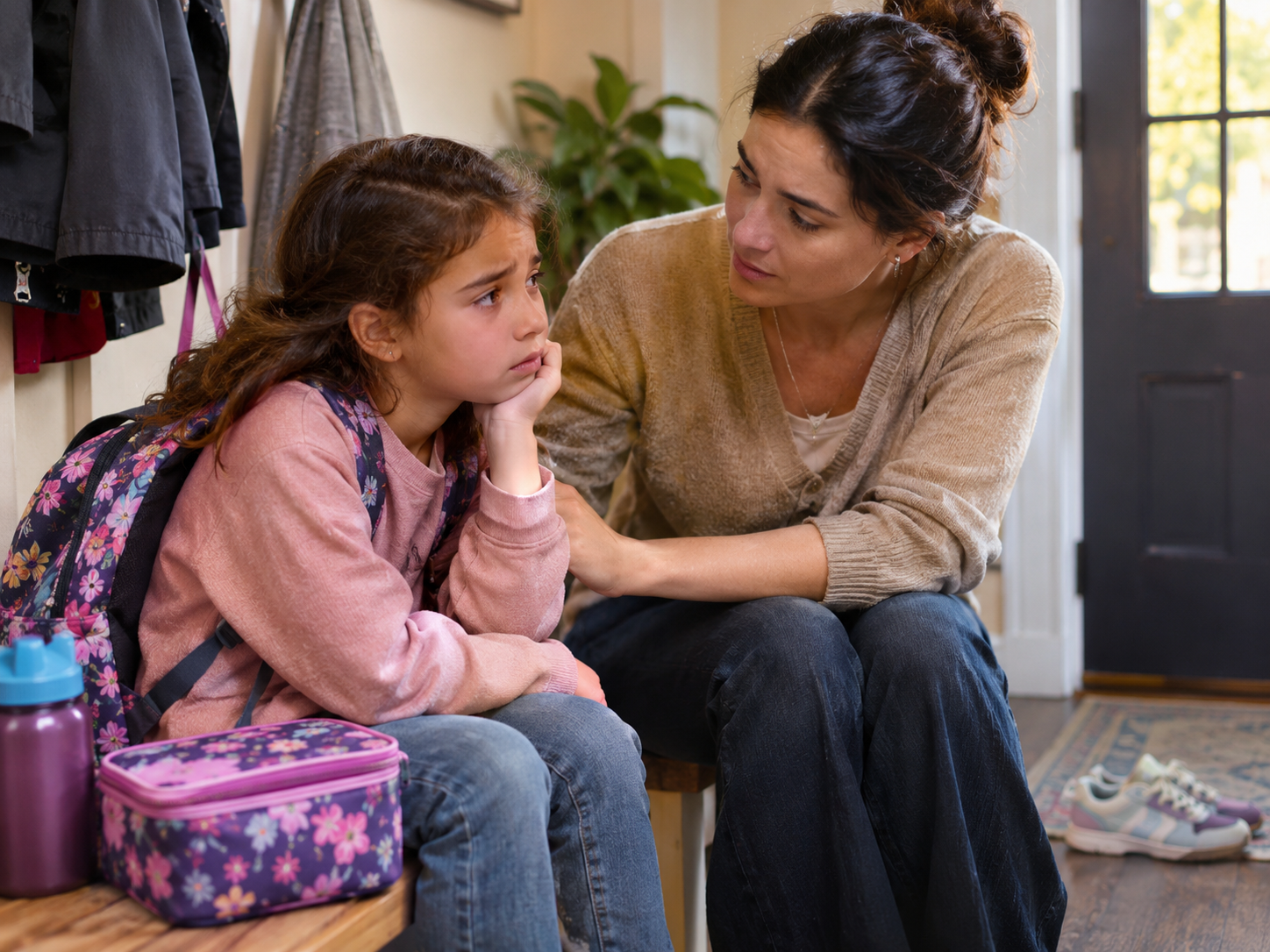
Anxiety in children can appear through physical complaints, behavior, avoidance, sleep changes, or repeated worry, even when a child never says, “I feel anxious.”
What Does Anxiety Look Like in a Young Child?
Anxiety can be surprisingly physical. A child may complain of a stomachache before school, say their head hurts before an activity, feel nauseated, become shaky, seem unusually tired, or say their heart feels fast. HealthyChildren.org, from the American Academy of Pediatrics, notes that children experiencing anxiety may report physical sensations such as a racing heart, sweating, shaking, stomach discomfort, or feeling unusually hot or cold.
Those symptoms are real experiences for the child. They should not automatically be dismissed as an attempt to escape something uncomfortable, even when they appear predictably before school, separation, a performance, or another stressful situation.
At the same time, physical complaints have many possible causes. A stomachache is not evidence of anxiety simply because a child also happens to be worried about school. New, persistent, severe, or concerning physical symptoms deserve appropriate medical attention rather than being casually explained away as nerves.
Anxiety can also change behavior. A child may become irritable, angry, unusually controlling, clingy, tearful, quiet, restless, or difficult to settle. The behavior adults notice may be the outer layer of a feeling the child does not yet know how to explain.
Normal Childhood Fear and Anxiety Are Not the Same as an Anxiety Disorder
Fear is part of childhood. Preschool-age children may become distressed when separating from caregivers and can develop temporary fears of darkness, strangers, animals, storms, or imaginary dangers. As children move into the school years, worries can increasingly involve school performance, injury, natural events, social situations, or things that might happen to themselves or people they love. The American Academy of Child and Adolescent Psychiatry emphasizes that many of these fears can be developmentally appropriate.
The fact that a fear is common does not mean it feels small to the child experiencing it. A four-year-old who is terrified of the dark does not become less frightened because adults know that many four-year-olds feel the same way.
What changes the level of concern is usually the pattern around the fear. Anxiety deserves closer attention when it becomes persistent, unusually intense, difficult for the child to control, or begins interfering with everyday activities such as school, sleep, play, friendships, family routines, or age-appropriate independence. The CDC similarly distinguishes ordinary childhood fears from persistent or extreme fear and worry that may indicate an anxiety condition.
Parents do not need to make that distinction alone. If you are unsure whether what you are seeing falls within ordinary development, a pediatrician or qualified mental-health professional can help put the behavior in context.
Anxiety Symptoms in Preschoolers Ages 3–5
Preschoolers often communicate emotional distress through behavior and the body before they can give adults a detailed explanation of what they are thinking.
A three- or four-year-old may not say, “I am worried that you will leave and not return.” They may become extremely distressed at drop-off, follow a parent from room to room, resist sleeping alone, or repeatedly ask where the parent is going.
Likewise, a child frightened by an upcoming activity may cry, hide, refuse to get dressed, complain that their stomach hurts, become unusually demanding, or suddenly insist that the activity is boring. The reaction may look oppositional even when fear is helping drive it.
Separation fears are especially important to interpret developmentally. AACAP notes that anxiety around separation can be normal from infancy through the preschool years, while also emphasizing that fears become more concerning when they are severe or significantly interfere with daily functioning.
The same principle applies to fears of darkness, animals, storms, strangers, unfamiliar bathrooms, loud noises, or sleeping somewhere new. One frightened evening does not tell you very much. A repeated pattern that begins shrinking the child's world tells you more.
Anxiety Symptoms in Children Ages 6–8
As children's language and awareness of the world expand, their worries can become more specific and more future-oriented.
A six-, seven-, or eight-year-old may worry about making mistakes at school, disappointing a teacher, being laughed at, forgetting homework, getting hurt, losing a game, being away from a parent, or something bad happening to a family member. Some children ask these worries directly, while others carry them quietly.
School can make previously invisible anxiety easier to notice because children are now being asked to separate, perform, cooperate with groups, complete work, navigate friendships, tolerate mistakes, follow schedules, and manage more of their day independently.
A child may therefore appear perfectly comfortable at home while regularly visiting the school nurse with stomachaches, becoming distressed on Sunday nights, taking an unusually long time to finish assignments, erasing work repeatedly, refusing to raise a hand, or insisting they cannot attend school.
HealthyChildren.org notes that school avoidance can involve physical complaints such as headaches, stomachaches, nausea, dizziness, or other symptoms that occur most often on school days. That does not mean every school-day stomachache is anxiety, but the timing and repetition are useful information to share with the child's pediatrician.
Physical Symptoms Can Be Part of Anxiety
Adults sometimes expect anxiety to live entirely inside a child's thoughts.
Children's bodies are less cooperative with that distinction.
Anxiety can accompany stomach discomfort, headaches, fatigue, nausea, sleep difficulty, trembling, sweating, restlessness, and sensations such as a racing heart. Both the CDC and American Academy of Pediatrics recognize physical symptoms as part of the way anxiety can appear in children.
For parents, the practical lesson is not to decide that every unexplained symptom must be psychological. It is to notice whether there is a pattern connecting the physical complaint with particular situations, separations, school days, performances, social situations, or anticipated events.
A pediatrician can help rule out medical causes and determine whether anxiety may be contributing. Children deserve to have both their physical symptoms and their emotional experiences taken seriously.
Anxiety Can Look Like Anger or Irritability
A worried child does not always look worried.
Sometimes they look furious.
The CDC specifically notes that anxiety can present as irritability or anger in children. A child who feels overwhelmed by uncertainty may become argumentative, rigid, controlling, or explosive precisely when the family is trying to leave for the event that makes them anxious.
That does not mean every tantrum conceals anxiety. Children become angry for hundreds of reasons, including being tired, hungry, frustrated, disappointed, overstimulated, or simply four years old on a Tuesday afternoon.
The useful question is whether anger repeatedly appears around the same kinds of demands. If the explosion happens whenever the child must separate, perform, try something unfamiliar, make a mistake, attend school, or enter a social situation, anxiety may be one piece of the pattern worth exploring.
Recognizing that possibility does not excuse hurtful behavior. It helps adults respond to both the behavior and what may be happening underneath it.

Childhood anxiety can sometimes look like anger, irritability, refusal, or attempts to control a situation rather than obvious fear.
Avoidance Is One of the Most Important Patterns to Notice
An anxious child may discover very quickly that avoiding something makes the uncomfortable feeling drop. If school feels frightening, staying home provides immediate relief. If talking in front of the class feels unbearable, remaining silent removes the immediate social risk. If joining a game creates uncertainty, standing beside a parent feels safer.
That relief is understandable, but repeated avoidance can gradually make a child's world smaller. The child begins to learn not only that the activity feels uncomfortable, but that escape is the reliable way to make the feeling stop.
Parents may notice avoidance as outright refusal, but it can be much subtler. A child might suddenly need the bathroom before an activity, move extraordinarily slowly while getting ready, insist that they are tired, claim that the activity is stupid, or repeatedly ask to do it another day.
None of those behaviors proves anxiety is present. Their value is in the pattern, especially when avoidance repeatedly appears around similar kinds of situations.
Repeated Reassurance Can Be Another Clue
Many children ask questions when they feel uncertain, and answering those questions is part of being a parent. Anxiety can make the questions unusually repetitive.
“Are you sure you'll pick me up?”
“What if it rains?”
“What if I don't know the answer?”
“Are you sure Grandma is okay?”
“What time are we leaving?”
The parent answers, and the child feels better for a moment. Then the same question returns ten minutes later because the answer did not eliminate the underlying uncertainty.
Repeated reassurance seeking by itself does not establish an anxiety disorder, but it can be useful information when it appears alongside other patterns such as sleep problems, avoidance, physical complaints, or persistent worry.
Rather than becoming frustrated that the child apparently did not listen the first six times, it can help to recognize that they may be trying to achieve a level of certainty that real life cannot always provide.
Perfectionism Can Hide Anxiety Behind Good Behavior
Some anxious children are easy to notice because they refuse, cry, cling, or become angry. Others become extraordinarily well behaved. AACAP warns that anxious children can be quiet, compliant, and eager to please, which means their difficulties may be overlooked because they are not disrupting anyone.
A child may spend excessive time making schoolwork perfect, become devastated by small mistakes, avoid raising a hand unless completely certain of the answer, or refuse to attempt something unless success feels guaranteed. From the outside, that can look like conscientiousness. The difference may appear in how much distress surrounds the performance.
Healthy effort leaves room for mistakes. Anxiety-driven perfectionism can make mistakes feel dangerous enough that avoiding the attempt seems safer than risking an imperfect result.
Freezing and Hesitation Can Be Forms of Worry Too
Some children do not run away from the difficult moment. They simply stop at its edge.
They want to join the game but cannot walk onto the field. They have talked about the birthday party all week but cannot cross the doorway. They know the answer in class but cannot make themselves raise a hand.
That pause is particularly important within the Yabbit Parent Resources work because hesitation is not automatically the same thing as clinical anxiety. Temperament, unfamiliarity, fear of mistakes, uncertainty, previous experiences, and anxiety can all contribute to the moment before a child begins.
For a deeper look specifically at that distinction, read Why Children Hesitate Before Trying: What Yabbit Helps Kids Understand About the First Step: https://www.yabbitrabbit.com/parent-resources/psychology-of-hesitation-in-children-yabbit-the-rabbit
The goal is not to diagnose anxiety every time a child pauses. It is to become curious about what is making this particular beginning difficult.
Buy The Rabbit in the Moon
The Rabbit in the Moon is not a treatment for childhood anxiety, and it was not written to diagnose anxious children. Its strongest connection to this subject is narrower and more honest.
Yabbit represents the child who wants to move forward but hesitates when the moment becomes real. He worries, sees reasons not to begin, and experiences the challenge as something larger from where he is standing. Snail brings persistence and companionship without requiring Yabbit to become fearless first.
For children whose worry tends to appear as hesitation, avoidance, or difficulty taking the first step, Yabbit can provide a character who understands that experience from the inside. A family can talk about Yabbit's hesitation without immediately asking a child to explain their own, giving the feeling a little emotional distance.
The message is not that every worried child simply needs to be braver. It is that courage and uncertainty can exist together, and sometimes movement begins with something much smaller than the whole challenge.
Sleep Problems Can Be Both a Symptom and a Signal
Nighttime removes many of the distractions that keep worries quiet during the day. A child may suddenly begin asking questions once the lights go out, resist sleeping alone, repeatedly leave the bedroom, have trouble falling asleep, wake during the night, or seek reassurance that everyone in the family is safe. The CDC includes trouble sleeping among the ways anxiety can appear in children, while AACAP also identifies sleep difficulties within several anxiety presentations.
Once again, sleep problems have many possible causes. The useful information for parents is whether sleep changes are occurring alongside a broader pattern of worry, avoidance, separation difficulty, physical complaints, or distress during the day.
When sleep trouble becomes persistent, severe, or disruptive to the child or family, bring the pattern to the child's pediatrician rather than assuming anxiety is the only explanation.
School Refusal Deserves Attention
Many children occasionally announce that they do not want to go to school. That statement becomes more significant when school avoidance turns into a repeated pattern accompanied by distress, physical complaints, missed school, or difficulty functioning. HealthyChildren.org describes school avoidance as regular resistance to attending school and notes that some children develop headaches, stomachaches, nausea, dizziness, or other anxiety-related symptoms that often appear on school days.
School refusal can have different causes, including separation concerns, academic difficulty, bullying, social anxiety, stressful changes, or other emotional and developmental issues. The answer is therefore not simply to label the child anxious and move on. Parents, teachers, pediatricians, and mental-health professionals may need to compare what they are seeing across settings to understand why school has become difficult.
Quiet Children Can Be Struggling Too
One of the easiest mistakes adults make is assuming that distress must be disruptive. A child who sits quietly, follows directions, receives good grades, and never causes trouble may still be carrying substantial anxiety. AACAP specifically cautions that anxious children may be quiet, compliant, and eager to please, which can allow their difficulties to go unnoticed.
Parents might instead notice the cost at home. The child holds everything together during the school day and falls apart after returning to a safe environment, or they worry extensively the evening before activities that teachers believe are going perfectly well.
This does not mean every quiet or conscientious child is secretly anxious. It means outward compliance should not be the only measure adults use to decide whether a child is comfortable.
Look for Patterns Instead of Counting Symptoms
A checklist can be helpful, but children are not spreadsheets. A child can have a stomachache, sleep badly, refuse an activity, and become irritable without having an anxiety disorder. Another child may show fewer outward symptoms but experience worry that is much more disruptive internally.
Rather than counting signs, look at the full pattern. Notice when the behavior happens, how often it occurs, how intense it becomes, how long it has continued, what the child avoids because of it, and whether the pattern is expanding into new parts of life.
It can also be useful to compare environments. Does the child struggle only at school? Only before separation? Mainly at bedtime? Around unfamiliar people? Whenever mistakes are possible?
Those details are far more useful to a pediatrician or clinician than the statement, “My child seems anxious.”
Keep Notes Before You Talk With Your Child's Pediatrician
Parents do not need to arrive at an appointment with a diagnosis. They can arrive with observations.
You might note that stomachaches occur primarily on school mornings, that bedtime questions have increased over the last six weeks, or that the child has stopped attending activities they previously enjoyed. You may notice that the teacher sees a different child than you see at home, or that worries have begun appearing in situations that never caused difficulty before.
Teachers and other caregivers can contribute useful information because anxiety may look different depending on the setting.
Concrete observations make the conversation more productive. They allow the professional to consider frequency, duration, developmental expectations, medical causes, family circumstances, school experiences, and the degree to which symptoms are interfering with ordinary life.
What Parents Can Do While They Are Figuring Out What Is Going On
Children benefit when adults take worry seriously without treating every anxious thought as proof of danger. That balance can be difficult. Dismissing the fear with “there's nothing to worry about” may leave the child feeling misunderstood, while reorganizing the entire family around avoiding every uncomfortable situation can allow anxiety to take up more and more space.
Parents can start by listening, naming what they observe, and keeping routines reasonably predictable. A response such as, “I can see that school feels especially hard this morning, and I want to understand which part feels hardest,” creates more useful information than arguing over whether the child should feel worried.
HealthyChildren.org recommends talking with a pediatrician when anxiety is interfering with normal activities or does not improve, and notes that evidence-based treatments such as cognitive behavioral therapy may be appropriate for some children. The parent does not have to solve the entire problem before asking for help.
Where Picture Books Can Help
A picture book gives a child somewhere else to look. Instead of asking, “Why are you worried?” for the tenth time, a parent can talk about why a character looks uncertain, what the character thinks might happen, or what helped the character take the next step. This emotional distance can make conversation easier because the child is not immediately being asked to explain or defend their own behavior.
Picture books can also give families shared language. A character, image, or moment from a story may later become a gentle way to revisit an experience without turning every difficult situation into a formal discussion about anxiety.
For recommendations matched to different kinds of childhood worry, see Children's Books for Anxiety: 17 Picture Books That Help Worried Kids Feel Understood: https://www.yabbitrabbit.com/parent-resources/childrens-books-for-anxiety-picture-books-help-worried-kids-feel-safer
Books can support understanding and connection. They should not be expected to diagnose or treat an anxiety disorder.
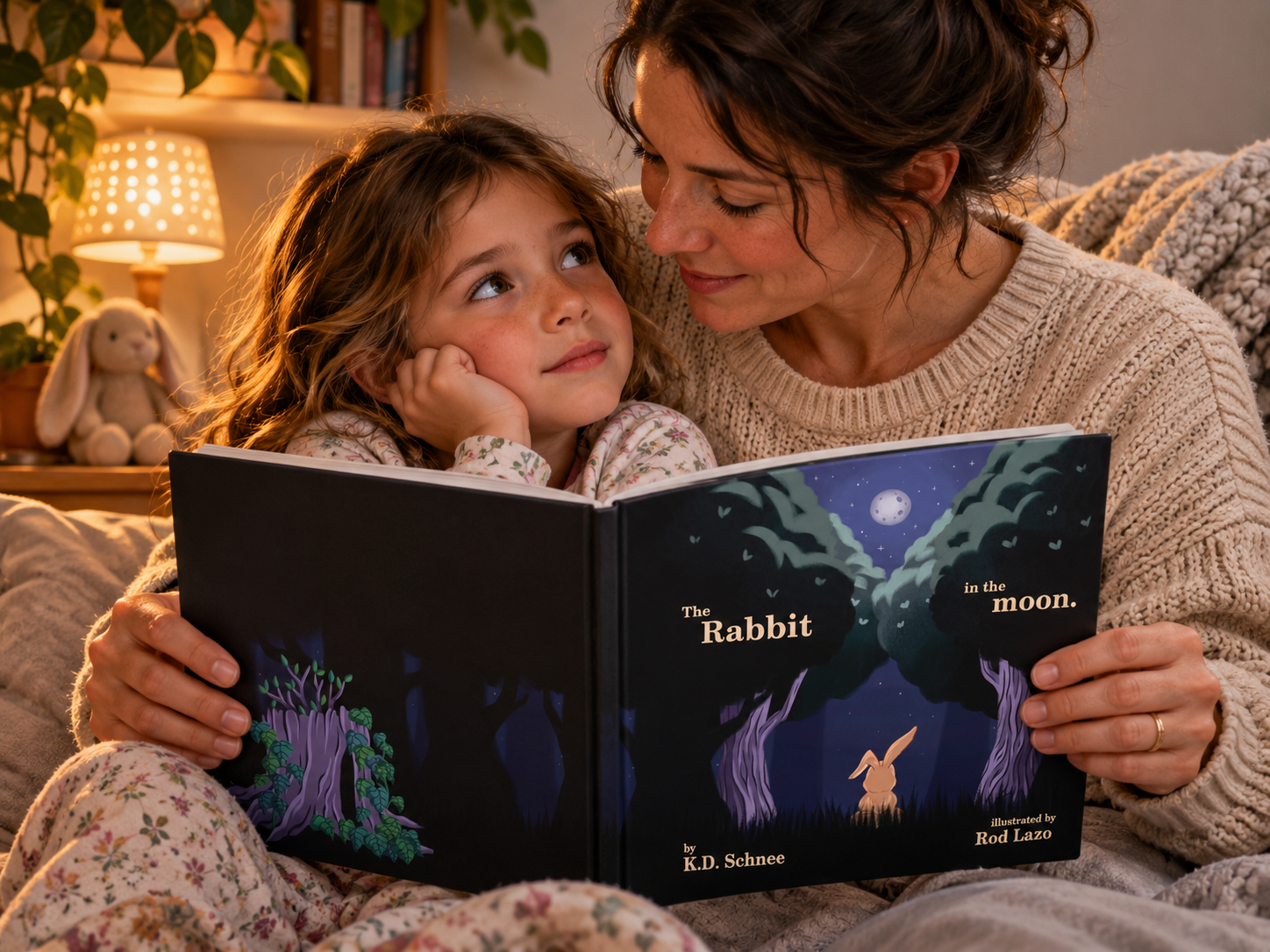
Picture books can give children emotional distance from difficult feelings, allowing families to talk about worry through a character before asking a child to talk about themselves.
When Should Parents Ask for Professional Help?
There is no single symptom that tells a parent, “This is definitely an anxiety disorder.” The more useful threshold is whether the fear or worry has become persistent, unusually intense, worsening, or disruptive to the child's daily life. The CDC recommends talking with a health-care provider when parents are concerned about anxiety, and both the CDC and AACAP emphasize the importance of severity and interference with everyday functioning when distinguishing ordinary fears from a possible anxiety disorder.
Seek professional guidance when worry is regularly interfering with school attendance, sleep, eating, friendships, family activities, play, separation, or age-appropriate independence. You should also speak with a medical professional when physical symptoms are recurrent or concerning, because headaches, stomachaches, fatigue, sleep problems, and other symptoms can have causes unrelated to anxiety.
A pediatrician can often be the first stop. They can help evaluate the overall pattern, consider medical issues, and determine whether referral to a child mental-health professional or another specialist would be appropriate.
An Authoritative Resource for Parents
The American Academy of Pediatrics offers a useful parent guide through HealthyChildren.org called Help Your Child Manage Anxiety: Tips for Home & School. It explains common signs of anxiety, discusses how anxiety can interfere with everyday activities, and encourages parents to speak with their child's pediatrician when worry persists or worsens.
HealthyChildren.org: https://www.healthychildren.org/English/family-life/family-dynamics/Pages/help-your-child-manage-fears-and-anxieties.aspx
The resource is particularly useful because it treats anxiety as something parents can notice and discuss without expecting families to diagnose the child themselves.
Frequently Asked Questions About Anxiety Symptoms in Children Ages 3–8
What are common signs of anxiety in young children?
Anxiety can appear as fear or worry, but children may also become irritable, angry, restless, clingy, avoidant, unusually quiet, or have trouble sleeping. Physical symptoms such as headaches, stomachaches, fatigue, nausea, shaking, sweating, or a racing heart can also accompany anxiety, although those symptoms can have other medical causes and should not automatically be attributed to worry.
Can anxiety cause stomachaches in children?
Yes, stomachaches can occur with childhood anxiety, and both the CDC and American Academy of Pediatrics identify stomach discomfort among possible physical symptoms. However, recurring or concerning abdominal pain should still be discussed with a medical professional rather than assuming anxiety is responsible.
Can anxiety look like anger in a child?
Yes. The CDC notes that anxiety can present as irritability and anger as well as obvious fear or worry. The important clue is often the pattern, such as anger repeatedly appearing before separation, school, unfamiliar activities, performance demands, or other situations the child finds threatening.
How can I tell the difference between normal childhood fears and anxiety that needs help?
Many childhood fears are developmentally normal, including separation worries in younger children and temporary fears of darkness, animals, storms, or other unfamiliar experiences. Concern increases when fear becomes persistent, unusually intense, worsening, or interferes with ordinary activities such as school, sleep, friendships, play, or family life.
Is refusing school a sign of anxiety?
It can be. Anxiety is one possible contributor to school avoidance, particularly when refusal is accompanied by physical complaints, separation distress, social fears, or repeated worry, but school refusal can have several causes and deserves a broader assessment rather than an automatic anxiety label.
Can a child be anxious even if they seem happy and well behaved at school?
Yes. Some anxious children are quiet, compliant, and eager to please, which can make anxiety less visible to adults. Parents may sometimes notice worry, exhaustion, perfectionism, or emotional release at home that teachers do not see during the school day.
When should I talk to my child's pediatrician about anxiety?
Talk with your child's pediatrician when worry is persistent, worsening, causing significant distress, or interfering with normal activities such as school, sleep, play, relationships, or family life. A professional can also help determine whether physical symptoms need medical evaluation and whether additional mental-health support would be useful.
Final Thought
Childhood anxiety does not have one face. It may be the child crying at preschool drop-off, but it can also be the seven-year-old quietly rewriting the same homework answer because being wrong feels unbearable. It may be the child who says their stomach hurts every school morning, the child who asks the same worried question twelve times before bed, or the child who desperately wants to join the game and cannot make their feet move toward it.
None of those moments should be reduced to a label. Children are still learning what fear feels like, what uncertainty means, how mistakes work, and what their bodies do when something feels threatening. Parents do not need to diagnose every difficult reaction, but they can become careful observers of patterns and ask for professional help when worry begins taking too much territory from ordinary childhood.
Sometimes the right response is reassurance. Sometimes it is more information, a predictable routine, a smaller first step, a conversation with the teacher, or an appointment with the pediatrician. And sometimes a story gives the family a gentler place to begin talking.
For the child whose worry appears at the starting line, Yabbit's role is not to promise that fear will disappear. It is to show that hesitation can be part of the story without becoming the end of it, and that a child can still discover what comes next one manageable step at a time.