25 Award-Winning Children’s Books Worth Reading With Your Child
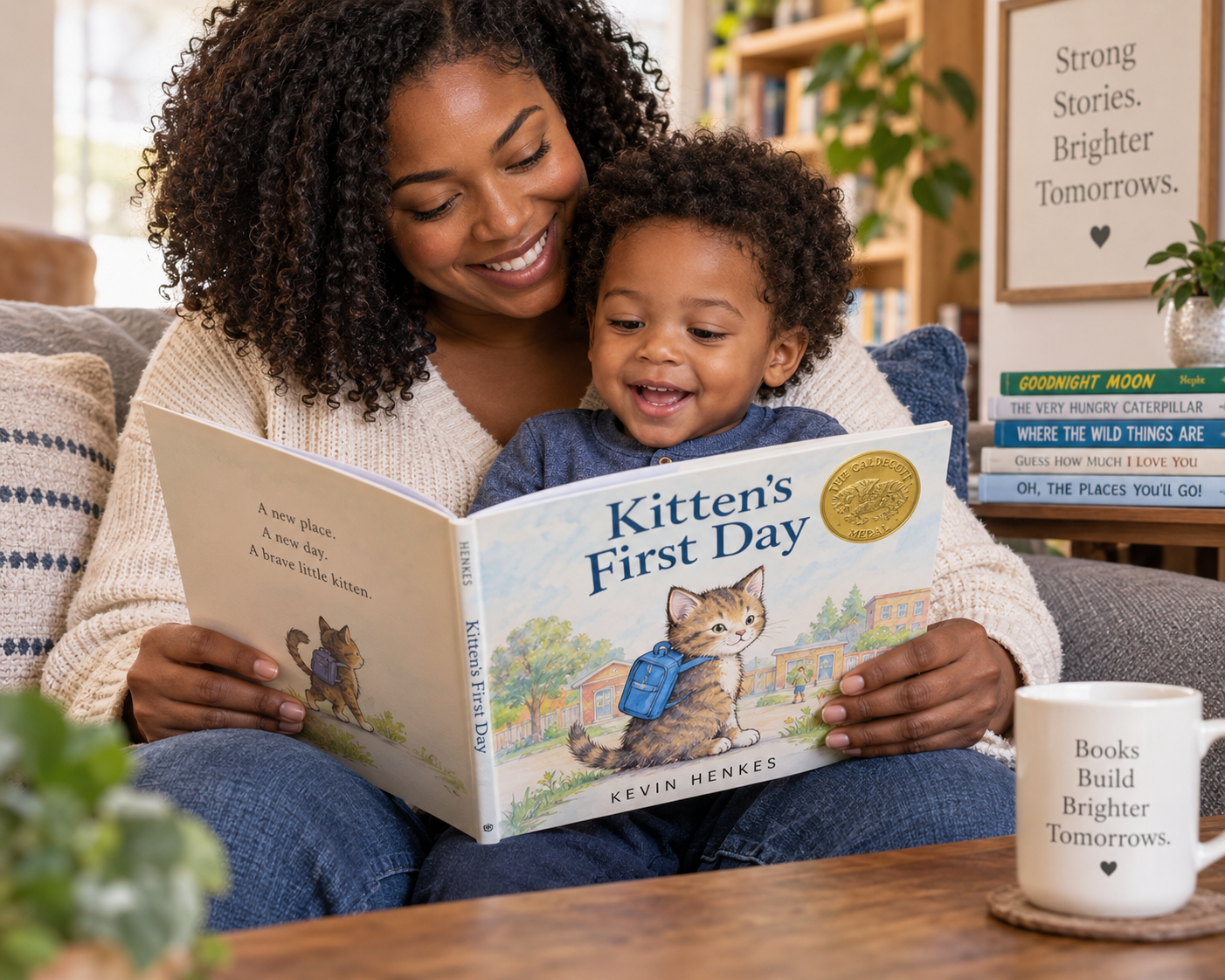
A true children’s classic does not only make adults nostalgic. It still works when a child is sitting beside you, waiting to care.
Award-winning children’s books are worth reading with your child when the award recognition is matched by something children actually respond to: a strong story, memorable illustrations, emotional clarity, read-aloud pleasure, humor, wonder, or a character they want to return to.
That distinction matters.
A medal on the cover can help parents, grandparents, and teachers notice a book, but it should not do all the thinking for us. Some award-winning books are beautiful, important, and deeply moving, but not every one is the right fit for every child at every age. A four-year-old may not care that a committee honored a book if the pacing loses them by page three. A seven-year-old may connect deeply with a picture book that a toddler is not ready to sit with yet.
As a children’s author, I look at award-winning books with admiration, but also with a parent’s practical question: does this book still work when a real child is beside you?
That is the purpose of this guide. Not to list every famous medal book, and not to pretend awards are the only measure of quality. This is a parent-friendly look at award-winning children’s books that are genuinely worth reading aloud, discussing, keeping on a shelf, or giving as a meaningful gift.
What makes an award-winning children’s book worth reading?
An award-winning children’s book is worth reading when the craft serves the child.
Awards can recognize illustration, writing, cultural contribution, literary distinction, originality, and excellence. The Caldecott Medal, for example, is awarded to the artist of the most distinguished American picture book for children, while the Newbery Medal recognizes distinguished contribution to American literature for children. Other awards, including the Coretta Scott King Book Awards and the Pura Belpré Awards, recognize outstanding books that reflect specific cultural experiences and contributions in children’s literature.
That recognition matters. It helps families discover books that might otherwise be missed. But a strong read-aloud book also needs to meet children where they are. The child should have something to notice, feel, wonder about, laugh at, worry over, or talk about after the book closes.
For KD Schnee, that is the larger lesson of great children’s literature. The best books do not impress adults at the expense of children. They invite children in first.
1. The Snowy Day by Ezra Jack Keats
Award recognition: Caldecott Medal winner
Suggested age: 2–6
Best for: Wonder, observation, quiet read-alouds
The Snowy Day remains one of the strongest award-winning children’s books because it understands how large a simple day can feel to a small child. Peter walks through snow, makes tracks, notices his body in the changed world, and brings the experience home in his imagination.
Children do not need an elaborate plot here. They need the feeling of entering a world that has become new overnight. The book works because it respects ordinary childhood wonder. Parents may appreciate how quietly it moves, but children appreciate something even more basic: Peter is allowed to notice.
2. Where the Wild Things Are by Maurice Sendak
Award recognition: Caldecott Medal winner
Suggested age: 3–7
Best for: Big feelings, imagination, anger, coming home
This book is not gentle in the sugary sense, and that is why it still works. Max is angry. His imagination becomes enormous. He travels into wildness and returns to a room where supper is waiting.
Children understand that emotional arc. They know what it feels like when anger makes the world expand. They also know the relief of finding their way back. Parents may appreciate the emotional honesty, but the child often responds to the wild rumpus first, which is exactly how the book earns its deeper meaning.
3. Make Way for Ducklings by Robert McCloskey
Award recognition: Caldecott Medal winner
Suggested age: 3–7
Best for: Animal lovers, city stories, family journeys
Make Way for Ducklings turns a city into a family adventure. The ducklings are small, the streets are large, and the adult world has to make room for a vulnerable little procession.
That is the emotional strength of the book. Children can follow the goal easily: the ducklings need to get safely across. The illustrations give them plenty to study, and the family structure of the story feels secure without being boring. It is a strong choice for children who enjoy animals, maps, movement, and a little gentle suspense.
4. The Little House by Virginia Lee Burton
Award recognition: Caldecott Medal winner
Suggested age: 4–8
Best for: Change, home, time, close looking
The Little House is slower than many modern picture books, but its pacing is part of its power. Children watch the house remain in place while the world changes around her. Seasons pass. Roads appear. The city grows closer. The feeling of home shifts.
This is a book for children who like to look carefully and think about change. Parents may appreciate its nostalgia, but the child’s entry point is usually simpler: the house feels alive. That emotional personhood gives the book its staying power.
5. Sylvester and the Magic Pebble by William Steig
Award recognition: Caldecott Medal winner
Suggested age: 4–8
Best for: Separation, fear, relief, family love
This is one of the more emotionally intense books on the list, and it may be too much for some younger children. But for the right child, it is unforgettable. Sylvester’s wish goes terribly wrong, and the story becomes about fear, longing, patience, and the enormous relief of reunion.
What makes the book worth reading is that the emotion is not pretend. Children feel the stakes. They also feel the restoration at the end. It is an award-winning book that trusts children to experience a little ache inside a safe story.
6. Why Mosquitoes Buzz in People’s Ears by Verna Aardema, illustrated by Leo and Diane Dillon
Award recognition: Caldecott Medal winner
Suggested age: 4–8
Best for: Folktales, cause-and-effect, rhythm, visual style
This West African tale works as a read-aloud because the story has momentum. One action sets off another, and the chain keeps moving until the world of the story has been knocked out of balance.
Children often enjoy the repeated structure and the dramatic escalation. Parents and teachers can use it to talk about consequences, listening, and storytelling traditions, but the pleasure comes first through rhythm, pattern, and the bold visual style. It is a good reminder that children’s literature can carry cultural storytelling without feeling like a lesson sheet.
7. Ox-Cart Man by Donald Hall, illustrated by Barbara Cooney
Award recognition: Caldecott Medal winner
Suggested age: 4–8
Best for: Seasons, family work, cycles, quiet reading
Ox-Cart Man is not a noisy book. Its power is in the year’s rhythm: making, gathering, selling, returning, and beginning again. For children who enjoy process and repetition, it can be strangely satisfying.
This is a book that teaches patience without announcing patience as the topic. Children see how a family’s work fits together over time. Parents may appreciate the tenderness of the cycle, while children may connect to the clear movement from home to market and back again.
8. Jumanji by Chris Van Allsburg
Award recognition: Caldecott Medal winner
Suggested age: 5–8
Best for: Suspense, imagination, children who like danger in safe doses
Before many children know the film versions, Jumanji is a beautifully controlled picture book about play becoming unexpectedly real. The premise is irresistible: a board game that spills danger into the house.
This is a strong choice for children who like suspense but still need the safety of a contained story. Van Allsburg’s illustrations give the impossible events a serious visual weight, which is part of the fun. The book does not wink too much. It lets the strangeness stand.
9. The Polar Express by Chris Van Allsburg
Award recognition: Caldecott Medal winner
Suggested age: 4–8
Best for: Christmas, wonder, belief, atmospheric read-alouds
The Polar Express continues to work because of its atmosphere. The train, the night, the snow, and the quiet invitation all create a world that feels slightly outside ordinary time.
This is not a book for every night of the year, but in season it can feel almost ceremonial. Children may connect with the mystery and the ride, while parents may appreciate the book’s meditation on belief. The illustrations do much of the emotional work, which is why it remains such a strong visual read-aloud.
10. Owl Moon by Jane Yolen, illustrated by John Schoenherr
Award recognition: Caldecott Medal winner
Suggested age: 4–8
Best for: Quiet courage, nature, parent-child connection
Owl Moon is one of the best examples of a book that respects silence. A child goes owling with a father, and the story depends on attention, patience, cold, darkness, and the thrill of waiting.
Children who are ready for a quieter book often feel the suspense. Will they see the owl? Can the child stay still? What does it mean to be brave in the dark? Parents may appreciate the language, but the child often feels the closeness of being trusted to join an adult in something special.
11. Tuesday by David Wiesner
Award recognition: Caldecott Medal winner
Suggested age: 3–8
Best for: Wordless storytelling, prediction, humor, visual imagination
Tuesday is nearly wordless, which makes it a gift for children who like to tell the story themselves. Frogs fly through the night on lily pads. That is the glorious nonsense of it, and the book does not overexplain.
This is a strong choice for building conversation because every page invites the child to notice and interpret. What happened? Why are the frogs there? What do you think the people will say in the morning? For hesitant readers, wordless books can also be freeing because the child can enter the story without worrying about getting words wrong.
12. Officer Buckle and Gloria by Peggy Rathmann
Award recognition: Caldecott Medal winner
Suggested age: 3–7
Best for: Humor, friendship, classroom read-alouds
This book still lands because the comedy is visual and immediate. Officer Buckle gives safety speeches. Gloria the dog turns them into theater. Children understand the mismatch quickly, and the pages reward them for noticing what the words do not fully explain.
It is also a friendship story without becoming too heavy. Officer Buckle wants to be useful. Gloria helps him, then hurts his feelings, then helps repair the emotional center of the story. A good read-aloud can let the humor carry the message.
13. Kitten’s First Full Moon by Kevin Henkes
Award recognition: Caldecott Medal winner
Suggested age: 2–5
Best for: Toddlers, preschoolers, simple persistence, bedtime
A kitten sees the moon and thinks it is a bowl of milk. That is enough. The book works because the misunderstanding is perfectly child-sized, and the black-and-white illustrations make the world feel clear and dreamy at the same time.
For very young children, the repetition and simple pursuit are satisfying. For parents, it is a reminder that a small mistake can become an entire story. It is gentle, funny, and brief enough for tired nights when everyone needs the book equivalent of a soft landing.
14. Flotsam by David Wiesner
Award recognition: Caldecott Medal winner
Suggested age: 4–8
Best for: Wordless storytelling, curiosity, visual mystery
Flotsam is a treasure-box book. A child finds an underwater camera, and the images inside open into strange, layered worlds. Because the book is wordless, children become co-narrators.
This is a strong award-winning book for families who want children to slow down and look. It builds visual literacy beautifully. It also encourages a kind of patient wonder that is harder to find in faster media. The child is not being told what to think. They are being asked to notice.
15. The Invention of Hugo Cabret by Brian Selznick
Award recognition: Caldecott Medal winner
Suggested age: 7–10, or younger as a shared read with the right child
This is the outlier on the list because it is much longer than a standard picture book. It won the Caldecott Medal even though it behaves like a hybrid of novel, picture book, and silent film.
For older children, it can be mesmerizing. The pages move between text and image in a way that makes the act of reading feel cinematic. It is best for a child who has enough patience for a longer story but still loves visual storytelling. Read together, it can feel like opening a secret machine.
16. Last Stop on Market Street by Matt de la Peña, illustrated by Christian Robinson
Award recognition: Newbery Medal winner, Caldecott Honor, Coretta Scott King Illustrator Honor
Suggested age: 3–8
Best for: Gratitude, community, city life, conversation
This is a rare picture book that won the Newbery Medal, which is one reason it belongs in any serious award-winning children’s books conversation. The story follows CJ and his grandmother on a bus ride through the city, but the real movement is in how CJ learns to see what is already around him.
Children connect to the questions CJ asks. Parents may appreciate Nana’s steady responses. The book does not scold a child into gratitude. It models attention, which is much more powerful.
17. Finding Winnie by Lindsay Mattick, illustrated by Sophie Blackall
Award recognition: Caldecott Medal winner
Suggested age: 4–8
Best for: Animal lovers, true stories, family history
Finding Winnie tells the true story of the bear who helped inspire Winnie-the-Pooh. That alone gives the book child appeal, but the structure also matters. The story is told with warmth, family connection, and a sense of history made approachable.
Children get a bear. Parents get a layered true story. Teachers get a bridge between biography, history, and beloved literature. That is a lot for one picture book to carry, and it carries it gracefully.
18. Radiant Child by Javaka Steptoe
Award recognition: Caldecott Medal winner
Suggested age: 5–9
Best for: Art, biography, creativity, children who feel different
This picture-book biography of Jean-Michel Basquiat has a visual energy that matches its subject. It is not simply a biography shortened for children. It feels like a book made with an artist’s sense of texture, movement, and emotional intensity.
Some of the themes may need adult context, but for children interested in art, identity, and creative expression, it can be powerful. Parents may appreciate that it does not reduce creativity to being “good at drawing.” It shows art as a way of seeing and becoming.
19. Hello Lighthouse by Sophie Blackall
Award recognition: Caldecott Medal winner
Suggested age: 4–8
Best for: Detail-rich illustrations, change, place, routine
Hello Lighthouse works because children can enter it visually before they understand every detail of lighthouse life. The circular scenes, small domestic moments, storms, routines, and changes over time all create a world worth lingering in.
This is a book for children who like looking closely. It also works well for talking about place, work, weather, loneliness, family, and change. The award recognition is easy to understand once you sit with the art.
20. The Undefeated by Kwame Alexander, illustrated by Kadir Nelson
Award recognition: Caldecott Medal winner and Coretta Scott King Illustrator Award winner
Suggested age: 6–10, with adult guidance for younger children
The Undefeated is a powerful book, but it is not a casual bedtime romp. It is poetic, historical, emotional, and best read with time to talk. For older children, it can become a meaningful introduction to Black history, resilience, struggle, brilliance, and memory.
Kadir Nelson’s illustrations give the book much of its force. Parents should be ready to pause, explain, and let questions surface. This is exactly the kind of award-winning book that deserves the recognition, but also deserves an adult who will not rush it.
21. We Are Water Protectors by Carole Lindstrom, illustrated by Michaela Goade
Award recognition: Caldecott Medal winner
Suggested age: 4–8
Best for: Nature, water, environmental care, Indigenous representation
This book has the rhythm of a call to protect something sacred. Children may first respond to the movement of water, the colors, and the urgency of the images. Older children may begin to understand the environmental and cultural meaning more deeply.
It is a strong read-aloud when adults allow the language to carry its chant-like power. The book can open conversations about water, care, community, and responsibility without needing to flatten those ideas into a simple lesson.
22. Watercress by Andrea Wang, illustrated by Jason Chin
Award recognition: Caldecott Medal winner and Newbery Honor
Suggested age: 5–9
Best for: Family memory, identity, food, intergenerational stories
Watercress is quiet, but it cuts deep. A child feels embarrassed by her family gathering watercress by the roadside, then learns about her mother’s childhood experience with hunger in China.
This is a beautiful example of a picture book that trusts children with layered emotion. It is not only about food. It is about family history, shame, memory, and understanding. Read it slowly. Give children room to ask questions.
23. Hot Dog by Doug Salati
Award recognition: Caldecott Medal winner
Suggested age: 3–7
Best for: Overstimulation, city life, sensory reset
Hot Dog is a wonderful book for modern children because it understands sensory overload. The dog is hot, crowded, and done with the city’s noise. Then the story opens into space, air, water, and relief.
Children may laugh at the dog first, but many will also recognize the feeling of needing a break. Parents may appreciate that the book gives visual language to dysregulation and reset without turning into a lecture. The emotional arc is simple and deeply usable.
24. Big by Vashti Harrison
Award recognition: Caldecott Medal winner
Suggested age: 5–9
Best for: Body image, self-worth, hurtful words, emotional repair
Big is a strong and tender book about how words can shape a child’s sense of self. It should be read with care, especially for children who have experienced teasing, body shame, or hurtful labels.
The book’s power comes from its emotional honesty and visual restraint. It does not rush the child toward a cheerful fix. It lets the harm be real, then gives the character room to reclaim herself. This is an award-winning book that can become important in the right family or classroom conversation.
25. Drum Dream Girl by Margarita Engle, illustrated by Rafael López
Award recognition: Pura Belpré Award winner
Suggested age: 4–8
Best for: Music, persistence, girls with big dreams, bilingual/cultural shelves
Drum Dream Girl is based on the childhood of Millo Castro Zaldarriaga, a Chinese-African-Cuban girl who became a drummer despite expectations that girls should not drum. The book has rhythm in its bones.
Children respond to the dream, the music, and the sense of unfairness. Parents and teachers may appreciate its message about persistence and possibility, but the book works because it feels musical before it feels instructional. Rafael López’s illustrations give it a vivid, celebratory energy.
How should parents choose from award-winning children’s books?
Start with the child, not the medal.
If your child loves visual puzzles, try Tuesday or Flotsam. If they love animals, try Make Way for Ducklings, Kitten’s First Full Moon, or Hot Dog. If they are ready for emotional depth, try Watercress, Big, Sylvester and the Magic Pebble, or The Undefeated. If they need bedtime calm, try Owl Moon, The Snowy Day, or Hello Lighthouse.
The award can guide your attention, but the child’s response should guide your choice.
A good children’s book is not good because adults say so. It is good because it creates a real reading moment. The child leans closer. They ask a question. They point to a page. They request it again. They carry a line, image, character, or feeling into the rest of the day.
That is where awards meet real life.
For a deeper guide on judging whether a picture book is worth buying and keeping, read: https://www.yabbitrabbit.com/parent-resources/what-makes-picture-book-worth-buying
Are award-winning books always the best books for children?
No.
Awards matter, but they are not the only measure of a book’s value. Some books win awards because they are artistically extraordinary. Some become beloved because they are funny, comforting, useful, rhythmic, odd, tender, or exactly right for one child at one stage of life. Many wonderful children’s books never receive a major award.
That is why parents should use award lists as discovery tools, not commandments from a mountain.
If a book has won a major award and your child loves it, wonderful. If a book has won a major award and your child wanders away halfway through, that is information too. Try again later, read it differently, or choose another book.
Reading with children is not about proving taste. It is about building a life with books.
What award-winning books teach children’s authors
Award-winning children’s books teach authors that children deserve craft.
They deserve language that has been shaped carefully. They deserve illustrations that do more than fill space. They deserve emotional honesty. They deserve humor that respects them, difficulty that is held safely, and beauty that does not talk over their heads.
As KD Schnee, that is the lesson I carry into the world of Yabbit the Rabbit and The Rabbit in the Moon. This list is limited to books with major award recognition, so The Rabbit in the Moon is not included as an award-winning recommendation. Editorial trust matters. We should not pretend a book has earned an award it has not earned.
But as an author, I can still learn from what the best award-winning children’s books do. They give children a character, a feeling, a world, or a question worth returning to. They understand that a picture book can be small in page count and large in emotional life.
That is the standard every children’s author should respect.
How to read award-winning books with your child
Do not turn award-winning books into assignments.
Read them the way you would read any meaningful story: with warmth, curiosity, and room for your child’s response. Some books invite laughter. Some invite silence. Some invite questions. Some need a second reading before the child enters them fully.
You might ask:
“What did you notice?”
“Which page stayed with you?”
“How do you think the character felt?”
“Would you want to read this one again?”
Those questions are simple, but they give children room to form their own relationship with the book. A medal may tell you adults recognized the book. Your job is to help your child discover whether the book speaks to them.
For more help making read-alouds feel natural and useful, read: https://www.yabbitrabbit.com/parent-resources/how-to-read-picture-book-with-your-child
External Resource
For a broader overview of major children’s book awards, including the Newbery Medal, Caldecott Medal, Coretta Scott King Awards, American Indian Youth Literature Awards, Asian/Pacific American Awards, and Pura Belpré Awards, Reading Rockets has a helpful award guide here: https://www.readingrockets.org/books-and-authors/award-winning-and-notable-kids-books
Buy the Book
Award-winning children’s books can help families discover extraordinary stories, but awards are not the only reason a book belongs on a child’s shelf.
If your child hesitates before trying, freezes at the first step, fears mistakes, or needs courage to feel smaller, The Rabbit in the Moon was created for that emotional moment. Yabbit is not fearless. He pauses. He worries. He feels the size of the journey before him. With Snail’s steady support, he learns that courage can begin with one tiny brave hop.
The Rabbit in the Moon is not included in this award-winning list because this article is limited to books with verified award recognition. But it belongs in the broader conversation about meaningful children’s books because it gives families language they can use in real life.
Sometimes the best book for your child is the award-winner.
Sometimes it is the book that helps them take the next small step.
FAQs
What are award-winning children’s books?
Award-winning children’s books are books recognized by literary, library, cultural, or educational organizations for excellence in writing, illustration, cultural contribution, or overall quality. Major examples include the Caldecott Medal, Newbery Medal, Coretta Scott King Book Awards, and Pura Belpré Awards.
Are award-winning children’s books always better?
Not always. Awards can help parents discover excellent books, but the best book for a child is still the one that fits their age, interests, emotional stage, and read-aloud experience. A medal should guide attention, not replace judgment.
What is the best award-winning picture book for toddlers?
For toddlers, strong award-winning picture books include The Snowy Day, Kitten’s First Full Moon, and Hot Dog. Look for simple emotional arcs, clear illustrations, rhythm, and a story short enough to hold attention.
What award-winning books are good for preschoolers?
Preschoolers may enjoy Where the Wild Things Are, Make Way for Ducklings, Officer Buckle and Gloria, Tuesday, Owl Moon, and Drum Dream Girl. The best choices usually combine strong pictures with a story children can follow and talk about.
What award-winning books are good for kindergarten and early elementary children?
Kindergarten and early elementary children may connect with Last Stop on Market Street, Watercress, Big, The Undefeated, Finding Winnie, Hello Lighthouse, and The Invention of Hugo Cabret, depending on their attention span and emotional readiness.
What is the difference between Caldecott and Newbery books?
The Caldecott Medal recognizes distinguished American picture-book illustration, while the Newbery Medal recognizes distinguished American literature for children. Some picture books, such as Last Stop on Market Street, have received Newbery recognition because of their literary strength.
How should I choose an award-winning book for my child?
Choose by fit, not just fame. Consider your child’s age, interests, attention span, emotional readiness, and whether the book will work as a read-aloud. The best award-winning book is one your child wants to hear, discuss, or return to.