25 Classic Children’s Books That Still Captivate Kids Today
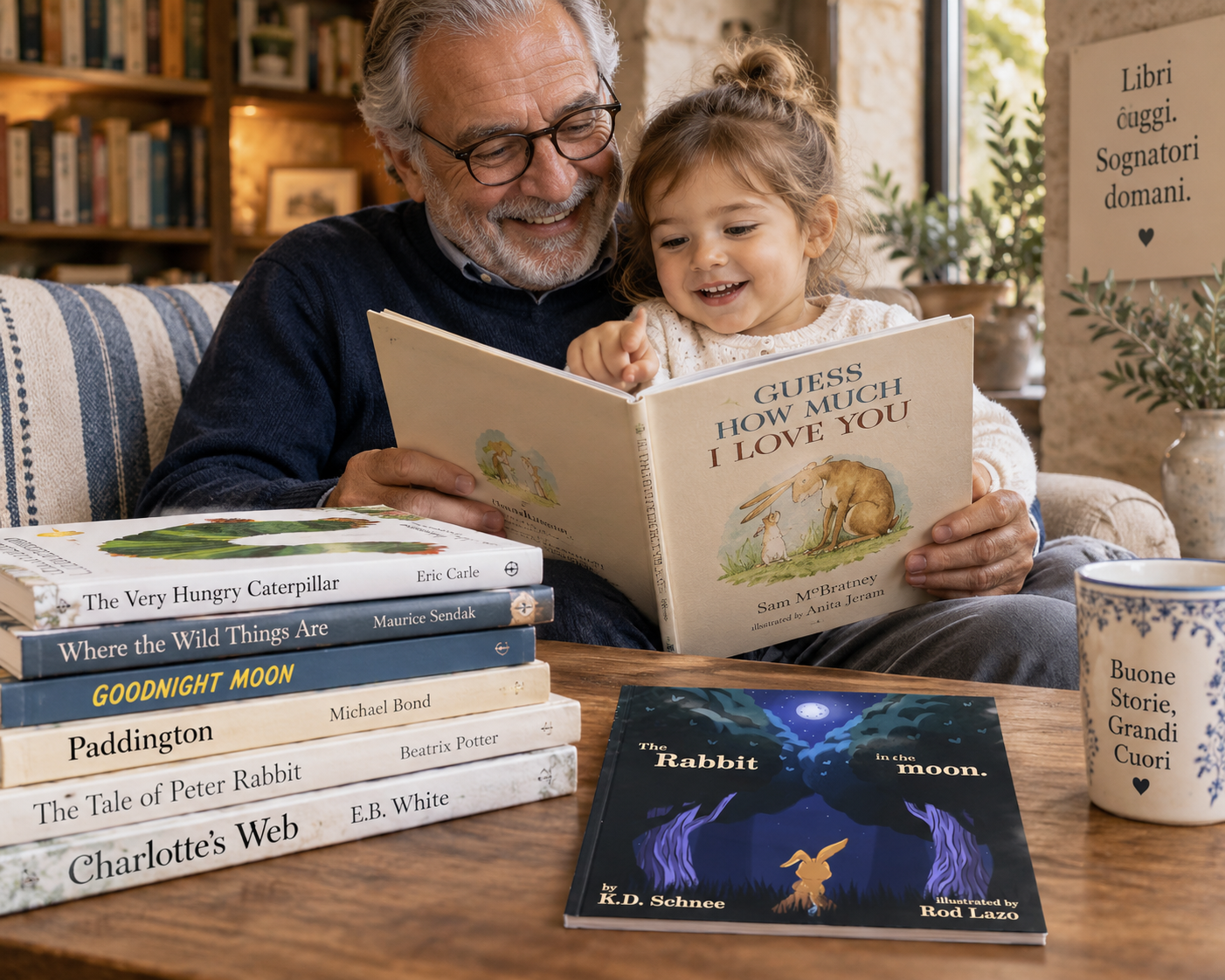
A true children’s classic does not only make adults nostalgic. It still works when a child is sitting beside you, waiting to care.
The best classic children’s books are not simply old books adults remember fondly. They are the stories that still hold a child’s attention today because they have rhythm, emotion, humor, memorable characters, strong illustrations, and something worth returning to.
That is the standard I would use.
A classic children’s book should not get a free pass just because grown-ups loved it thirty years ago. Children are honest readers. If a book is slow, stiff, confusing, or more important to adults than it is interesting to kids, they usually let us know by sliding sideways off the couch, asking for a snack, or suddenly becoming fascinated by a sock.
The classic books that still work have something alive in them. A sound. A character. A page turn. A little danger. A joke that still lands. A bedtime rhythm that still softens the room. An illustration that gives children something to study before they even understand every word.
As a children’s author, I think about this often. A book does not become meaningful because it announces a lesson. It becomes meaningful because a child wants to hear it again. That is the real test of a classic.
What makes classic children’s books still work today?
Classic children’s books still work when they respect the child’s experience.
Some do that through repetition and participation. Some do it through humor. Some do it through emotional honesty. Some create a world a child can enter immediately. Some offer a character who feels small, stubborn, curious, brave, worried, mischievous, lonely, or wonderfully sure of themselves.
A good classic usually has several of these qualities:
It sounds good when read aloud.
The child can follow the emotional shape of the story.
The illustrations help tell the story, not just decorate it.
The main character wants something clear.
The book invites rereading.
The humor, fear, wonder, or comfort still feels recognizable.
The story gives the child room to participate.
The book does not need an adult lecture to make it matter.
Not every old book still earns its place. Some classics feel dated in ways that may require context, and some simply do not connect with a modern child the way adults expect. That is okay. The point is not to preserve every book from the past. The point is to choose the ones that still create a real reading moment now.
1. Goodnight Moon by Margaret Wise Brown
Best for: Toddlers, preschoolers, bedtime readers
Goodnight Moon still works because it understands the emotional pace of bedtime. Nothing dramatic happens, which is exactly the point. The room gets named, the objects get noticed, and the child is gently moved toward rest through repetition and rhythm.
For young children, the book feels less like a plot and more like a ritual. That is why it survives. It gives families a way to slow down together. The language is simple, but the mood is precise: the world is still here, the room is safe, and sleep can come closer one goodnight at a time.
2. The Very Hungry Caterpillar by Eric Carle
Best for: Toddlers, preschoolers, early counting and sequencing
This book remains captivating because children can participate almost immediately. They can count the foods, notice the holes, follow the days of the week, and watch the caterpillar change. It is simple without being empty.
The transformation at the end still has power. A child may not use the word “metamorphosis,” but they understand becoming. They understand hunger, color, pattern, and surprise. Eric Carle’s collage art also gives the book a texture that still feels handmade and alive on the page.
3. Where the Wild Things Are by Maurice Sendak
Best for: Preschoolers, kindergarteners, children learning about anger and imagination
Where the Wild Things Are still works because it takes a child’s wild feelings seriously. Max is angry, imaginative, powerful, lonely, and ready to come home. The book does not punish his big feelings with a heavy moral. It gives them a forest, a boat, a kingdom, and a return.
Children understand that emotional journey. They may not explain it neatly, but they feel the movement from fury to fantasy to comfort. The illustrations also do what picture books do best: they expand the emotional world beyond the words.
4. The Snowy Day by Ezra Jack Keats
Best for: Toddlers, preschoolers, kindergarteners
The Snowy Day still captivates because it honors a small child’s wonder. Peter is not saving the world. He is walking through snow, making tracks, noticing his body in a changed landscape, and carrying the day home in his imagination.
The book’s quietness is its strength. It reminds adults that children do not always need a complicated plot. Sometimes they need a story that understands how enormous an ordinary morning can feel when the world looks new.
5. Corduroy by Don Freeman
Best for: Preschoolers, kindergarteners, children who love stuffed animals
Corduroy lasts because it connects with a child’s deep belief that beloved objects have inner lives. The missing button matters. The department store at night matters. Lisa’s choice matters.
At its heart, this is a story about being seen and chosen. Children understand that. Corduroy is not perfect, but he is loved. That emotional clarity is why the book still works across generations.
6. Harold and the Purple Crayon by Crockett Johnson
Best for: Preschoolers, kindergarteners, imaginative children
Harold still captures children because he draws his way through the world. The premise is simple enough for a young child to understand and flexible enough to feel magical: if Harold needs something, he draws it.
The book gives children a powerful kind of agency. Harold is small, but his imagination changes the page. For children who love drawing, pretending, building, or inventing, this classic still feels wonderfully available.
7. The Tale of Peter Rabbit by Beatrix Potter
Best for: Preschoolers and early elementary children with adult read-aloud support
Peter Rabbit remains interesting because he is disobedient in a way children recognize. He is told not to go somewhere, goes anyway, gets into trouble, and barely escapes. The stakes are real enough to hold attention, but the world is small enough for a child to enter.
Adults may notice the old-fashioned language, but children often respond to Peter’s appetite, curiosity, fear, and narrow escape. This is a classic that benefits from a warm read-aloud voice and a little patience.
8. Madeline by Ludwig Bemelmans
Best for: Preschoolers, kindergarteners, children who enjoy rhythm and repetition
Madeline still works because it has a memorable rhythm and a heroine with nerve. The lines move. The setting feels grand. The group of girls creates order, and Madeline disrupts that order with personality.
Children often like the pattern before they understand everything about Paris, boarding schools, or appendixes. The book has a chant-like quality that makes it enjoyable to read aloud, and Madeline herself remains small but unmistakably bold.
9. Make Way for Ducklings by Robert McCloskey
Best for: Preschoolers, kindergarteners, early elementary children
This book still holds up because it turns a city into a family journey. The ducklings are vulnerable, the parents are determined, and the adult world must slow down to make room for them.
Children love following the ducklings because the goal is clear: get safely across. The illustrations also give the story a gentle realism that rewards careful looking. It is a wonderful read-aloud for children who enjoy animals, maps, cities, and family movement.
10. Blueberries for Sal by Robert McCloskey
Best for: Preschoolers, kindergarteners
Blueberries for Sal remains delightful because of its sound and symmetry. Kuplink, kuplank, kuplunk. A child can hear the berries before they fully understand the structure of the story.
The parallel between child and bear cub gives young readers just enough suspense. The mix-up is funny, slightly dangerous, and easy to follow. It is a strong reminder that classic picture books often work because they give children something to listen for.
11. The Story of Ferdinand by Munro Leaf
Best for: Preschoolers, kindergarteners, children who resist pressure to perform
Ferdinand still matters because he does not want what everyone expects him to want. He would rather sit quietly and smell the flowers than fight. That is a simple idea, but it carries real emotional weight for children who feel pressured to be louder, tougher, faster, or more competitive than they are.
The book works best when adults resist over-explaining it. Ferdinand’s quiet preference is enough. Children understand the dignity of wanting to be left in peace with the thing you love.
12. Caps for Sale by Esphyr Slobodkina
Best for: Preschoolers, kindergarteners, participatory read-alouds
Caps for Sale remains a strong read-aloud because it invites children into the pattern. The cap seller repeats himself. The monkeys imitate him. The structure is funny, physical, and easy for children to join.
This is one of those books where the pleasure is partly in knowing what is coming. Repetition gives children confidence, and the ending still feels satisfying because the solution is simple, surprising, and earned.
13. Mike Mulligan and His Steam Shovel by Virginia Lee Burton
Best for: Preschoolers, kindergarteners, children who love machines
This book still works for many children because it gives emotional life to a machine and a worker who do not want to be left behind. Mike and Mary Anne are trying to prove they still matter in a changing world.
The book is longer than many modern picture books, but for the right child, especially one who loves trucks, construction, and old machines, it has real staying power. It also opens a gentle conversation about usefulness, change, and finding a new place.
14. The Little House by Virginia Lee Burton
Best for: Kindergarteners and early elementary children
The Little House still captivates because children can feel the passage of time through the pictures. The house remains steady while the world changes around her. The city grows, the seasons move, and the emotional mood shifts.
This is not the fastest book on the shelf, but it rewards children who like to look closely. It is especially strong for talking about change, memory, home, and the way places can feel different over time.
15. Millions of Cats by Wanda Gág
Best for: Preschoolers, kindergarteners, children who enjoy repetition and folklore rhythm
Millions of Cats has the rhythm of an old tale. The repeated phrase becomes part of the experience, and children often enjoy the absurdity of more cats than anyone could possibly manage.
It is a strange little book in the best way. The story has the feeling of something passed down, and the repetition makes it easy for children to anticipate and join in. That participatory quality is one reason it still works.
16. The Little Engine That Could by Watty Piper
Best for: Preschoolers, kindergarteners, children learning persistence
This classic survives because its central phrase is sticky: “I think I can.” Children remember it. Parents remember it. Teachers remember it. The message is direct, but the train journey gives the lesson a story shape.
The book can feel old-fashioned, but the emotional idea still connects. Children know what it feels like to face something that seems too hard. A story about trying anyway still has a place, especially when read with warmth rather than pressure.
17. Frog and Toad Are Friends by Arnold Lobel
Best for: Preschoolers as a read-aloud, kindergarten and early elementary readers
Frog and Toad remain beloved because their friendship feels emotionally real. They are funny, tender, particular, and sometimes a little ridiculous. The stories are short, but they carry real feeling.
For children moving toward early readers, Frog and Toad are especially valuable because the language is accessible without being thin. The books respect children’s emotional intelligence. They also remind us that friendship stories do not need fireworks to matter.
18. Little Bear by Else Holmelund Minarik
Best for: Preschoolers as a read-aloud, early readers
Little Bear still works because it feels safe without being dull. The stories are gentle, imaginative, and rooted in the relationship between Little Bear and Mother Bear.
For children beginning to read independently, the book can also feel empowering. The language is simple enough to support early reading, but the emotional world is warm enough for rereading. Maurice Sendak’s illustrations give the stories a softness that still invites children in.
19. Bread and Jam for Frances by Russell Hoban
Best for: Preschoolers, kindergarteners, picky eaters, children who enjoy humor
Frances is wonderfully specific. She has opinions. She has songs. She has a strong commitment to bread and jam until bread and jam become too much of a good thing.
This book still works because it is funny without being mean. Children recognize the stubbornness, and parents recognize the dinner-table politics. Frances feels like a real child in badger form, which is often the best kind of character.
20. George and Martha by James Marshall
Best for: Preschoolers, kindergarteners, early elementary children
George and Martha stories still hold up because they are short, funny, and emotionally sharp. The friendship has little conflicts, small embarrassments, and moments of repair.
For young children, the humor is easy to access. For adults, the stories are dry and smart. That combination makes them excellent read-alouds. They also help children understand friendship without turning every page into a lesson about social skills.
21. Sylvester and the Magic Pebble by William Steig
Best for: Kindergarteners and early elementary children
This book still captivates because it has real emotional stakes. Sylvester’s wish goes wrong, and the story becomes about fear, separation, patience, and return.
It may be intense for some younger children, but that is part of why it lasts. Children often connect deeply with stories where something truly matters. The ending brings relief that feels earned, not pasted on.
22. Alexander and the Terrible, Horrible, No Good, Very Bad Day by Judith Viorst
Best for: Preschoolers, kindergarteners, early elementary children
Alexander remains one of the great bad-day characters because he is honest about the mood. The book does not try to cheer him up too quickly. It lets the day be terrible, horrible, no good, and very bad.
Children appreciate that. Adults sometimes rush to fix disappointment, but this book gives children permission to recognize a hard day without turning it into a catastrophe. The humor keeps it from feeling heavy, and the repeated phrase makes it unforgettable.
23. Strega Nona by Tomie dePaola
Best for: Preschoolers, kindergarteners, early elementary children
Strega Nona still works because it has folklore structure, humor, magic, and consequences. The pasta pot is a perfect picture-book device: simple, visual, funny, and increasingly out of control.
Children enjoy the growing absurdity. Adults appreciate that the lesson is embedded in the story rather than delivered as a lecture. The illustrations also have warmth and character, which helps the world feel inviting even when the pasta is taking over.
24. Miss Rumphius by Barbara Cooney
Best for: Kindergarteners and early elementary children
Miss Rumphius has a quieter kind of staying power. It asks a large question in a gentle way: how will you make the world more beautiful?
This may not be the first book every toddler grabs from the shelf, but for older picture-book readers, it can be deeply memorable. It has travel, aging, purpose, beauty, and a sense of legacy. Some classics entertain immediately. Others plant something that grows slowly. This is one of those.
25. Chicka Chicka Boom Boom by Bill Martin Jr. and John Archambault
Best for: Toddlers, preschoolers, early alphabet learners
Chicka Chicka Boom Boom still works because it turns letters into action. The alphabet climbs, crashes, tumbles, and returns with rhythm that children can feel in their bodies.
This is a classic because it makes early literacy playful. The child is not being drilled on letters. They are hearing sound, pattern, movement, and anticipation. That is exactly the kind of joyful repetition that helps children return to books.
How should parents choose classic children’s books?
Choose classic children’s books the same way you would choose any good picture book: by thinking about the child, not only the reputation of the book.
A famous title may be worth trying, but fame is not the same as fit. A child who loves rhythm may connect with Chicka Chicka Boom Boom or Caps for Sale. A child who loves emotional stories may connect with Corduroy, Frog and Toad, or Sylvester and the Magic Pebble. A child who loves machines may sit beautifully for Mike Mulligan and His Steam Shovel, while another child may drift away after two pages and start negotiating for crackers.
That is not a failure of literature. That is a child being a child.
The best classic for your family is the one your child actually wants to hear again. For more help turning read-alouds into meaningful family moments, read: https://www.yabbitrabbit.com/parent-resources/how-to-read-picture-book-with-your-child
A book becomes a classic in a child’s life when it gets read, remembered, requested, and carried forward.
Should parents worry if some classic books feel dated?
Yes, but worry is not the same as panic.
Some classic children’s books reflect the time in which they were written. That can show up in language, gender roles, family assumptions, cultural stereotypes, pacing, discipline, or ideas that no longer feel right. Parents do not need to throw out every older book, but they also do not need to treat age as proof of quality.
Read with your eyes open.
If a book feels dated but still has value, talk about it. If a book feels uncomfortable in a way that overwhelms the story, skip it. Childhood is short. No family is required to preserve a book that no longer serves the child in front of them.
A healthy bookshelf can hold old books, new books, silly books, beautiful books, comfort books, courage books, and books that reflect the actual world your child lives in. Classics are one part of the shelf, not the whole shelf.
For a deeper guide to deciding whether a picture book is worth buying and keeping, read: https://www.yabbitrabbit.com/parent-resources/what-makes-picture-book-worth-buying
The real question is not, “Is this book famous?” The better question is, “Does this book still give my child something worth returning to?”
What classic children’s books teach modern writers
As a children’s author, I think the best classics teach one lesson over and over: children do not need stories that talk down to them.
They need rhythm, clarity, humor, danger in safe amounts, emotional truth, memorable characters, and pictures that do some of the storytelling. They need books that trust them to notice. They need stories that can be read aloud without collapsing under their own message.
That matters to me because The Rabbit in the Moon was written with the same respect for the child’s inner world. It is not a classic, and I would never pretend it belongs on a classic list simply because I wrote it. Classics earn that word over time. But new books can still learn from what classics do well: they give children a character, a feeling, and a reason to come back.
For Yabbit, that feeling is hesitation. The moment before beginning. The small pause when a child wants to try but something inside says, “Yeah, but…”
That is the kind of emotional truth I admire in lasting children’s books. They understand something real about being small in a big world.
External Resource
For a broader library-curated list of enduring children’s books, The New York Public Library’s “100 Great Children’s Books” is a helpful resource: https://www.nypl.org/childrens-100-books-of-2013
Buy the Book
If your family loves classic picture books because they create language, memory, and connection, The Rabbit in the Moonwas written with that same respect for the read-aloud experience.
Yabbit is not a classic character from the past. He is a new character created for a feeling many children know well: hesitation before the first step. With Snail’s steady support, Yabbit helps children understand that courage does not have to arrive all at once. It can begin with one tiny brave hop.
For parents, grandparents, teachers, counselors, and caregivers, The Rabbit in the Moon gives children a story about fear, support, and brave beginnings. It is a book to read aloud, talk about, and return to when the next step feels too big.
FAQs
What are classic children’s books?
Classic children’s books are stories that have remained meaningful across generations because children still respond to their characters, rhythm, illustrations, humor, imagination, or emotional truth. The best classics still work for children today, not just adults who remember them fondly.
What are the best classic children’s books for toddlers?
Strong classic children’s books for toddlers include Goodnight Moon, The Very Hungry Caterpillar, The Snowy Day, Brown Bear, Brown Bear, What Do You See?, and Chicka Chicka Boom Boom. Look for repetition, rhythm, clear illustrations, and a read-aloud pace that holds attention.
What are the best classic children’s books for preschoolers?
Preschoolers often enjoy classics with memorable characters, humor, and strong visual storytelling, such as Where the Wild Things Are, Corduroy, Caps for Sale, Madeline, The Story of Ferdinand, and Harold and the Purple Crayon.
Do classic children’s books still hold up today?
Some do, and some do not. The best classic children’s books still hold up because children enjoy them now. Others may feel dated in language, pacing, stereotypes, or assumptions. Parents should choose classics thoughtfully rather than keeping them only because they are famous.
Are classic picture books good for read-alouds?
Yes. Many classic picture books became classics because they read aloud beautifully. Rhythm, repetition, page turns, strong illustrations, and memorable characters help children stay engaged and ask for the book again.
Should every child have classic children’s books at home?
Classic children’s books can be a wonderful part of a home library, but they should not be the only books on the shelf. Children also need modern books, diverse books, funny books, emotional books, informational books, and stories that reflect their own lives.
How do I know if a classic book is right for my child?
A classic book is right for your child if it holds their attention, feels age-appropriate, creates conversation, and invites rereading. If the book feels dated or does not connect, it is okay to choose another classic or a newer story that serves your child better.e