Bilingual Children’s Book Recommendations: How to Choose Stories That Help Kids Feel at Home in Two Languages
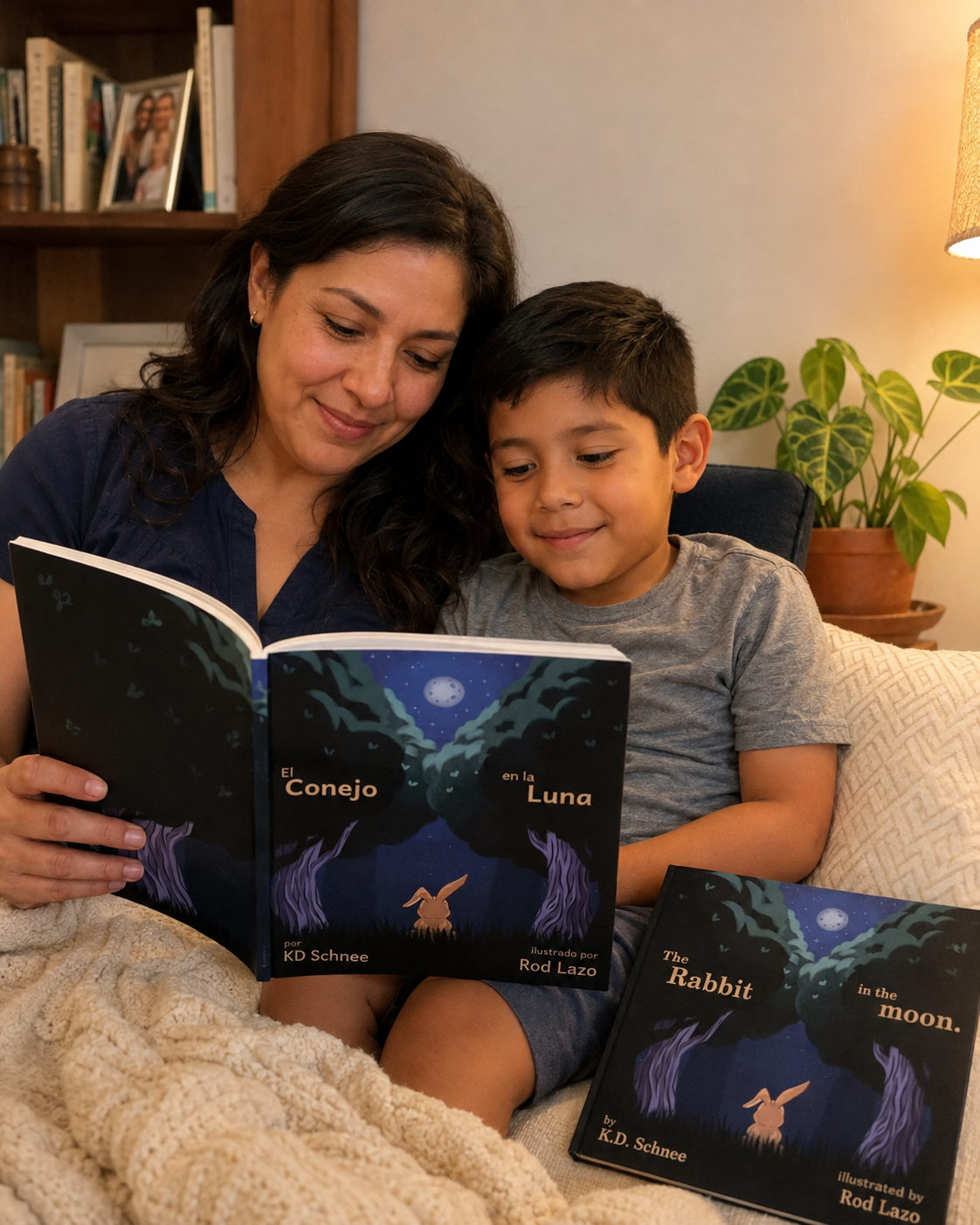
The best bilingual children’s books do not make language feel like a lesson. They make it feel like a place a child belongs.
The best bilingual children’s books help children feel connected to story in more than one language. They are not just vocabulary tools. They are read-aloud experiences that can support family connection, cultural identity, emotional language, and a child’s confidence around books.
That is the first thing I would tell any parent, teacher, grandparent, or gift-giver looking for bilingual children’s book recommendations.
A bilingual book should not feel like homework hiding in a pretty cover. It should feel like a story worth entering. Children can learn words from it, of course, but language grows best when the child also feels interest, comfort, rhythm, curiosity, and connection. If the book only exists to teach vocabulary, many children will sense that quickly and drift away from it.
A good bilingual children’s book gives the child a reason to care.
As the author of The Rabbit in the Moon and El Conejo en la Luna, I think about this carefully. The Spanish edition was not created as a quick translation to check a box. It was created so Yabbit’s story could feel natural in Spanish, with the same emotional purpose: helping children understand hesitation, fear, support, and one small brave step forward.
What makes a bilingual children’s book worth choosing?
A bilingual children’s book is worth choosing when the story still works as a story.
That sounds obvious, but it matters. Some bilingual books are useful because they introduce words, labels, colors, animals, or everyday objects. Those books have a place, especially for very young children. But if you are choosing a picture book for repeated read-alouds, bedtime, classroom use, or emotional growth, the book needs more than two languages on the page.
It needs a character children can follow. It needs artwork that gives children something to notice. It needs language that can be read aloud without feeling stiff. It needs an emotional reason to be read again.
Parents often ask whether a bilingual book should teach the language directly. Sometimes, yes. But the deeper question is: will the child want to return to it?
A book a child wants to hear again will do more quiet work than a book that technically teaches twelve useful words but never becomes part of family life.
Should bilingual children’s books be side-by-side in two languages?
Not always.
Some bilingual books place both languages on the same page. That can be helpful for families who want to compare words, read one language and glance at the other, or support children who are moving between languages. Other books are published as separate editions, with one book fully in English and another fully in Spanish. That can also be valuable because each language has room to breathe.
The right format depends on the child and the family.
A side-by-side dual-language book can be useful when a parent, teacher, or child wants both languages visible at once. A separate-language edition can be useful when the goal is immersion, flow, bedtime reading, or helping the story feel natural in one language from beginning to end.
That is why The Rabbit in the Moon and El Conejo en la Luna exist as companion editions rather than a side-by-side book. The English edition is written in rhyme. The Spanish edition is written in natural prose, because forcing the English rhyme directly into Spanish would have made the story feel less natural.
The goal was not to make the Spanish sound like English wearing a costume. The goal was to let Yabbit live fully in Spanish.
Why El Conejo en la Luna belongs in a bilingual book stack
El Conejo en la Luna belongs in a bilingual book stack because it gives children a full emotional story in Spanish, not just a translated set of words.
Yabbit is a cautious rabbit who often hesitates before trying something new. With help from Snail, Owl, Bat, and She-wolf, he learns that courage does not mean waiting until fear disappears. Courage can begin with one small step.
That message matters in any language.
For Spanish-speaking families, El Conejo en la Luna gives children a story about fear, uncertainty, support, and bravery in the language of home. For bilingual families, it gives parents and children a way to experience the same emotional journey in Spanish and English. For English-speaking families introducing Spanish, it offers a meaningful story that can become part of a child’s broader relationship with the language.
The book is not trying to turn Spanish into a lesson. It is trying to make Spanish part of the story world.
That distinction matters. You can learn more about the Spanish edition here: https://www.yabbitrabbit.com/el-conejo-en-la-luna
What kinds of bilingual books should parents choose?
A strong bilingual bookshelf should include different kinds of books.
Some books can teach everyday words. Some can introduce songs, rhymes, animals, colors, family language, food, and routines. Some should reflect culture, place, tradition, and identity. Some should be funny. Some should be beautiful. Some should be emotionally useful. A child’s bilingual shelf should not be made of only one kind of book, because language itself does many jobs.
It helps to think in categories.
Choose some books for vocabulary. Choose some for comfort. Choose some for family heritage. Choose some for bedtime. Choose some for classroom read-alouds. Choose some for emotional moments, such as worry, separation, mistakes, confidence, or fear of beginning.
That is where The Rabbit in the Moon and El Conejo en la Luna fit. They are not word-list books. They are courage books. Their job is to help children carry an emotional idea across languages: you do not have to feel completely ready to begin.
How bilingual books support emotional language
Bilingual books can help children understand that feelings belong in every language they use.
This is important because children do not only need words for objects. They need words for what happens inside them. They need language for fear, worry, excitement, hesitation, bravery, frustration, sadness, pride, and relief. When those words exist in more than one language, children have more ways to connect with family, teachers, caregivers, and themselves.
A child might talk about Yabbit being nervous in English. Another child might talk about Yabbit feeling unsure in Spanish. A parent might say “one tiny brave hop,” while another family might say “un pequeño salto valiente.” The words may change, but the emotional bridge stays the same.
That is one reason story matters more than translation alone. A bilingual child is not just collecting vocabulary. They are learning how to move through the world with language that belongs to more than one part of their life.
How to read bilingual books at home without pressure
The best way to read bilingual books at home is to keep the experience warm and flexible.
You do not have to turn every page into a language lesson. You do not have to translate every sentence perfectly. You do not have to stop constantly and ask, “What does this word mean?” In fact, doing that too often can make the book feel like a quiz, and children are wonderfully fast at detecting when storytime has been smuggled into schoolwork.
Read for the story first.
If your child is fluent in one language and learning another, read the book in the stronger language first so the story feels clear. Later, read the other edition or introduce a few key words. If your child understands both languages, you can choose one language per reading, compare favorite phrases, or let your child decide which version they want that night.
For a practical guide to making read-alouds feel meaningful without over-teaching, read: https://www.yabbitrabbit.com/parent-resources/how-to-read-picture-book-with-your-child
The goal is not to perform bilingualism perfectly. The goal is to make language feel alive, useful, and connected to someone the child loves.
How to use The Rabbit in the Moon and El Conejo en la Luna together
There are several simple ways to use the English and Spanish editions together.
You can read The Rabbit in the Moon one night and El Conejo en la Luna the next. You can read the English edition for rhythm and rhyme, then read the Spanish edition for emotional clarity and natural flow. You can choose one page or scene and talk about how the same feeling appears in both languages.
You can also use the phrase at the heart of the story in both languages.
“One tiny brave hop.”
“Un pequeño salto valiente.”
That small phrase can travel. A child might use it before school, bedtime, swim lessons, a doctor visit, a new activity, or a moment when reading feels hard. The language becomes more than something to know. It becomes something to use.
That is when a bilingual book starts doing deeper work. It helps a family create shared language across real moments.
What should teachers look for in bilingual children’s books?
Teachers should look for bilingual books that help children feel included, not singled out.
A good bilingual classroom book can welcome the languages children bring from home. It can show that more than one language belongs in the room. It can help children hear familiar words, notice new ones, and understand that language difference is not a problem to hide.
For teachers who do not speak every language represented in the classroom, bilingual books can still matter. A book in a child’s home language can be part of the shelf. A family member can read it aloud. A teacher can invite children to notice similarities and differences. The illustrations can support understanding even when every adult is not fluent in every language.
El Conejo en la Luna can work well in bilingual or Spanish-speaking classrooms because it gives teachers a story about hesitation and courage, not only a language resource. Children can talk about what Yabbit feels, who helps him, and what one small brave step might look like in school.
A bilingual classroom book should not only say, “Here are two languages.” It should say, “Your language belongs here.”
What if parents do not speak both languages fluently?
Parents do not need to be perfectly fluent in both languages to make bilingual books meaningful.
If you are stronger in English, read the English edition with warmth and confidence, then explore a few Spanish words together. If you are stronger in Spanish, read the Spanish edition fully and let the child experience the story in that language. If different family members speak different languages, let each person bring the book to life in the language that feels most natural.
Children benefit from hearing language used with comfort, affection, and purpose. A hesitant adult reading nervously in a language they do not know may accidentally make the experience feel tense. It is better to be honest and playful.
You might say, “Let’s learn this word together,” or “Abuela reads this part beautifully,” or “Tonight we’ll read the Spanish edition, and tomorrow we’ll read the English one.”
A bilingual reading life does not have to be flawless to be valuable. It has to be welcoming.
Bilingual books are not only for bilingual families
Bilingual books are not only for children who already speak two languages at home.
They can also help children develop curiosity and respect for language itself. A child who sees Spanish and English books on the shelf learns that stories do not belong to one language only. They learn that a character can travel. A feeling can travel. A story can be carried differently and still remain itself.
That is a beautiful idea for young children. For families living in multilingual communities, bilingual books can also help children notice the language around them with more warmth. A sign, a song, a friend’s family, a classroom phrase, a neighborhood conversation, or a grandparent’s voice may start to feel connected to the world of books.
The point is not to turn every child into a fluent reader in two languages overnight. The point is to make language feel expansive rather than intimidating. A bilingual book quietly tells a child: there is more than one way to enter a story.
Why KD Schnee created a Spanish edition
Creating El Conejo en la Luna mattered to me because Yabbit’s message should not belong to only one language.
The original English edition, The Rabbit in the Moon, is written in rhyme. That rhythm is part of its read-aloud experience. But when we began shaping the Spanish edition, it became clear that a forced rhyme would weaken the emotional honesty of the story. The Spanish needed to sound natural. It needed to read like a real children’s book in Spanish, not like a translation doing gymnastics in the corner.
That is why the Spanish edition is written in prose.
Sandra Herrera adapted the story into Spanish with care, and Rod Lazo’s illustrations carry the same emotional world across both editions. The result is one story with two reading experiences: the musicality of the English rhyme and the natural warmth of the Spanish prose.
For me, that is what a bilingual children’s book recommendation should respect. Language is not decoration. It changes rhythm, intimacy, and feeling.
A good bilingual book honors that.
How to choose a bilingual book as a gift
A bilingual book can make a deeply thoughtful gift when it connects to the child’s family, language, or community.
For a Spanish-speaking family, El Conejo en la Luna can be a gift that says, “This story was made for your language too.” For a bilingual family, giving both editions can create a beautiful read-aloud pairing. For a classroom, the Spanish edition can help expand the shelf in a way that feels meaningful and emotionally useful.
When giving a bilingual book, consider writing a short note inside.
“For brave little beginnings in every language.”
“Para los pequeños saltos valientes.”
“For the moments when courage needs to feel small.”
The inscription does not have to be elaborate. It just needs to show that the book was chosen with care. That is what makes a book gift feel personal instead of generic.
Recommended bilingual book qualities to look for
When choosing bilingual children’s books, look for stories that children will want to hear more than once. The artwork should invite noticing. The language should sound natural when read aloud. The story should have enough emotional life to matter after the book closes.
For younger children, repetition, rhythm, clear images, and familiar routines can help. For preschool and kindergarten children, look for books that connect language to feelings, family, friendship, courage, curiosity, and everyday experiences. For early elementary children, look for stories that offer more depth without making the language feel heavy.
Also pay attention to whether the book respects both languages. If one language feels carefully written and the other feels stiff or pasted on, children may feel that difference even if they cannot explain it. A good bilingual or translated book should feel alive in the language being read.
That is the standard I wanted for Yabbit. Not simply available in Spanish. Alive in Spanish.
Buy the Book
If you are looking for a meaningful bilingual children’s book recommendation, The Rabbit in the Moon and El Conejo en la Luna offer one story in two carefully created editions.
Yabbit is a hesitant rabbit who learns that courage does not mean being fearless. With Snail’s steady support, he discovers that trying can begin with one small brave step. In English, the story is written in rhyme. In Spanish, the story is adapted in natural prose so the emotional rhythm can feel true to the language.
For families, teachers, grandparents, and gift-givers, the two editions can support read-aloud connection, emotional language, and a child’s growing confidence in more than one language.
A child does not have to feel completely ready to begin.
Sometimes, in any language, courage starts with one small hop.
External Resource
For practical early literacy guidance, including offering books in a child’s home language and in English, NAEYC provides this parent resource:
https://www.naeyc.org/our-work/families/everyday-steps-reading-and-writing
FAQs
What are the best bilingual children’s books?
The best bilingual children’s books are stories children want to hear again. Look for books with natural language, strong illustrations, emotional meaning, and a read-aloud experience that works in the language being used.
Are bilingual books good for young children?
Yes. Bilingual books can support early literacy, family connection, cultural identity, and language development when they are read in warm, low-pressure ways. Children benefit from hearing stories, songs, and conversation in the languages connected to their home and community.
Should I choose a dual-language book or separate English and Spanish editions?
Both can work. Dual-language books are helpful when you want both languages visible on the same page. Separate editions can be better when you want each language to flow naturally as a complete read-aloud experience.
Is El Conejo en la Luna a translation of The Rabbit in the Moon?
El Conejo en la Luna is the Spanish edition of The Rabbit in the Moon, but it is not a stiff word-for-word translation. The English edition is written in rhyme, while the Spanish edition is adapted in natural prose to protect the emotional clarity and rhythm of the story.
Can bilingual books help children with emotional language?
Yes. Bilingual books can help children name feelings in more than one language. That matters because children need words not only for objects, but for worry, courage, hesitation, support, mistakes, and confidence.
How should parents read bilingual books at home?
Read for the story first. Use the language that feels most natural, then introduce the second language gently. You can alternate editions, compare favorite phrases, or let different family members read in the language they know best.
Why recommend The Rabbit in the Moon and El Conejo en la Luna?
The two editions give families and classrooms a meaningful story about hesitation, courage, and one small brave step in English and Spanish. They are especially useful for children who need emotional language and gentle encouragement when something feels hard to begin.