Best Picture Books for 4 Year Olds: 25 Stories Kids Want to Hear Again
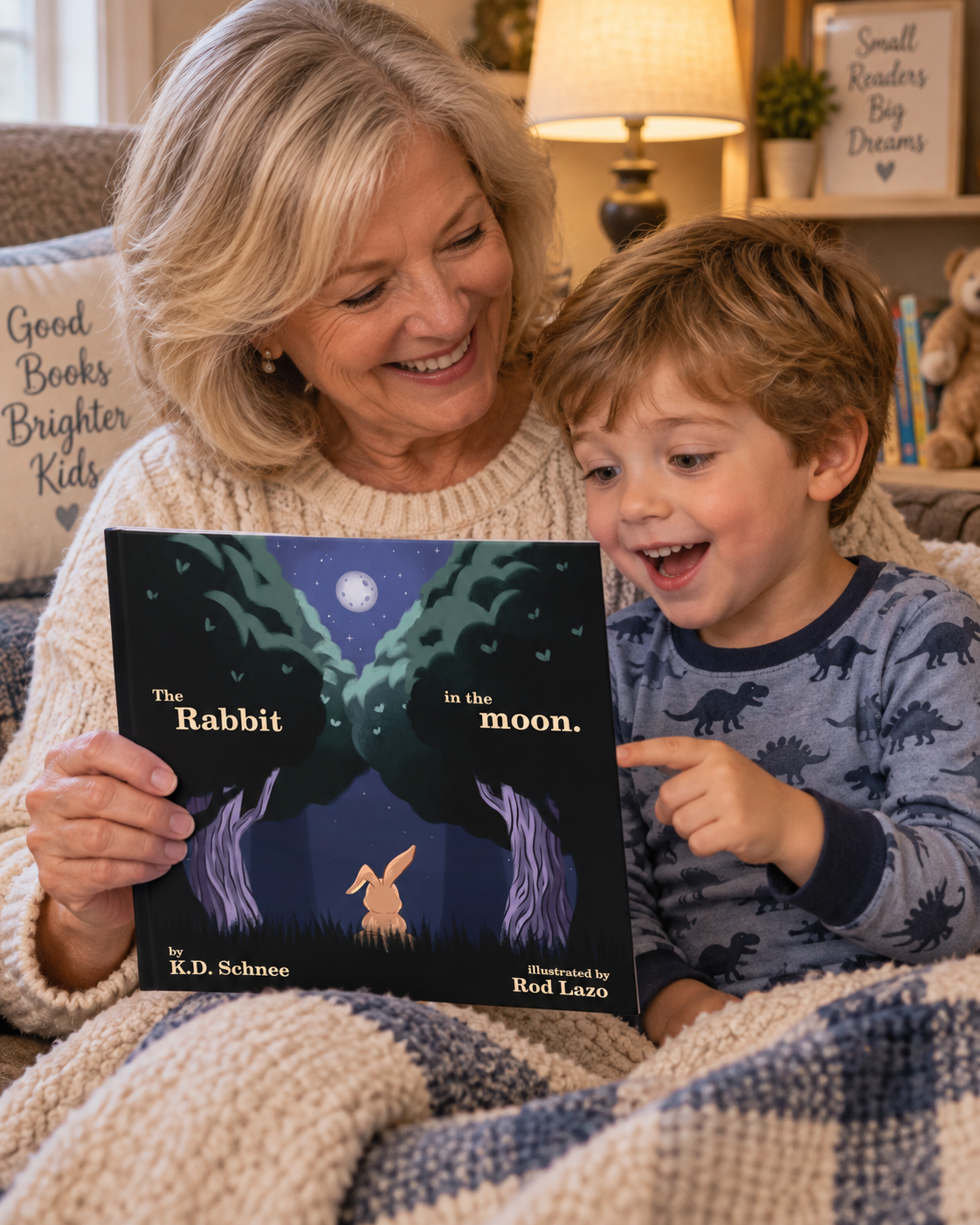
The best picture books for 4 year olds do not just fill a shelf. They give children stories they want to hear, repeat, discuss, act out, and carry into real life.
The best picture books for 4 year olds are the ones children want to hear again. At this age, a strong book should make room for laughter, language, imagination, feelings, repetition, and the small confidence a child needs to participate in the story.
Four is a wonderful reading age because children are no longer only listening to the sound of a book. They are beginning to understand how stories work. They can predict what might happen next, notice small details in the illustrations, remember favorite lines, ask sharper questions, and connect a character’s feelings to their own life.
That does not mean every 4-year-old needs the same books. Some want silly read-alouds. Some want animals. Some want gentle bedtime stories. Some want books about school, mistakes, friendship, or big feelings. Some want a book with barely any text because the pictures are doing the talking. Others are ready to sit through a longer story if the rhythm, humor, or character pulls them in.
As the author of The Rabbit in the Moon, I think the best books for this age do more than entertain. They give children a safe place to practice being human. A good picture book lets a child try on courage, worry, humor, frustration, kindness, curiosity, and wonder without needing to explain all of it perfectly.
What makes a picture book good for a 4-year-old?
A good picture book for a 4-year-old gives the child a way into the story quickly.
That may come through a funny character, a repeated phrase, an expressive illustration, a clear problem, a strong read-aloud rhythm, or an emotional moment the child recognizes. Four-year-olds are often ready for more story than toddlers, but they still need books that feel alive on the page. If the book asks them to wait too long before caring, they may quietly melt off the couch and become a rug-based creature.
The best picture books for 4 year olds usually do at least one of these things well: make the child laugh, invite participation, build vocabulary, show feelings clearly, reward close looking, create a memorable character, or offer a story worth rereading. That last part matters. Rereading is not a problem at this age. It is often how children build comfort, memory, language, and confidence.
Parents sometimes ask whether a book is “educational enough.” I would ask a better question: does your child want to come back to it? A book a child returns to will usually teach more than a book an adult respects but the child avoids.
How I chose these books
I chose these books by thinking about what 4-year-olds actually need from read-alouds. The list includes funny books, emotional books, confidence-building books, classics, school-ready books, bedtime books, and books that stretch imagination.
Some are newer. Some are well-established. Some are loud. Some are quiet. The point is not to create one perfect shelf for every child. The point is to give parents a practical way to choose books that match a 4-year-old’s stage.
A strong 4-year-old bookshelf should have range. It should have books for giggles, books for settling down, books for talking about feelings, books for trying again, books for language play, and books that make a child point to the page and say, “Again.”
That “again” is the little bell we are listening for.
1. The Rabbit in the Moon by KD Schnee
Best for: Hesitant children, emotional language, courage, bedtime, preschool transitions
Why 4-year-olds may connect: Yabbit gives hesitation a character children can understand
Why parents may appreciate it: The story offers practical language for fear, courage, and one small brave step
The Rabbit in the Moon is a strong picture book for 4-year-olds because this is an age when many children begin facing bigger social, school, and independence moments while still needing emotional safety close by. They may want to join, try, climb, speak, sleep alone, go to school, or take part in something new, but the first step can feel enormous.
Yabbit is not fearless. He hesitates. He pauses before the journey. With Snail’s steady support, he learns that courage does not have to arrive all at once. It can begin with one tiny brave hop. That phrase gives families something simple to use after the book closes, especially when a child says “I can’t” before trying.
2. Don’t Let the Pigeon Drive the Bus! by Mo Willems
Best for: Humor, participation, expressive read-alouds
Why 4-year-olds may connect: They get to say “no” to a character who keeps pushing
Why parents may appreciate it: It turns the child into an active participant
This book works beautifully for 4-year-olds because it gives them a job. Pigeon wants to drive the bus, and the child gets to hold the boundary. That small reversal is delicious at an age when children are usually the ones being told no.
The humor is immediate, the pages are uncluttered, and Pigeon’s emotional drama is easy to understand. It is also a reminder that picture books do not have to be quiet to be valuable. Sometimes a child falls in love with reading because a book lets them talk back.
3. The Book with No Pictures by B.J. Novak
Best for: Laughter, read-aloud performance, children who resist traditional books
Why 4-year-olds may connect: The adult has to say ridiculous things
Why parents may appreciate it: It proves words alone can be wildly entertaining
This is a great book for a 4-year-old who thinks books are supposed to be boring. There are no pictures, which sounds like a terrible pitch to a preschooler until the adult reader is forced to say nonsense words, dramatic phrases, and increasingly undignified things out loud.
The joke is that the book controls the grown-up. Four-year-olds understand that power immediately. It can be especially useful for children who need a playful doorway back into reading.
4. Dragons Love Tacos by Adam Rubin and Daniel Salmieri
Best for: Silly humor, dragons, food, high-energy read-alouds
Why 4-year-olds may connect: The premise is instantly funny
Why parents may appreciate it: It is easy to read again without collapsing from boredom
Dragons plus tacos is the kind of idea a 4-year-old can understand before the first page fully begins. The book has a strong comic hook, a clear warning, and the kind of absurd escalation children enjoy.
This is not a quiet emotional book. It is a laughter book, and laughter matters. Funny books help many children associate reading with pleasure instead of pressure. That is a real foundation for lifelong reading.
5. The Day the Crayons Quit by Drew Daywalt and Oliver Jeffers
Best for: Voice, humor, perspective-taking, classroom read-alouds
Why 4-year-olds may connect: Each crayon has a complaint and a personality
Why parents may appreciate it: It introduces point of view without feeling like a lesson
The crayons are tired, annoyed, overlooked, overused, and ready to explain themselves. Children enjoy the idea that ordinary objects have opinions. Parents and teachers can use the book to talk about feelings, fairness, creativity, and perspective, but the humor carries the story first.
That is important. A book with a message works better when children are laughing before adults start explaining.
6. We Don’t Eat Our Classmates by Ryan T. Higgins
Best for: School readiness, social behavior, humor
Why 4-year-olds may connect: A dinosaur trying not to eat classmates is a very clear problem
Why parents may appreciate it: It makes empathy funny and concrete
This is a strong choice for children entering preschool, pre-K, or kindergarten-like settings because it turns social learning into comedy. Penelope Rex has to learn that classmates are not snacks, which is ridiculous enough to keep children engaged while still pointing toward a real social idea.
Four-year-olds often need books that make behavior visible without scolding them directly. This one does that well.
7. The Rabbit Listened by Cori Doerrfeld
Best for: Big feelings, comfort, emotional regulation
Why 4-year-olds may connect: The feeling is simple and recognizable
Why parents may appreciate it: It models presence before fixing
When something goes wrong for Taylor, different animals offer different reactions. The rabbit simply listens. That simplicity is why the book has become so useful for families and classrooms.
For 4-year-olds, the story gives shape to disappointment, sadness, anger, and comfort without overexplaining. It is also a good reminder for adults. Sometimes a child does not need advice first. They need someone steady enough to sit with the feeling.
8. The Color Monster by Anna Llenas
Best for: Naming feelings, visual learners, emotional vocabulary
Why 4-year-olds may connect: Feelings become colors and images
Why parents may appreciate it: It gives children a simple emotional sorting tool
Four-year-olds are often beginning to name feelings with more precision, but emotional language is still developing. The Color Monster gives children a visual way to think about sadness, anger, fear, calm, and joy.
It is not the only feelings book a child needs, but it is useful because the structure is clear. For children who need help organizing big feelings, color can be a helpful bridge.
9. Llama Llama Misses Mama by Anna Dewdney
Best for: Preschool separation, school beginnings, missing a parent
Why 4-year-olds may connect: Llama’s worry feels familiar and safe
Why parents may appreciate it: It helps children rehearse separation through story
Separation can still feel hard at four, especially around preschool, daycare, or the start of a new routine. This book gives children a character who misses his mother, feels unsure, and eventually discovers that school can become manageable.
The rhyme helps carry the emotion, and the familiar Llama Llama character makes the experience less intimidating. It is a useful read before a transition, not only after tears begin.
10. The Kissing Hand by Audrey Penn
Best for: Separation anxiety, school drop-off, reassurance
Why 4-year-olds may connect: The kiss-in-the-hand idea is concrete
Why parents may appreciate it: It gives families a simple goodbye ritual
This remains a popular school-transition book because it gives children something they can imagine carrying with them. The idea of a parent’s love staying in the child’s hand is simple, physical, and easy to repeat at drop-off.
For 4-year-olds who struggle with goodbye, the book can become part of a small routine. The power is not only in the story. It is in the phrase or gesture the family can use later.
11. Giraffes Can’t Dance by Giles Andreae and Guy Parker-Rees
Best for: Confidence, trying anyway, children who feel different
Why 4-year-olds may connect: Gerald is easy to root for
Why parents may appreciate it: The confidence message is clear and memorable
Gerald wants to dance but feels awkward and judged. That emotional setup is easy for young children to understand, even if they have never been a giraffe at a jungle dance, which is, for most families, a fairly rare Tuesday.
The book’s message is direct, but the rhyme and illustrations keep it lively. It is a good choice for children who need reassurance that they can find their own way into something difficult.
12. The Dot by Peter H. Reynolds
Best for: Creativity, perfectionism, fear of starting
Why 4-year-olds may connect: One small mark becomes enough to begin
Why parents may appreciate it: It helps children who freeze before making mistakes
The Dot is useful because the first step is almost impossibly small. A child who says she cannot draw is invited to make one mark. That mark becomes the beginning of confidence.
For 4-year-olds who resist because they are afraid of getting something wrong, this book offers a gentle model. Start small. See what happens. Let the first mark be imperfect.
13. The Gruffalo by Julia Donaldson and Axel Scheffler
Best for: Rhyme, suspense, cleverness, imagination
Why 4-year-olds may connect: The mouse outsmarts bigger creatures
Why parents may appreciate it: It has strong pacing and reread value
The Gruffalo is a strong read-aloud because the rhythm carries the story forward and the structure is satisfying. The mouse is small but clever, and children often love watching him navigate danger with imagination.
Four-year-olds can usually follow the pattern, enjoy the suspense, and anticipate the repeated descriptions. That combination makes the book feel both exciting and safe.
14. Room on the Broom by Julia Donaldson and Axel Scheffler
Best for: Rhyme, friendship, teamwork, Halloween-adjacent fun
Why 4-year-olds may connect: Animals keep joining the broom
Why parents may appreciate it: It combines humor, suspense, and cooperation
This book has many of the ingredients 4-year-olds respond to: rhyme, repetition, animals, a witch, a dragon, and a problem that gets solved through teamwork. It is playful without being flimsy.
The best read-alouds often give children something to anticipate. Here, the growing group on the broom creates that pleasure. The child knows the pattern and waits to see what happens next.
15. The Very Hungry Caterpillar by Eric Carle
Best for: Counting, sequencing, transformation, toddlers through preschool
Why 4-year-olds may connect: They can participate with food, days, and change
Why parents may appreciate it: It teaches without feeling heavy
Many children meet this book before age four, but it still belongs on the shelf. Four-year-olds can engage with it in a deeper way than toddlers, noticing the sequence, the pattern, the days of the week, and the transformation.
It is a classic because it gives young children structure and surprise. The book feels simple, but it is doing many quiet things at once.
16. Where the Wild Things Are by Maurice Sendak
Best for: Big feelings, imagination, anger, returning to safety
Why 4-year-olds may connect: Max gets to be wild and still come home
Why parents may appreciate it: It takes children’s feelings seriously
This book continues to work because it gives a child’s anger a whole world. Max is not corrected on every page. His feeling becomes a forest, a boat, a kingdom, and then a return.
Some 4-year-olds may find parts intense, so read the child in front of you. For many, though, the book is thrilling because it does not treat big feelings as silly. It gives them shape and then brings the child safely back.
17. The Snowy Day by Ezra Jack Keats
Best for: Wonder, seasons, quiet observation
Why 4-year-olds may connect: Peter’s day feels small and enormous at once
Why parents may appreciate it: The story honors ordinary childhood attention
The Snowy Day is quiet, but not empty. Peter walks through snow, makes tracks, experiments with his body in the world, and carries the day home in his imagination.
Four-year-olds often live exactly this way. A stick, a footprint, a hill, or a snowball can become important because the child is noticing with their whole self. This book respects that kind of attention.
18. Corduroy by Don Freeman
Best for: Stuffed-animal lovers, belonging, gentle suspense
Why 4-year-olds may connect: Corduroy wants to be chosen
Why parents may appreciate it: It is warm, memorable, and emotionally clear
Corduroy’s missing button gives the story a simple problem, but the deeper appeal is belonging. Children understand the wish to be found, chosen, and loved even with something missing.
The department store adventure adds just enough suspense for a young child. The ending gives comfort without overworking the message. It is a lovely example of a book that feels gentle but still has movement.
19. Knuffle Bunny by Mo Willems
Best for: Lost loveys, toddler/preschool emotion, parent-child humor
Why 4-year-olds may connect: Losing a beloved object feels urgent and real
Why parents may appreciate it: It captures family life with comic precision
This book works because the stakes are perfectly child-sized. A lost stuffed animal may not seem like a catastrophe to adults, but to a young child it can become the entire weather system.
The mix of photography and illustration gives the book a distinctive visual style, and the emotional arc feels honest. Parents may laugh because they recognize the meltdown. Children may care because they understand the loss.
20. A Sick Day for Amos McGee by Philip C. Stead and Erin E. Stead
Best for: Friendship, kindness, gentle read-alouds
Why 4-year-olds may connect: The animals take care of Amos
Why parents may appreciate it: It is tender without becoming syrupy
This is a quiet book with real charm. Amos takes care of the zoo animals, and when he is sick, they come take care of him. The story is simple, but the emotional balance is beautiful.
Four-year-olds can understand the reciprocity: he helps them, then they help him. The illustrations invite close looking, and the gentle pace makes it a good choice for calmer reading moments.
21. Last Stop on Market Street by Matt de la Peña and Christian Robinson
Best for: Conversation, gratitude, city life, perspective
Why 4-year-olds may connect: CJ asks questions children understand
Why parents may appreciate it: It offers depth without losing the child’s point of view
This book follows CJ and his grandmother through the city, but the deeper story is about attention. CJ notices what others have and what he does not have, while Nana helps him see beauty, music, and community around him.
Some 4-year-olds will connect with the bus ride and pictures first. That is enough. As they grow, the book offers more. A strong picture book does not reveal everything at once.
22. Little Blue Truck by Alice Schertle and Jill McElmurry
Best for: Vehicles, animals, rhythm, kindness
Why 4-year-olds may connect: The truck, animals, and sounds are easy to join
Why parents may appreciate it: It is friendly, rhythmic, and reliable
Little Blue Truck works because it combines several preschool favorites: animals, vehicle sounds, mud, helping, and a repeated rhythm children can follow. It is especially good for children who like joining in with sound effects.
At four, many children enjoy being part of the read-aloud. This book gives them plenty of chances.
23. Pete the Cat: I Love My White Shoes by Eric Litwin and James Dean
Best for: Repetition, music, resilience, playful reading
Why 4-year-olds may connect: Pete keeps going after each colorful mishap
Why parents may appreciate it: The repeated structure makes participation easy
Pete the Cat books often work well for 4-year-olds because they invite performance. The child can chant, sing, predict, and join the rhythm. That participation makes the book feel less like something being delivered and more like something being shared.
The story also offers a light touch around flexibility. Something changes, Pete keeps walking, and the child gets to enjoy the pattern.
24. Owl Babies by Martin Waddell and Patrick Benson
Best for: Separation worries, bedtime, gentle reassurance
Why 4-year-olds may connect: The baby owls’ worry is easy to understand
Why parents may appreciate it: It gives separation anxiety a safe story shape
The baby owls wake up and their mother is gone. That is a simple setup, but emotionally powerful for young children. The worry builds, the siblings respond differently, and then Mother Owl returns.
For 4-year-olds who need reassurance around separation, this book can be very useful. It does not dismiss the worry. It holds it until the return.
25. Harold and the Purple Crayon by Crockett Johnson
Best for: Imagination, drawing, child agency
Why 4-year-olds may connect: Harold creates the world he needs
Why parents may appreciate it: It shows imagination as action
Harold draws his way through the story. That premise remains magical because it gives a small child enormous creative agency. He needs a path, a moon, a boat, or a way home, and the crayon helps him make it.
For children who love drawing or pretend play, this book can feel immediately personal. It also reminds adults that imagination is not a decoration in childhood. It is one of the ways children solve problems.
How should parents choose picture books for 4-year-olds?
Start with your child, not the list.
If your child loves to laugh, begin with Pigeon, Pete, dragons, crayons, or a book with no pictures that makes the adult reader look ridiculous. If your child is sensitive to separation or bedtime, try The Kissing Hand, Owl Babies, or Llama Llama Misses Mama. If your child is hesitant, perfectionistic, or afraid to try, choose books that make courage feel small and safe, including The Rabbit in the Moon and The Dot.
A good 4-year-old book should not feel like a reading assignment. It should feel like a place your child wants to enter. The more your child asks to hear a book again, the more the book is doing quiet work: building memory, language, confidence, attention, and connection.
For the broader 4–5 age bridge, read: https://www.yabbitrabbit.com/parent-resources/best-books-for-4-5-year-olds-picture-books
Should 4-year-olds still be read aloud to?
Yes. Four-year-olds absolutely still need read-alouds.
This is one of the biggest mistakes adults make around early literacy. Once a child starts recognizing letters, retelling stories, or showing interest in reading, some adults assume the goal is to move quickly toward independent reading. But shared reading still matters deeply at four. It gives children richer language, emotional connection, story structure, vocabulary, listening stamina, and a warm relationship with books.
Read-alouds also let children enjoy stories they may not be able to read independently yet. A 4-year-old can understand humor, fear, suspense, kindness, and wonder long before they can decode every word on the page. That is why picture books are so powerful at this age. They let children live inside story while their reading skills are still growing.
The American Academy of Pediatrics recommends shared reading from birth through at least kindergarten because it supports language-rich interaction, early literacy, relationships, and social-emotional development.
What kinds of books do 4-year-olds usually like?
Most 4-year-olds like books that give them a role in the reading.
They enjoy repeating lines, predicting what comes next, pointing out details, correcting the adult, making sound effects, laughing at absurdity, and noticing when a character feels something familiar. This is why interactive books, rhyming books, funny books, and emotionally clear books often work so well at this age.
Four-year-olds also love mastery. When they ask for the same book again, they are not stuck. They are becoming experts. They know when the funny part is coming. They remember the phrase. They understand the character. They may even “read” the story aloud from memory while holding the book upside down like a tiny professor in a blanket fort.
Let that count.
Are picture books better than early readers for 4-year-olds?
For most 4-year-olds, picture books should still be the center of the reading life.
Early readers can be useful when a child is showing readiness for decoding and wants to practice simple words. But picture books do something different. They give children richer story, stronger illustrations, deeper emotion, more interesting language, and shared read-aloud experiences that early readers do not always provide.
There is no need to rush a 4-year-old out of picture books. A child can enjoy letter learning and still need complex, beautiful, funny, emotionally rich picture books. In fact, that combination is ideal: playful exposure to print, paired with stories that make books feel worth loving.
For a deeper guide to the difference, read: https://www.yabbitrabbit.com/parent-resources/picture-books-vs-early-readers-hesitant-child
Where The Rabbit in the Moon fits on a 4-year-old bookshelf
The Rabbit in the Moon belongs on a 4-year-old bookshelf because many children at this age are beginning to meet the world in bigger ways.
They may be starting preschool, making friends, trying sports, sleeping in their own room, visiting new places, speaking up, handling mistakes, or learning to separate from a parent. All of those moments can bring hesitation. A child may want to be brave and still need help beginning.
Yabbit gives that hesitation a character. Snail gives children a model of steady support. The story gives families a phrase they can use outside the book: one tiny brave hop.
That is what I believe the best picture books do. They do not simply entertain for ten minutes. They leave a little language behind for the next real moment.
How many books should a 4-year-old read each day?
There is no perfect number.
One warm, attentive read-aloud is better than five rushed books that everyone is trying to survive. Some nights your child may want three books. Some mornings they may only have patience for one page. Some weeks they may want the same story every day. That is normal.
The goal is not to hit a number. The goal is to make books part of the rhythm of family life. Keep books visible. Let your child choose. Read aloud often. Talk about pictures. Reread favorites. Stop before reading becomes a battle.
A child who associates books with closeness, curiosity, and pleasure is building something stronger than a daily tally.
External Resource
For practical guidance on choosing books for 4-year-olds, Scholastic offers a helpful age-specific list here:
https://www.scholastic.com/parents/books-and-reading/book-lists-and-recommendations/books-4-year-olds.print.html
Buy the Book
If you are choosing picture books for a 4-year-old who hesitates before trying, worries about new things, freezes at the first step, or needs courage to feel smaller, The Rabbit in the Moon belongs on your shelf.
Yabbit is not fearless. He pauses before the journey. Snail brings steadiness, patience, and quiet support. Together, they help children understand that courage does not have to arrive all at once. It can begin with one tiny brave hop.
For parents, grandparents, teachers, counselors, and caregivers, The Rabbit in the Moon offers more than a read-aloud. It gives children language for hesitation, support, and brave beginnings at an age when the world is getting bigger.
FAQs
What are the best picture books for 4 year olds?
The best picture books for 4 year olds are stories with strong read-aloud language, memorable characters, humor, emotional clarity, and illustrations that invite children to notice and participate. Good choices include funny books, bedtime books, confidence-building books, and stories children want to hear again.
What books should I read to my 4-year-old?
Read books your child enjoys enough to return to. At four, many children love books with rhyme, repetition, humor, animals, expressive characters, school themes, big feelings, and clear story problems. Picture books are still the best foundation.
Should a 4-year-old be reading independently?
Some 4-year-olds begin recognizing words or pretending to read familiar books, but independent reading is not the main goal for most children this age. Shared read-alouds, picture books, conversation, and playful language are still essential.
Are picture books good for 4-year-olds?
Yes. Picture books are ideal for 4-year-olds because they combine story, illustration, language, emotion, and shared attention with an adult. They help children build vocabulary, comprehension, imagination, and emotional understanding.
How do I choose a picture book for a 4-year-old?
Choose a book that matches your child’s interests, attention span, emotional stage, and read-aloud life. Look for books your child wants to hear again, not only books that seem impressive to adults.
What books help 4-year-olds build confidence?
Books that show characters trying, making mistakes, asking for help, or taking small brave steps can help build confidence. The Rabbit in the Moon, The Dot, Giraffes Can’t Dance, and The Kissing Hand are strong examples.
Is The Rabbit in the Moon good for 4-year-olds?
Yes. The Rabbit in the Moon is well suited for many 4-year-olds because it helps children understand hesitation, courage, support, and one small brave step forward through a gentle, illustrated story.