Popular Children’s Books Parents Are Actually Buying, Reading, and Recommending Right Now
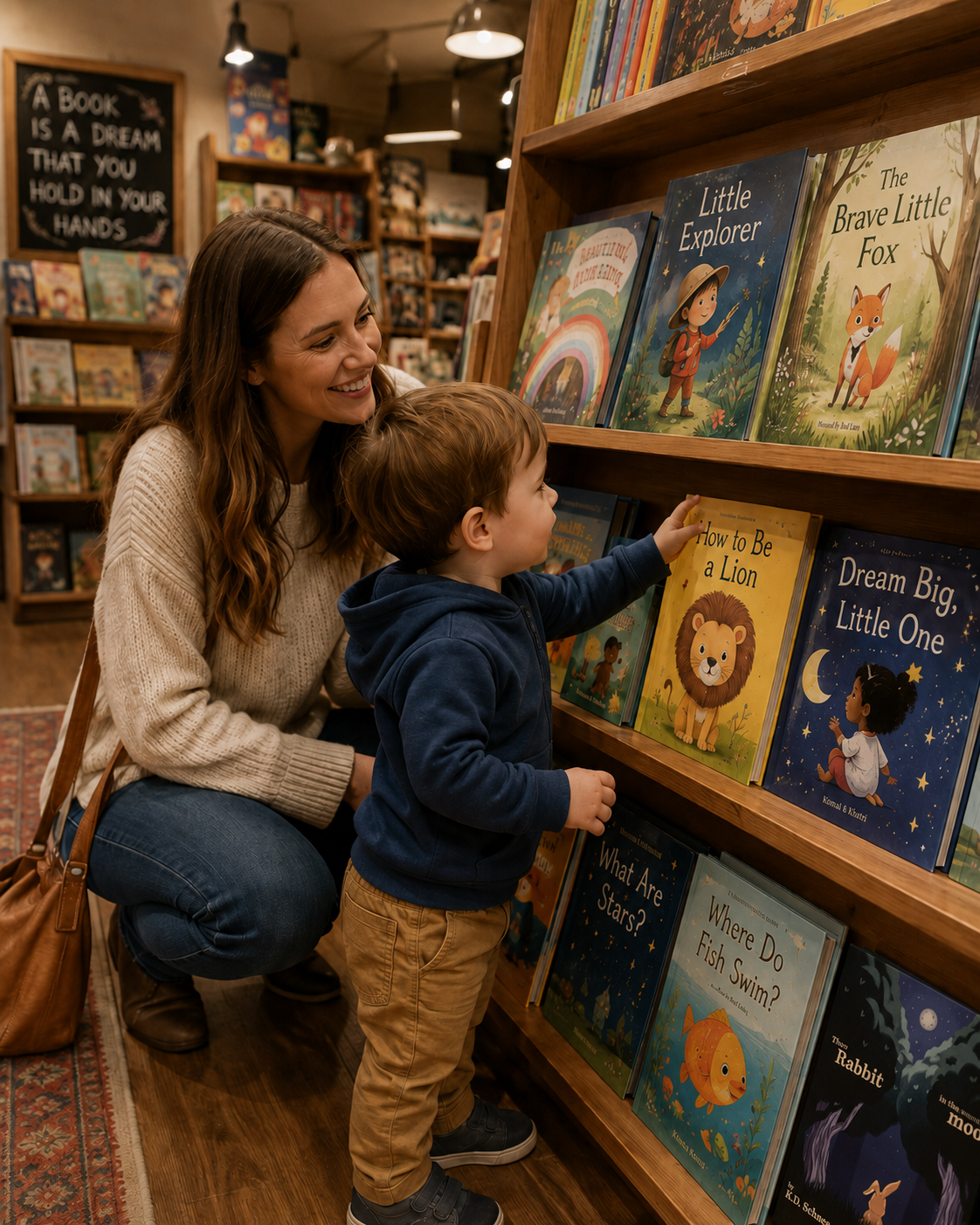
A popular children’s book earns attention in different ways: through laughter, comfort, school moments, bedtime, emotional connection, or the simple fact that children ask for it again.
Popular children’s books are not all popular for the same reason. Some sell because they are tied to school, holidays, or familiar characters. Some last because children genuinely want to hear them again. The best choices are the popular books that still work when a real child is beside you, waiting to care.
As a parent, grandparent, teacher, or gift-giver, it is easy to assume a popular book must be the right book. Sometimes it is. Other times, a book is popular because it has a famous character, a strong retail push, a seasonal hook, or a cover children grab before anyone has read a word. Popularity can point you toward books worth noticing, but it should not make the final decision for you.
As the creator of Yabbit the Rabbit and The Rabbit in the Moon, I look at children’s books through a slightly different lens. I want to know what job the book does for a child. Does it invite laughter? Calm bedtime? Support school transitions? Build language? Help a child talk about feelings? Give the family a phrase they can use later? Make the child want to return?
That is where popularity becomes useful. Not as a trophy, but as a starting point.
How this popular children’s books list was chosen
This list is not pretending to be a perfect ranking of every book children love. Popularity changes quickly, and children’s book lists move with seasons, school calendars, holidays, retail promotions, classroom trends, and new releases.
For this guide, I looked at current bestseller and recommendation signals, including recent children’s picture-book bestseller lists, books that continue to stay visible over time, and titles parents are likely to encounter in bookstores, libraries, classrooms, and online recommendations. The New York Times children’s picture-book bestseller list for August 30, 2026 included current school-season titles such as The Pigeon HAS to Go to School!, On the First Day of Kindergarten, The Crayons Go Back to School, and Time for School, Little Blue Truck. Publishers Weekly’s children’s picture-book bestseller data, supplied by Circana BookScan, showed long-running sales strength for books such as The Very Hungry Caterpillar, Goodnight Moon, The Night Before Kindergarten, and newer seasonal titles.
Bookroo’s daily refreshed bestseller page also helps show what families are buying right now across age ranges, while Common Sense Media’s updated NYT kids-and-teens bestseller review list adds a parent-facing age and content lens. So this is not a “25 books every child must own” list. It is a practical parent guide to popular children’s books that have a clear reason to be read, bought, recommended, or revisited right now.
1. The Very Hungry Caterpillar by Eric Carle
Best for: Toddlers and preschoolers
Why kids love it: Food, counting, color, holes in the pages, and transformation
Why parents keep buying it: It is simple, visual, sturdy, and easy to read again
The Very Hungry Caterpillar remains popular because it gives young children several entry points at once. They can count the food, follow the days, notice the holes, and watch the caterpillar become something new. A toddler does not need to understand every layer to enjoy the rhythm of the book.
Parents like it because it is easy to repeat without feeling empty. It teaches sequencing, counting, food names, and change, but it does not feel like a lesson first. It feels like a small, colorful journey.
2. Goodnight Moon by Margaret Wise Brown
Best for: Toddlers, preschoolers, bedtime routines
Why kids love it: Repetition, familiar objects, soft rhythm
Why parents keep buying it: It creates a reliable bedtime ritual
Goodnight Moon stays popular because it understands bedtime as a transition, not just a time of night. The book slows the room down. It names what is there. It gives children a repeated pattern that helps the day settle.
Not every child will fall in love with it immediately, especially if they are used to faster books. But for many families, the repetition becomes the point. It is not a story built for surprise. It is a story built for return.
3. The Wonderful Things You Will Be by Emily Winfield Martin
Best for: Baby showers, birthdays, toddlers, preschoolers
Why kids love it: Soft illustrations and a warm, dreamy tone
Why parents keep buying it: It speaks to parental hopes without feeling harsh or demanding
This is one of those books that parents often buy because it says something they want a child to feel: you are loved, and your future is open. Children may first respond to the pictures and rhythm, while adults feel the tenderness behind the words.
That dual appeal helps explain its staying power. It is not a high-conflict story, but it does not need to be. It works as a keepsake, a bedtime read, and a book parents can give when they want the gift to feel personal.
4. The Pigeon HAS to Go to School! by Mo Willems
Best for: Preschoolers and kindergarteners
Why kids love it: Big reactions, humor, and a character who says what they feel
Why parents keep buying it: It gives children a funny way into school anxiety
Pigeon is popular because he is emotionally loud in a way children recognize. He resists, argues, worries, imagines disaster, and makes the feeling funny enough to talk about. For children nervous about school, that humor can be useful.
The book does not make school anxiety disappear, but it makes it less lonely. A child can laugh at Pigeon before talking about their own worries. That is often the gift of a good funny book. It opens the door sideways.
5. Time for School, Little Blue Truck by Alice Schertle and Jill McElmurry
Best for: Preschoolers, kindergarteners, school-season reading
Why kids love it: A familiar vehicle character and a school-day problem
Why parents keep buying it: It is cheerful, comforting, and tied to a real transition
Little Blue Truck remains a strong franchise because the character feels friendly and dependable. In this school-themed book, the setting gives parents an easy back-to-school read-aloud, especially for children who like vehicles and predictable rhythms.
For hesitant children, the usefulness comes from familiarity. A known character can make an unfamiliar transition feel easier to enter. Sometimes the most helpful school book is not the most profound one. It is the one a child is willing to hear.
6. On the First Day of Kindergarten by Tish Rabe and Laura Hughes
Best for: Incoming kindergarteners
Why kids love it: The countdown structure and school details
Why parents keep buying it: It helps make kindergarten feel more concrete
Back-to-school books become popular for a reason. Parents want something to make the unknown feel less foggy. On the First Day of Kindergarten does that by giving children a familiar structure and a series of school moments they can imagine before they arrive.
For children who are nervous, concrete details can help. They do not need the entire year explained. They need a few pictures of what the beginning might feel like.
7. The Crayons Go Back to School by Drew Daywalt and Oliver Jeffers
Best for: Preschoolers, kindergarteners, early elementary children
Why kids love it: Funny crayon personalities and school energy
Why parents keep buying it: It blends a popular series with a seasonal school need
The crayons became popular because each crayon feels like a little personality with complaints, opinions, and comic timing. This back-to-school entry gives families a familiar way to talk about returning to the classroom.
It also works because the humor is not too precious. Children enjoy the idea that crayons have feelings about school, art, and being used. That is enough to keep the page alive.
8. See You Later, Alligator! by Sally Hopgood and Emma Levey
Best for: Preschoolers
Why kids love it: Animal goodbyes and playful language
Why parents keep buying it: It is useful for separation, goodbyes, and repetition
This kind of book works because the premise is clear and repeatable. A character says goodbye to animal friends, and the language gives children something to anticipate. For young children, predictable phrasing can turn a story into participation.
It may also help with separation moments. Goodbyes are hard for many children, and books that make goodbye playful can give families gentler language before preschool, bedtime, or drop-off.
9. The Night Before Kindergarten by Natasha Wing and Julie Durrell
Best for: Kindergarten readiness, school-night reading
Why kids love it: Familiar first-day details
Why parents keep buying it: It fits a specific moment families search for every year
Some books become popular because they solve a seasonal need. The Night Before Kindergarten is exactly that kind of book. Parents want something to read before the first day, and children often need a story that turns school into pictures, faces, routines, and a beginning they can imagine.
The book’s value is timing. It meets a family right before a big transition, when reassurance works better as a story than as a speech.
10. Little Blue Truck Lost and Found by Alice Schertle and Jill McElmurry
Best for: Preschoolers and vehicle-loving readers
Why kids love it: Familiar characters, problem-solving, and friendly rhythm
Why parents keep buying it: It continues a trusted series children already know
Series books remain popular because children like returning to a world they already understand. That is especially true for young children. The character is familiar, the tone is familiar, and the child knows how to enter.
This is why Little Blue Truck keeps working. Parents may buy the newest entry because the child already trusts the character. In a crowded bookstore, familiarity has a very loud little bell.
11. The Day the Crayons Quit by Drew Daywalt and Oliver Jeffers
Best for: Preschoolers through early elementary children
Why kids love it: Crayons with grievances, letters, and personality
Why parents keep buying it: It is funny, clever, and strong for read-alouds
This book became popular because the premise is brilliant: the crayons are tired, annoyed, underused, overused, and ready to speak. Children understand the joke quickly. They also enjoy hearing each crayon’s voice.
Parents and teachers like it because it invites conversation about perspective without feeling like a social-emotional lesson stamped onto the page. The book is funny first. That is why the perspective-taking works.
12. If You Give a Mouse a Cookie by Laura Numeroff and Felicia Bond
Best for: Preschoolers and kindergarteners
Why kids love it: Cause-and-effect silliness
Why parents keep buying it: It is repeatable, familiar, and easy to discuss
The mouse’s requests spiral in a way children can predict and enjoy. The structure is the reason the book stays popular. A child begins to understand that one thing leads to another, and the circular ending gives the story a satisfying snap.
It is also useful for conversation. Parents can ask, “What do you think he’ll want next?” without turning the book into a quiz. The child gets to play inside the pattern.
13. The Rainbow Fish by Marcus Pfister
Best for: Preschoolers and early elementary children
Why kids love it: Shiny scales and underwater visuals
Why parents keep buying it: It is familiar, beautiful, and often used to talk about sharing
The Rainbow Fish remains popular partly because children are drawn to the visual design. The shiny scales matter. They make the book feel special in a child’s hands.
Parents often use it as a sharing book, though it is worth reading thoughtfully. Some families love the message, while others may want to talk carefully about what healthy generosity looks like. Either way, the book continues to invite conversation, which is one reason it stays in circulation.
14. Pete the Cat: I Love My White Shoes by Eric Litwin and James Dean
Best for: Preschoolers, kindergarteners, music-loving children
Why kids love it: Repetition, singing, and Pete’s calm attitude
Why parents keep buying it: It makes read-alouds feel playful
Pete the Cat became popular because the books are easy to perform. Children can join the repeated lines, sing along, and anticipate the pattern. Pete’s relaxed response to messes also gives the book a simple emotional rhythm.
It is not trying to be delicate literature. It is trying to be fun, repeatable, and easy for a child to enter. That has real value.
15. Dragons Love Tacos by Adam Rubin and Daniel Salmieri
Best for: Preschoolers and early elementary children
Why kids love it: Dragons, tacos, and absurd consequences
Why parents keep buying it: It is a funny read-aloud that does not over-explain itself
The title alone does a lot of work. Children hear “dragons” and “tacos,” and the door opens. The humor is simple, strange, and wonderfully ridiculous.
Popular books often have one strong hook that a child understands instantly. This one has that. It also gives adults enough comic rhythm to survive repeated readings, which should never be underestimated.
16. Don’t Let the Pigeon Drive the Bus! by Mo Willems
Best for: Preschoolers and kindergarteners
Why kids love it: They get to say “no” to a very persuasive pigeon
Why parents keep buying it: It makes children active participants
This book works because children are not passive listeners. They become part of the story. Pigeon begs, bargains, melts down, and tries again, while the child gets the power to answer.
That participation is why the book remains so strong. The child is not just watching a character misbehave. They are holding the boundary, which is deliciously fun when you are small and usually not in charge of anything larger than a cracker.
17. Brown Bear, Brown Bear, What Do You See? by Bill Martin Jr. and Eric Carle
Best for: Toddlers and preschoolers
Why kids love it: Predictable structure, animals, colors, rhythm
Why parents keep buying it: It is one of the easiest books for children to join
This is a popular book because it works almost like a song. Children learn the pattern quickly and can participate before they can read. That makes the book feel successful for very young readers.
It also gives adults an easy read-aloud. There are no complicated plot mechanics, no tricky explanations, no emotional tax form to complete. Just rhythm, color, and repetition doing exactly what they are supposed to do.
18. Chicka Chicka Boom Boom by Bill Martin Jr. and John Archambault, illustrated by Lois Ehlert
Best for: Toddlers, preschoolers, early alphabet learners
Why kids love it: Sound, movement, letters, and the crash
Why parents keep buying it: It makes alphabet learning feel physical and fun
This book remains popular because it turns letters into characters with momentum. The alphabet climbs the tree, piles up, and falls with a sound children remember.
For early literacy, that matters. Children are not just identifying letters. They are hearing rhythm, anticipating sound, and feeling the alphabet move. It is a book that knows learning should sometimes bounce.
19. Dear Zoo by Rod Campbell
Best for: Toddlers and preschoolers
Why kids love it: Lift-the-flaps, animals, and repetition
Why parents keep buying it: It is interactive without being chaotic
Interactive books stay popular with young children because they give small hands a job. Dear Zoo works because the structure is simple and the reveal is satisfying. Each animal is wrong until the final pet is right.
The repetition also helps children feel in control. They know how the book works. They can predict, lift, laugh, and request it again. For toddlers, that is the whole carnival.
20. How to Catch a Unicorn by Adam Wallace and Andy Elkerton
Best for: Preschoolers and early elementary children
Why kids love it: A magical creature, chase structure, and bright action
Why parents keep buying it: It is part of a recognizable, highly visible series
The “How to Catch” books are popular because they offer a clear premise children grasp quickly: someone is trying to catch something exciting. The unicorn entry leans into color, energy, and fantasy.
This may not be the quietest bedtime choice, but that is not the job it is doing. Some books are popular because they create excitement. For the right child at the right time, that can be the doorway into reading.
21. The Rabbit Listened by Cori Doerrfeld
Best for: Preschoolers, kindergarteners, children learning emotional regulation
Why kids love it: A soft character and a simple emotional problem
Why parents keep buying it: It helps adults talk about comfort without over-talking
This book continues to be recommended because it gives children and adults a gentle model of support. Taylor’s block creation falls, different animals offer different kinds of advice, and the rabbit simply listens.
Parents often need books like this as much as children do. It reminds the adult that not every hard feeling needs a fix right away. Sometimes the child needs presence first.
22. The Magical Yet by Angela DiTerlizzi and Lorena Alvarez
Best for: Preschoolers and early elementary children
Why kids love it: Bright art and a magical companion
Why parents keep buying it: It gives children language for growth and trying again
Growth-mindset books can become heavy if the message arrives with steel-toed shoes. The Magical Yet works because the idea is playful. A child may not be able to do something yet, and that little word opens the door to trying again.
For parents, it offers a phrase that can travel into daily life. That is always a sign of a useful picture book. If the language works after the book closes, the story has done more than entertain.
23. The Color Monster by Anna Llenas
Best for: Preschoolers and kindergarteners
Why kids love it: Color, a monster, and clear feelings
Why parents keep buying it: It helps children sort emotional language
Feeling books are popular because parents need help making emotions visible. The Color Monster gives children a simple way to connect feelings with color and image. That can be especially useful for children who do not yet have the language to explain what is happening inside them.
It is not the only way to teach emotional language, but it is easy to understand. For many families, that makes it useful.
24. The Girl Who Never Made Mistakes by Mark Pett and Gary Rubinstein
Best for: Kindergarteners and early elementary children
Why kids love it: A relatable fear and a public mistake
Why parents keep buying it: It helps perfectionistic children talk about pressure
This book remains relevant because many children know what it feels like to worry about getting something wrong. Beatrice is known for never making mistakes, and that reputation becomes its own trap.
For children who freeze under pressure, the story can open a helpful conversation. Mistakes are not abstract. They are social, emotional, and sometimes embarrassing. A book that understands that can be useful.
25. Butt or Face? by Kari Lavelle
Best for: Kids who need nonfiction to feel funny
Why kids love it: The title, the guessing game, and animal absurdity
Why parents keep buying it: It turns science and observation into laughter
A book like Butt or Face? proves an important point about popular children’s books: sometimes the reason children read is because the book is funny in exactly the way adults did not plan. That is not a weakness. It is a reading doorway.
Children who resist quiet, serious books may lean into something weird, visual, and fact-based. If a book makes a child laugh and look closely, it has earned its moment.
How should parents choose from popular children’s books?
Choose popular children’s books by asking what kind of reading moment you actually need.
If you need bedtime calm, choose a book with rhythm, softness, and a familiar ending. If you need school readiness, choose a book that makes the first day or classroom routine feel more concrete. If you need laughter, choose a book with a strong comic hook. If your child is hesitant, perfectionistic, worried, or resistant, look for a story that helps with the feeling underneath the behavior.
A popular book is not automatically the right book, but it can be a useful place to begin. The best test is still your child’s response. Do they lean closer? Do they laugh? Do they point? Do they ask for it again? Do they carry a phrase into real life?
For more help judging whether a picture book is worth buying and keeping, read: https://www.yabbitrabbit.com/parent-resources/what-makes-picture-book-worth-buying
Popularity gets a book into the room. The child decides whether it stays.
Should parents only buy popular children’s books?
No. A child’s bookshelf should not be built only from bestseller lists.
Popular books can be wonderful, but they are only one part of a strong home library. Children also need quiet books, strange books, diverse books, emotional books, nonfiction books, poetry, classics, new discoveries, library finds, and books that match their very specific interests. The right book for your child may not be on any national list.
This is especially true for children who are anxious, hesitant, reluctant to read, or afraid to try new things. They may need books that do a more specific emotional job than a general bestseller can do. A book does not have to be massively popular to become important in one family.
For a broader guide to building a balanced bookshelf, read: https://www.yabbitrabbit.com/parent-resources/how-to-build-childrens-book-collection
A healthy children’s shelf should have room for both: the books everyone is talking about and the books your child quietly needs.
Why popular books change so quickly
Popular children’s books change because childhood has seasons.
Back-to-school books rise when school begins. Pumpkin books rise in fall. Bedtime books sell steadily because children keep needing sleep, or at least adults keep hoping they will try it. Holiday books arrive in waves. New franchise books surge because children recognize the characters before parents even reach the display table.
That is why this page should be updated periodically. A truly useful popular children’s books guide should not pretend that “right now” lasts forever. Some books have long-term staying power. Others are hot for a season. Both can be worth reading, but they are not the same kind of recommendation.
When you choose a popular book, ask whether it is popular because of timing, because of a known character, because of a trend, or because families genuinely return to it.
Those are different signals.
What popular children’s books teach parents
Popular children’s books teach parents that children need different kinds of reading pleasure.
Some children want humor. Some want comfort. Some want rhythm. Some want beautiful pictures. Some want animals, vehicles, dinosaurs, monsters, crayons, tacos, school buses, or very suspicious fish. Some want the same book for six straight nights until the adult reader begins to see the pages floating in the toaster.
That repetition can be exhausting, but it is also information. Children return to books that give them something: control, laughter, safety, surprise, mastery, or a feeling they are still trying to understand.
As KD Schnee, that is the piece I care about most. A children’s book does not need to be popular to matter, but the books that last usually understand something real about children. They do not only impress adults. They give the child a doorway.
That is the standard worth keeping.
Where The Rabbit in the Moon fits
The Rabbit in the Moon is not included in this list of popular children’s books because this article is based on current popularity signals, bestseller visibility, and widely recognized parent/bookstore demand. That matters.
Editorial trust is more important than forcing my own book into a category it has not yet earned. The Rabbit in the Moon is a newer independent picture book, and I would rather be honest about its lane than pretend it belongs beside long-running national bestsellers. Its lane is different.
The Rabbit in the Moon was created for hesitant children: the child who wants to try but freezes at the start, the child who says “I can’t,” the child who needs courage to feel smaller before they can begin. Yabbit gives that feeling a character. Snail gives the child steady support. The phrase “one tiny brave hop” gives families language they can use in real life.
So if you are looking for the most popular book on a national list, choose from the books above. If you are looking for a newer picture book that helps a hesitant child build courage one small step at a time, The Rabbit in the Moon may be the better fit.
That is the honest distinction.
Buy the Book
If your child hesitates before trying, freezes at the first step, worries about mistakes, struggles with school transitions, or needs courage to feel more manageable, The Rabbit in the Moon was written for that moment.
Yabbit is not fearless. He pauses before the journey. Snail brings steadiness, patience, and quiet support. Together, they help children understand that courage does not have to arrive all at once. It can begin with one tiny brave hop.
Popular children’s books can help families find what other parents are buying and reading now. The Rabbit in the Moongives families something more specific: a story and shared language for hesitation, support, and brave little beginnings.
External Resource
For a current bestseller reference, see The New York Times Children’s Picture Books Best Sellers list: https://www.nytimes.com/books/best-sellers/picture-books/
FAQs
What are popular children’s books right now?
Popular children’s books right now include a mix of long-running favorites, school-season books, funny read-alouds, bedtime books, familiar series, and current bestsellers. Titles such as The Very Hungry Caterpillar, Goodnight Moon, The Pigeon HAS to Go to School!, Time for School, Little Blue Truck, and The Wonderful Things You Will Be continue to appear strongly in parent, retail, and bestseller conversations.
Are popular children’s books always the best books?
No. Popularity can help parents discover books, but it should not replace judgment. The best book for your child is the one that fits their age, attention span, interests, emotional needs, and read-aloud life.
How do I choose a popular book my child will actually read?
Start with your child’s real interests. If they like humor, choose a funny book. If they are starting school, choose a school book. If they need calm, choose a bedtime book. If they love animals, vehicles, art, or facts, choose a book that begins there.
What popular books are good for toddlers?
Popular toddler choices often include books with rhythm, repetition, animals, colors, flaps, and simple emotional patterns. Brown Bear, Brown Bear, What Do You See?, Dear Zoo, Goodnight Moon, and The Very Hungry Caterpillar are strong examples.
What popular books are good for preschoolers?
Preschoolers often enjoy popular books with humor, repetition, clear characters, and strong pictures. Don’t Let the Pigeon Drive the Bus!, Pete the Cat, Dragons Love Tacos, The Day the Crayons Quit, and The Pigeon HAS to Go to School! are good examples.
Should I buy only bestselling children’s books?
No. Bestseller lists are useful, but a child’s shelf should include more than bestsellers. Add classics, library discoveries, diverse books, emotional books, nonfiction, funny books, bedtime books, and stories that match your child’s current stage.
Why is The Rabbit in the Moon not on this popular children’s books list?
The Rabbit in the Moon is not included because this list focuses on books with current, visible popularity signals. It is a newer independent picture book with a more specific purpose: helping hesitant children understand fear, support, and one tiny brave hop forward.