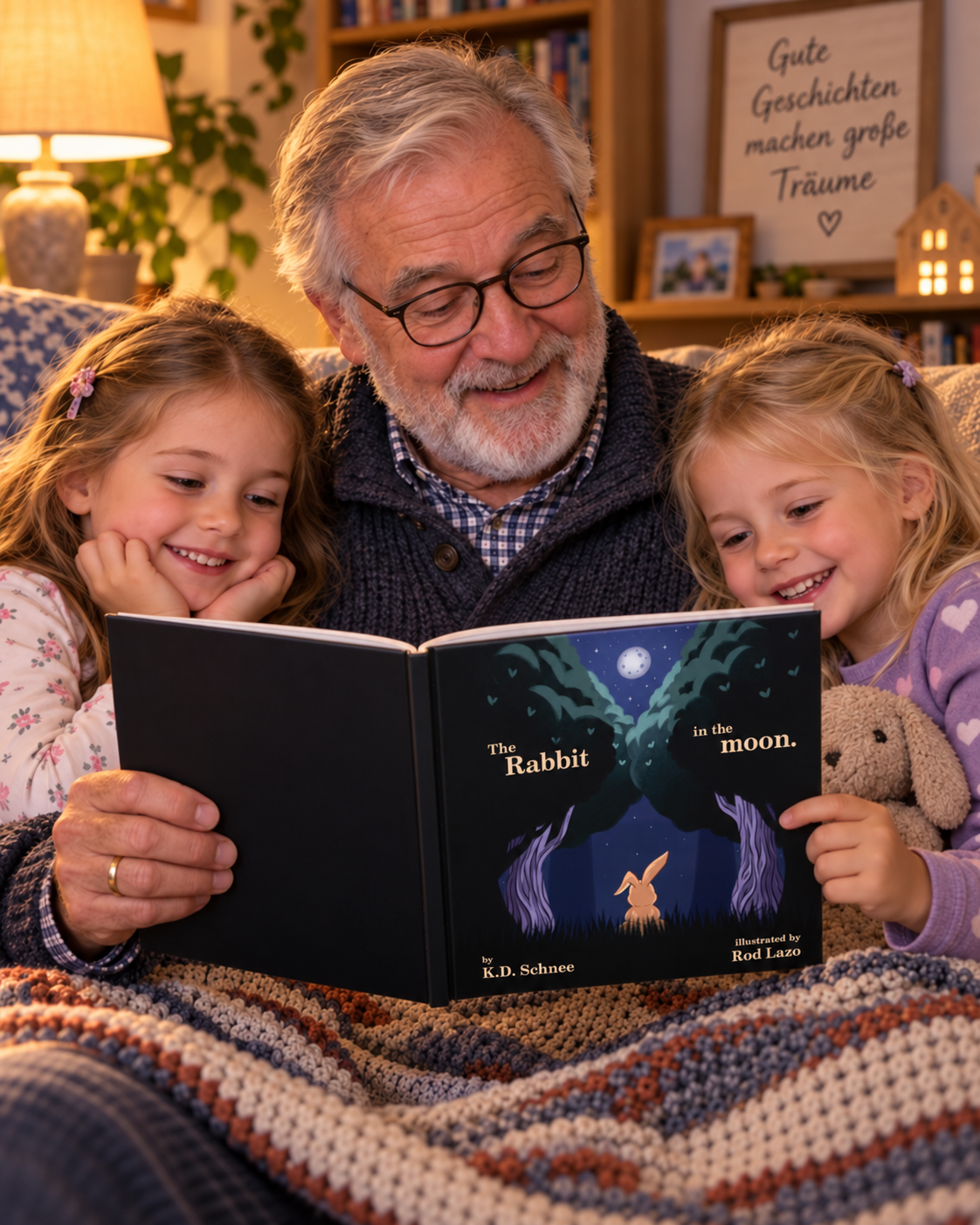
A parent reading picture books with a 5-year-old child, showing how the best picture books for 5 year olds build confidence, language, imagination, and read-aloud connection.
The best picture books for 5 year olds are stories children want to hear again, talk about, act out, question, and carry into real life. At this age, a strong picture book should build language, stretch imagination, support emotional growth, and help children feel more confident as the world around them gets bigger.
Five is a fascinating reading age. Many children are entering kindergarten or getting ready for it. They are beginning to notice letters, sounds, patterns, jokes, fairness, friendship, mistakes, and the social world with sharper eyes. They may be starting to read a few words on their own, but they still need the richness of being read to by an adult.
That last part matters.
A 5-year-old may be learning to decode simple words, but their listening comprehension, imagination, emotional life, and sense of humor are often running far ahead of what they can comfortably read independently. Picture books are perfect for that gap. They give children sophisticated stories, memorable illustrations, and big feelings without asking them to carry the whole reading task alone.
As the author of The Rabbit in the Moon, I think the best books for this age should do more than entertain. A good picture book gives a 5-year-old a safe place to practice courage, frustration, kindness, curiosity, disappointment, confidence, worry, humor, and the strange art of trying again. At five, children are not just learning how stories work. They are using stories to rehearse life.
What Are the Best Picture Books for 5 Year Olds?
The best picture books for 5 year olds combine entertaining stories with richer language, emotional depth, humor, imagination, and themes children entering kindergarten can recognize. Strong choices include The Rabbit in the Moon for courage and hesitation, The Day the Crayons Quit for humor and perspective, The Dot for confidence, Jabari Jumps for trying something new, and The Most Magnificent Thing for persistence through frustration.
What makes a picture book good for a 5-year-old?
A good picture book for a 5-year-old gives the child enough story to think about and enough pleasure to want the book again.
At five, many children can handle longer plots, richer language, bigger jokes, more complex feelings, and stories that leave a little room for discussion. They may notice when a character is embarrassed, left out, nervous, proud, unfair, kind, brave, or pretending to be fine. They may also challenge the story in the middle of the page because five-year-olds are small attorneys with snack crumbs.
That is part of the fun. The best picture books for 5 year olds usually have several strengths. They read aloud well.
They have a clear emotional shape. The pictures add meaning. The main character wants something. The story gives children room to predict, laugh, wonder, disagree, or connect the book to their own life. Most importantly, the book should still feel alive on the second or third reading.
Parents sometimes ask whether 5-year-olds should move on from picture books once they start reading simple words. I would not rush that. Picture books still give children language, rhythm, visual literacy, emotional vocabulary, and shared attention with an adult. They are not a step backward. They are often the richest reading experience a child can have at this age.
How I chose these books
I chose these books by thinking about what 5-year-olds actually need from a picture book.
Some books on this list are funny because humor is one of the great doorways into reading. Some are emotionally useful because five can be a tender age for school, friendships, mistakes, and comparison. Some support confidence, creativity, and trying again. Some are classics because they still hold children. Some are classroom-friendly. Some are quieter books that work best when a child is ready to sit close and think.
This is not a list of books that all do the same job. That would make a very boring shelf, and children already have enough adults asking them to make sensible choices.
A good 5-year-old bookshelf should have range: books for laughter, books for bedtime, books for school, books for feelings, books for imagination, books for persistence, books for conversation, and books that become family favorites for reasons nobody could have predicted.
1. The Rabbit in the Moon by KD Schnee
Best for: Hesitant children, courage, emotional language, school transitions, bedtime
Why 5-year-olds may connect: Yabbit gives hesitation a character children can understand
Why parents may appreciate it: The story offers practical language for courage, support, and one small brave step
The Rabbit in the Moon belongs on a 5-year-old bookshelf because five is an age of bigger beginnings. Children may be starting kindergarten, joining new groups, trying sports, learning to read, sleeping more independently, handling mistakes, or discovering that other children seem to move through the world with different kinds of confidence.
That can be a lot.
Yabbit was created for the child who wants to try but hesitates at the edge of the beginning. He is not fearless. He pauses before the journey. With Snail’s steady support, he learns that courage does not have to arrive all at once. It can begin with one tiny brave hop.
For a 5-year-old, that phrase can become very useful. It gives a child something to do when “be brave” feels too big. Say hello to one friend. Try one line. Put one foot inside the classroom. Ask for help. Begin with the part that feels possible.
That is why I put this book first, transparently. Not because every child needs the same book, but because many 5-year-olds are standing at the exact threshold Yabbit was created to understand.
2. The Day the Crayons Quit by Drew Daywalt and Oliver Jeffers
Best for: Humor, perspective-taking, classroom read-alouds
Why 5-year-olds may connect: Each crayon has a complaint, a personality, and a point of view
Why parents may appreciate it: It introduces empathy and perspective without feeling like a lesson
This book works beautifully at five because children are old enough to enjoy the joke and young enough to fully believe that crayons might have feelings. Each crayon’s letter has a different personality, and that gives the read-aloud energy.
It is also a useful book for helping children think about point of view. Why is red tired? Why is beige upset? Why does pink feel overlooked? The book does not need a lecture on empathy. The crayons handle that themselves, with dramatic stationery.
3. The Book with No Pictures by B.J. Novak
Best for: Laughter, reluctant readers, read-aloud performance
Why 5-year-olds may connect: The adult has to say every ridiculous word
Why parents may appreciate it: It proves that text can be funny even without illustrations
A book with no pictures should not work this well with young children, which is exactly why it does. The whole joke is that the adult reader must say whatever the page says, no matter how absurd.
Five-year-olds understand the power reversal immediately. The book turns reading into performance, language play, and shared laughter. It is especially useful for children who think books are quiet, serious, or too much like school. This book walks in wearing a paper hat and ruins that theory.
4. We Don’t Eat Our Classmates by Ryan T. Higgins
Best for: School behavior, empathy, humor
Why 5-year-olds may connect: A dinosaur learning not to eat classmates is an unforgettable social problem
Why parents may appreciate it: It makes classroom expectations funny and concrete
This is a strong book for kindergarten-age children because it takes a real social skill and gives it a ridiculous costume. Penelope Rex wants to be part of class, but her instincts are terrible for friendship.
Children understand the humor first. Then they understand the feeling underneath it: other people have feelings too. For five-year-olds learning classroom life, group behavior, and friendship repair, that is a useful idea to meet inside a funny story.
5. The Rabbit Listened by Cori Doerrfeld
Best for: Big feelings, disappointment, comfort, emotional regulation
Why 5-year-olds may connect: The feeling is simple, but the response is deeply recognizable
Why parents may appreciate it: It models presence before fixing
When Taylor’s block creation falls apart, different animals offer different ways to respond. The rabbit listens.
That is the whole heart of the book, and it works because many children know what it feels like when adults rush to fix, explain, cheer up, or move on before the feeling has settled. At five, children are old enough to understand that comfort is not always advice. Sometimes it is someone staying close without taking over.
This is a good book for the child who needs help with disappointment, frustration, or the rough little weather system that follows a plan falling apart.
6. The Dot by Peter H. Reynolds
Best for: Creativity, perfectionism, fear of starting
Why 5-year-olds may connect: One small mark becomes the beginning
Why parents may appreciate it: It helps children who freeze because they think they cannot do something
The Dot is one of the cleanest picture-book examples of making the first step smaller. A child says she cannot draw. A teacher invites her to make one mark. That tiny beginning opens a new relationship with creativity.
Five-year-olds often begin comparing their work to other children’s work. They notice who draws better, writes faster, reads more easily, or gets praised. This book gently interrupts the belief that you have to be good before you begin.
Make one mark.
That is a tiny brave hop with a paintbrush.
7. After the Fall by Dan Santat
Best for: Fear after failure, resilience, trying again
Why 5-year-olds may connect: Humpty Dumpty’s fear after falling feels real
Why parents may appreciate it: It shows that getting back up may take time
This is a powerful book for children who become afraid after something goes wrong. Humpty Dumpty survives the fall, but he is not immediately fine. He avoids heights. He changes his life around the fear. That is emotionally honest.
For five-year-olds, this book can open a conversation about what happens after a mistake, accident, embarrassment, or scare. Some children do not need encouragement to try for the first time. They need help trying again after the first attempt hurt.
That is a different kind of courage, and the book respects it.
8. Jabari Jumps by Gaia Cornwall
Best for: Anticipatory fear, swimming, trying something new
Why 5-year-olds may connect: Jabari wants to jump and also needs time
Why parents may appreciate it: It shows patient support without pressure
Jabari has passed his swim test and is ready to jump from the diving board, except the moment gets bigger when he is standing there. That is exactly how anticipation works for many children. They are ready in theory. Then the edge arrives.
The father in the story is steady, not pushy. He gives Jabari room. That makes this a wonderful book for children who want to be brave but need the adult beside them to understand pacing. It pairs beautifully with conversations about school, sports, swimming, or any new beginning.
9. Giraffes Can’t Dance by Giles Andreae and Guy Parker-Rees
Best for: Confidence, self-expression, children who feel different
Why 5-year-olds may connect: Gerald wants to dance but feels judged
Why parents may appreciate it: The confidence message is easy for children to remember
Gerald the giraffe feels awkward and out of place at the jungle dance. Children understand that kind of social worry, especially at five, when they are more aware of what other children can do and how others may react.
The book is direct, but the rhyme and illustrations keep it lively. It is a good choice for a child who needs help believing that participation does not have to look the same for everyone. Gerald does not become someone else. He finds his own rhythm.
10. The Most Magnificent Thing by Ashley Spires
Best for: Frustration, persistence, creative problem-solving
Why 5-year-olds may connect: Making something can feel exciting until it does not work
Why parents may appreciate it: It shows frustration without pretending persistence is easy
This is a useful book for children who melt down when their idea does not match what they can make yet. The main character has a magnificent idea, tries to build it, gets frustrated, quits, walks away, and eventually returns.
That arc matters. Children need stories where persistence includes frustration, not just cheerful effort. At five, when children are making, writing, drawing, building, and comparing more, this book gives them a realistic model for stepping away and trying again.
11. What Do You Do With a Problem? by Kobi Yamada and Mae Besom
Best for: Worry, problem-solving, emotional courage
Why 5-year-olds may connect: The problem feels like something following the child
Why parents may appreciate it: It gives children a visual metaphor for worry
This book turns a problem into something a child can see. That visual metaphor is useful for five-year-olds because they often feel worry before they can explain it clearly.
The story helps children understand that avoiding a problem can make it feel larger, while facing it carefully can change the relationship. This is not a magic wand book. It does not tell children that problems disappear. It helps them imagine approaching one, which is often the part they need help with.
12. The Invisible Boy by Trudy Ludwig and Patrice Barton
Best for: Friendship, kindness, children who feel unseen
Why 5-year-olds may connect: Brian’s quietness is visible through the illustrations
Why parents may appreciate it: It opens conversation about inclusion without sounding preachy
Five-year-olds are beginning to understand group belonging in a more complicated way. Who gets noticed? Who gets invited? Who sits alone? Who feels included?
The Invisible Boy gives children a gentle way to think about those questions. The illustrations help show Brian’s emotional experience before the text explains everything. That makes it especially useful for children who may feel unseen themselves, or who are learning how their choices affect others.
13. Strictly No Elephants by Lisa Mantchev and Taeeun Yoo
Best for: Inclusion, friendship, feeling left out
Why 5-year-olds may connect: A child and pet are excluded, then create a more welcoming group
Why parents may appreciate it: It gives belonging a clear story shape
This is a strong book for children who are learning what inclusion actually looks like. The child with the tiny elephant is not allowed into a pet club, so a new group forms where many different pets and people are welcome.
At five, children can often understand the unfairness clearly. They may also understand the relief of finding a place where they belong. The book is warm and accessible, with just enough edge to make the kindness meaningful.
14. The Name Jar by Yangsook Choi
Best for: Identity, school, names, belonging
Why 5-year-olds may connect: A new child is deciding how she wants to be known
Why parents may appreciate it: It respects culture and identity in a child-centered way
Starting school can make children very aware of names, accents, differences, and belonging. The Name Jar handles that tenderly. Unhei is new to school and wonders whether she should choose an American name, while classmates make suggestions.
The story gives families and classrooms a way to talk about identity without turning a child into a lesson. Five-year-olds may first connect with the school setting and the jar of names. Older children may understand more of the emotional weight. That layered usefulness is a sign of a strong picture book.
15. Chrysanthemum by Kevin Henkes
Best for: Teasing, self-worth, school feelings
Why 5-year-olds may connect: Chrysanthemum loves her name until others make her doubt it
Why parents may appreciate it: It helps children talk about hurtful words
Kevin Henkes understands small-child emotional weather better than almost anyone. In Chrysanthemum, a little mouse loves her name until classmates tease her. The hurt is not treated as trivial, because to a child it is not trivial.
This book is especially useful for kindergarten conversations about names, teasing, confidence, and the power of adult support. It also reminds parents that a child’s pride can be fragile when peers enter the picture. At five, that lesson matters.
16. Lilly’s Purple Plastic Purse by Kevin Henkes
Best for: Impulse control, school behavior, repair
Why 5-year-olds may connect: Lilly is excited, impatient, and very sure of herself
Why parents may appreciate it: It gives children a way to understand mistakes and making amends
Lilly is not a mild character, thank goodness. She is bright, dramatic, loving, impulsive, and upset when her beloved teacher takes away her purse after she cannot stop showing it off.
This book works because it does not make Lilly bad. It lets her make a mistake, feel big feelings, and repair the relationship. That is valuable for five-year-olds, who are learning that being sorry is not the same as being ruined.
17. Ada Twist, Scientist by Andrea Beaty and David Roberts
Best for: Curiosity, STEM, persistence, asking questions
Why 5-year-olds may connect: Ada asks big questions and investigates everything
Why parents may appreciate it: It celebrates curiosity while showing that curiosity needs guidance
Ada Twist is a wonderful character for children who ask endless questions, including the kind that arrive when a parent is trying to cook, drive, answer a message, and remember where the library book went. Her curiosity is the engine of the story.
For five-year-olds, the book celebrates wondering and experimenting. It also shows that curiosity can create messes and still be worth supporting. That balance is useful. Children need permission to ask questions and gentle structure for what to do with them.
18. Rosie Revere, Engineer by Andrea Beaty and David Roberts
Best for: Invention, fear of failure, trying again
Why 5-year-olds may connect: Rosie hides her inventions after feeling embarrassed
Why parents may appreciate it: It gives failure a healthier frame
Rosie loves inventing but becomes afraid to share her creations after being laughed at. That is a deeply familiar pattern for children who pull back after embarrassment.
The book’s strength is that it treats failure as part of invention, not the end of it. For five-year-olds beginning to build more, make more, and compare more, this is a healthy message. Trying again is not presented as a slogan. It is part of how making works.
19. The Gruffalo by Julia Donaldson and Axel Scheffler
Best for: Rhyme, suspense, cleverness, forest adventures
Why 5-year-olds may connect: A small mouse outsmarts larger animals
Why parents may appreciate it: It has excellent read-aloud rhythm and structure
The Gruffalo remains a terrific book for five because the structure is easy to follow and the language is fun to hear. The mouse is small, but clever. The danger is present, but contained. Children enjoy knowing more and more as the pattern builds.
The rhyme does real work here. It keeps the story moving and makes repeated readings enjoyable. A good rhyming picture book should feel effortless to the listener, even if the writer had to wrestle every line behind the curtain.
20. Room on the Broom by Julia Donaldson and Axel Scheffler
Best for: Friendship, teamwork, rhyme, mild suspense
Why 5-year-olds may connect: Animals keep joining the broom until the problem becomes bigger
Why parents may appreciate it: It blends humor, danger, and cooperation
This book gives five-year-olds a wonderfully satisfying structure: something gets lost, an animal helps, the animal joins, and the broom becomes more crowded. Then the story turns when the group needs to help the witch.
It is a strong read-aloud because children can anticipate the pattern and still enjoy the suspense. The cooperation message works because it grows from the story, not from an adult stepping onto the page with a clipboard.
21. The Snail and the Whale by Julia Donaldson and Axel Scheffler
Best for: Adventure, courage, small characters doing big things
Why 5-year-olds may connect: A tiny snail longs to see the world
Why parents may appreciate it: It shows that smallness does not prevent bravery
This is a beautiful book for children who love journeys. The tiny snail wants to see the world, and the whale carries her across oceans, ice, storms, and danger. The scale is enormous, but the emotional idea is child-sized: even someone small can matter.
Five-year-olds often like stories where the world opens wide. This book gives them adventure, rhyme, and a satisfying moment where the small character becomes essential.
22. Where the Wild Things Are by Maurice Sendak
Best for: Big feelings, imagination, anger, returning home
Why 5-year-olds may connect: Max gets to be wild and still return to safety
Why parents may appreciate it: It treats a child’s inner life with seriousness
Max’s anger becomes a whole world. That is why the book has lasted. It does not overexplain his feelings or hurry him into being sweet. It lets wildness exist inside the safety of a story.
Five-year-olds may connect more deeply with this than younger children because they can begin to understand the emotional movement: anger, imagination, power, loneliness, return. It is also one of the best examples of illustrations expanding the story beyond the words.
23. Last Stop on Market Street by Matt de la Peña and Christian Robinson
Best for: Gratitude, community, conversation, city life
Why 5-year-olds may connect: CJ asks questions children understand
Why parents may appreciate it: It helps children notice beauty in ordinary places
CJ and his grandmother ride through the city, and the story gently shifts the way CJ sees what is around him. Five-year-olds can connect with the questions first: why do we have to go here, why do they have that, why is this our day?
The book’s strength is that Nana does not lecture CJ into gratitude. She helps him look. That is a more powerful model for children, and honestly for adults too.
24. Owl Moon by Jane Yolen and John Schoenherr
Best for: Quiet courage, nature, patience, parent-child connection
Why 5-year-olds may connect: The child has to stay quiet and brave in the dark
Why parents may appreciate it: It gives silence and waiting real beauty
Owl Moon is slower and quieter than many books on this list, but the right five-year-old may find it mesmerizing. A child goes owling with a father on a winter night. The suspense is not loud. It is held in quiet, cold, darkness, and waiting.
That makes it a different kind of courage book. The child does not perform bravery loudly. The child practices patience, attention, and trust. In a world full of bright flashing nonsense rectangles, that kind of book is a small miracle with feathers.
25. How to Catch a Star by Oliver Jeffers
Best for: Imagination, longing, problem-solving, quiet wonder
Why 5-year-olds may connect: A child wants something impossible and keeps trying
Why parents may appreciate it: It honors persistence without making the story feel heavy
Oliver Jeffers often gives children big ideas in simple shapes. In this book, a boy wants to catch a star. His attempts are imaginative, sincere, and beautifully childlike.
Five-year-olds are ready for stories where the goal may be impossible in practical terms but emotionally true. Wanting something, trying different ways, and seeing the world through imagination are all part of childhood thinking. This book respects that.
How should parents choose picture books for 5-year-olds?
Choose picture books for 5-year-olds by thinking about the child’s stage, not just the child’s age.
A five-year-old who is starting kindergarten may need books about school, friendship, separation, names, mistakes, and asking for help. A five-year-old who loves to laugh may need Pigeon, crayons, dragons, and books that let the adult reader become ridiculous. A hesitant child may need Yabbit, Jabari, Rosie, Gerald, or another character who shows that courage can begin before confidence fully arrives.
The best book is not always the one adults admire most. It is the one your child wants to enter, return to, and talk about later in their own uneven, wonderful way.
For the broader 4–5 age bridge, read: https://www.yabbitrabbit.com/parent-resources/best-books-for-4-5-year-olds-picture-books
A child asking for the same book again is not wasting time. They are building fluency, memory, confidence, comfort, and ownership.
Are picture books still important for 5-year-olds who are learning to read?
Yes. Picture books are still important for 5-year-olds, even when they are beginning to read on their own.
Early readers and phonics books help children practice decoding, but picture books give them richer language, stronger story structure, more complex emotions, and illustrations that support meaning. A child may only be able to read simple sentences independently, but they can listen to, understand, and discuss much deeper stories.
That is one reason read-alouds still matter so much at this age. Shared reading lets a 5-year-old live above their independent reading level. They can hear beautiful sentences, enjoy suspense, understand character feelings, build vocabulary, and connect books with warmth instead of pressure.
The goal is not to make picture books compete with early readers. The goal is to let each kind of book do its job.
What kinds of books prepare 5-year-olds for kindergarten?
Books that prepare 5-year-olds for kindergarten are not only books about classrooms.
School readiness is emotional as much as academic. Children need stories about listening, waiting, trying, making mistakes, joining groups, feeling nervous, asking for help, being kind, handling disappointment, and separating from parents. They also need silly books, because childhood should not be turned into a laminated skills checklist.
A good kindergarten bookshelf includes school stories, friendship stories, feelings stories, confidence stories, and read-alouds that make language joyful. Books such as We Don’t Eat Our Classmates, The Name Jar, Chrysanthemum, The Rabbit in the Moon, The Kissing Hand, and Lilly’s Purple Plastic Purse all support different parts of the school experience.
For what comes next in the age-based reading path, read: https://www.yabbitrabbit.com/parent-resources/best-picture-books-for-6-year-olds
The point is not to make school sound perfect. The point is to give children story-language for the moments they are likely to meet.
How many picture books should a 5-year-old read each day?
There is no perfect number of picture books a 5-year-old should read each day.
One warm, focused read-aloud can matter more than a stack of books rushed through while everyone is exhausted. Some days your child may want three books. Some days they may only have patience for one page. Some weeks they may request the same story over and over until the adults in the house can recite it while loading the dishwasher.
That is normal.
The more useful goal is consistency. Keep books visible. Let your child choose. Read aloud often. Visit libraries and bookstores when you can. Let rereading count. Ask one good question instead of turning every story into an interview. Most of all, protect the feeling of reading as something shared, not something your child has to perform.
Where The Rabbit in the Moon fits on a 5-year-old bookshelf
The Rabbit in the Moon fits on a 5-year-old bookshelf because this is an age when many children begin to face the world with more independence, but not always more confidence.
A five-year-old may be brave in one setting and hesitant in another. They may run into a playground but freeze at school drop-off. They may speak constantly at home but go quiet in a group. They may want to try a new activity until the moment arrives. They may want to read, write, draw, swim, join, or perform, then suddenly say, “I can’t.”
Yabbit gives that hesitation a name. Snail gives children an image of steady support. The story gives families a phrase that can travel into real life: one tiny brave hop.
That is what I believe the best picture books can do. They entertain, yes. But they also leave a child with language for the next moment that feels big.
External Resource
For more guidance on matching children with books they can enjoy, Reading Rockets offers this helpful parent resource: https://www.readingrockets.org/topics/childrens-books/articles/choosing-childs-book
Buy the Book
If you are choosing picture books for a 5-year-old who hesitates before trying, worries about mistakes, freezes at the first step, struggles with school transitions, or needs courage to feel smaller, The Rabbit in the Moon belongs on your shelf.
Yabbit is not fearless. He pauses before the journey. Snail brings steadiness, patience, and quiet support. Together, they help children understand that courage does not have to arrive all at once. It can begin with one tiny brave hop.
For parents, grandparents, teachers, counselors, and caregivers, The Rabbit in the Moon offers more than a read-aloud. It gives children language for hesitation, support, brave beginnings, and the kind of confidence that grows one small step at a time.
FAQs
What are the best picture books for 5 year olds?
The best picture books for 5 year olds have strong read-aloud language, memorable characters, humor, emotional clarity, rich illustrations, and enough story depth for a child entering kindergarten or early school life. Look for books your child wants to hear again.
What books should I read to my 5-year-old?
Read picture books that match your child’s interests, feelings, and stage. Many 5-year-olds enjoy funny books, school stories, confidence-building books, friendship books, bedtime stories, imaginative adventures, and books with characters who face mistakes or uncertainty.
Should a 5-year-old still read picture books?
Yes. Picture books are still very important at five. Even if your child is beginning to read simple words, picture books offer richer language, stronger stories, visual meaning, and shared read-aloud experiences that support comprehension and emotional growth.
Are picture books or early readers better for 5-year-olds?
Most 5-year-olds benefit from both. Early readers help children practice decoding and independence, while picture books provide deeper stories, more interesting language, stronger illustrations, and read-aloud connection with an adult.
What books help 5-year-olds get ready for kindergarten?
Books that help 5-year-olds get ready for kindergarten include stories about school, friendship, separation, names, mistakes, asking for help, listening, waiting, and trying again. Children need emotional readiness as well as academic readiness.
What books help 5-year-olds build confidence?
Confidence-building books for 5-year-olds often show characters trying something hard, making mistakes, asking for help, or taking one small brave step. The Rabbit in the Moon, Jabari Jumps, The Dot, After the Fall, and Rosie Revere, Engineer are strong examples.
Is The Rabbit in the Moon good for 5-year-olds?
Yes. The Rabbit in the Moon is well suited for many 5-year-olds because it helps children understand hesitation, courage, support, and one small brave step forward through a gentle, illustrated story.