When parents search for the best picture books for kindergarteners, they are rarely just looking for a “good book.” They are looking for a book that can do real work in a child’s life.
A kindergartener does not need a story that is merely cute, loud, or forgettable after one reading. They need a story that holds attention, survives repeat reads, opens conversation, and gives them language for the hard moments that show up at this age. Walking into school. Joining the group. Trying when they are not sure. Recovering after a wobble. Starting before they feel fully ready.
That is why I believe The Rabbit in the Moon is one of the best picture books for kindergarteners.
It meets children at one of the most important emotional stages of early childhood: the point where the world gets bigger, expectations get higher, and courage begins to matter in a more daily, practical way.
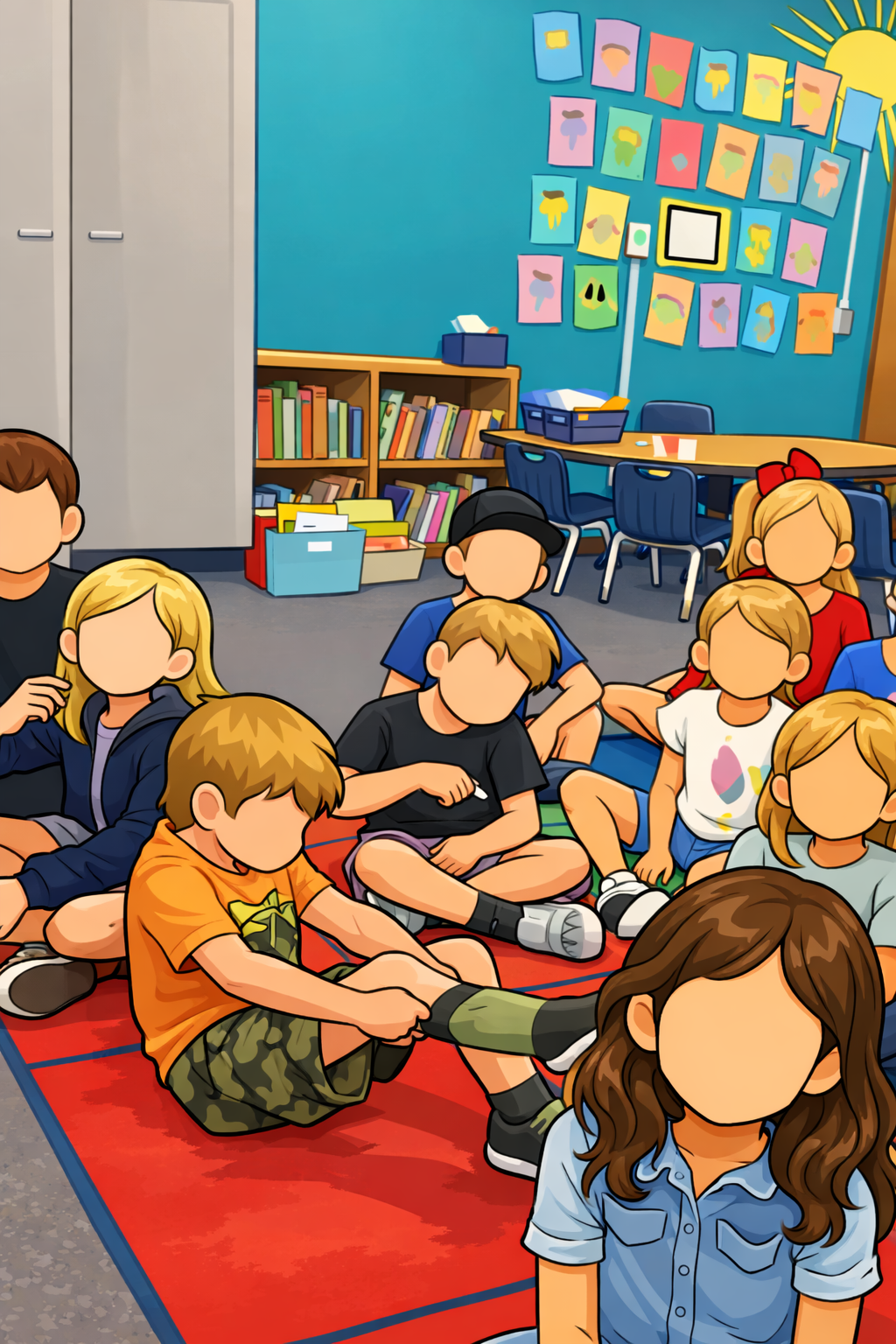
The best kindergarten picture books do more than entertain. They give children language for real moments.
What kindergarten really asks of a child
Kindergarten is not just academic. It is emotional.
At this age, children are being asked to do more in public. They are expected to separate, listen in groups, tolerate uncertainty, recover from mistakes, and try things before they feel fully comfortable. For some children, that growth is exciting. For others, it is where hesitation starts showing up more clearly.
That hesitation can look different from child to child.
Sometimes it looks like silence.
Sometimes it looks like stalling.
Sometimes it looks like “I don’t want to.”
Sometimes it looks like a child who wants to join, but cannot seem to cross the threshold.
This is why the best picture books for kindergarteners are not just entertaining. They are useful. They help children feel seen, and they help adults respond with more wisdom and less pressure.
What separates a strong kindergarten picture book from an average one
A strong kindergarten picture book has a different job than a novelty book or a one-time bedtime pick.
It needs read-aloud strength.
The language has to move cleanly. Kindergarteners feel rhythm immediately. If a book drags, they drift. If it carries, they stay with you.
It needs emotional clarity.
Children this age do not need a lecture. They need a recognizable feeling, a believable problem, and a way through that feels possible.
It needs reread value.
The best books for kindergarteners are the ones children want again. They become part of the emotional vocabulary of the house or classroom.
It needs transfer.
After the story ends, the language should still be usable. A great kindergarten book does not stay trapped on the page. It shows up later in real life.
That last part matters most to me. Because when a parent is searching for the best picture books for kindergarteners, what they are often really asking is this: Will this book help my child in the moments that matter?
Why The Rabbit in the Moon fits kindergarten so well
What makes The Rabbit in the Moon especially right for kindergarten is not that it tries to impress adults. It is that it understands a child’s inner experience at exactly the age when courage starts getting tested more often.
It understands hesitation without turning it into an identity.
Yabbit is not written as a broken child. He is not reduced to a label. He is a child who hesitates when the task feels too big. That is a far more accurate reflection of what many kindergarteners experience. They are not “bad at starting.” They are often overwhelmed by the size of the moment.
It makes bravery feel reachable.
A lot of children’s media talks about courage as if it arrives in one big cinematic burst. Real childhood bravery is usually smaller than that. It begins with one manageable move. One step. One try. One moment of not backing away.
That is the emotional center of this story. Bravery is not framed as perfection. It is framed as movement.
It gives parents and teachers better language.
One of the reasons certain picture books stay with families is that they leave behind language adults can reuse. The Rabbit in the Moon does that by turning courage into something children can imagine and practice, not just admire.
It preserves an important emotional truth.
Yabbit is hesitant. Snail is persistent. Snail does not erase Yabbit. He balances him. That matters, because many children carry both parts inside them. They hesitate in one moment and keep going in another. The story makes room for both truths.
That emotional complexity is one reason the book works so well for kindergarteners. It respects where they really are.
Why this book belongs on a kindergarten shelf, not just a general “best of” list
There is a difference between a book that is good for children and a book that is especially right for kindergarten.
A kindergartener is living in the exact territory this story speaks to:
new environments
bigger expectations
group participation
fear of getting it wrong
wanting to try, but not always knowing how to begin
That is why I would not place The Rabbit in the Moon on a shelf only as a “feelings book” or a “bravery book.” I would place it on a kindergarten shelf because this is the age where its message becomes deeply practical.
It can support the child who freezes at the starting line.
It can support the child who needs courage made smaller.
It can support the child who wants to participate, but does not always know how to enter the moment.
That makes it more than a sweet story. It makes it relevant.
How I would use this book with a kindergartener
The best use of this book is not overexplaining it. It is reading it, letting it land, and then borrowing its language later when life gives you the opening.
Read it once for connection. Read it again for recognition.
Then, when the next hard moment arrives, use one calm question:
“What is the tiny brave step here?”
That question is simple enough for a kindergartener to hold. It lowers the pressure. It turns courage from a giant demand into a next move.
For parents dealing with that exact starting-line freeze, this companion post goes deeper: https://www.yabbitrabbit.com/parent-resources/when-your-child-freezes-before-trying-first-move-script
And for teachers or parents thinking about read-aloud value in a classroom setting, this related post fits naturally beside it: https://www.yabbitrabbit.com/parent-resources/best-picture-books-for-classroom
Why I trust this book for both home and classroom life
The strongest kindergarten books work in both of the child’s main worlds.
At home, they create closeness, language, and emotional safety. At school, they help children make sense of participation, waiting, trying, and rejoining after uncertainty.
The Rabbit in the Moon works in both spaces because it is not built around performance. It is built around emotional truth. That makes it easier for children to recognize themselves inside it, and easier for adults to use it in a way that feels natural rather than forced.
That is one of the clearest markers of a truly strong kindergarten picture book. It does not just entertain in the moment. It becomes usable afterward.
The Rabbit in the Moon is an investment in your child’s emotional growth
If you are looking for one of the best picture books for kindergarteners, especially for a child who hesitates before trying, needs courage to feel smaller, or benefits from calm emotional language, The Rabbit in the Moon belongs on that shelf.
It is a story designed to help children feel seen, supported, and more ready to begin. And if it helps your family, one honest review helps another parent find the right book at the right moment.
FAQs
What makes a picture book one of the best for kindergarteners?
The best picture books for kindergarteners usually combine strong read-aloud rhythm, emotional clarity, memorable characters, and language that helps children handle real-life moments like transitions, mistakes, and first tries.
Is The Rabbit in the Moon a good book for kindergarten read-alouds?
Yes. It works well as a kindergarten read-aloud because the emotional situation is immediately recognizable, the story invites conversation naturally, and the message about courage is concrete enough for young children to understand.
Why do kindergarteners connect with stories about hesitation?
Because kindergarten is often the age when hesitation becomes more visible. Children are entering larger groups, bigger routines, and more public moments of trying, which makes stories about starting, joining, and trying again especially relevant.
Is this book only for children who feel anxious?
No. It is especially helpful for children who hesitate or worry, but its message is broader than anxiety. It speaks to any child who has ever wanted to try something and needed help taking the first step.
How is The Rabbit in the Moon different from other confidence books?
It does not present courage as a personality trait that some children naturally have and others do not. It presents courage as something smaller and more practical, something a child can begin to practice one step at a time.
Is The Rabbit in the Moon appropriate for kindergarten classrooms?
Yes. It is well suited for kindergarten and early elementary classrooms because it supports social-emotional learning, discussion, and read-aloud reflection without sounding preachy or overly abstract.
What kind of child is most likely to benefit from this book?
Children who avoid starting, freeze before trying, struggle with transitions, or need a calmer path into bravery often connect especially strongly with this story.