Some children hear about a new activity and are halfway to the door before the adult finishes explaining it. Others are interested right up until the moment participation becomes real.
They want to join the soccer practice, but they stay beside the parent when the coach calls everyone onto the field. They like the idea of swimming until they reach the edge of the pool. They want to draw, build, perform, climb, make a friend, or learn something new, but once the first move belongs to them, a confident “yes” becomes “maybe later” or “I can't.”
That kind of hesitation can be frustrating for adults because the child often seems to want the experience. What they are struggling with is not necessarily the activity itself. Sometimes the hardest part is crossing the small but emotionally significant distance between thinking about doing something and actually beginning.
Picture books can be useful in that space because they allow children to watch another character approach uncertainty first. A story can show a child hesitating, finding excuses, making a mistake, asking for help, taking a chance, or beginning before they feel completely ready without turning the family conversation into another pep talk.
The books below are not interchangeable. Some are especially good for fear of the first step, while others fit perfectionism, change, physical challenges, failure, or the belief that “I can't do it.” Choosing the book that resembles your child's actual sticking point is usually more useful than reaching for a general story about bravery.
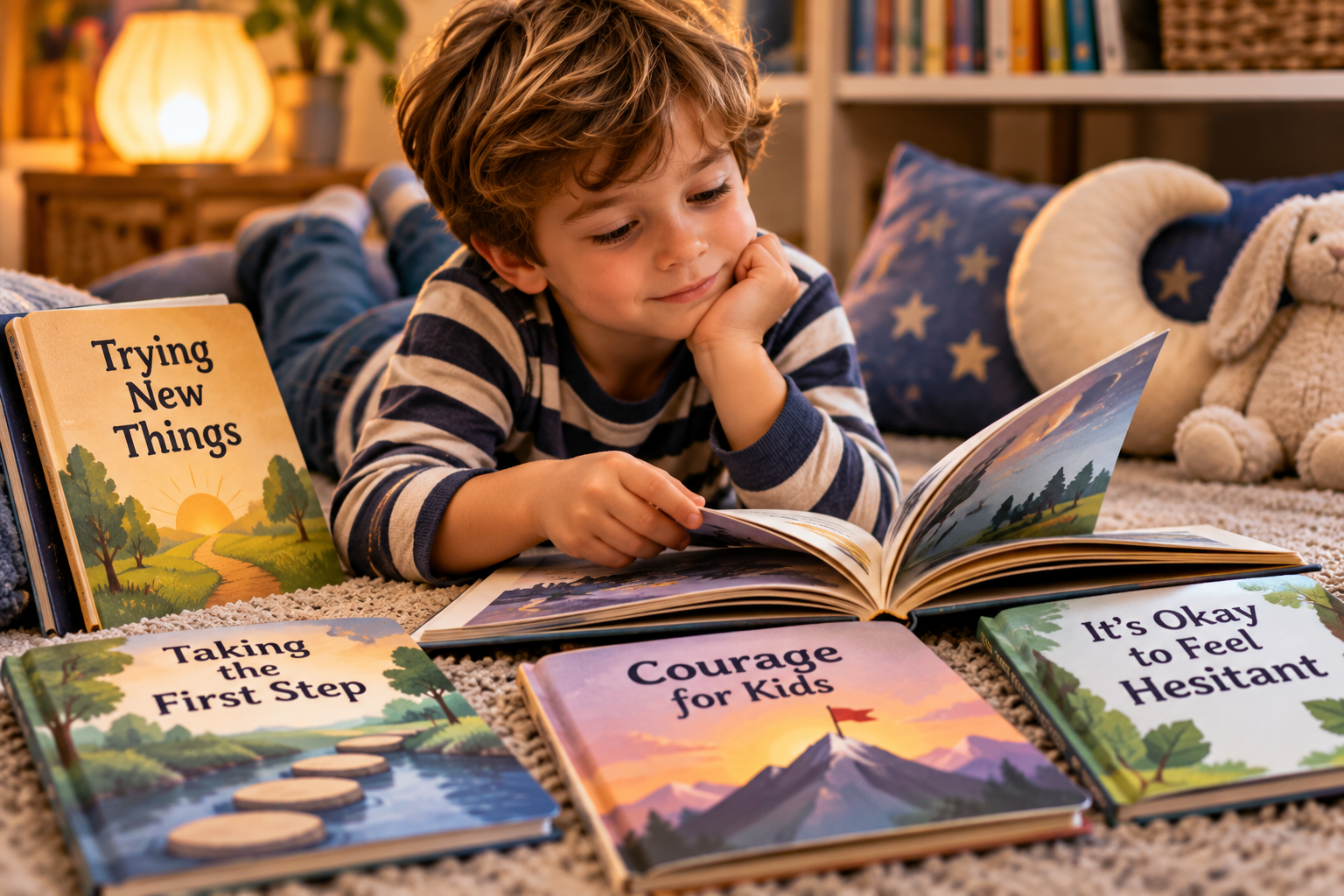
Picture books about trying new things can help children explore hesitation at a safe distance before they have to face their own unfamiliar experience.
Quick Answer: Which Picture Book Is Best for a Child Who Is Afraid to Try?
For a child who wants to participate but freezes before beginning, The Rabbit in the Moon and The Thing Lou Couldn't Do are especially strong choices because both understand hesitation from inside the child rather than beginning with a naturally fearless hero. For a child facing one specific physical challenge, Jabari Jumps captures the nervous delay before taking action beautifully.
If your child's hesitation sounds more like “I can't do this,” The Dot can make beginning feel wonderfully small. The Koala Who Could fits children who resist change, while Trying and After the Fall are more useful when a previous mistake or failure has made the next attempt harder.
The important question is not simply, “Which book teaches courage?” It is, “What is making my child hesitate?” Once you know that, the right story becomes much easier to recognize.
1. The Rabbit in the Moon by KD Schnee
The Rabbit in the Moon belongs on this list because Yabbit is not a child-character who charges into something frightening and discovers afterward that everything worked out. His defining experience is the hesitation itself.
Yabbit wants to move forward, but he can see all the reasons the journey might be difficult before he takes the first step. He worries, pauses, and experiences the size of the challenge before he experiences his own ability to handle it. Snail provides a useful counterweight because he is persistent and steady without requiring Yabbit to suddenly become fearless.
That distinction matters for children who do not identify with naturally adventurous characters. A hesitant child may already know that brave people try things; the more useful discovery is that a person can hesitate and still be brave.
The story is especially well suited to children who freeze before new activities, say “I can't” before starting, watch from the edge before joining, or need the whole task made smaller before participation feels possible. Its central idea is not that fear should disappear, but that movement can begin with one small brave hop.
2. The Thing Lou Couldn't Do by Ashley Spires
Lou is an adventurous child until her friends decide to climb a tree. Because she has never done that before, she begins producing increasingly creative reasons why climbing is unnecessary, inconvenient, or perhaps not something she wanted to do in the first place.
That pattern will feel familiar to many parents of hesitant children. Avoidance does not always sound frightened; sometimes it sounds remarkably logical. A child who is worried about joining may suddenly decide the activity is boring, announce that they have a stomachache, or suggest twelve alternate plans that conveniently eliminate the difficult first step.
What makes Ashley Spires's story particularly useful is that Lou eventually tries without immediately becoming successful. The attempt matters even though mastery does not arrive on schedule, which gives children permission to separate trying from being good at something right away.
This is one of the strongest companion books to Yabbit for children whose fear disguises itself as excuses, procrastination, or sudden declarations that they never wanted to participate anyway.
3. Jabari Jumps by Gaia Cornwall
Jabari has completed his swimming lessons and is ready to jump from the diving board, at least until the moment arrives when he actually has to climb the ladder.
Gaia Cornwall captures something children and adults both recognize: the little delays we create when courage is almost ready but not quite. Jabari stretches, thinks about his jump, watches other swimmers, and takes time before finally moving forward, while his father remains reassuring without humiliating him for being nervous.
This book is particularly good when the challenge is concrete and physical. A child preparing to jump into a pool, ride a bicycle, climb something tall, perform, or attempt a new sport can see that nervousness does not invalidate readiness.
Jabari does not need a lecture about bravery. He needs enough support and time to make the decision his own, which is precisely why the eventual jump feels earned.
4. The Dot by Peter H. Reynolds
Sometimes children do not refuse because the activity is scary. They refuse because they have already decided they will not be good at it.
Vashti sits in front of a blank piece of paper convinced that she cannot draw. Her teacher does not respond with a speech about talent or insist that she create something impressive. She simply invites Vashti to make a mark and see where it leads, and one small dot becomes the beginning of a much larger creative journey.
That makes The Dot especially useful for children whose first response to art, writing, building, schoolwork, or another unfamiliar skill is “I can't.” The book makes beginning almost comically small, which reduces the burden of having to know what the finished product should look like before starting.
For a hesitant child, that is a powerful message. Sometimes the first step does not need to prove anything except that the page is no longer blank.
5. What Do You Do With a Chance? by Kobi Yamada, illustrated by Mae Besom
Not every new experience arrives as something a child is required to do. Sometimes the challenge is deciding whether to take an opportunity at all.
Kobi Yamada's What Do You Do With a Chance? follows a child who encounters an opportunity, hesitates, and gradually learns what can happen when we decide to move toward something uncertain rather than allowing it to pass. The story treats a chance as something exciting but vulnerable, which makes it useful for children who are curious about new possibilities yet reluctant to say yes to them.
This can work especially well for older elementary-age children facing invitations, clubs, new friendships, performances, leadership opportunities, or other situations in which the decision to participate belongs partly to them.
The emotional question is slightly different from fear. It asks whether uncertainty is enough reason to let an opportunity go.
6. The Koala Who Could by Rachel Bright, illustrated by Jim Field
Some children handle new activities reasonably well once they arrive but resist anything that changes the familiar arrangement of their world.
Kevin the koala prefers things exactly as he knows them and worries about leaving the safety of his comfortable routine. Rachel Bright and Jim Field use humor and rhyme to explore what happens when change arrives anyway and Kevin discovers that something unfamiliar can hold possibilities he could not see from his old position.
This is a good choice for children who hesitate around a new classroom, new activity, unfamiliar group, move, vacation, or changing routine. Their resistance may not sound like “I'm scared.” It may sound more like “I don't want to,” especially when the familiar option still feels perfectly acceptable.
For those children, the book creates room to talk about the difference between genuinely disliking something and rejecting it simply because it is not yet familiar.
7. The Magical Yet by Angela DiTerlizzi, illustrated by Lorena Alvarez Gómez
“I can't” can feel final to a young child. Adding one small word changes the sentence considerably: “I can't do it yet.”
The Magical Yet turns that idea into a playful story about learning, struggling, practicing, and discovering that ability can grow. The book is especially well suited to children who interpret the first difficult attempt as evidence that they simply cannot do the thing.
The useful message is not that every child will become excellent at everything if they work hard enough. It is that being unable to do something today does not tell us everything about what may become possible with practice, help, and time.
For children who become discouraged almost immediately when a new skill feels awkward, “yet” gives the story somewhere to go after “I can't.”
8. Trying by Kobi Yamada, illustrated by Elise Hurst
Trying is particularly good for the child who understands that starting something new includes the possibility of failing at it.
The story centers on being a beginner and the uncomfortable truth that effort does not guarantee immediate success. Instead of treating failure as something children should simply ignore, the book explores what failure can teach and why continuing to try can reveal abilities that would remain hidden if a person never began.
This is a slightly more reflective book than some of the others on the list, which makes it useful for older children who are beginning to evaluate themselves against classmates, siblings, teammates, or their own expectations.
A child may not be afraid of the activity itself. They may be afraid of discovering that they are not immediately good at it, and Trying speaks directly to that worry.
9. The Most Magnificent Thing by Ashley Spires
The girl at the center of The Most Magnificent Thing begins with enormous confidence. The trouble arrives when reality refuses to cooperate with the perfect version she has already created in her head.
She tries repeatedly to build her magnificent invention, becomes increasingly frustrated when the results do not match her expectations, and eventually reaches the point where continuing feels impossible. A break gives her enough distance to return with a different perspective and continue working.
This is especially useful for children who can start but struggle to remain engaged once something becomes difficult. It also fits perfectionistic children who expect early attempts to resemble finished work.
Trying something new requires more than courage at the starting line. Children also need permission to discover that the middle can be messy, frustrating, and full of revisions without meaning they chose the wrong activity.
10. Ish by Peter H. Reynolds
A child can become hesitant after somebody else's opinion changes how they see their own ability.
In Ish, Ramon loves drawing until a critical remark from his brother makes every picture feel inadequate. His sister eventually helps him see that something does not need to be exactly right to have value, opening the door to creativity again.
This book is particularly useful when a child used to enjoy an activity but has become self-conscious, perfectionistic, or worried about being judged. The first-step problem is no longer unfamiliarity; it is the memory of feeling exposed.
For those children, encouragement may need to do more than say “try again.” They may need help loosening the standard they believe every attempt has to meet.
11. Jabari Tries by Gaia Cornwall
While Jabari Jumps focuses on finding the courage to begin, Jabari Tries explores what happens when beginning is easy and succeeding is not.
Jabari decides to build a flying machine and initially expects the project to be straightforward. When his invention repeatedly fails, frustration grows, and he has to become more flexible about receiving help and changing his approach.
This book is valuable for children whose hesitation develops after the first attempt goes badly. They may enthusiastically start something once, encounter difficulty, and then become much less willing to return.
Trying new things becomes easier when children understand that needing help, changing the plan, and starting over are normal parts of learning rather than evidence that they should quit.
12. After the Fall by Dan Santat
Sometimes hesitation has a history.
Dan Santat imagines what happens to Humpty Dumpty after his famous fall. He survives, but the experience changes his relationship with heights, preventing him from doing things he once enjoyed until he gradually confronts what fear has taken away from him.
This is an especially thoughtful choice for children who are hesitant because something went wrong before. Perhaps they fell from a bicycle, missed the ball during a game, froze during a performance, failed a test, or had an embarrassing first attempt.
Those children may not need to be convinced that trying is worthwhile. They may need a story that understands why trying again can feel harder than trying the first time.
[INSERT IMAGE HERE]
Image ALT text: Stack of children's picture books about trying new things, courage, mistakes, change, and beginning again.
SEO-forward image caption: Different kinds of hesitation call for different stories, from fear of the first step to perfectionism, change, physical challenges, and trying again after something went wrong.
What Makes a Good Book About Trying New Things?
The strongest books in this category do more than place a nervous character in front of a challenge and have them succeed three pages later. A hesitant child benefits from seeing the middle of the experience. They need to see uncertainty, delay, frustration, second thoughts, imperfect attempts, or the possibility that courage might arrive gradually instead of appearing as a personality trait the character already possessed.
I also look for stories that respect the child's emotional reality. A book is less useful when everyone around the worried character seems to know that the fear is ridiculous, because many hesitant children already suspect that adults think they are making too much of the situation. The better stories say something closer to, “This feels difficult from where you are standing, and there is still a way to begin.”
Look for the Reason Your Child Is Hesitating
Two children can refuse the same activity for completely different reasons. One may be worried about physical danger, while another fears being watched. One may expect immediate success and want to avoid making a mistake, while another dislikes not knowing exactly what will happen. A child may also have had a previous bad experience and be protecting themselves from repeating it.
That is why matching the book to the hesitation matters. Jabari Jumps may speak beautifully to a child nervous about a physical challenge, while The Dot is more useful when the obstacle is believing they lack ability. The Thing Lou Couldn't Do fits the child whose fear produces avoidance and excuses, while After the Fall belongs with the child who has already discovered that things can go wrong.
If you want a broader framework for choosing stories based on the kind of hesitation you see, read How to Choose a Picture Book for a Hesitant Child at https://www.yabbitrabbit.com/parent-resources/how-to-choose-picture-book-hesitant-child.
Do Not Turn the Book Into Another Form of Pressure
A picture book loses some of its usefulness when the child can feel the lesson approaching from across the room. If your child is terrified about swimming lessons tomorrow, announcing, “I bought you a book about being brave at the pool because you need to jump in tomorrow,” can make the story feel less like reading and more like an assignment.
When possible, introduce useful stories during ordinary reading time. Let your child enjoy the characters before asking them to transfer every lesson into their own life, and resist stopping after each page to explain exactly how the story applies to soccer practice on Saturday.
Later, you can return to the language naturally. A child may remember that Jabari needed time before his jump or that Lou found plenty of reasons not to climb, and that recognition can become useful without forcing the comparison.
Books Can Help With the First Step, but They Do Not Need to Produce It
Parents sometimes read the perfect story, close the cover, and understandably hope something has clicked. Children are rarely that tidy.
The value of a story may appear later, after it has given the child a character, image, or phrase that makes their own hesitation easier to understand. A child who still refuses the activity tonight may remember the book the next time a similar moment appears.
The American Academy of Pediatrics advises parents not to ridicule children's fears or pressure them into bravery and notes that significant fears are often approached gradually rather than by demanding the complete feared action at once. That principle works well alongside picture books because the story can open the conversation while the real-world challenge is still broken into manageable steps.
Turn the Whole Challenge Into One Small Brave Hop
If a child finishes a book and wants to connect it to their own situation, avoid jumping immediately from the story to the largest possible action. Instead of asking whether they are now ready to attend the entire birthday party, try asking what the smallest meaningful first step might be. That could mean walking into the room with you, staying for ten minutes, saying hello to one child, or simply visiting the location beforehand.
The Tiny Brave Hop Method is built around making the beginning manageable without pretending the larger challenge does not exist. You can read the full framework at https://www.yabbitrabbit.com/parent-resources/how-to-help-your-child-take-tiny-brave-hops.
The book and the brave hop serve different purposes. The story helps the child recognize the emotional experience, while the smaller real-world step gives them a chance to discover what they can actually handle.
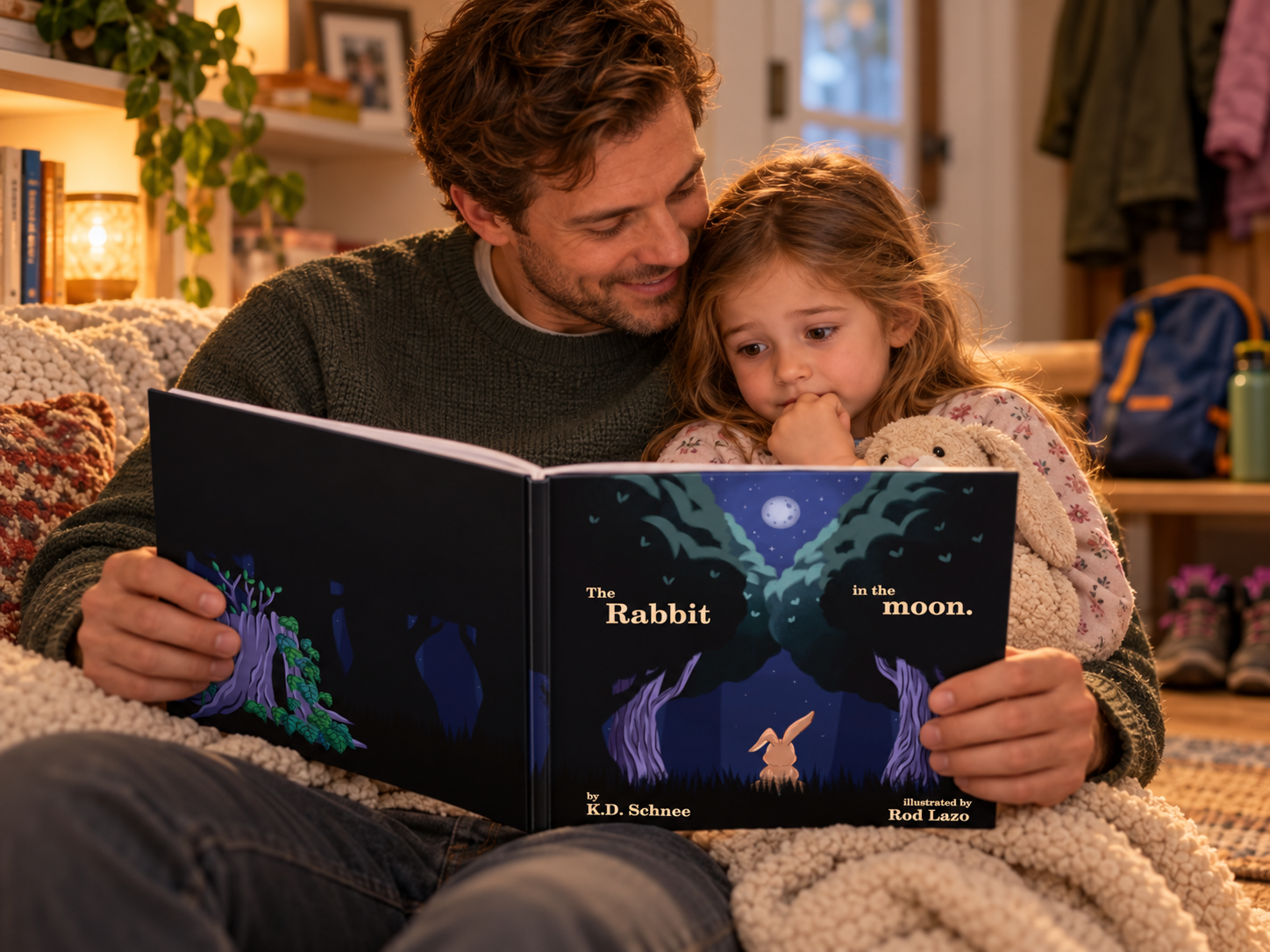
Reading about another character's hesitation can give children language for fear and uncertainty before they choose a small first step of their own.
Why The Rabbit in the Moon Is Different From a General Confidence Book
Confidence books often begin with the message that children are capable. That can be encouraging, but it does not always reach the child who already knows what everyone wants them to do and still cannot make themselves begin.
Yabbit occupies that moment before confidence. He experiences hesitation before he has evidence that everything will work out, which is precisely where many cautious children get stuck.
His value is not that he teaches children to become fearless or automatically adventurous. He gives them a character who understands the internal argument that can happen before the first step, while Snail demonstrates the steadiness that helps movement continue.
That makes The Rabbit in the Moon particularly relevant for a child who wants to try but freezes at the beginning. Other books on this list may be better for a child whose primary challenge is perfectionism, coping with failure, accepting change, or persisting through frustration, which is why matching the story to the child matters more than declaring one book universally best.
What Should You Ask After Reading?
You do not need a formal discussion guide every time you open a picture book. One thoughtful question can reveal far more than ten questions that make reading feel like homework. You might ask what made the character hesitate, what finally helped them begin, whether the character had to stop feeling nervous first, or what the smallest step in the story turned out to be. If your child wants to connect the story to their own life, follow them there rather than forcing the comparison.
Another useful question is, “Which part felt hardest to you?” Children sometimes identify a very different moment from the one adults expect, and their answer can tell you something important about how they understand risk, mistakes, embarrassment, or uncertainty.
An Authoritative Resource for Parents
The American Academy of Pediatrics offers guidance on childhood fears and anxiety through HealthyChildren.org. Its recommendations include listening sympathetically, avoiding ridicule or pressure to “be brave,” and helping children approach fears gradually when appropriate.
HealthyChildren.org: Fears & Phobias in Children: How Parents Can Help: https://www.healthychildren.org/English/health-issues/conditions/emotional-problems/pages/Understanding-Childhood-Fears-and-Anxieties.aspx
Picture books can complement that kind of support by giving children language and emotional distance, but they should not be expected to replace professional help when fear or anxiety is persistent, severe, or significantly interfering with everyday life.
Buy The Rabbit in the Moon
The Rabbit in the Moon was written for the child standing just before the beginning. Yabbit wants to move forward, but he hesitates when the journey feels larger than he expected. Snail brings persistence and companionship without treating hesitation as a flaw, and together they show that courage does not require fear to vanish before movement becomes possible.
For families with a child who watches before joining, says “I can't” before trying, or needs a new experience broken into smaller pieces, the story offers a shared language for one small brave hop forward.
Frequently Asked Questions About Picture Books for Trying New Things
What are the best picture books for a child who is afraid to try new things?
For children who hesitate before the first step, The Rabbit in the Moon, The Thing Lou Couldn't Do, and Jabari Jumps are particularly strong choices. The Dot works well when the child says “I can't,” while The Koala Who Could is a better match when unfamiliar change is the main difficulty.
What book is good for a child who says “I can't” before trying?
The Dot by Peter H. Reynolds is an excellent starting point because it reduces beginning to one tiny mark instead of demanding impressive performance. The Magical Yet can also help children understand that not being able to do something today does not mean they will never be able to learn it.
What is a good picture book for a child who freezes before starting?
The Rabbit in the Moon is specifically relevant to children who want to move forward but become stuck at the beginning because Yabbit's hesitation is central to the story. The Thing Lou Couldn't Do is another strong choice for children who avoid a new challenge by producing reasons not to begin.
Which books help children who are afraid of making mistakes?
Trying, Ish, and The Most Magnificent Thing all approach mistakes from different angles. They are especially useful for children whose hesitation comes from believing the first attempt must be successful, polished, or correct.
Should I read a book about courage immediately before my child tries something scary?
Sometimes that can help, but useful stories often work better when children first encounter them during a calm reading moment. That allows the story to become familiar before a parent later recalls the character or idea during a real challenge.
Can picture books help with childhood anxiety?
Picture books can give children language for fear, uncertainty, and coping while allowing them to think about those feelings through a character instead of immediately discussing themselves. They are supportive tools rather than treatment, so persistent or severe anxiety that interferes with ordinary life should be discussed with a pediatrician or qualified child mental-health professional.
Final Thought
Trying something new asks a child to step into a situation without knowing exactly how it will feel or whether they will succeed. Adults become accustomed to that uncertainty, but children are still building the experiences that teach them what happens after the first nervous step.
The right picture book does not need to persuade a child that the new experience will be easy. It can do something more useful by showing that hesitation belongs inside the story too, that mistakes do not end the story, and that courage sometimes appears after several pauses rather than before them.
For one child, the useful story will be about climbing the tree. For another, it will be about making a mark, taking the jump, accepting change, returning after a fall, or learning to say “not yet” instead of “never.”
The common thread is not fearlessness. It is discovering that the whole adventure does not have to happen at once, because every new experience begins in the same place: with the first thing the child is willing to try.