
Regression after a new sibling arrives can show up as clinginess, potty accidents, baby talk, requests for extra help, or a sudden interest in things the older child had already outgrown.
A preschooler who spent the past six months announcing “I can do it myself” may change their mind rather dramatically once a new baby comes home. Suddenly they want to be carried. They ask you to feed them, even though they are perfectly capable of using a spoon.
A child who proudly gave up the bottle may want one again, while another who had been reliably using the toilet begins having accidents. Bedtime becomes harder, separation feels more upsetting, and tasks they managed without help last month now seem to require a parent sitting six inches away. To an exhausted parent who is already feeding, changing, soothing, and waking with a newborn, this can feel almost designed to test the remaining threads of adult patience.
Yet the American Academy of Pediatrics specifically tells parents to expect some regression when a new baby arrives. A toilet-trained child may begin having accidents, for example, or ask for a bottle again as they adjust to changes in attention and family life. The AAP recommends giving the older child reassurance and individual attention rather than simply telling them to act their age.
The child has not necessarily forgotten how to be independent. They may be trying to understand a much more important question: Now that the baby needs you so much, is there still room for me to need you too?
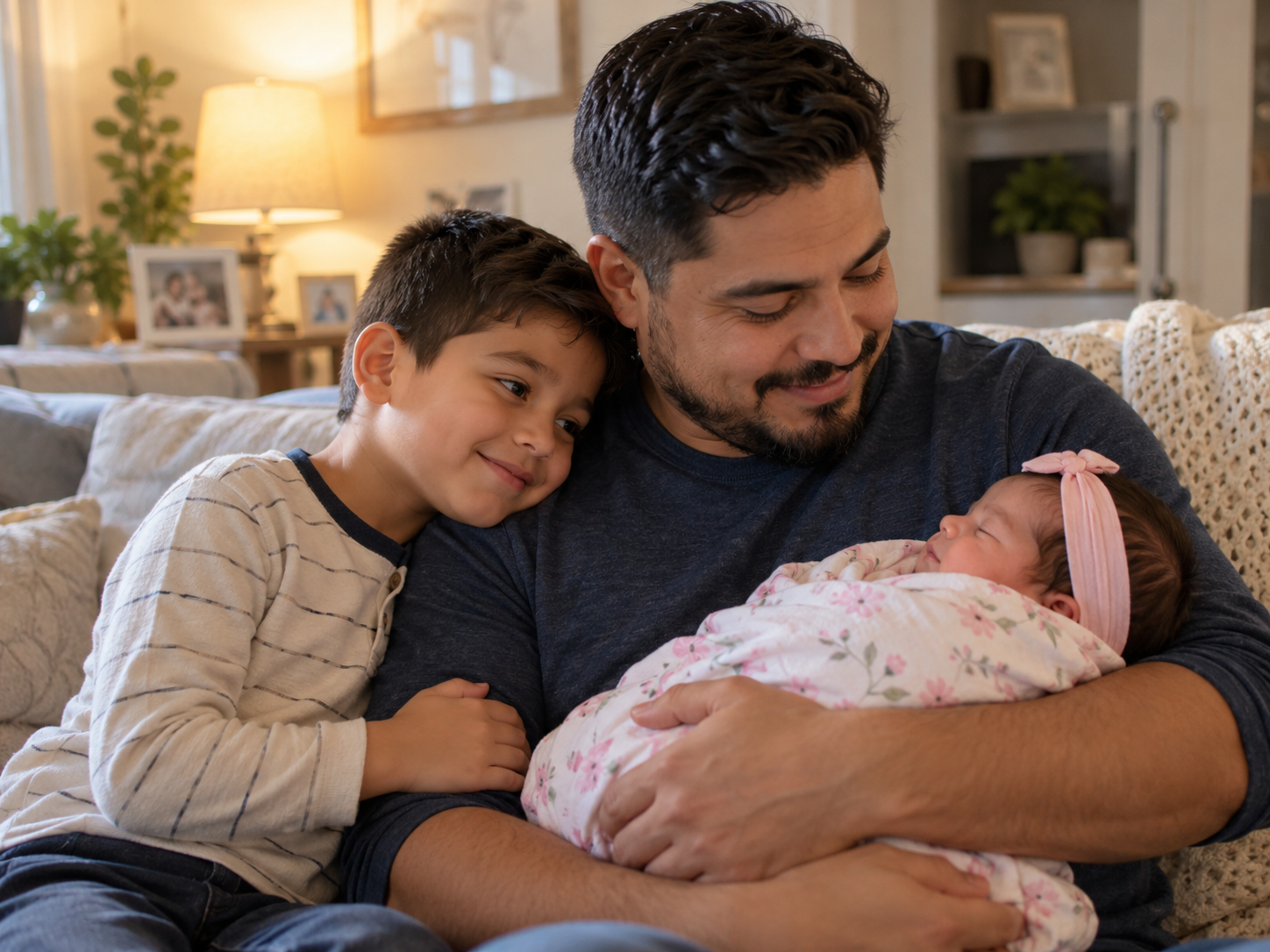
A new sibling can change routines, attention, and family roles all at once, and some children respond by temporarily returning to behaviors they had already outgrown.
What Does New Sibling Regression Look Like?
Regression after a new sibling can appear in many forms because children return to different kinds of comfort.
A child who was toilet trained may start having accidents or ask to wear a diaper. Another may want a bottle, pacifier, baby food, or help eating. Some children begin using baby talk, crawling around for fun, asking to be rocked, wanting to sit in the baby's equipment, or insisting that a parent dress them even though they dressed independently before.
Other changes are less obviously “babyish.” The child may become unusually clingy, cry when a parent leaves the room, wake more often at night, have bigger tantrums, ask for constant help, or become less willing to play independently.
Child Mind Institute also describes acting younger after a sibling arrives as a common response and notes that children may return to diapers or bottles as they seek reassurance that they still have their parents' attention. The exact behavior matters less than the larger pattern. Something in the family has changed, and the child is experimenting with ways to find their place inside the new version of home.
Why Can a New Baby Trigger Regression?
From an adult perspective, the baby has been anticipated for months. There were appointments, conversations, preparations, tiny clothes, perhaps a nursery, and many explanations about what life would be like once the baby came home.
The older child could understand some of that, but they could not fully experience the change until it happened. Suddenly the parent who used to respond immediately may be feeding someone else. Bedtime might be handled by another caregiver. Visitors arrive and head straight toward the bassinet, while conversations revolve around sleeping, feeding, diapers, and how adorable the baby is.
Even positive change can unsettle children because familiar patterns help them understand where they belong. A new sibling changes those patterns without asking the older child's permission, which can create excitement, affection, jealousy, confusion, pride, anger, and insecurity at the same time.
Regression can therefore function less like forgetting and more like communication. A child may not be able to say, “I understand that you love me, but I am still trying to figure out whether my place changed when the baby arrived.” Asking to be held like the baby can communicate the same question much more efficiently.
Regression Is Not the Same as Losing Developmental Skills
Parents should make an important distinction between temporary baby-like behavior after a major transition and a genuine loss of developmental abilities. A child who occasionally uses baby talk even though they can still communicate normally, asks to be fed despite being able to use utensils, or has toileting accidents after a sibling arrives may be showing a behavioral response to change. The underlying skill is still available even though the child is temporarily asking for more help.
A child who actually loses previously established language, motor, social, or cognitive abilities is different. The CDC advises parents not to wait if a child has lost skills they once had and recommends discussing the change with the child's doctor and asking about developmental screening.
That boundary matters because the word regression gets used casually for both situations. A new baby may explain why a child suddenly wants you to put on their socks again, but parents should not automatically attribute a true loss of developmental skills to sibling adjustment.
Do Not Make “You're the Big Kid Now” a Job They Have to Perform
Becoming an older sibling is often presented as a promotion. Adults tell the child how grown-up they are, how lucky the baby is to have a big brother or sister, and how helpful they can be now. All of that can be lovely when it gives the child pride and belonging.
It becomes harder when “big kid” quietly turns into a rule that says the older child no longer gets to need the things the baby receives freely. The baby is carried because the baby is little, while the preschooler hears, “You can walk.” The baby gets cuddled after crying, while the older child hears, “You're old enough to calm down.”
A child can understand the logic and still dislike the emotional bargain.
Try to let being the older sibling add possibilities rather than remove comfort. Your child can be capable of putting on their shoes and still want to sit in your lap afterward. They can pour their own water and still need reassurance that becoming more independent has not made them less deserving of care.
Avoid Saying “Stop Acting Like a Baby”
Parents usually say this because the contrast feels so obvious. The child can use a fork, speak in full sentences, sleep in their own bed, or use the toilet, and suddenly they are behaving as though all previous progress has vanished.
Telling them to stop acting like a baby may shut down the behavior briefly, but it can also make the underlying need feel embarrassing. The child is already watching the baby receive enormous amounts of attention for doing very little besides existing with remarkable intensity.
A calmer response separates the feeling from the skill. You might say, “You want me to feed you because you've been watching me feed the baby a lot. You still know how to use your spoon, and I'll sit beside you while you eat.” That response does not pretend the child has suddenly lost the skill. It also does not make wanting closeness into something shameful.
Give Connection Before the Child Has to Manufacture a Crisis
One of the most useful ways to respond to sibling regression is to make connection predictable. If the older child learns that the only reliable way to get a parent's full attention is to have an accident, interrupt a feeding, scream during bedtime, or insist that they suddenly cannot put on their pants, those behaviors may become surprisingly effective tools.
The solution is not to ignore distress. It is to create small pockets of attention that do not have to be earned through distress in the first place.
The AAP recommends setting aside special time to read, play, listen to music, talk, or otherwise be together after the new baby arrives. Child Mind Institute similarly recommends maintaining one-on-one rituals with the older child so that the relationship still contains moments that belong specifically to them.
Ten predictable minutes can sometimes matter more than a vague promise that you will play later. When the child knows that a familiar book, short walk, bedtime conversation, or little ritual still belongs to the two of you, they have something steady inside a household that currently feels less predictable.
Give the Older Child Attention That Has Nothing to Do With Being Helpful
Inviting an older child to participate with the baby can be useful. They may enjoy choosing an outfit, bringing a diaper, singing during a change, sitting beside you during a feeding, or showing the baby a favorite toy.
The AAP encourages parents to include older children in age-appropriate ways so they feel part of family life rather than excluded from everything surrounding the baby. Still, involvement should not become the only route to praise or attention. A preschooler should not have to earn closeness by becoming an unpaid junior member of the newborn care team.
Ask them to help when it feels enjoyable, but also spend time with them because they are your child, not because they are a big sibling performing the role correctly. Sometimes the most reassuring thing a parent can do is talk about dinosaurs, build a tower, read the same book again, or listen to a complicated account of playground politics without mentioning the baby at all.
Potty-Training Regression After a New Baby Is Common, but Still Look for Physical Causes
Toilet accidents are one of the clearest ways sibling regression can appear because toileting involves both independence and parental attention.
HealthyChildren.org specifically names a new sibling as one possible reason a previously toilet-trained toddler or preschooler may begin having accidents or talking about wearing diapers again. The AAP recommends trying to understand what changed and also advises parents to consider physical explanations, such as constipation, when the reason is unclear.
Respond as calmly as you can. Help the child clean up, return to familiar bathroom routines, and avoid turning each accident into a lecture about how they “know better.”
At the same time, do not automatically assume every toileting change is emotional. Painful bowel movements, constipation, urinary symptoms, or persistent accidents deserve a conversation with the child's pediatrician, particularly when the pattern is severe or does not improve as the family settles.
What If Your Child Wants a Bottle, Pacifier, or Other Baby Item Again?
The baby's possessions have an obvious emotional advantage: they come bundled with attention. If the older child suddenly wants a bottle or pacifier again, begin by noticing what the request may represent rather than rushing to debate whether they are too old. The child may be curious, nostalgic for an earlier comfort, or interested because the object is repeatedly associated with being held and cared for.
You do not have to reintroduce every item the child has already given up. You can acknowledge the desire while offering the underlying comfort in another form, perhaps through cuddling, a special cup, reading together, or being rocked for a few minutes if that feels appropriate for your family.
The message can remain warm and clear: “You remember having a bottle, and seeing the baby with one makes you want it again. You're going to use your cup, but you can sit close to me while you drink.” That gives the child what they may actually be asking for without pretending developmental boundaries no longer exist.
Extra Clinginess Does Not Mean You Ruined Their Independence
A previously independent child may begin following a parent from room to room after a baby comes home. That can be exhausting when the same parent already has a newborn attached to them for large parts of the day. Yet temporary clinginess makes sense in a world where the child's access to that parent suddenly feels less certain.
You can offer closeness while keeping ordinary expectations in place. A child may sit beside you while you feed the baby, help choose the book you will read afterward, or know that you will come find them once the diaper change is finished. The aim is not to prove that they can cope without you. It is to help them discover that your attention can move away and reliably return.
Sleep Can Become Harder After a New Sibling Too
Sleep is especially vulnerable to family transitions because nighttime asks children to separate at the very moment the household may already feel different.
An older child who had been falling asleep independently might start requesting another story, asking a parent to stay, waking during the night, or appearing in the parents' room again. The newborn's crying can also disrupt sleep physically, while changes in bedtime staffing or routine add another layer of uncertainty.
Try to preserve as much of the older child's familiar bedtime structure as practical. If Dad always reads the final book but is temporarily handling something else, explain what will change and what will stay the same rather than letting the routine become unpredictable every evening.
You can offer temporary additional reassurance without assuming that every change must become permanent. Children often need a bridge through a transition, and a bridge can eventually be crossed rather than becoming the new address.
Expect Bigger Feelings, Not Just Baby-Like Behavior
Sibling adjustment does not always arrive wearing a diaper.
Some children become angrier, more argumentative, more tearful, or far less tolerant of ordinary frustration. A request to turn off the television may provoke an enormous reaction because the television was only the final pebble on a day filled with sharing adults, waiting for help, hearing the baby cry, and being told “one minute” repeatedly.
That does not mean every tantrum should be excused because a sibling was born. Limits still matter, particularly around hurting the baby, hurting other people, or destructive behavior.
What changes is the interpretation. Instead of assuming that the child has suddenly become difficult, parents can recognize that their emotional bandwidth may be thinner while still saying, “You can be angry that I was feeding the baby. You cannot hit.”
Comfort and boundaries do not cancel each other out.
Keep Some Old Routines Alive
A new baby inevitably changes family life, but children benefit when not everything changes at once. If Saturday pancakes, the bedtime story, preschool pickup with Dad, a weekly playground visit, or Sunday morning cartoons were important before the baby, preserve some of those rituals whenever possible. They provide evidence that the family has expanded rather than being completely replaced.
Small routines carry more emotional weight than adults sometimes realize because they tell children what they can count on. The baby may have changed when everyone wakes, how quickly parents respond, and what dinner looks like, but the same silly song in the bath can quietly say, “This part of us is still here.”
Predictability is particularly useful for children who tend to hesitate around change. They do not need the old world preserved exactly, but familiar landmarks can make the new one easier to navigate.
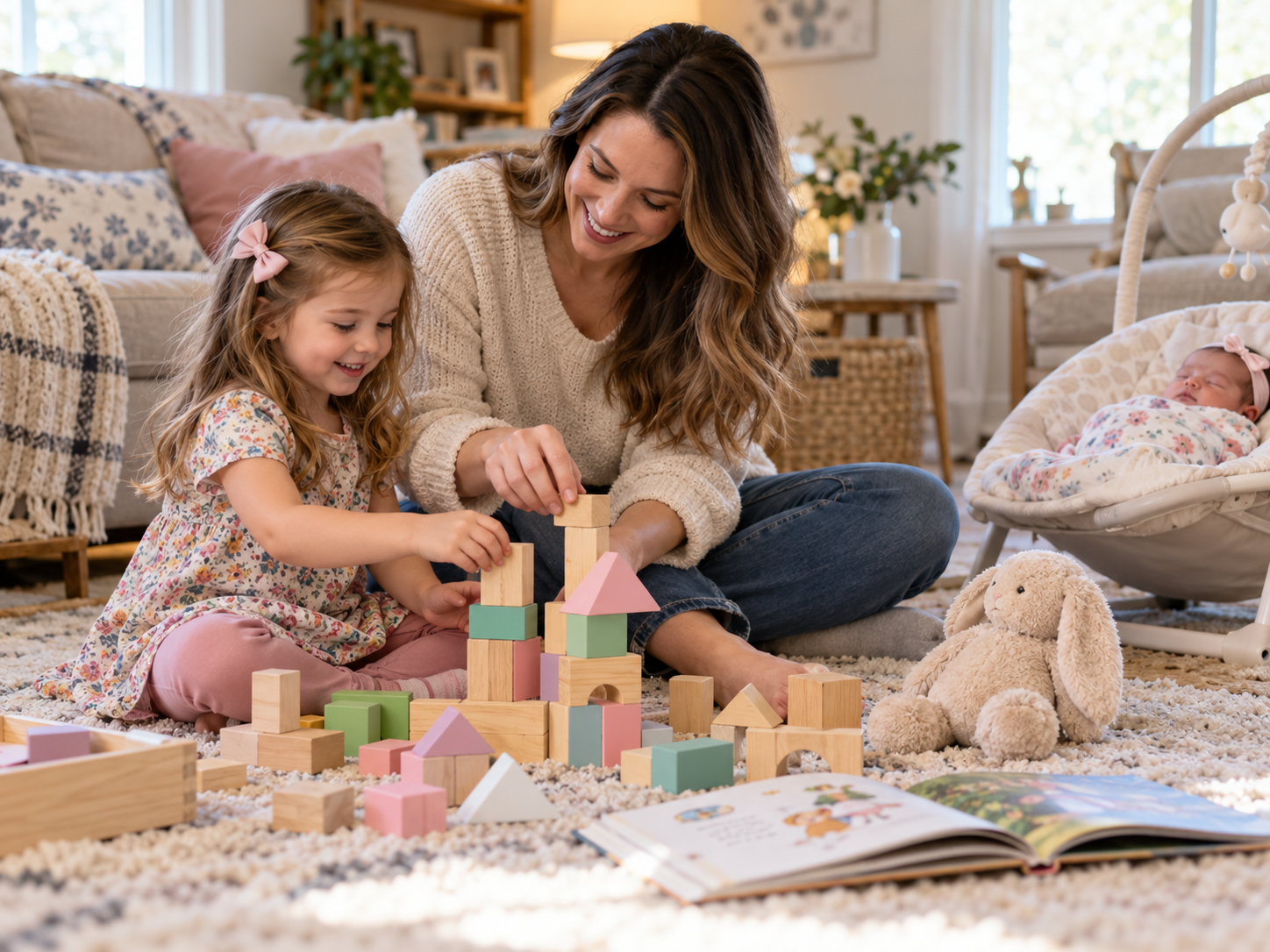
Predictable one-on-one time can reassure an older child that the arrival of a new baby has changed family life without replacing their relationship with a parent.
Do Not Compare the Older Child With the Baby
Comparisons can sneak into sibling relationships surprisingly early. “You're four. The baby is the one who needs help.”
“Look how quietly the baby is sitting.” “Why are you crying more than your little brother?” Even when the comparison is technically absurd, tired families occasionally produce sentences nobody would nominate for a parenting award.
The more useful comparison is with the older child's own abilities and recent experience. You can remind them gently that they know how to dress themselves while still offering help with one tricky part, or notice that they slept in their own bed last night even though bedtime has felt harder recently.
This protects the sibling relationship from becoming a competition over who deserves care. The baby does not need to become the standard against which the older child's behavior is judged.
Help Visitors Remember the Older Child Exists
The parade of visitors after a new baby arrives can be emotionally strange for the older sibling. Grandparents, relatives, and friends may walk into the home asking where the baby is, carrying gifts for the baby, taking photographs of the baby, and discussing the baby for forty-five minutes before realizing another child has been standing nearby with a plastic dinosaur and increasingly strong opinions about the arrangement.
The AAP specifically recommends asking visitors to spend time with the older child as well so they do not feel overlooked. This does not require turning every visit into an elaborate sibling celebration. A genuine greeting, a few minutes of conversation, an invitation to show something important, or occasionally bringing something small for the older child can send a useful message: people did not stop seeing you when the baby arrived.
Let Independence Return Without Withdrawing Affection
Parents sometimes worry that providing extra help will reinforce regression indefinitely. There is a reasonable concern underneath that fear. If a child can dress themselves but a parent permanently resumes doing everything because protest is exhausting, the old skill may receive less practice.
The answer does not have to be either total independence or complete assistance. A parent might say, “I'll help with your shirt, and you can do your pants,” or “I'll sit beside you while you eat, and you're going to use your spoon.”
That combination says two important things at once. The relationship is still available, and the child's abilities have not disappeared.
Use Tiny Brave Hops to Return to Skills Without Making Regression Shameful
A new sibling can make previously ordinary tasks feel different because independence suddenly has emotional meaning. Doing something alone may feel less like competence and more like being sent away while the baby gets help.
A Tiny Brave Hop can help the child return to familiar skills without making the process a test of whether they are “big enough.” If dressing has become difficult, the first step might be choosing clothes and putting on one item independently while the parent stays nearby. If sleeping alone has become harder, the step might involve returning gradually to the old bedtime routine rather than demanding an abrupt return to pre-baby independence.
For the full framework, see How to Help Your Child Take Tiny Brave Hops. The point is not to reward regression with permanent retreat. It is to make the path back toward confidence small enough that the child can walk it while also feeling securely connected to you.
Do Not Make Every Regressive Behavior the Center of Family Life
Once parents notice regression, it is easy to begin watching for it everywhere. Every babyish voice gets corrected. Every request for help becomes a conversation about independence, while every accident produces a family analysis of how well the child is adjusting to the baby.
That amount of attention can accidentally make the regression more important than it needs to be. Some behaviors are better handled briefly and calmly, especially when the underlying need for connection is being addressed elsewhere.
If the child crawls around pretending to be a baby for five minutes and then goes back to building a complicated block tower, you may not need a developmental summit. Families can sometimes allow harmless experimentation to pass without turning it into evidence that something has gone wrong.
Picture Books Can Give Children Language for the Change
A new sibling is an unusual transition because children may be expected to feel happy about something that also costs them something. They can love the baby and miss having a parent to themselves. They can feel proud to be an older sibling and furious that feeding the baby interrupts play. Young children often need help understanding that opposite feelings can exist at the same time.
Picture books about change and new beginnings can give those emotions somewhere to live outside the child. A character can feel displaced, uncertain, jealous, excited, or left out, allowing parents to talk about the experience without demanding that the child confess how they feel about their own sibling.
For related books and guidance on using stories during family changes, see Picture Books About Change and Transitions for Kids: Stories That Make New Beginnings Feel Safer. Read the story without turning it into an interrogation about the baby. The child may recognize themselves immediately, or they may carry the idea quietly and bring it back days later when they finally have words for what changed.

Picture books can help older children explore mixed feelings about a new sibling without requiring them to explain jealousy, uncertainty, or sadness directly.
Why The Rabbit in the Moon Can Fit a New-Sibling Transition
The Rabbit in the Moon is not a book about becoming a brother or sister, and its value here comes from a broader emotional truth rather than a literal match. Yabbit knows what it feels like when the world ahead no longer feels as predictable as it did a moment ago. He hesitates, worries, and needs the next part made manageable rather than being rushed toward a version of courage that ignores what he is feeling.
A new sibling can create that same kind of uncertainty. The older child has not necessarily stopped being capable, but the emotional meaning of familiar things has shifted because the family around them has changed.
Snail's steadiness offers a useful model for parents because he supports movement without treating hesitation as a defect. That is often what an older sibling needs too: reassurance that they still belong, combined with gentle confidence that the abilities they developed before the baby arrived are still theirs.
When Should Sibling Regression Concern You?
A temporary increase in clinginess, baby talk, toileting accidents, or requests for extra help can fall within an ordinary adjustment to a new sibling, particularly when the child's underlying skills are still present. The AAP explicitly advises families to expect some regression after a new baby arrives.
Talk with your child's pediatrician when the behavior is severe, continues to worsen, causes significant problems in daily life, or does not begin easing as the family adjusts. Toileting changes that involve pain, constipation, urinary symptoms, or persistent accidents also deserve medical attention rather than being attributed automatically to the sibling transition. HealthyChildren.org
A genuine loss of previously acquired language, social, cognitive, or motor skills is especially important to raise promptly. The CDC recommends acting early and speaking with the child's doctor whenever a child has lost skills they once had.
Parents do not have to decide on their own whether a behavior is emotional, developmental, or medical before asking for help. The pediatrician's role is partly to help make exactly those distinctions.
An Authoritative Resource for Parents
The American Academy of Pediatrics offers a particularly useful guide to helping an older child adjust before and after a new baby arrives. It addresses temporary regression, toilet accidents, requests for bottles, special one-on-one time, involving older siblings, and helping children feel that they have not been displaced by the baby's arrival.
Buy The Rabbit in the Moon
The Rabbit in the Moon was written for children who hesitate when something ahead feels larger or less certain than they expected. A new baby is a different kind of challenge from Yabbit's journey, but the emotional need can be surprisingly similar.
Yabbit does not need someone to shame him into moving faster. He needs steadiness, companionship, and a way to make the next step manageable, which is also a useful way to think about a child temporarily struggling with independence after a sibling arrives.
Parents can reassure the older child that needing extra closeness does not erase the skills they have already developed. With support, those skills can return without turning every setback into a battle over whether they are old enough to know better.
Frequently Asked Questions About New Sibling Regression
Is it normal for a child to regress after a new baby arrives?
Yes, some temporary regression can be a normal response to the arrival of a sibling. The American Academy of Pediatrics specifically notes that previously toilet-trained children may have accidents or ask for a bottle again as they adjust to changes in attention and family life.
How long does regression after a new sibling last?
There is no universal timetable because children differ in temperament, age, family circumstances, and how much their routines changed after the baby arrived. The more useful measure is whether the child gradually begins settling as family life becomes predictable again or whether the regression is becoming more severe, persistent, or disruptive.
Why is my potty-trained child having accidents after the new baby arrived?
A new sibling is one recognized trigger for temporary toileting regression because the child is adapting to a major family change and may also notice how much attention the baby's diapering receives. HealthyChildren.org recommends considering the emotional change while also checking for physical causes such as constipation when accidents are persistent or the reason is unclear. HealthyChildren.org
Should I give my older child a bottle or pacifier again if they ask for one?
You do not necessarily need to reintroduce an item they have already outgrown, but the request is worth understanding rather than mocking. The child may be asking for the closeness and attention associated with the baby's bottle or pacifier, so parents can acknowledge the wish while offering comfort in an age-appropriate form.
Should I ignore baby talk and other attention-seeking behavior?
Not necessarily. Some harmless baby-like behavior can pass without much attention, but consistently ignoring the emotional need underneath it may leave the child searching harder for connection. A useful balance is to keep the response to the behavior calm while making affection and individual attention available at other predictable times.
How can I help my older child feel important after the baby arrives?
Protect some regular one-on-one time, preserve familiar routines where possible, involve the older child with the baby when they genuinely enjoy it, and give them attention that has nothing to do with being a helpful big brother or sister. Both the AAP and Child Mind Institute recommend maintaining special individual time with the older child after the baby's arrival. HealthyChildren.org
When should I talk with the pediatrician about regression?
Contact your child's pediatrician when changes are severe, persistent, unexplained, accompanied by physical symptoms, or involve a genuine loss of previously acquired developmental skills. The CDC specifically advises parents to act early when a child loses skills they once had rather than assuming the change is simply behavioral. CDC
Final Thought
A new sibling can make an older child look younger for a while, but that does not necessarily mean development is moving backward. Often the child is trying to answer a relational question using the tools available to them: whether they can still be held, helped, noticed, and cared for now that someone smaller seems to need so much.
Parents can answer that question without abandoning boundaries or doing everything for the child again. We can offer more connection while gently returning responsibility, preserve familiar routines while the family finds new ones, and notice when a setback needs reassurance rather than embarrassment.
Over time, the child begins to discover that becoming an older sibling did not require giving up their place as somebody's little one. They can grow into the new role without being rushed out of the comfort they still need, and the skills that briefly wobbled can settle again once the family itself begins to feel steady.