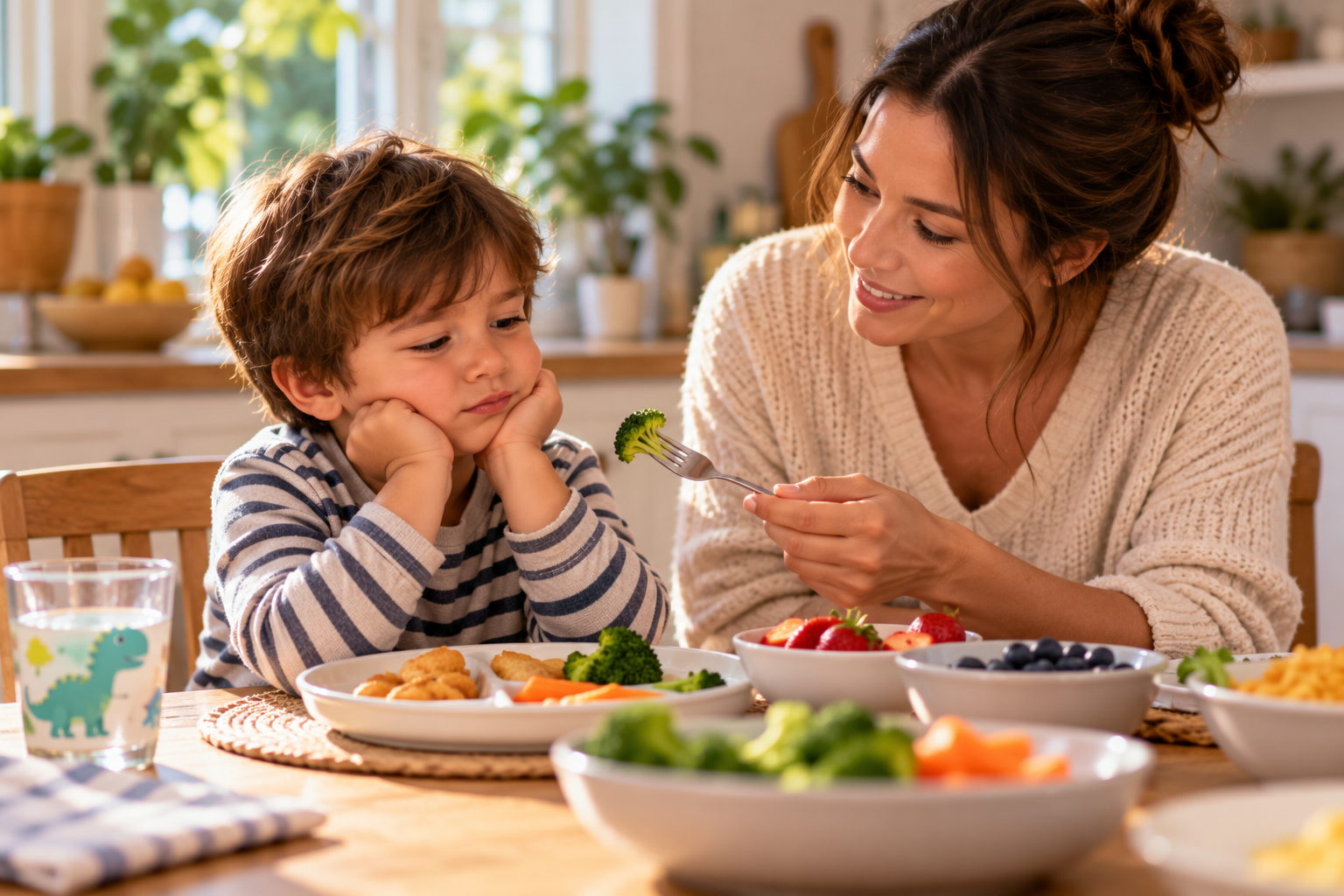
Helping a picky eater become comfortable with new foods often works better when parents reduce pressure, keep meals predictable, and allow familiarity to build over repeated exposures.
A child can eat blueberries enthusiastically on Monday and regard the same blueberries with deep suspicion by Thursday. The pasta they requested every night last month may suddenly be unacceptable because the sauce touched the noodles, the banana broke in the wrong place, or the chicken looks somehow different despite having been prepared exactly as it was yesterday.
Picky eating can make otherwise ordinary meals surprisingly tense. Parents worry about nutrition, growth, variety, and whether their child will ever voluntarily eat something green again, while the child gradually learns that everyone at the table is watching what goes into their mouth. Before long, dinner can start to feel less like a family meal and more like a nightly negotiation.
Selective eating is common in young children, and the American Academy of Pediatrics recommends an approach built around regular meals and snacks, repeated exposure, family modeling, and less pressure. Parents decide what foods are offered and when, while children retain control over whether they eat and how much they eat from what is available. HealthyChildren.org
That does not mean parents simply surrender to a permanent menu of crackers and beige carbohydrates. It means recognizing that children are more likely to become comfortable with unfamiliar food when eating is treated as a skill that develops over time rather than a performance they are expected to complete tonight.
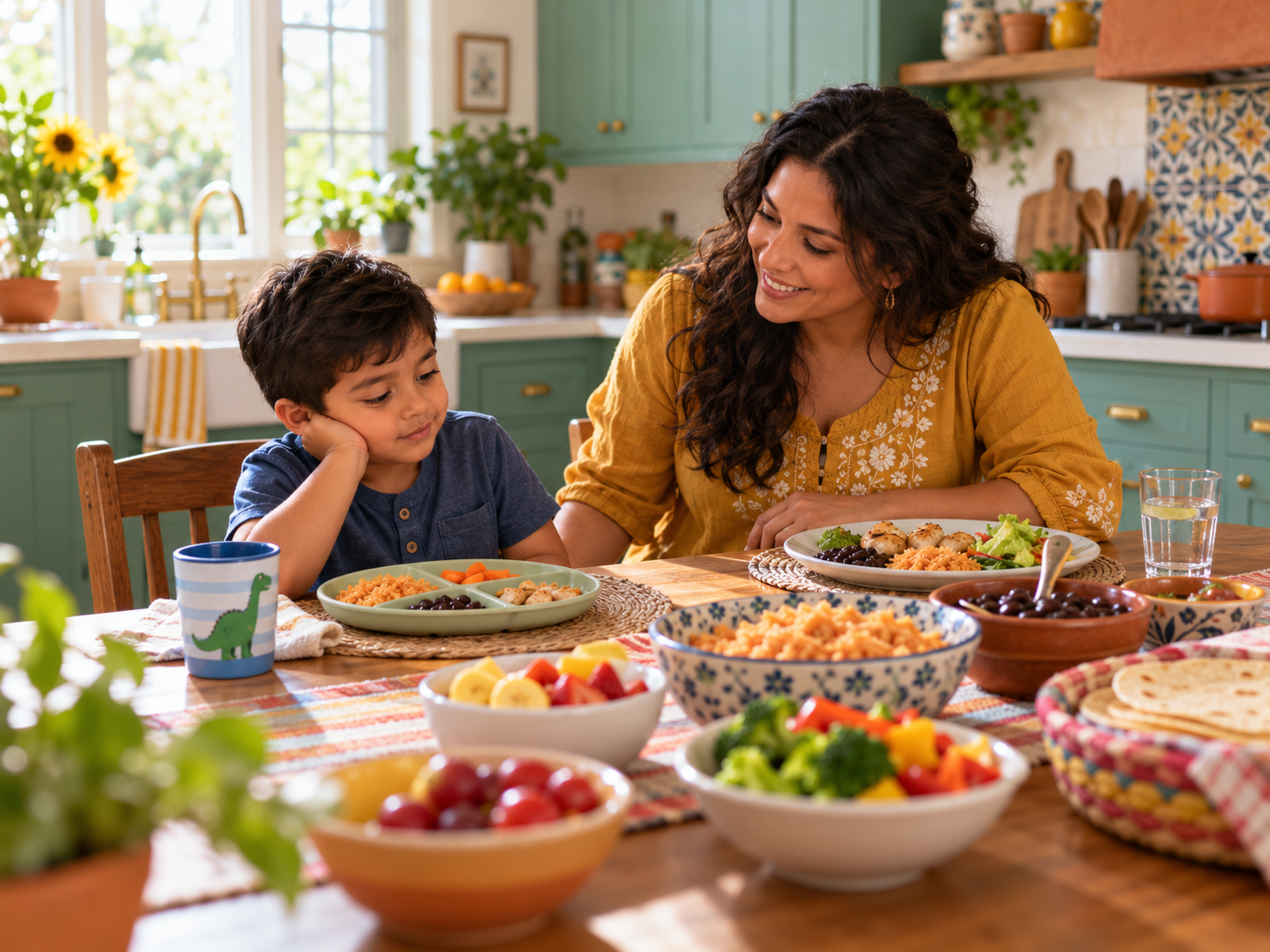
A picky eater may need repeated, low-pressure experiences with a new food before tasting it, which means progress can begin long before the first bite.
Why Do Young Children Become Picky Eaters?
Young children are learning about food at the same time they are becoming more independent. They are discovering that they can have preferences, refuse what is offered, notice tiny differences in texture and appearance, and exercise control over something adults care about very much.
Development also changes what children notice. A toddler who once ate almost anything placed in front of them may become far more cautious about unfamiliar tastes, smells, textures, colors, or combinations. What looks like inexplicable stubbornness to an adult may be a child's attempt to make an unpredictable sensory experience more manageable.
Appetite also varies. Children do not necessarily eat the same amount at every meal or even from one day to the next, and the AAP encourages parents to think about intake over a longer period rather than judging nutrition by what disappears from one dinner plate.
That broader view can lower the emotional temperature considerably. When every uneaten carrot stops feeling like an emergency, parents have more room to focus on the larger goal of helping a child develop a flexible, healthy relationship with food.
Picky Eating Is Not Automatically a Behavior Problem
When a child repeatedly refuses food, adults can easily interpret the refusal as defiance. The child knows dinner is being served, understands that the family wants them to taste it, and still says no, so the behavior can begin to feel personal.
Food refusal can communicate many different things, however. A child may dislike the smell, be unsure about the texture, remember gagging on something similar, feel full, or simply need more familiarity before they are ready to put the food in their mouth. ASHA specifically advises that food avoidance can be understood as communication rather than automatically being treated as negative behavior.
Looking for the reason does not require parents to accept an endlessly shrinking diet. It simply moves the question from “How do I make my child eat this?” to “What is making this food difficult enough that my child will not approach it yet?”
That second question usually gives you far more useful information.
Stop Making One Bite the Only Version of Success
Parents often reach for the apparently modest request, “Just take one bite.” From an adult perspective, it sounds almost absurdly reasonable because the child is not being asked to finish the portion or even like it.
For a child who is genuinely wary of unfamiliar food, however, taking a bite may still be the largest step in the entire process. Before food reaches the mouth, the child has already had to tolerate its presence, appearance, smell, texture, and uncertainty about what it will feel like once they chew it.
Current AAP guidance describes trying food much more broadly. Exploration can include allowing a food onto the plate, touching it, smelling it, licking it, chewing it and politely spitting it out, or eventually eating it, and some foods may require 13 or more exposures before a child accepts them.
That does not mean every dinner needs to become a laboratory session in which parents document whether broccoli was smelled at 6:14 p.m. It simply means that familiarity can grow before eating happens, and those earlier stages deserve to count.
Let a New Food Be Present Without Making It the Main Event
One of the easiest ways to make an unfamiliar food feel more threatening is to put it on the child's plate and then spend the next twenty minutes discussing it.
A parent may ask whether the child has tried it yet, explain how delicious it is, describe its nutritional benefits, take an enthusiastic bite themselves, offer a reward, bargain over portion size, and eventually announce that the child cannot possibly know they dislike it because they have not tasted it. The food has now become the celebrity guest at dinner.
Repeated exposure works better when the food can sometimes simply exist. Serve a small amount beside foods the child already recognizes, eat your own meal, and allow the child to notice it without requiring an immediate decision.
The AAP recommends continuing to offer rejected foods in small amounts rather than giving up after the first refusal. It also suggests including at least one familiar food at meals so the child is not faced with an entire plate of uncertainty.
That combination creates a useful middle ground. The child is not allowed to dictate that unfamiliar food disappears forever, but they are also not trapped in a staring contest with a green bean.
Keep at Least One Familiar Food on the Table
There is a difference between making an entirely separate meal whenever a child refuses dinner and making sure there is something at the meal they can reasonably eat. The AAP recommends serving one family meal rather than automatically preparing a second dinner when the first is rejected, while also including at least one food the child generally likes.
That approach reduces two common sources of tension. Parents do not become short-order cooks, and children do not arrive at dinner believing the only available foods are unfamiliar or difficult.
A familiar food can also make exploration easier. When a child knows there is bread, rice, fruit, yogurt, or another accepted option available, trying something new does not feel like gambling the entire meal on whether they can tolerate it.
Avoid Turning Hunger Into a Negotiating Tool
Parents sometimes hope that enough hunger will eventually make a picky child eat whatever has been served. The logic is understandable, but it can quickly turn food into a struggle over who has more patience.
Regular meal and snack times are more useful because they create predictable opportunities to eat while allowing natural hunger to develop between them. The AAP recommends structured meals and snacks rather than continuous grazing, which can leave children less interested in food when family meals arrive.
The larger goal is to help children become aware of hunger and fullness signals rather than teaching them that adults control how hungry they must become before an unwanted food is unavoidable. Parents still provide the structure. The child simply retains responsibility for what happens inside their own body once the meal is offered.
Be Careful With Bribes and Dessert Deals
“If you eat three bites of chicken, you can have dessert” is one of the most tempting sentences in parenting because it can occasionally produce immediate results.
The problem is what the bargain teaches. The unfamiliar or less-preferred food becomes the unpleasant task that must be endured, while dessert becomes the valuable reward waiting on the other side. The AAP specifically advises against using treats as bribes for eating other foods because the arrangement can increase the appeal of the reward while making the target food feel even less desirable.
A child who tastes something only because a cookie is being held hostage may technically have taken the bite, but they have not necessarily become more comfortable with the food.
That distinction matters because the long-term goal is not merely food entering the mouth. It is helping the child develop enough familiarity and flexibility that unfamiliar foods gradually become less threatening or objectionable.
Let Children Explore Food Outside the Pressure of Eating It
The dinner table is not the only place children can become familiar with food. They can choose a fruit or vegetable at the grocery store, rinse produce, stir ingredients, tear lettuce, mash an avocado, smell spices, or help arrange foods on a plate. The AAP recommends involving young children in choosing and preparing foods because exploration gives them additional ways to become familiar with ingredients without every interaction ending in a demand to eat them.
Cooking also changes the child's relationship with the food. A mushroom that arrives mysteriously on a dinner plate may be rejected immediately, while the same mushroom has already been touched, smelled, cut, and discussed if the child helped prepare it.
Participation does not guarantee tasting, and it should not be offered as a covert contract. A child who helps make dinner does not owe the family a bite in return, but the experience may make the food less foreign the next time it appears.
Use a Tiny Brave Hop With New Foods
Picky eating fits naturally with the Tiny Brave Hop approach because there are many meaningful steps between refusing a food and comfortably eating it. For one child, the first step may be allowing a strawberry onto the plate without immediately asking for it to be removed. Another child may be willing to touch a slice of cucumber, smell a new sauce, lick a tiny amount from a spoon, or take a small taste knowing they are not required to finish it.
The step should move the child slightly toward greater familiarity without turning the food into a test of courage. If touching is currently manageable and biting produces panic, demanding the bite does not become a Tiny Brave Hop simply because the portion is small.
For the full framework behind making intimidating first steps more manageable, see How to Help Your Child Take Tiny Brave Hops. The same principle applies here: the next step should be small enough for the child to participate while still representing real movement.
The goal is not to gamify every pea. It is to show a hesitant child that unfamiliar food can be approached in pieces rather than conquered all at once.
Do Not Praise a Child for Being a “Good Eater”
Parents naturally want to celebrate progress, but identity labels can become surprisingly complicated around food. Calling one sibling a wonderful eater while describing another as picky may gradually turn temporary preferences into family roles. The child begins hearing not simply that they disliked tonight's soup but that they are the person in the family who does not eat things.
More specific feedback leaves room for growth. You might notice that the child tried something that smelled unfamiliar, kept a new food on the plate, helped prepare dinner, or tasted something they had previously refused.
This kind of language celebrates curiosity rather than appetite. A child does not have to eat the largest variety in the family to become more flexible over time.
Do Not Compare Your Child With the Adventurous Eater at the Table
One child may happily eat olives, curry, fish, asparagus, and anything offered on a toothpick, while another objects because the toast was cut into rectangles rather than triangles. Comparing them rarely improves the reluctant eater's relationship with food. Instead, it may add embarrassment to an experience that was already difficult.
A more useful comparison is with the child's own history. The child who once refused to let avocado touch the plate may now tolerate it beside the rice, while a food they previously smelled may finally have reached the tasting stage. Those changes may look modest beside another child's enthusiasm, but they represent genuine progress for the child who had farther to travel.
What If Foods Cannot Touch?
Some children object not only to particular foods but to the way foods are arranged. Sauce touching rice, fruit juice reaching a sandwich, or two textures sharing the same section of a plate can make an otherwise acceptable meal suddenly impossible.
For many young children, separation can simply be a preference while they are becoming comfortable with foods. There is no urgent developmental requirement that peas and mashed potatoes achieve physical contact.
Parents can accommodate reasonable preferences without allowing them to become increasingly rigid rules that control every meal. A divided plate, foods served separately, or sauce offered on the side can reduce unnecessary conflict while the child continues seeing a variety of foods.
If the child's need for separation is part of a much broader pattern of extreme texture sensitivity, very restricted food variety, gagging, difficulty chewing, or other feeding concerns, however, it is worth discussing the pattern with a pediatrician or feeding specialist rather than assuming it is ordinary picky eating. ASHA identifies limited texture tolerance, food refusal, gagging, chewing difficulty, and highly restricted variety among possible signs of feeding difficulties.
What If Your Child Suddenly Rejects a Food They Used to Love?
Children's preferences do not move in a straight line. A food can disappear from the accepted list and return later without anything being fundamentally wrong.
When a familiar food is rejected, avoid turning the change into a referendum on everything the child has eaten before. Continue offering variety over time and allow the food to reappear without announcing that the child “used to love this.”
Preparation also matters. A child may accept crisp apples but dislike soft ones, eat plain pasta but reject it with sauce, or enjoy roasted carrots while refusing steamed carrots because texture is part of how they experience the food.
Instead of interpreting inconsistency as manipulation, pay attention to what changed. The child may be revealing a preference you did not previously realize was important.
Model Eating Without Performing Eating
Children learn a great deal by watching adults, and family meals give parents an opportunity to model eating a range of foods. The AAP encourages family-style eating and adult modeling as part of helping young children develop broader eating habits.
Modeling works best when it looks like ordinary eating rather than dinner theater. You do not need to take an exaggerated bite of broccoli, widen your eyes, and announce that it is the most delicious thing humanity has ever cultivated.
Eat the food because it is part of your meal. Talk about flavor or texture if it comes up naturally, and allow the child to see adults having preferences too.
Healthy eating does not require pretending everyone loves everything. It means showing that a varied diet can include foods we enjoy, foods we are still getting used to, and foods we simply prefer not to eat.
Keep Mealtime Conversation Bigger Than the Child's Plate
When parents are worried about picky eating, it becomes very easy for every meal to revolve around what the child has or has not eaten. That attention can make eating feel increasingly performative. The child becomes aware that adults are monitoring each bite, while parents struggle to enjoy the meal because they are mentally calculating whether two peas and half a piece of bread count as dinner.
Try to protect some of the meal as family time. Talk about the day, something funny that happened, plans for the weekend, or which dinosaur would be least welcome at the table. Food is part of the meal, but the meal does not have to become a meeting about food.
Reducing the spotlight can be especially helpful for hesitant children because curiosity has more room to emerge when nobody appears to be waiting for it.
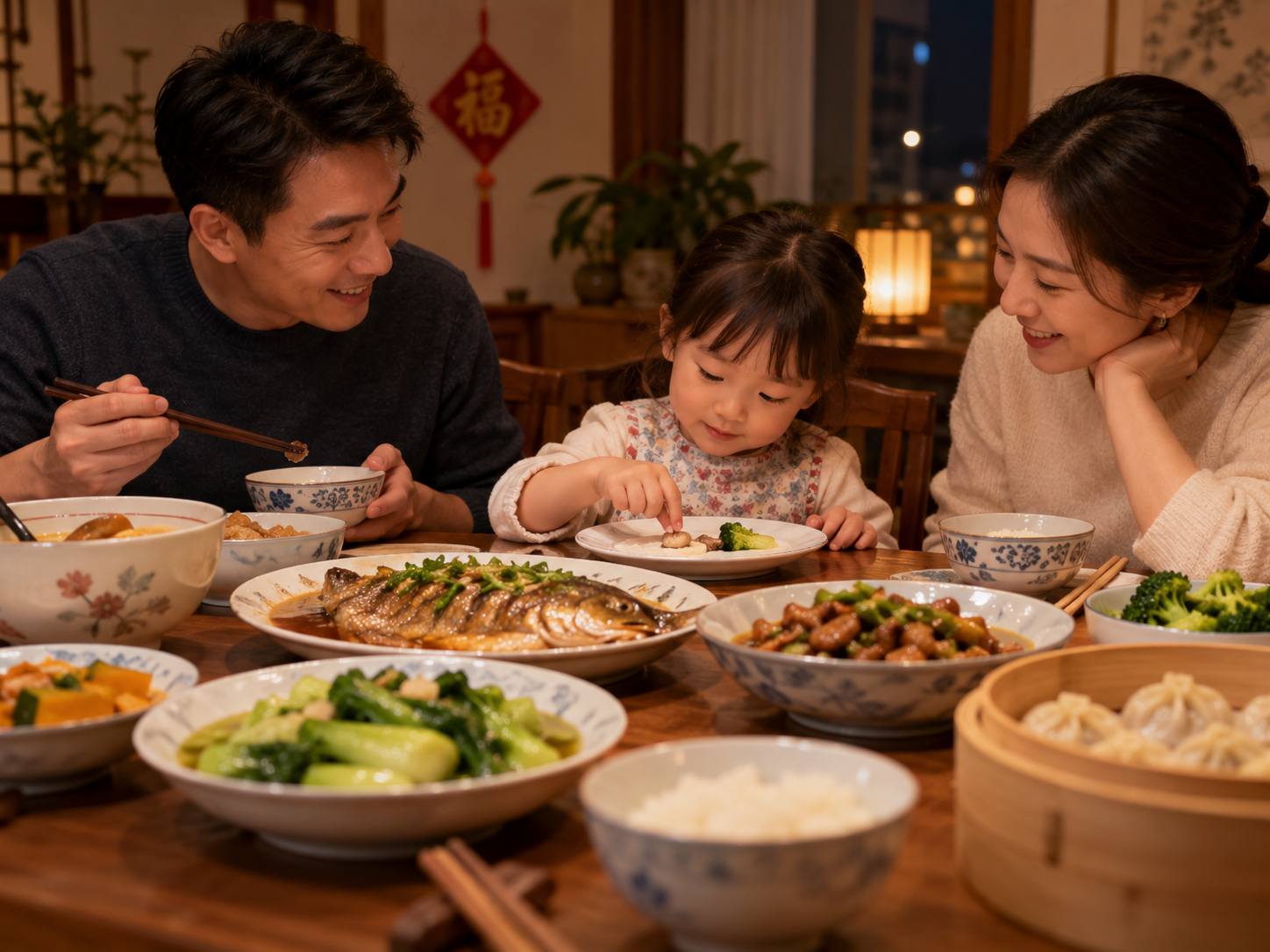
Keeping family meals relaxed and offering unfamiliar foods in small amounts can help a picky eater build familiarity without making every bite the center of attention.
Do Not Hide Every New Food Inside Something Else
There is nothing wrong with blending vegetables into a sauce or adding nutritious ingredients to foods your child enjoys. Families cook foods in mixed forms all the time, and nutrition does not become invalid simply because spinach is in a smoothie.
Problems arise when hiding food becomes the only strategy for broadening a child's diet. If a child never knows that a vegetable is present, they receive the nutrients but do not become more familiar with the vegetable itself.
There is also a trust issue when food is deliberately disguised because adults expect the child would object if they knew what they were eating. A child who discovers the trick may become more suspicious of foods that previously felt safe.
It is possible to do both. Serve nutritious mixed dishes when they work for your family while continuing to give children opportunities to see, touch, smell, prepare, and eventually taste foods in recognizable forms.
Picture Books Can Make New Foods Less Mysterious
Stories can give children another low-pressure way to encounter unfamiliar food. A picture-book character can dislike something, become curious about it, make a mess while cooking, change their mind, or decide they still do not like a particular food. The important part is that the experience belongs to the character first, which gives the child room to think without somebody placing a fork in their hand.
Food books can also expand vocabulary. A child may learn words for crunchy, smooth, tart, juicy, warm, cold, crisp, or creamy, which can make it easier to explain what they actually dislike instead of rejecting everything with the same “yucky.”
Reading should remain reading, however. If every book about food ends with a parent immediately announcing, “Now we're going to try it,” children will quickly discover that the library has become an unusually elaborate delivery system for dinner negotiations.
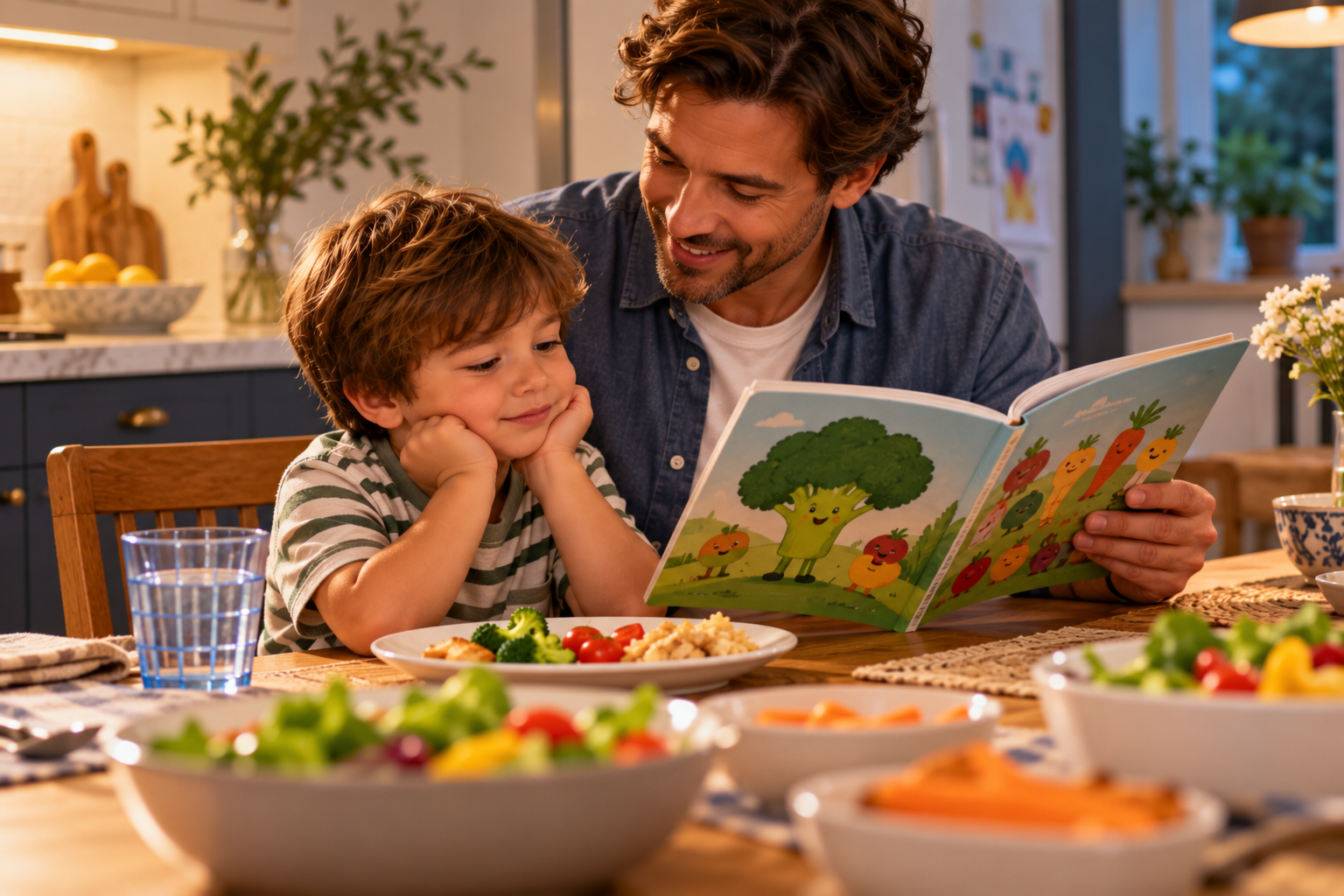
Picture books can help picky eaters explore food, textures, and trying something unfamiliar without making tasting the immediate requirement.
Why The Rabbit in the Moon Fits the Hesitant Eater
The Rabbit in the Moon is not a book about picky eating, and I would not position it as one. Its usefulness comes from the emotional territory Yabbit represents: wanting to move forward while the next unfamiliar step feels larger than other people seem to understand.
That can describe many children facing new food. An adult sees one piece of roasted zucchini and thinks the request is tiny, while the child is processing an unfamiliar smell, texture, color, expectation, and the uncomfortable awareness that everyone wants them to put it in their mouth.
Yabbit's experience gives families another way to talk about beginning. Instead of turning dinner into “Are you going to eat it or not?”, the question can become, “What would one small brave hop with this food look like today?”
That answer might be touching it, smelling it, allowing it to remain on the plate, or taking a small taste. The important distinction is that courage should support curiosity rather than become a new form of pressure.
When Picky Eating May Be More Than Ordinary Picky Eating
Most selective eating does not automatically mean a child has a feeding disorder, and parents should be cautious about diagnosing a young child based on food preferences alone.
There are situations, however, in which the pattern deserves closer attention. ASHA identifies warning signs that can include persistent difficulty chewing, frequent coughing or gagging during meals, holding or pocketing food in the mouth, accepting only very limited textures, unusually long meals, trouble gaining weight or growing, and significant food refusal.
Extreme restriction can also occur with conditions such as avoidant/restrictive food intake disorder, commonly called ARFID. ARFID involves much more than ordinary childhood pickiness and can include significant nutritional deficiency, faltering growth, dependence on supplements, or major interference with everyday life. ASHA
Parents do not need to determine which diagnosis, if any, explains the behavior. If eating is unusually restricted, meals are consistently distressing, growth or nutrition is a concern, or your child appears to have difficulty safely chewing or swallowing, begin with your pediatrician. Depending on the concern, evaluation may also involve a dietitian, feeding specialist, speech-language pathologist, occupational therapist, or child mental-health professional.
Do Not Use Tiny Brave Hops to Push Through a Feeding Problem
The Tiny Brave Hop Method is meant to make hesitation more manageable, not to override a child's body.
If a child is gagging repeatedly, choking, struggling to chew, unable to tolerate age-appropriate textures, experiencing pain, losing weight, or showing signs of a feeding or swallowing difficulty, the appropriate next step is professional evaluation rather than gradually increasing pressure to taste the food. ASHA's guidance makes clear that these symptoms can reflect feeding or swallowing problems that deserve assessment.
The same is true when eating produces extreme distress or the child's range of foods has become so restricted that nutrition or normal family life is being affected. A useful parenting framework should help adults recognize when to encourage a manageable step and when to stop treating the situation as ordinary hesitation.
What to Do When Dinner Has Already Become a Battle
Sometimes families reach this article after mealtime conflict has been going on for months. The child expects pressure before sitting down, the parent expects refusal, and both parties enter dinner prepared for the next round.
Changing the atmosphere may require temporarily lowering the emotional stakes. Keep meals and snacks predictable, include something familiar, continue offering variety in small amounts, and stop using every meal as a chance to secure a breakthrough.
You may also need to change the language around food. Instead of “You haven't eaten anything,” you might say, “These are the foods we're having tonight.” Rather than repeatedly asking for one bite, allow the food to remain available while conversation moves elsewhere.
The AAP recommends avoiding pressure and punishment when children refuse food because those responses can increase dislike rather than create acceptance. A calmer dinner may initially look less productive because nobody is negotiating the child into an extra bite. Over time, however, reducing the struggle can give curiosity somewhere to return.
Helping a Child Who Refuses New Things Beyond the Dinner Table
Some picky eaters are flexible everywhere else, while others approach many unfamiliar experiences with the same caution they bring to new food. If your child also refuses unfamiliar activities, freezes before starting, or becomes overwhelmed by not knowing what will happen, How to Help a Child Who Refuses to Try New Things.
The distinction matters because not every picky eater is generally hesitant, and not every hesitant child will struggle with food. When the pattern does travel across situations, however, parents may find that the same principles of predictability, smaller beginnings, and reduced pressure are useful in more than one part of childhood.
An Authoritative Resource for Parents
The American Academy of Pediatrics provides practical guidance for picky eating through, including repeated exposure, regular meals and snacks, family modeling, offering familiar foods alongside new ones, and allowing children some control over whether and how much they eat. Its newer guidance also explicitly recognizes that exploring a new food can begin with seeing, touching, smelling, or tasting rather than requiring a full bite immediately. HealthyChildren.org
For families who are concerned that picky eating may involve chewing, swallowing, sensory, growth, or feeding-skill difficulties, the American Speech-Language-Hearing Association provides a useful overview of signs that may warrant evaluation. ASHA
Buy The Rabbit in the Moon
The Rabbit in the Moon was not written to persuade children to eat vegetables. It was written for the emotional moment when something feels bigger from the child's side than it appears from the adult's side, and when encouragement works better after the next step has been made manageable.
Yabbit the Rabbit hesitates and finds reasons not to begin, while Snail brings patience and steady companionship instead of demanding an instant transformation. That dynamic can give families useful language for trying new foods without turning bravery into another requirement children must satisfy at dinner.
A child does not need to leap from “I won't touch that” to happily eating a serving tonight. Sometimes the useful beginning is simply allowing the unfamiliar food to exist nearby, becoming curious about it, or discovering that one small interaction with it is manageable.
That is enough for a first hop.
Frequently Asked Questions About Picky Eating
Is picky eating normal in toddlers and young children?
Selective eating is common during early childhood, particularly as children develop stronger preferences and more independence around food. The AAP recommends continuing to offer a variety of foods without pressure, maintaining regular meal and snack times, and remembering that children may need many exposures before accepting something unfamiliar. HealthyChildren.org
How many times should I offer a food my child refuses?
There is no magic number that guarantees acceptance, but repeated exposure matters. Current guidance notes that a child may need 13 or more exposures to a new food before accepting it, and those exposures can include seeing, touching, smelling, licking, or tasting rather than requiring the child to eat a full portion each time. HealthyChildren.org
Should I make a separate meal when my picky eater refuses dinner?
The AAP recommends serving one family meal rather than automatically cooking a replacement while making sure there is at least one food at the meal the child generally accepts. That approach allows parents to maintain structure without turning dinner into an all-or-nothing confrontation. HealthyChildren.org
Should I require my child to take one bite of every food?
A mandatory bite may sound small to an adult, but it can still feel like a large demand to a child who is highly uncertain about the food. A lower-pressure approach can allow familiarity to develop through smaller interactions such as tolerating the food on the plate, touching it, smelling it, or tasting it voluntarily. HealthyChildren.org
Is it okay to give dessert as a reward for eating vegetables?
The AAP advises against using treats as bribes for eating other foods because the arrangement can make the reward more desirable while turning the other food into an unpleasant task. It is generally more useful to keep introducing foods without requiring children to earn one food by eating another. HealthyChildren.org
When should I worry that picky eating is more than a phase?
Talk with your child's pediatrician when eating is extremely restricted, growth or nutrition is a concern, mealtimes cause significant distress, or your child routinely gags, coughs, struggles to chew, pockets food, or accepts only a very narrow range of textures. Those patterns can warrant evaluation rather than simply being treated as ordinary picky eating. ASHA
Can a Tiny Brave Hop help a picky eater try new foods?
It can be useful when the difficulty is hesitation or unfamiliarity rather than a medical or feeding problem. A Tiny Brave Hop might mean touching, smelling, helping prepare, or taking a small voluntary taste of an unfamiliar food, while children who show signs of feeding or swallowing difficulties should be evaluated rather than pushed through those symptoms. ASHA
Final Thought
Parents often measure progress with food by what was swallowed, which makes sense because eating is ultimately the point. Yet a child who is learning to become more flexible may make meaningful progress before an unfamiliar food ever reaches their stomach.
They may stop demanding that it be removed from the table, become willing to place it on the plate, help prepare it, notice its smell without recoiling, or take a small taste without feeling that the entire meal depends on what happens next. Each experience makes the food a little less unknown.
When adults reduce pressure, maintain predictable meal structure, keep offering variety, and allow familiarity to accumulate, children have more room to develop curiosity on their own timetable. That does not mean abandoning nutrition or letting the child's accepted-food list shrink indefinitely; it means recognizing that healthy eating habits are built across hundreds of ordinary meals rather than won through one dramatic bite.
For a picky eater, the most important change may eventually be surprisingly quiet. A food that once caused immediate refusal appears on the plate, the child considers it, and dinner continues.