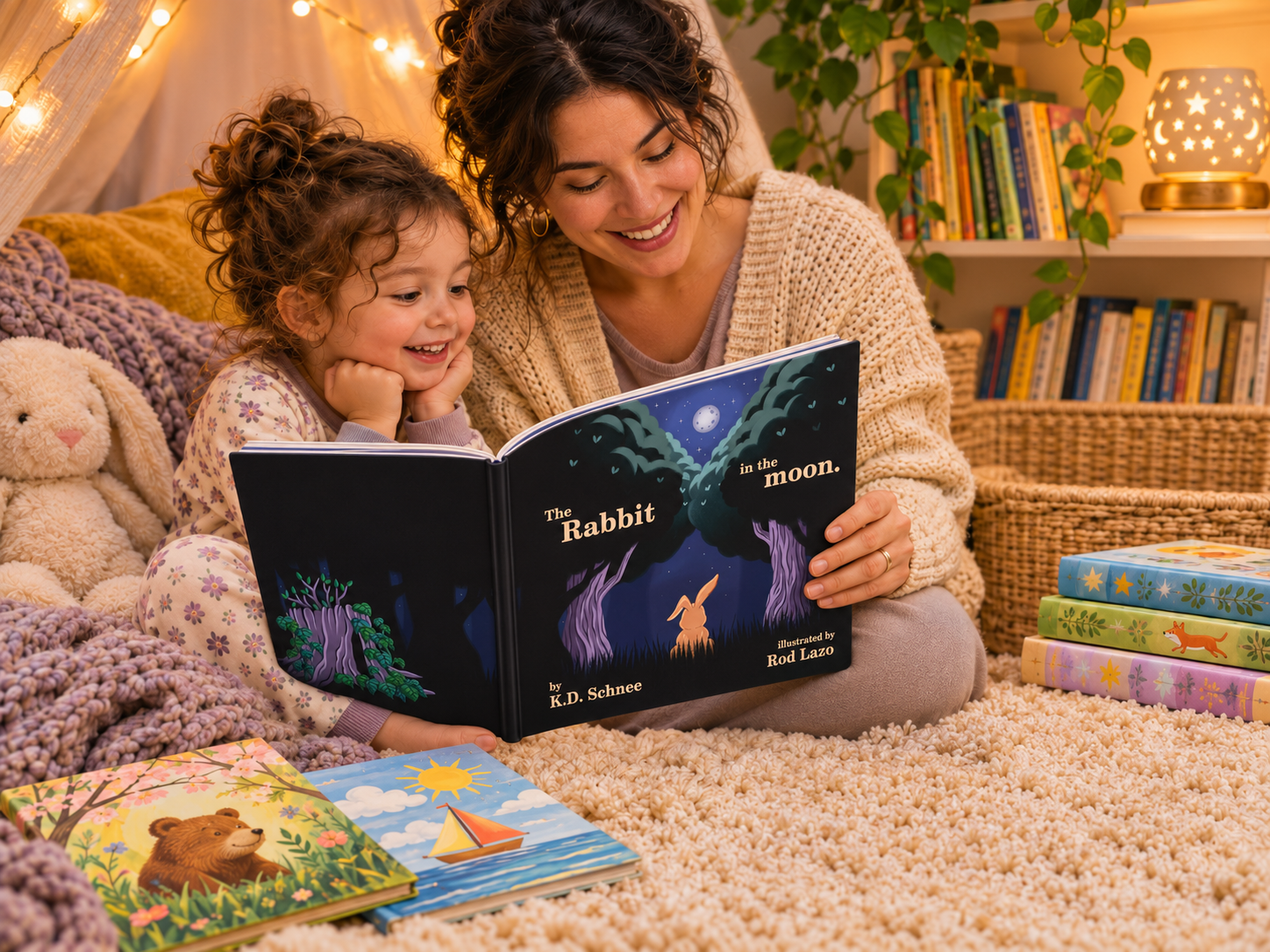
The best picture books for 3 year olds combine language, rhythm, humor, imagination, emotional recognition, and enough reread value to survive the enthusiastic request for “again.”
Three is an age with very little interest in moderation. A three-year-old can insist on putting on their own shoes, become outraged when the shoes refuse to cooperate, and then ask to be carried because walking has apparently been canceled for the afternoon. They can tell a surprisingly elaborate story, ask seventeen questions about a worm, and become heartbroken because someone cut their toast the wrong way.
That combination of growing independence and very young emotional regulation is part of what makes three such an interesting age for books. Language is expanding quickly, imagination is becoming richer, and children are beginning to tell adults much more about what they notice, remember, want, fear, and feel.
The American Academy of Pediatrics notes that by three, children may choose the books they want to share, pretend to read familiar stories, connect events in books to their own experiences, ask questions about what they are reading, and even correct an adult who dares to skip a favorite page. That last skill may develop with astonishing precision.
A good bookshelf for this age should therefore do more than teach colors or keep a child occupied until bedtime. Three-year-olds benefit from books with rhythm, repetition, strong pictures, humor, emotional clarity, interesting language, and stories that invite them to participate rather than merely sit still.
The 20 books below do different jobs. Some help children name feelings, some invite laughter and participation, some build language and prediction, and others gently explore independence, separation, change, mistakes, or courage.
There is no single perfect book for every three-year-old. The useful question is which story fits the child sitting beside you today.
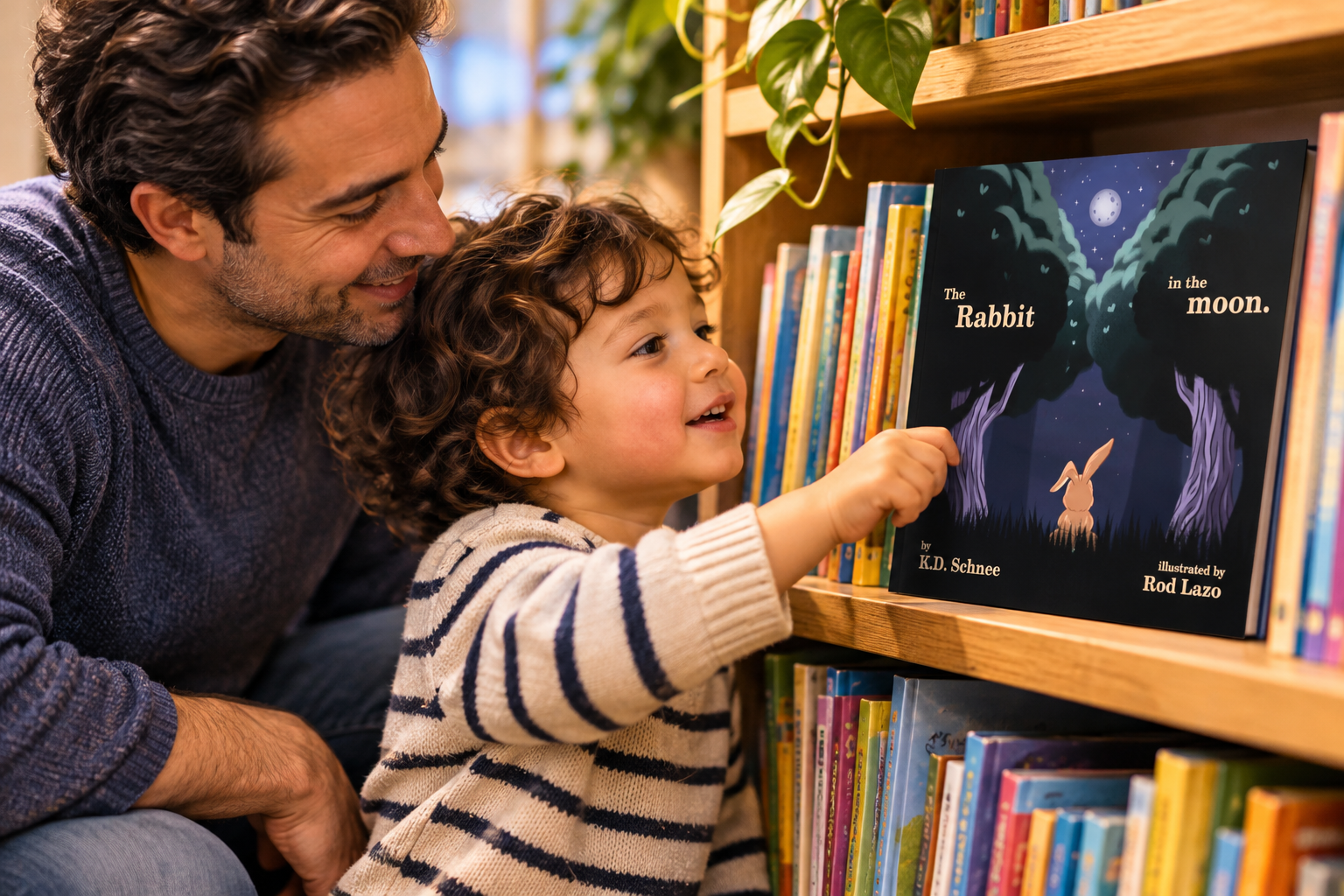
Three-year-olds benefit from picture books that invite participation, conversation, repetition, emotional recognition, and the pleasure of choosing what they want to hear again.
What Makes a Good Picture Book for a 3-Year-Old?
At three, a book does not need a complicated plot to do important work. The child is still learning how stories move, how pictures and words work together, how characters feel, and what happens when something changes from one page to the next.
Repetition is especially useful because familiarity lets children participate. They begin supplying the next word, predicting what is coming, retelling the story in their own language, and proudly informing you when you have committed the unforgivable crime of changing a sentence.
Illustrations matter just as much as the text. Three-year-olds can often understand an expression, action, or emotional moment in a picture before they can explain it verbally, which makes picture books a natural place to develop both language and emotional awareness.
The best shelves also have range. A child needs funny books, quiet books, books that encourage movement, books about feelings, books with wonderful sounds, and a few stories that help make unfamiliar experiences feel less lonely. If you are choosing for several ages or wondering how picture books change as children grow, our broader guide explains how story needs shift from toddlerhood through early elementary years: https://www.yabbitrabbit.com/parent-resources/picture-books-by-age-child-stage-feelings
20 Best Picture Books for 3 Year Olds
These books are not ranked from objectively best to twentieth-best because three-year-olds would reject that level of administrative efficiency. I chose them because each brings something particularly useful to a preschool bookshelf, whether that is language, participation, feelings, imagination, independence, or simple read-aloud joy.
1. The Rabbit in the Moon by KD Schnee
Best for: hesitation, courage, friendship, persistence, and emotional language.
Three is an age when children are becoming more independent while still regularly encountering moments that feel enormous. Walking into preschool, trying a new activity, separating from a parent, joining other children, or attempting something unfamiliar can produce a very real pause between wanting to participate and feeling ready to begin.
Yabbit lives in that pause. He is not introduced as the naturally fearless rabbit who already knows what to do; he hesitates, worries, and needs time before moving forward. Snail brings steadiness and persistence, allowing the story to show that courage can be gradual rather than dramatic.
For a three-year-old, the idea of one small brave hop is easier to hold than an abstract instruction to “be brave.” The story also gives parents a character through whom they can talk about hesitation without turning the child themselves into the subject of every conversation.
2. The Very Hungry Caterpillar by Eric Carle
Best for: counting, sequencing, food vocabulary, repetition, and change.
Few books understand the preschool appetite for repetition as efficiently as The Very Hungry Caterpillar. The predictable structure gives young children the pleasure of knowing what comes next, while the food, numbers, days, and transformation give adults plenty of language to build around the story.
Its final change from caterpillar to butterfly also introduces transformation in a form that feels wondrous rather than threatening. Penguin Random House lists the book for ages 2–5, which helps explain why it continues to work so naturally at three.
3. Brown Bear, Brown Bear, What Do You See? by Bill Martin Jr. and Eric Carle
Best for: colors, animals, prediction, memory, and joining the read-aloud.
Three-year-olds often love books they can begin “reading” before they actually know how to read, and this is one of the great examples. The recurring question-and-answer pattern lets children predict language, remember the sequence, and participate confidently.
The bold animals and clear color vocabulary make the visual experience easy to follow without making the book feel purely instructional. It is the kind of story a child may eventually perform back to you from memory, with absolutely no concern that they are holding the book upside down.
4. The Gruffalo by Julia Donaldson, illustrated by Axel Scheffler
Best for: rhyme, vocabulary, imagination, humor, and clever problem-solving.
For three-year-olds ready for a slightly more developed story, The Gruffalo has a tremendous read-aloud rhythm. Julia Donaldson's rhyme creates momentum while Axel Scheffler's illustrations give children plenty to inspect as the mouse makes his way through the woods.
The mouse is small but resourceful, which gives the story a satisfying reversal of expectations. Rather than succeeding through physical strength, he uses imagination and quick thinking to navigate creatures much larger than he is.
5. Don't Let the Pigeon Drive the Bus! by Mo Willems
Best for: participation, humor, boundaries, persuasion, and saying no.
This book understands that many three-year-olds would prefer not merely to hear a story but to be placed in charge of it. The Pigeon begs, bargains, complains, negotiates, and escalates while the child gets the delicious responsibility of telling him no.
That participation makes the book extremely rereadable, but there is useful emotional material under the comedy too. Children recognize wanting something very badly and not getting it, while adults may recognize certain negotiation techniques from someone approximately three feet tall who lives in their house.
6. Press Here by Hervé Tullet
Best for: following directions, cause and effect, imagination, and active participation.
Press Here turns a physical book into an interactive game using nothing more complicated than colored dots and the reader's willingness to play along. Children press, shake, tilt, clap, and watch the page appear to respond.
Chronicle Books recommends it for ages 3–5, and that age range makes sense because three-year-olds are old enough to understand the playful cause-and-effect illusion while still being delighted by the possibility that they personally made the dots move.
7. The Rabbit Listened by Cori Doerrfeld
Best for: disappointment, big feelings, empathy, and comfort.
When Taylor's creation is destroyed, a series of animals arrive with ideas about what Taylor should do next. The rabbit offers something simpler: presence and listening.
That is an unusually useful emotional message for a three-year-old because young children are constantly encountering disappointments that look small to adults and enormous from inside the moment. The book does not require Taylor to stop feeling upset quickly, and it gives parents a lovely reminder that fixing is not always the first job.
8. Llama Llama Red Pajama by Anna Dewdney
Best for: bedtime, separation, reassurance, rhythm, and naming worry.
Bedtime separation can feel very different once the parent actually walks out of the room, and Llama Llama Red Pajamacaptures the escalating emotional logic of that experience with enormous affection and humor.
The rhyming language makes it particularly satisfying to read aloud, while the story allows children to see that distress can rise and fall without changing the underlying connection between parent and child. Penguin Random House recommends the book for ages 2–5.
9. The Color Monster by Anna Llenas
Best for: naming feelings, emotional vocabulary, and talking about mixed emotions.
Young children frequently experience several feelings before they have the words to separate them. The Color Monstermakes those internal experiences visible by associating different emotions with colors and helping the character sort through what feels tangled.
That visual structure can be especially useful at three, when “mad,” “sad,” “scared,” and “happy” are becoming more usable but emotional life is considerably more complicated than four tidy categories. The publisher recommends the book for ages 3–7.
10. The Feelings Book by Todd Parr
Best for: emotional vocabulary, acceptance, humor, and everyday feelings.
Todd Parr's bright, direct style is wonderfully accessible for young preschoolers. Rather than building one large emotional story, the book moves through many moods and experiences, reinforcing the idea that feelings change and do not all need to make perfect sense.
That can be reassuring at an age when a child can feel brave, silly, angry, affectionate, and completely devastated by a broken cracker before lunch. The picture-book edition is recommended for ages 3–6.
[INSERT IMAGE HERE]
Image ALT text: Three-year-old child looking through picture books about feelings, colors, animals, and imagination.
SEO-forward image caption: A strong bookshelf for a 3-year-old should mix emotional stories with playful books about language, color, rhythm, movement, humor, and imagination.
11. Grumpy Monkey by Suzanne Lang, illustrated by Max Lang
Best for: bad moods, emotional acceptance, friendship, and not forcing happiness.
Jim Panzee is in a terrible mood, and everyone around him has a suggestion for how he should fix it. The increasingly enthusiastic attempts to make him cheerful only make things worse.
The story works because it allows a child to consider the possibility that a feeling does not always need to be corrected immediately. For three-year-olds, who are frequently told to calm down, cheer up, stop crying, or use a happy voice, that recognition can feel refreshingly honest.
12. We're Going on a Bear Hunt by Michael Rosen, illustrated by Helen Oxenbury
Best for: repetition, movement, sound play, sequencing, and shared participation.
This is a read-aloud that practically refuses to remain on the page. Children can swish through grass, splash through water, squelch through mud, and build anticipation as the family's journey becomes increasingly adventurous.
The repeated structure helps three-year-olds predict the language while the sound effects make the story physical. It is an excellent choice for children who listen better when listening includes movement, which at three may be less of a preference and more of a lifestyle.
13. The Kissing Hand by Audrey Penn, illustrated by Ruth E. Harper and Nancy M. Leak
Best for: preschool separation, reassurance, connection, and new beginnings.
Chester Raccoon does not want to leave his mother for school, and the story gives him a simple ritual for carrying their connection with him. That makes The Kissing Hand particularly relevant for three-year-olds beginning preschool or another regular separation from a caregiver.
The story's value is not in promising that separation will never feel difficult. It offers a concrete symbol of connection a child can imagine carrying into an unfamiliar place, and the publisher recommends it for ages 3–7.
14. Giraffes Can't Dance by Giles Andreae, illustrated by Guy Parker-Rees
Best for: confidence, difference, encouragement, and finding your own way.
Gerald wants to dance but struggles to move the way the other animals do. His difficulty becomes embarrassing until encouragement helps him discover that dancing does not need to look exactly the same for everyone.
Three-year-olds are beginning to notice differences in ability without yet having much perspective on why everyone learns differently. The story gives children a playful way to explore self-consciousness, encouragement, and the possibility that struggling with something does not mean you do not belong.
15. Pete the Cat: I Love My White Shoes by Eric Litwin, illustrated by James Dean
Best for: colors, repetition, flexibility, and recovering when things do not go as planned.
Pete's beautiful white shoes repeatedly become something other than beautiful white shoes, yet the story keeps moving. Children get colors, repetition, questions they can answer, and a character who does not treat every unexpected change as a catastrophe.
That combination is particularly useful at three, an age when a minor deviation from the expected plan can occasionally be received as a personal betrayal by the universe. Pete offers flexibility without turning the story into a lecture about flexibility.
16. The Snowy Day by Ezra Jack Keats
Best for: observation, independence, imagination, and quiet exploration.
Peter's adventure through a snowy neighborhood is wonderfully small in scale, which is part of its power. He experiments, notices, makes tracks, creates shapes, and explores an ordinary day transformed by weather.
The story respects the importance of a child's own observations rather than filling every page with action. Penguin Random House recommends the classic edition for ages 2–5, and it remains a beautiful example of how a picture book can make everyday discovery feel significant.
17. Little Blue Truck by Alice Schertle, illustrated by Jill McElmurry
Best for: animal sounds, rhyme, friendship, cooperation, and helping others.
For children who love vehicles and animals, Little Blue Truck brings both into a rhythmic story built around friendliness and cooperation. The sound play invites young listeners to join in, while the narrative gives the repeated noises a purpose beyond simple identification.
The emotional lesson is also straightforward enough for three-year-olds to grasp: relationships matter, and helping others tends to work better when you have treated them well along the way.
18. How Do Dinosaurs Say I Love You? by Jane Yolen, illustrated by Mark Teague
Best for: family love, misbehavior, reassurance, and connection after difficult moments.
Young children need stories that understand they can behave badly and still remain deeply loved. This book uses enormous dinosaurs to dramatize very familiar preschool behavior before returning to the security of parent-child connection.
That makes it particularly useful after the kind of day when everyone has had enough of everyone else. The humor creates distance, while the ending reassures children that conflict and connection can exist in the same family.
19. Goodnight Moon by Margaret Wise Brown, illustrated by Clement Hurd
Best for: bedtime routine, repetition, vocabulary, and calming down.
Some books earn their place not because the plot is exciting but because they help create a familiar emotional rhythm. Goodnight Moon moves slowly through a room, naming and saying goodnight to the child's surroundings until the entire world seems to settle.
That predictability can be especially valuable at three, when bedtime often contains both a need for independence and a powerful desire for everything familiar to remain exactly where it belongs. The story is simple enough to become almost ritualistic with repeated reading.
20. A Good Day by Kevin Henkes
Best for: disappointment, changing feelings, perspective, and emotional recovery.
Several characters begin the book having distinctly bad experiences, but the day does not remain trapped in its opening mood. The story gradually changes direction without pretending that the earlier disappointments did not happen.
That emotional movement is useful for three-year-olds because feelings at this age can seem permanent while they are happening. A bad moment can feel like a bad universe, and stories that gently show feelings changing over time help children begin building perspective.
Buy The Rabbit in the Moon
If your three-year-old is beginning to say “I can't,” hang back before new experiences, struggle with separation, or simply need a gentler way to understand courage, The Rabbit in the Moon offers a story built around that emotional moment. Yabbit does not become a fearless rabbit. He hesitates, worries, and moves forward with Snail's steady companionship beside him, allowing young children to see that courage can begin before uncertainty disappears.
For parents, the story also creates usable family language. Instead of asking a three-year-old to understand an abstract idea such as resilience, you can talk about what feels big to Yabbit and what one small brave hop might look like.
Which Books Are Best for Language Development at Age 3?
For language and prediction, Brown Bear, Brown Bear, What Do You See?, The Very Hungry Caterpillar, We're Going on a Bear Hunt, The Gruffalo, and Press Here are especially strong choices. Their repetition, rhythm, sequencing, questions, and memorable vocabulary give children many opportunities to participate rather than simply listen.
That participation matters because three-year-olds increasingly want to tell part of the story themselves. Repeating a refrain, predicting the next animal, describing a picture, or retelling a favorite scene all turn read-aloud time into active language practice without making it feel like schoolwork.
Which Books Are Best for Feelings at Age 3?
The Rabbit Listened, The Color Monster, The Feelings Book, Grumpy Monkey, and Llama Llama Red Pajama each approach emotions differently. Some name feelings directly, while others allow children to watch a character experience disappointment, worry, anger, or sadness without immediately solving it.
That variety is useful because emotional literacy is not only learning the correct word for a feeling. Children also learn that feelings change, that another person can feel differently from them, that comfort can come in different forms, and that an unpleasant emotion does not mean something has gone permanently wrong.
Which Books Are Best for Independence and Trying New Things?
At three, independence frequently arrives before competence, which is why the phrase “I do it myself” can be followed very quickly by “Help me!” That tension is developmentally useful even when it is not particularly efficient.
The Rabbit in the Moon is especially relevant when a child wants to move forward but hesitates at the starting line. The Kissing Hand fits children facing separation, Giraffes Can't Dance supports children who feel different or incapable, and Pete the Cat: I Love My White Shoes models flexibility when the plan changes unexpectedly.
For a deeper look at why Yabbit specifically fits this age, read Why The Rabbit in the Moon Is One of the Best Picture Books for 3-Year-Olds: https://www.yabbitrabbit.com/parent-resources/best-picture-book-for-3-year-olds-rabbit-in-the-moon
Do Not Turn Every Picture Book Into a Lesson
Parents can see the educational potential in a picture book very quickly. The danger is squeezing so much learning out of each page that storytime begins to resemble a quarterly performance review.
Three-year-olds do not need to answer a comprehension question after every sentence. Sometimes they want to point at the dog, laugh at the Pigeon, turn the page too early, announce that they also own socks, or hear the same book for the forty-seventh time. That is still valuable reading.
Ask questions when they add to the experience, but leave room for the story to work without explanation. A child who loves books is building something more durable than a child who can correctly identify the moral of every one.
Rereading the Same Book Is Not a Problem
Adults crave novelty much faster than preschoolers do. A three-year-old may request the same story every night because familiarity is part of the pleasure. They know where the funny part is, when the character gets scared, which line they can say with you, and what happens at the end.
The American Academy of Pediatrics specifically encourages families to let children choose books and notes that familiar stories help young children pretend to read, retell events, and connect stories to their own experiences. Repeated reading also means the book changes as the child changes. The child who first notices the animal may later notice the feeling, the joke, the rhyme, the problem, or the solution.
How Long Should a 3-Year-Old Sit for Storytime?
There is no prize for achieving perfect preschool stillness. Some children will sit through several books in a row, while others listen while shifting positions, touching the illustrations, asking unrelated questions, or temporarily becoming fascinated by something under the couch.
Follow the child's engagement more than the clock. If they are participating, looking, commenting, predicting, laughing, or returning to the story, meaningful reading is happening even if their body is not behaving like a very small library patron.
HealthyChildren.org recommends making book sharing comfortable and interactive and responding to children's questions and observations. Reading should remain a relationship rather than a test of attention span.
An Authoritative Resource for Parents
The American Academy of Pediatrics offers a practical guide called How to Share Books with Children 2 and 3 Years Old. It explains that three-year-olds may choose favorite books, pretend to read familiar stories, connect them to real experiences, ask questions, and retell stories in their own words.
HealthyChildren.org: https://www.healthychildren.org/English/ages-stages/toddler/Pages/How-to-Share-Books-with-2-and-3-Year-Olds.aspx
The guidance also encourages parents to talk about pictures, respond to children's comments, point out concepts such as colors and numbers, and visit libraries for books and storytime. The larger message is reassuring: reading with a three-year-old should be interactive, enjoyable, and connected to the relationship between the child and the person holding the book.
Frequently Asked Questions About Picture Books for 3 Year Olds
What are the best picture books for 3 year olds?
Strong choices include The Rabbit in the Moon, The Very Hungry Caterpillar, Brown Bear, Brown Bear, What Do You See?, The Gruffalo, Don't Let the Pigeon Drive the Bus!, The Rabbit Listened, Llama Llama Red Pajama, and Press Here. The best choice depends on whether your child is most interested in humor, feelings, language, participation, bedtime, or new experiences.
What should a 3-year-old get from picture books?
Picture books can support vocabulary, listening, memory, prediction, imagination, emotional language, and the pleasure of sharing a story with another person. At three, children may also begin retelling familiar stories and connecting what happens in a book with experiences from their own lives.
Are emotional picture books too complicated for a 3-year-old?
Not when the story and illustrations make the feeling concrete. Three-year-olds may not understand abstract discussions about anxiety or resilience, but they can recognize a character who looks worried, angry, sad, unsure, or comforted.
How many books should I read to my 3-year-old each day?
There is no required number that makes a family successful at reading. A short daily routine with one or two books can be valuable, while some children will happily request several more when time allows.
Why does my 3-year-old want the same book every night?
Repetition helps young children predict language, remember story sequences, notice new details, and feel secure in knowing what comes next. Familiar books also let children participate more actively because they begin remembering words and retelling parts themselves.
Is The Rabbit in the Moon a good book for 3-year-olds?
Yes, particularly for children who hesitate before new experiences or benefit from stories about feelings, friendship, and manageable courage. Younger readers can enjoy the characters, rhyme, illustrations, and journey, while the emotional meaning can deepen as they grow.
Should I buy board books or picture books for a 3-year-old?
Both can work. Board books are durable and often shorter, while full picture books can offer richer stories and language, so the best format depends on your child's attention, interests, and how gently they currently believe books should be handled.
Final Thought
Three-year-olds do not need every book on their shelf to make them smarter, calmer, kinder, braver, or more emotionally articulate by bedtime. Sometimes a book's job is to be funny enough that the child demands it again before you have closed the cover.
But a thoughtfully varied bookshelf can do something remarkable over time. It can give children words they did not have yesterday, characters who make unfamiliar feelings recognizable, rhythms they can join, worlds they can explore, and stories that help growing independence feel a little less lonely.
Choose books with laughter in them. Choose books with feelings. Choose books your child can shout along with and quiet books that make the room soften around bedtime.
Most of all, choose books your three-year-old wants to come back to. At this age, “Again” is one of the best book reviews you can get.