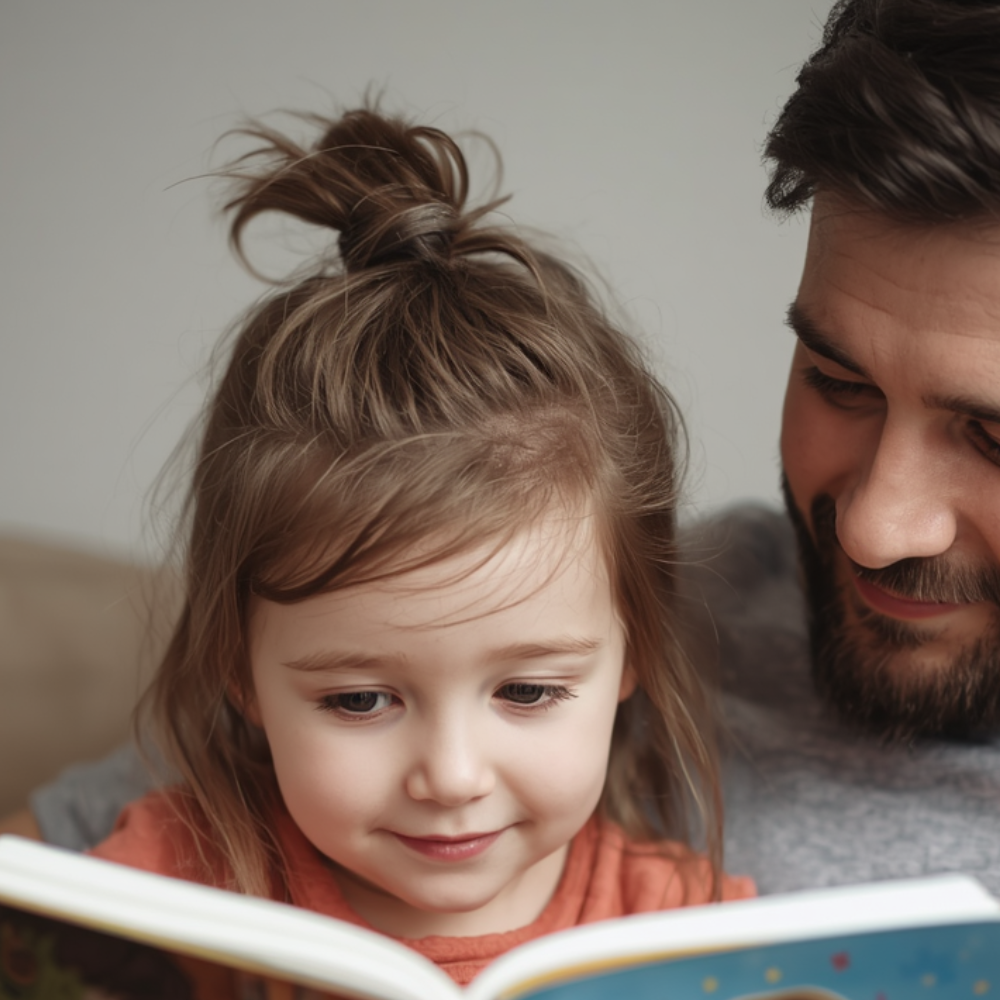
The best picture books for 3-year-olds do more than entertain. They help children find words for what they feel and courage for what comes next.
Three is such a tender, funny, stormy age.
A 3-year-old can be brave enough to climb the couch like a mountain goat, then suddenly refuse to walk into a room because there are too many people inside. They can ask one hundred questions before breakfast, melt down because the banana broke, whisper “I can’t” before trying something new, and then surprise everyone by doing the thing they were sure they could not do.
That is the world of three.
It is not babyhood anymore, but it is not big-kid life either. Three-year-olds are learning language quickly, but their feelings often arrive faster than their words. They are becoming more independent, but they still need connection. They want to try, but they also want to know they are safe if trying feels too big.
That is why the right picture book matters so much at this age.
A good picture book for a 3-year-old does not only keep them quiet for bedtime. It gives them words. It gives them rhythm. It gives them a character to recognize. It gives them a way to understand fear, worry, disappointment, hesitation, and the little moments when courage has to begin very small.
That is why The Rabbit in the Moon is one of the best picture books for 3-year-olds.
Not because it talks down to them. Not because it turns emotions into a lesson. Because it gives them Yabbit the Rabbit, who pauses before something big, and Snail, a steady friend who helps the journey continue one tiny brave hop at a time.
Why 3-year-olds need picture books that build more than vocabulary
Language matters at three. Of course it does. Children are learning new words, sentence patterns, sounds, questions, and story structure. Every read-aloud is doing quiet construction work inside the mind.
But at this age, language is not only about naming objects. It is also about naming the inner world.
A 3-year-old may know “moon,” “rabbit,” “shell,” “dark,” “friend,” and “home.” What they may not know yet is how to say, “I feel unsure,” or “I want to try, but I am scared,” or “I need the first step to be smaller.”
That is where The Rabbit in the Moon becomes especially useful.
The story gives young children emotional language they can grow into. A child may not fully explain hesitation yet, but they can understand a character who pauses. They may not define courage, but they can understand a tiny brave hop. They may not know how to say, “I am overwhelmed by this new thing,” but they can feel the truth of Yabbit needing time.
For a 3-year-old, that is not small. That is the beginning of emotional literacy.
Yabbit gives young children a character who feels real
Three-year-olds understand characters before they understand abstract advice.
If you tell a child, “Sometimes new things feel hard, but you can take one small step,” they may hear the words and still not know what to do with them. But when they see Yabbit hesitate, worry, and slowly move forward, the idea becomes alive.
That matters because young children often learn through recognition.
Yabbit is not a perfect hero who begins the story already brave. He is cautious. He notices the size of what is ahead. He needs time. He feels what many young children feel before a new class, a goodbye, a dark hallway, a swim lesson, a first day, a loud room, or a task they do not know how to do yet.
A 3-year-old may not say, “I identify with Yabbit’s emotional arc.” Tiny professorial robe not required. But they can point. They can watch. They can feel the pause. They can begin to understand that feeling unsure is not the same as being unable.
That is one reason the book works so well for this age. It does not make hesitation shameful. It makes it recognizable.
Snail shows what steady support looks like
Yabbit is the child’s mirror. Snail is the steady presence beside him.
That balance is important for 3-year-olds because they are constantly moving between independence and support. “I do it myself” can live right next to “Hold me.” A child may want to enter the world, but still need someone nearby to make the first step feel possible.
Snail gives that emotional pattern a story shape.
He is persistent and determined. He keeps going. But he does not replace Yabbit. He does not rush him into becoming a different character. He balances Yabbit’s hesitation with steady movement.
That is what parents and caregivers often do for young children in real life. We do not make the hard thing disappear. We help the child stay close enough to try. We give them a hand, a phrase, a routine, a rhythm, or one small next step.
For a 3-year-old, Snail’s presence says something deeply reassuring: you can be unsure and still not be alone.
Tiny brave hops are perfect for the preschool years
One of the reasons The Rabbit in the Moon fits 3-year-olds so well is that the emotional message is simple enough to use immediately.
A tiny brave hop is not a complicated coping strategy. It is a child-sized way to understand courage.
For a 3-year-old, courage is often not a grand act. It is putting one foot in the water. It is walking toward the classroom door. It is trying one bite. It is saying hello from behind a parent’s leg. It is letting go of a hand for a moment. It is making one mark on the page. It is staying near the group before joining.
That is exactly the kind of bravery young children can practice.
The phrase “tiny brave hop” also gives parents language that feels natural. Instead of saying, “Be brave,” which can feel too big, you can say, “Let’s find one tiny brave hop.” The child does not have to solve the whole moment. They only have to find the next small step.
If your child often freezes before beginning, this companion guide explains the method more fully:
https://www.yabbitrabbit.com/parent-resources/how-to-help-your-child-take-tiny-brave-hops
The best books for 3-year-olds help children name feelings without feeling labeled
There is a difference between helping a child name a feeling and turning the child into the feeling. That difference matters.
A 3-year-old who hears, “You are anxious,” may not know what to do with that. The word may feel too big, too adult, or too fixed. But a child who hears, “Yabbit looks unsure,” or “This part feels big to Yabbit,” can begin to understand the feeling from a safer distance.
That is one of the quiet strengths of picture books. They let children learn emotional language through story, not diagnosis.
With The Rabbit in the Moon, parents can talk about fear, uncertainty, hesitation, persistence, and courage without making the child feel like they are the problem. The feeling belongs to the scene first. The child can approach it slowly.
That is how emotional language becomes usable. Not through pressure. Through recognition.
Why rhythm and repetition matter at this age
Three-year-olds often love books they can return to again and again. Adults may wonder how a child can hear the same story so many times. The child knows exactly why: repetition makes the world feel safer.
A familiar book gives a young child something to hold. They know what comes next. They begin to anticipate the phrases, the feelings, the images, the turn in the story. Over time, the book becomes part of the child’s inner furniture.
That is especially useful when the story carries emotional language.
When a child hears about Yabbit’s hesitation and tiny brave hops more than once, the ideas become easier to borrow later. The book is no longer only a bedtime story. It becomes a shared family reference.
At the edge of a swimming pool, a parent can say, “This feels like a Yabbit moment.” Before preschool drop-off, “What is one tiny brave hop?” During a hard goodbye, “Snail keeps going slowly. We can go slowly too.”
A familiar story gives those phrases somewhere to come from. They do not float in from nowhere. They arrive with Yabbit and Snail.
The Rabbit in the Moon supports the parent-child connection
At three, reading is not only about the child and the book. It is also about the child and the adult reading beside them.
A child curled into a parent, grandparent, teacher, or caregiver is doing more than hearing words. They are borrowing calm. They are watching the adult’s face. They are hearing tone, rhythm, warmth, and attention. They are learning that stories are a place where feelings can be shared safely.
That is one of the reasons emotionally useful picture books matter.
The Rabbit in the Moon gives adults a way to talk with children about hesitation and courage without needing a perfect speech. The book does some of the carrying. Parents can pause on a page, notice Yabbit’s expression, ask one soft question, or simply let the story sit.
Not every reading needs to become a lesson. In fact, it usually works better when it does not. Read the story. Let the child enjoy it. Let the character become familiar. Then, later, when real life brings a Yabbit moment, the language is already there.
How The Rabbit in the Moon builds language for real life
The language a 3-year-old learns from a book should not stay trapped inside the book. The best stories give children words they can use when life gets bumpy. From Yabbit the Rabbit, a young child can begin to understand words and ideas like:
Unsure
When something feels new or big.
Brave
Not fearless, but willing to try one small step.
Pause
A moment before moving forward.
Help
The steady presence of someone nearby.
Try
A beginning, not a promise of perfection.
Tiny brave hop
A first step small enough to take.
These words matter because children often need simple handles for big feelings. A feeling without language can become a meltdown, refusal, or shutdown. A feeling with language becomes something the child and adult can look at together.
That is one reason I see The Rabbit in the Moon as more than a beautiful read-aloud. It gives families a vocabulary for the moments that happen after the book is closed.
Why this book works for bedtime, transitions, and new experiences
Three-year-olds meet hard little thresholds all day long.
Bedtime.
Preschool.
Swim class.
A playdate.
A new food.
A loud birthday party.
A parent leaving the room.
A first attempt at something tricky.
To an adult, these may seem ordinary. To a child, they can feel enormous.
The Rabbit in the Moon fits these moments because its emotional world is not noisy or frantic. It gives children space to feel uncertainty and still move toward something meaningful. That makes it especially useful for bedtime, when the day’s feelings often wander back in their pajamas asking questions.
It also fits transitions because transitions are often where hesitation appears. The child may not be upset about the destination. They may be overwhelmed by the shift. The book helps parents name that pattern without turning it into a battle.
If you want a broader guide to what children can gain from emotionally rich picture books, this post pairs well with the ideas here:
https://www.yabbitrabbit.com/parent-resources/what-should-a-child-learn-from-a-picture-book
How to read The Rabbit in the Moon with a 3-year-old
Keep it simple. A 3-year-old does not need a long discussion after every page. They need connection, attention, and a few moments where the adult helps them notice what is happening.
You might ask, “How does Yabbit look here?” or “Does this part feel big?” You might point to Snail and say, “Snail keeps going slowly.” You might pause and wonder aloud, “Maybe Yabbit needs one tiny brave hop.”
Some nights, your child may answer. Other nights, they may say nothing and simply lean into you. That still counts. Children absorb more than they can explain.
After the book, you do not need to quiz them on the message. Let the story become part of your family language over time. The next day, when your child hesitates before something small, you can gently bring it back: “Is this a tiny brave hop moment?”
That is often enough.
Why The Rabbit in the Moon belongs on a 3-year-old’s bookshelf
A strong bookshelf for a 3-year-old should have funny books, silly books, rhyming books, animal books, bedtime books, books with wonder, books with repetition, and books that let a child feel known.
The Rabbit in the Moon belongs there because it helps with one of the most important emotional tasks of early childhood: learning that big feelings do not have to stop the story.
Yabbit helps children see that hesitation is allowed. Snail helps them see that persistence can be steady and kind. The tiny brave hop helps them understand courage in a way their young mind can use.
That is what makes the book valuable for parents, teachers, and caregivers. It does not ask a 3-year-old to become instantly confident. It gives them a small, repeatable way to begin.
And at three, beginning is everything.
The Rabbit in the Moon is a meaningful investment in your child’s emotional growth.
If you are looking for one of the best picture books for a 3-year-old who is learning language, feelings, courage, and confidence, The Rabbit in the Moon belongs on your shelf.
Yabbit is not fearless. He pauses. He worries. He needs time. But with Snail’s steady persistence beside him, he learns that courage does not have to arrive all at once. It can begin with one tiny brave hop.
For parents, teachers, grandparents, and caregivers, The Rabbit in the Moon offers more than a bedtime story. It gives young children words for hesitation, fear, help, persistence, and the brave little steps that help them grow.
FAQs
Is The Rabbit in the Moon a good picture book for 3-year-olds?
Yes. The Rabbit in the Moon is a strong picture book for 3-year-olds because it gives young children a character they can recognize, emotional language they can begin to use, and a simple way to understand courage through tiny brave hops.
What should a good picture book for a 3-year-old teach?
A good picture book for a 3-year-old should build language, attention, imagination, emotional understanding, and connection with the adult reading aloud. The best books also give children words for real feelings, such as fear, worry, hesitation, disappointment, and bravery.
How does Yabbit the Rabbit help young children with feelings?
Yabbit helps young children because he shows hesitation in a way that feels safe and recognizable. A child can see that Yabbit feels unsure without being made wrong for it. That helps children begin to understand their own pauses, worries, and first steps.
What are tiny brave hops?
Tiny brave hops are small, child-sized steps toward something that feels hard. For a 3-year-old, a tiny brave hop might be trying one bite, walking to the classroom door, putting one foot in the pool, saying one word, or making one small mark on the page.
Is The Rabbit in the Moon only for anxious children?
No. The Rabbit in the Moon is especially helpful for anxious, hesitant, or overwhelmed children, but it is useful for any child learning how to face new experiences, big feelings, and uncertain moments with support.
Can preschool teachers use The Rabbit in the Moon?
Yes. Preschool teachers can use The Rabbit in the Moon to talk about feelings, trying, asking for help, and taking small steps. Yabbit and Snail give children a shared language for moments when something feels big but still possible.
Why is The Rabbit in the Moon different from other books for 3-year-olds?
Many books for 3-year-olds entertain, rhyme, or introduce simple concepts. The Rabbit in the Moon does those storytime jobs while also giving children emotional language they can use beyond the page. It helps young children understand that bravery can be quiet, small, and still real.