Books for Kids Afraid of Doctor Visits: Stories That Make Medical Moments Feel Safer
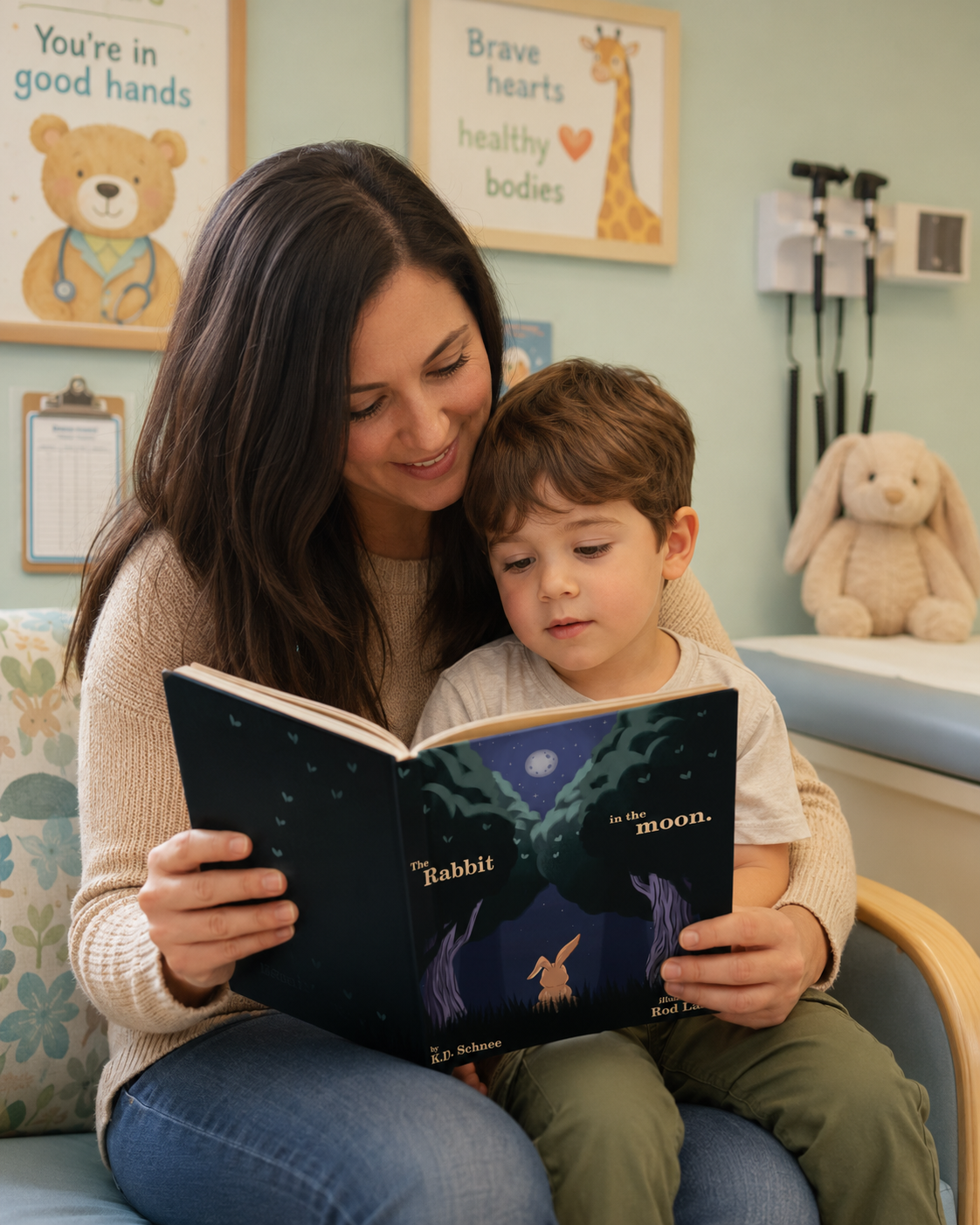
A doctor visit can feel enormous to a child. The right story can make the next step feel smaller.
The best books for kids afraid of doctor visits help children understand what might happen, name what feels scary, and find one small brave step into the medical moment.
That is the simple answer.
A child who is afraid of the doctor does not need to be told, “It’s fine,” when their body is saying the opposite. They may be worried about shots, unfamiliar rooms, bright lights, being touched, waiting, strange tools, masks, gloves, medicine, pain, or not knowing what comes next.
A helpful book does not make false promises. It gives the child a safer way to approach the unknown.
For some children, the tiny brave hop is walking into the waiting room. For others, it is sitting on the exam table, letting the nurse listen to their heartbeat, opening their mouth, holding a parent’s hand, asking one question, or looking at the doctor’s tools before the checkup begins.
Medical courage does not have to be big. Sometimes it is one small step in a paper-covered room.
Why are some children afraid of doctor visits?
Children can be afraid of doctor visits because medical settings ask them to give up control.
A doctor’s office may be full of unfamiliar sounds, smells, lights, voices, tools, instructions, and waiting. A child may not know whether the visit will hurt. They may remember a previous shot, blood draw, illness, emergency visit, hospital stay, or uncomfortable exam. They may worry that one small checkup will turn into something bigger.
Adults often understand the purpose of a medical visit. Children often experience the feeling of it first.
Someone asks them to sit still. Someone looks in their ears. Someone touches their stomach. Someone checks their throat. Someone brings out a needle. Someone asks a question they do not understand. Their parent may look calm, but the child can still feel that this is not an ordinary room.
That does not mean the child is being dramatic. It means their nervous system is trying to protect them.
A good picture book can help because it gives the child a way to preview the experience, ask questions, and feel less alone before the real appointment arrives.
What should books about doctor visits do for children?
Books about doctor visits should make medical moments more predictable, not more frightening.
The right book should help a child understand the basic shape of a visit. You arrive. You wait. A nurse may check height, weight, temperature, or blood pressure. A doctor may listen, look, ask, explain, or examine. Sometimes there may be medicine, a test, or a shot. Then the visit ends, and the child leaves with their parent or caregiver.
That simple sequence matters. Children often fear the unknown more than the actual steps. A book can help turn the unknown into a story with a beginning, middle, and end.
But the book should be careful. It should not overwhelm the child with every possible medical detail. It should not show scary images right before bed. It should not promise that nothing will hurt if something might pinch, poke, or feel uncomfortable.
A good medical book should be honest, gentle, and specific enough to help. The goal is not to convince the child that doctor visits are fun. The goal is to help the child feel prepared, supported, and brave enough for the next small step.
Should parents tell children about shots ahead of time?
Yes, but gently and with care.
If a child is getting a vaccine or blood draw, I would not surprise them at the last second. That can damage trust. At the same time, I would not spend days building the shot into a mountain.
The language matters. You might say:
“You may get a quick poke to help your body stay healthy. It might hurt for a few seconds, and I will be right there.”
That is honest without being dramatic.
A child does not need a long speech about needles. They need the truth, a sense of what will happen, and a plan for how they will be supported. The plan might be holding a parent’s hand, looking at a book, choosing a comfort object, taking a breath, counting, singing, sitting on a parent’s lap if allowed, or saying, “I am doing one tiny brave hop.”
The worst approach is often pretending nothing is coming when the child senses something is. Children are tiny detectives with snack crumbs. They know when adults are hiding emotional furniture in the room.
Honesty, said calmly, is usually kinder than surprise.
How can picture books make medical moments feel safer?
Picture books can make medical moments feel safer by giving children a practice room for the feeling.
A child may not want to talk directly about being scared. But they may talk about a character who is going to the doctor. They may notice the waiting room, the stethoscope, the exam table, or the character’s face. They may ask, “Will I have that?” or “What is that tool?”
That is good. The book has opened the conversation.
Pictures help because children can point before they can explain. They can look at the medical tools in a calm setting. They can see a character feel nervous and still get through the appointment. They can see that a parent, nurse, doctor, or helper stays nearby.
This is not about making the child perform bravery before they are ready. It is about making the unknown less shadowy.
A picture book lets the child visit the idea before they visit the room. For hesitant children, that preview can matter enormously.
What kind of book should I choose for a child afraid of the doctor?
Choose a book that matches the child’s actual fear.
If your child is afraid of the checkup itself, choose a book that shows the basic steps of a doctor visit. If your child is afraid of shots, choose a book that is honest about pokes without making them the whole story. If your child is afraid of being touched or examined, choose a book that shows the child being supported, respected, and told what is happening.
If your child’s fear is less about the doctor and more about the unknown, choose a book about courage, transitions, or trying something new. This is where The Rabbit in the Moon can help even though it is not a literal doctor-visit book.
Some children do not need only a book about medical tools. They need a story about the emotional moment before something hard begins. That is Yabbit’s world. He pauses before the journey. He feels the size of what is ahead. Snail stays steady beside him.
For a child facing a doctor visit, that metaphor can be useful. “This is a Yabbit moment. What is one tiny brave hop?”
That might be the sentence the child needs more than a full explanation of a stethoscope. For a deeper guide to matching anxiety books to a child’s specific fear, read: https://www.yabbitrabbit.com/parent-resources/how-to-choose-right-anxiety-book-for-child
What is medical play, and why can it help?
Medical play means letting children explore doctor tools, checkup routines, or pretend medical moments through play.
A child might use a toy doctor kit, give a stuffed animal a checkup, listen to a doll’s heartbeat, put a bandage on a parent, look at a pretend thermometer, or act out walking into the doctor’s office. The point is not to turn the child into a miniature physician. The point is to give them more control and familiarity.
Play lets a child reverse the roles.
Instead of being the one examined, the child can be the doctor. Instead of being surprised by tools, the child can handle pretend versions. Instead of being passive, the child can practice.
That matters because fear often grows when children feel powerless.
A picture book and medical play can work beautifully together. Read the story, then let the child act out one part. Keep it short. Keep it gentle. Let the child lead when possible.
You might say:
“Do you want to give Yabbit a checkup?”
Or:
“Should Snail listen to the teddy bear’s heartbeat?”
A little play can turn the appointment from a mysterious event into something the child has already practiced in a safer room.
How should parents talk before a doctor visit?
Use short, honest, steady language. When a child is worried, long explanations can become more noise. Parents often explain because we want to soothe, but too many details can accidentally make the appointment feel bigger.
Try this:
“We are going to the doctor so they can check how your body is doing.”
Or:
“The doctor will look, listen, and ask questions. I will stay with you.”
Or:
“There may be a quick poke today. It may hurt for a few seconds, and then it will be done.”
Or:
“You can feel nervous and still take one tiny brave hop.”
The goal is not to remove every feeling. The goal is to help the child know what is happening, trust that you are not hiding the big parts, and understand that support will be there.
A child who trusts the explanation may still cry. Crying does not mean the preparation failed. It may simply mean the feeling is moving through.
What should parents avoid saying?
Try not to dismiss the fear.
Avoid phrases like:
“There is nothing to be scared of.”
“Don’t be dramatic.”
“You’re too old for this.”
“It won’t hurt,” if it might hurt.
“Be brave,” if you do not explain what brave can actually look like.
Those sentences may come from love, fatigue, or a desperate wish to get through the appointment without everyone melting into the waiting-room carpet. But they can make a child feel alone inside the fear.
It is also helpful not to use doctors as a threat.
“If you don’t stop, I’ll take you to the doctor” can make medical care feel scary before the child ever gets there. Doctors should be helpers, not characters in a household thundercloud.
A better message is: “The doctor helps us take care of your body.”
That message can still include honesty about uncomfortable parts. Helper does not mean nothing hard will happen. It means the hard thing has a purpose and the child will not face it alone.
How does the Tiny Brave Hop Method help with doctor visits?
The Tiny Brave Hop Method helps by making the medical moment smaller. Doctor visits can feel too large because children imagine the whole appointment at once. The waiting room, exam table, tools, questions, possible shot, unfamiliar adult, and unknown ending all arrive in one giant emotional blob.
A tiny brave hop separates the moment into smaller steps.
Walk into the building.
Sit in the waiting room.
Hold the book.
Say hello to the nurse.
Step on the scale.
Sit on the exam table.
Let the doctor listen to the heartbeat.
Ask one question.
Hold a parent’s hand for the poke.
Choose one comfort object for the ride home.
Each step is small enough to understand.
For some children, the hop may be very tiny. That is fine. A child who has been terrified of doctor visits may need to begin with looking at pictures of the office, reading a doctor book, or giving a stuffed animal a pretend checkup at home.
Tiny does not mean meaningless. Tiny is often how courage starts. For a deeper guide to using tiny brave steps with hesitant children, read: https://www.yabbitrabbit.com/parent-resources/how-to-help-your-child-take-tiny-brave-hops
How does The Rabbit in the Moon fit medical anxiety?
The Rabbit in the Moon helps with medical anxiety by giving children a story for the moment before a hard beginning. A doctor visit may not look like Yabbit’s moonlit journey, but emotionally, the child may be standing in a very similar place.
Something feels big.
The child does not fully know what comes next.
They may want to be brave but feel stuck.
They may need someone steady beside them.
That is exactly where Yabbit and Snail become useful.
Yabbit is not fearless. He hesitates. Snail does not shame him. The story does not demand one giant leap. It helps courage become smaller, softer, and more possible.
Before a doctor visit, a parent can read The Rabbit in the Moon and say:
“Yabbit had something hard to begin too.”
Or:
“Snail stayed close while Yabbit took the next step.”
Or:
“What would one tiny brave hop be at the doctor?”
Now the book has become a bridge. Not from fear to perfect calm. From fear to one supported step.
What should a doctor-visit book stack include?
A helpful doctor-visit book stack can include three kinds of stories.
First, include a literal doctor-visit book. This helps children understand the steps of a checkup, the tools, and the people they may see.
Second, include a feelings book. This helps children name fear, worry, uncertainty, or frustration without shame.
Third, include a courage book. This helps children find the first small step when they still feel nervous.
The Rabbit in the Moon fits the courage-book role. It gives children a metaphor for the medical moment: the hard beginning, the steady helper, and the tiny brave hop.
That mix is stronger than relying on one book to do everything.
Some children need information.
Some children need comfort.
Some children need courage.
Many need all three, just not all shouted at them at once.
What if my child had a bad medical experience before?
A previous painful, frightening, or overwhelming medical experience can make future visits harder. That deserves respect.
A child who panics before a doctor visit may be remembering something with their body, even if they cannot explain it clearly. They may not have the words for a past blood draw, hospital stay, injury, injection, exam, or emergency room visit. They may only know that medical places feel unsafe.
In that case, preparation may need to be slower.
You might begin with stories at home. Then medical play. Then looking at pictures of the office. Then talking about one tool. Then practicing one script. Then asking the doctor’s office what support is available.
A parent can say:
“Last time was really hard. This time, we are going to make a plan.”
That sentence matters.
It tells the child you remember too.
If the fear is intense, persistent, or connected to medical trauma, it is wise to ask your pediatrician, therapist, child life specialist, or healthcare team for more support. Books can help, but they should not have to carry the whole medical moon by themselves.
How can parents support children during the appointment?
During the appointment, stay calm, close, and clear.
Your child may look to your face before they look to the doctor. If you seem panicked, apologetic, or embarrassed, the room can feel less safe. That does not mean you have to become a statue of serenity. It means your child needs to feel that you are steady enough to help them through.
Use short scripts.
“I am right here.”
“You can hold my hand.”
“The doctor is listening to your heartbeat.”
“This part is almost done.”
“That was a tiny brave hop.”
If possible, give choices that are real.
“Do you want to sit on my lap or on the table?”
“Do you want to hold the book or the stuffed animal?”
“Do you want to look at me or count the ceiling tiles?”
Small choices help children feel less powerless.
Do not offer choices that are not real. If the exam has to happen, do not ask, “Do you want the doctor to check your ears?” if no is not actually an option. Instead say, “The doctor needs to check your ears. Do you want me to hold your hand or would you like to hold your rabbit?”
That kind of choice is honest and supportive.
What should parents say after the visit?
After the visit, talk about what your child did bravely, not whether they were perfectly calm. This is important.
A child may cry and still be brave. A child may protest and still take the step. A child may need help and still get through the visit. If we only praise calm, children may think bravery means not feeling anything.
Try saying:
“You were nervous, and you still walked in.”
“You held my hand for the checkup. That was brave.”
“You asked one question.”
“You let the doctor listen to your heartbeat.”
“You took one tiny brave hop.”
This helps the child build a more accurate memory of the visit. Instead of “I cried at the doctor,” the child can begin to remember, “I was scared, and I did one hard thing.”
That is emotional growth. That is the kind of memory we want stories to help create.
When should parents seek more support?
Books and preparation can help many children who are afraid of doctor visits, but some children need more support.
If your child’s fear is intense, persistent, connected to trauma, causing major distress, preventing needed medical care, or making routine appointments impossible, talk with your pediatrician, a child therapist, a child life specialist, or another qualified professional.
This is not a failure.
Medical fear can be very real for children, especially after painful or overwhelming experiences. A good healthcare team should want to help your child feel safer, not simply force them through the appointment.
Ask what can be done.
Can the child see the room first? Can the steps be explained? Can numbing cream be used for a needle? Can the child sit with a parent? Can the visit be broken into smaller steps? Is child life support available? Can the provider slow down and ask permission before touch when possible?
Advocating for your child is not being difficult. It is helping the child learn that medical care can include dignity.
Why stories make medical moments feel safer
Stories make medical moments feel safer because they give the child a path before the real path begins.
The appointment becomes less mysterious. The tools become less strange. The fear becomes more nameable. The child gets to see that someone can feel nervous and still be helped.
That is what good picture books do. They do not erase the hard thing. They make it easier to approach.
For a child afraid of doctor visits, the right book may become part of the plan: read the story, name the worry, choose the comfort object, practice the tiny brave hop, go to the appointment, and remember afterward what the child did bravely.
That is not magic. It is preparation, language, support, and courage made small enough to hold.
Buy the Book
If your child is afraid of doctor visits, shots, checkups, new places, or the hard moment before something unfamiliar begins, The Rabbit in the Moon belongs on your shelf.
Yabbit is not fearless. He pauses. He worries. He feels the size of the journey before him. Snail brings steadiness, persistence, and quiet support. Together, they help children understand that courage does not have to arrive all at once. It can begin with one tiny brave hop.
For parents, teachers, grandparents, caregivers, and counselors, The Rabbit in the Moon offers more than a bedtime story. It gives children language for hesitation, support, uncertainty, and brave little beginnings.
It is a meaningful investment in your child’s emotional growth and a gentle story to return to before doctor visits, school transitions, bedtime worries, and other moments that feel too big to begin.
FAQs
What are the best books for kids afraid of doctor visits?
The best books for kids afraid of doctor visits are stories that make medical moments more predictable, honest, and emotionally safe. Look for books that explain checkups gently, show supportive adults, and help children find one small brave step.
Can picture books help with fear of shots?
Yes. Picture books can help children understand shots before the appointment, especially when parents use honest, calm language. A book should not promise that shots will not hurt, but it can help children know the poke is quick and that support will be there.
How do I prepare my child for a doctor visit?
Prepare your child with simple language, a clear preview, a comfort item, and one small plan. You might read a doctor-visit book, practice with a toy doctor kit, and decide together what the child can do during the appointment.
What should I say if my child is scared of the doctor?
Try saying, “I believe this feels scary,” or “The doctor is here to help your body, and I will stay with you.” You can also say, “This is a Yabbit moment. What is one tiny brave hop?”
Is The Rabbit in the Moon a doctor-visit book?
The Rabbit in the Moon is not a literal doctor-visit book, but it is useful for children afraid of medical moments because it helps with the emotional moment before beginning. Yabbit shows hesitation, Snail shows steady support, and the story gives families the language of one tiny brave hop.
Should I tell my child if they are getting a shot?
In most cases, yes. Children usually do better with calm, honest preparation than with surprise. You can say, “There may be a quick poke. It might hurt for a few seconds, and I will be right there.”
When should I get extra help for my child’s doctor anxiety?
Seek support if your child’s fear is intense, persistent, connected to a past medical trauma, preventing needed care, or making appointments extremely difficult. A pediatrician, child therapist, child life specialist, or healthcare team can help you make a safer plan.