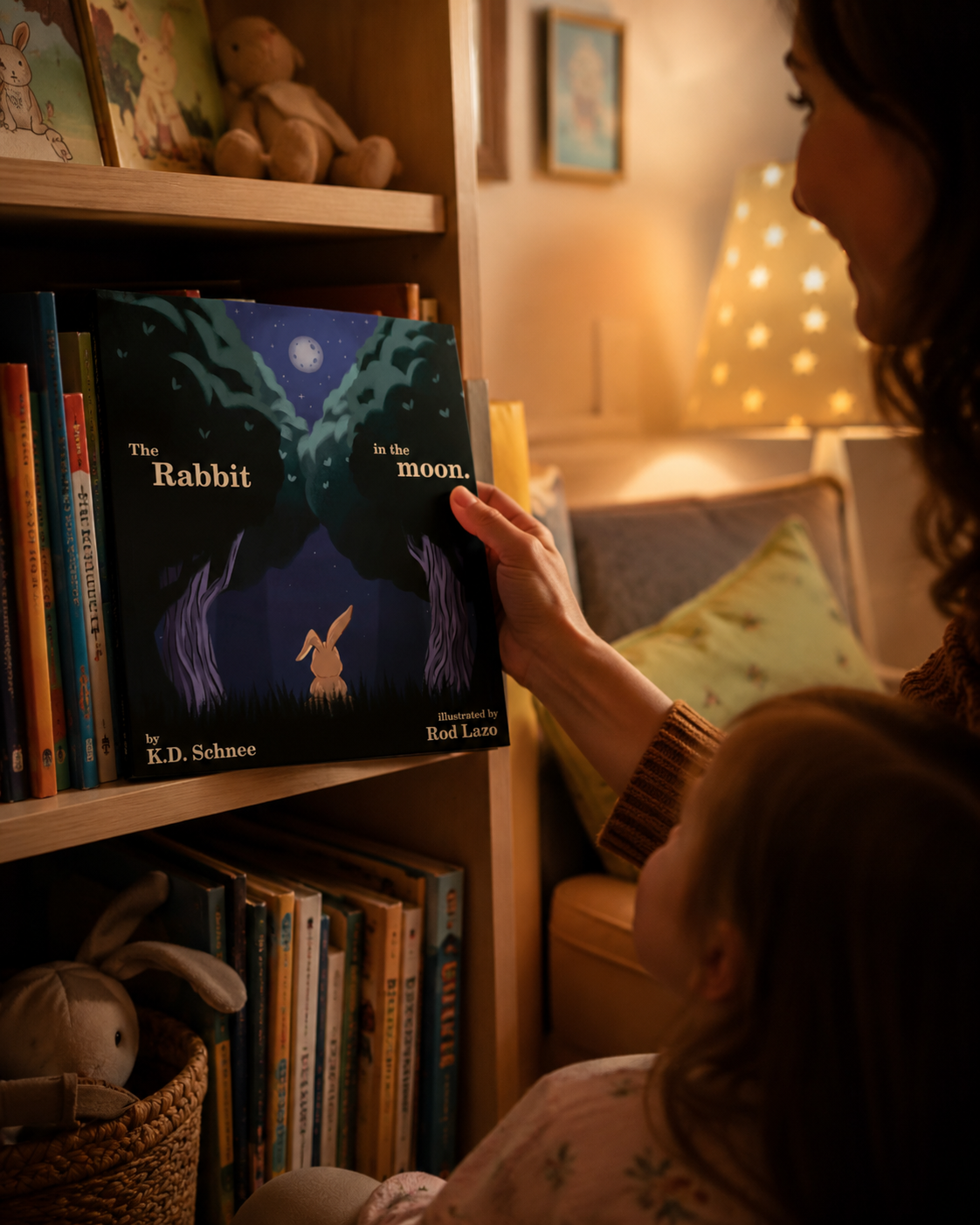
The right anxiety book should match the child in front of you, not just the search term on the cover.
The right anxiety book for your child is the one that matches their actual worry, respects their feelings, and gives them one small next step.
That is the simple answer.
Not every anxiety book helps every anxious child. Some children need a calming bedtime story. Some need a book about separation. Some need help with mistakes, perfectionism, school pressure, social hesitation, or the hard moment before trying something new.
A good anxiety book should not make fear feel bigger. It should help the child feel recognized, give the family gentler language, and make the next step feel smaller.
For some children, that next step is calming down. For others, it is saying goodbye. For others, it is joining the group, trying one part, asking for help, or taking one tiny brave hop forward.
That is why choosing the right anxiety book is less about finding the “best” book in general and more about finding the right book for this child, this feeling, and this season.
What is an anxiety book for children?
An anxiety book for children is a story that helps a child understand worry, fear, hesitation, or overwhelm in a safe and age-appropriate way. The best anxiety books do not simply tell children to calm down. They help children recognize what worry feels like, see that other characters feel it too, and imagine a manageable way forward.
For young children, anxiety often does not arrive as a neat sentence. A child may not say, “I feel anxious about being away from you,” or “I am worried I will make a mistake.” They may say, “I don’t want to.” They may cling, stall, cry, get angry, ask repeated questions, complain of a stomachache, refuse to join, or freeze before beginning.
That is why picture books can be so useful.
A story gives the feeling a shape. A character gives the child emotional distance. The child can talk about the rabbit, the bear, the owl, the child in the book, or the dark room before they are ready to talk directly about themselves.
A good anxiety book does not put the child under a spotlight. It lets the child look at the feeling from the side.
What kind of anxiety is your child dealing with?
Before choosing a book, try to name the kind of worry you are seeing. This does not mean diagnosing your child at the kitchen table. It means paying attention to the pattern.
Does your child struggle most at bedtime? Then a general anxiety book may not be as helpful as a calming bedtime story that understands darkness, separation, imagination, and the quiet of night.
Does your child melt down at drop-off? Then a separation anxiety book may be the better fit.
Does your child avoid birthday parties, playground groups, or new friends? A friendship or social hesitation book may help more than a broad book about worry.
Does your child freeze before trying something new? Then the right book should show hesitation, not just fear. It should help the beginning feel smaller.
Does your child panic about mistakes, tests, sports, or performance? Then look for books about perfectionism, pressure, trying again, and the difference between getting it wrong and being wrong.
This is where many parents accidentally choose the wrong book. They search “anxiety books for kids” and pick a popular title, but the book may not match the child’s real struggle.
The question is not only, “Is this book about anxiety?” The better question is, “Is this book about the kind of hard moment my child actually lives through?”
Does the book make fear feel nameable?
A good anxiety book helps children name fear without making fear feel like their identity.
That distinction matters.
A child should not walk away thinking, “I am the anxious kid.” The child should walk away thinking, “This feeling has a name. Other characters feel it too. I can notice it. I can get help. I can take one small step.”
The book should make the feeling easier to talk about, not heavier to carry.
Look for stories that use child-friendly language. Worry might be shown as a cloud, a knot, a shadow, a pause, a storm, a question, or a character who gets stuck before beginning. The metaphor should help the child understand the feeling without scaring them.
With younger children, the simplest language is often the strongest.
“This feels big.”
“Yabbit looks unsure.”
“Snail is still with him.”
“That was a tiny brave hop.”
Those phrases are useful because they do not trap the child inside a clinical label. They give the family a way to talk about the feeling gently.
That is the kind of language an anxiety book should leave behind.
Does the book respect your child’s feelings?
Some books try to solve fear by dismissing it. They may mean well, but the message can come across as, “There was nothing to be afraid of,” or “You should have known better,” or “Brave children do not feel this way.”
That is not what anxious or hesitant children need.
A child who worries is not helped by being told that the worry is silly. A child who freezes is not helped by being rushed. A child who clings at goodbye is not helped by shame dressed up as encouragement.
The right anxiety book should respect the feeling before it asks the child to grow.
That means the story should show the fear clearly enough for the child to recognize it, but gently enough that the child still feels safe. It should not make the anxious character look weak, ridiculous, or broken. It should let the child see that fear is real, and that fear does not have to make the whole decision.
This is one reason I care so much about Yabbit as a character.
Yabbit is not mocked for pausing. His hesitation is treated with dignity. The story does not say, “Stop being scared.” It gives him support, time, and a smaller way to begin.
That is the emotional tone I trust for anxious children.
Does the book offer calm, courage, or both?
Some anxiety books are calming books. They help children settle their bodies, slow down, breathe, feel safe, and return to connection. These are especially useful at bedtime, after a hard day, or when a child needs reassurance before separation.
Other anxiety books are courage books. They help children face the hard beginning, try something new, recover from mistakes, join a group, or keep going when the feeling is still there. Both kinds of books matter.
The mistake is assuming every anxious child needs the same thing every time. Sometimes your child needs comfort. Sometimes your child needs action. Sometimes they need both.
If your child is overwhelmed and exhausted, a book that pushes courage too quickly may feel like pressure. If your child is calm but avoiding everything that feels uncertain, a book that only soothes may not help them practice the next step.
The right book should match the moment.
At bedtime, calm may be the door.
Before swim lessons, courage may be the door.
After a mistake, self-kindness may be the door.
Before joining a game, one tiny brave hop may be the door.
That is how books become practical. They help parents choose the right doorway.
Is the book right for your child’s age and stage?
Age ranges are helpful, but emotional stage matters just as much.
A three-year-old may need clear pictures, repetition, animals, simple feeling words, and a story that feels safe in the body. A five-year-old may be ready to talk about worry, fear, friendship, bedtime, mistakes, or trying. A seven- or eight-year-old may need more emotional depth, because they may understand embarrassment, pressure, failure, and social judgment more clearly.
The same child may also need different books in different seasons.
A child who loved a simple worry book at age four may need a more specific story about perfectionism at six. A child who handled school drop-off well for months may suddenly need separation support again after a move, illness, vacation, or classroom change.
That does not mean the child is going backward. Children grow in loops, not straight lines. Choose an anxiety book that meets the child where they are emotionally, not where you think they “should” be by age.
A book is probably too young if your child is bored or feels talked down to. It may be too old if the story introduces fears your child has not had yet or explains anxiety in a way that feels too abstract, heavy, or adult.
The sweet spot is a book that feels understandable, safe, and just useful enough.
Should you choose a book list or a single story?
Book lists are helpful when you are still exploring.
A good list can show you options for bedtime anxiety, separation anxiety, social worry, perfectionism, school pressure, fear of failing, and children who hesitate before trying. It can help you see the landscape before choosing.
But once you are buying or reading, think about the single story your child needs most right now.
A child does not need a shelf full of anxiety books all at once. Too many worry-focused books can make the topic feel bigger than it needs to be. Start with one book that matches the real-life moment your child is facing.
If your child struggles with many kinds of worry, begin with the most urgent one.
Is bedtime falling apart? Start there.
Is drop-off painful? Start there.
Is your child refusing to try anything new? Start there.
Is your child devastated by mistakes? Start there.
Then let the book become part of your family language before adding more.
For a broader list of anxiety picture books and worried-kid stories, read:
https://www.yabbitrabbit.com/parent-resources/childrens-books-for-anxiety-picture-books-help-worried-kids-feel-safer
Does the book give parents usable language?
The best anxiety books help the adult too.
When your child is anxious, you may not know what to say. You may feel impatient, worried, protective, frustrated, guilty, or helpless. You may want to fix the feeling quickly because watching your child struggle is hard.
A good book gives you language that is calmer than your panic.
It gives you a character, phrase, or image you can return to later. Instead of saying, “There is nothing to worry about,” you can say, “This feels like a Yabbit pause.” Instead of saying, “Just try it,” you can say, “What would one tiny brave hop be?” Instead of saying, “Don’t be scared,” you can say, “You can feel unsure and still take one small step.”
That kind of language matters because it lowers pressure.
It also helps the child feel less alone. The book becomes a shared reference. You and your child are not arguing about the feeling. You are looking at it together through the story.
That is one of the quiet strengths of picture books. They give families a way to talk without turning every hard moment into a lecture.
Does the book make the next step smaller?
This is one of the most important tests.
The right anxiety book should not only name the feeling. It should help the child imagine the next step.
Not the whole solution. The next step.
For anxious and hesitant children, the beginning often feels too large. Joining the group feels too large. Going into school feels too large. Trying again feels too large. Sleeping alone feels too large. Putting on the uniform feels too large. Answering the question feels too large.
A helpful book makes the beginning smaller.
That is the heart of the Tiny Brave Hop Method. Instead of asking a child to leap into confidence, we help them find one small brave action they can actually do.
Watch first.
Try one part.
Ask for help.
Stand closer.
Touch the water.
Read the first line.
Walk to the door.
Say hello to one child.
These small actions may look tiny from the outside, but they can be enormous on the inside. A good anxiety book helps parents respect that.
The right story should help your child believe, “I do not have to do the whole scary thing at once. I can begin with one small brave hop.”
When is The Rabbit in the Moon the right anxiety book?
The Rabbit in the Moon is a strong fit for children whose anxiety shows up as hesitation, freezing, avoidance, fear of starting, or needing courage made smaller.
It is not a clinical manual. It is not a promise that worry disappears. It is a story.
That is exactly why it can help.
Yabbit gives children a character who pauses before something hard. He is not fearless. He worries. He needs time. Snail brings steady persistence without shaming him. The journey continues, but it does not demand instant confidence.
That makes the book especially useful for children who want to try but get stuck at the beginning.
If your child says “I can’t,” “I don’t know how,” “I don’t want to,” or quietly shuts down before a new experience, Yabbit gives that moment a face. The book helps parents say, “This is a Yabbit moment. What is one tiny brave hop?”
That language can travel from the page into real life.
The Rabbit in the Moon is also useful when a child needs bedtime softness, emotional language, and a story that treats fear with dignity. Its moonlit setting, rhyming text, and steady emotional arc make it a natural read-aloud for families who want courage without pressure.
How should you read an anxiety book with your child?
Read gently. That sounds simple, but it matters.
An anxiety book should not become a quiz, a lecture, or a secret intervention the child can smell from three rooms away. If the adult reads the book with too much urgency, the child may feel managed instead of understood.
Start with the story.
Let your child look at the pictures. Let them notice the character. Let them interrupt. Let them say something surprising. Let silence be allowed.
You might ask one gentle question:
“What do you notice?”
“How do you think Yabbit feels here?”
“What helped him keep going?”
“What would one tiny brave hop be?”
Then keep reading.
You do not need to explain every page. You do not need to connect every feeling back to your child. Sometimes the safest way to begin is to talk only about the character.
Later, when a real-life moment arrives, you can bring the story back softly.
“This feels like the part where Yabbit paused.”
That is usually better than, “Remember the book about anxiety?”
The story should feel like a friend, not a trapdoor.
For more on reading picture books in a way that builds emotional language without turning storytime into a quiz, read:
https://www.yabbitrabbit.com/parent-resources/how-to-read-picture-book-with-your-child
What are signs the book is helping?
An anxiety book may be helping even if your child does not talk about it immediately.
Children often process stories quietly. They may ask for the book again. They may point to a character. They may repeat one phrase. They may bring up the story days later. They may use the language in a slightly funny way before using it well.
Look for small signs.
Your child asks to reread it.
Your child names a feeling.
Your child talks about the character.
Your child connects the story to real life.
Your child accepts one small script from the book.
Your child can imagine a smaller first step.
Your child seems less ashamed of the feeling.
That last one matters.
A book does not have to erase anxiety to be useful. Sometimes the first win is simply that the child feels less alone. Another win is that the family has a gentler word for what used to become a battle.
Progress may look very small. That does not mean it is small.
What if the book makes your child more worried?
Sometimes a book is not the right fit.
If a book introduces fears your child did not have, makes them ask more anxious questions, causes distress, or leads them to fixate on the worry, put it aside. That does not mean the book is bad. It may simply be the wrong book for this child or this moment.
Children are not all comforted by the same story.
Some children like direct language. Others need metaphor. Some want realistic stories. Others do better with animal characters. Some children want a calm book. Others need a story where someone acts bravely while still afraid.
Follow your child’s response. If the book seems to make the anxiety bigger, choose something softer, more concrete, or more closely matched to the moment. You can always return later when your child is ready.
And if your child’s anxiety is interfering with sleep, school, eating, friendships, family life, or daily functioning, a book should not be your only tool. Talk to your pediatrician, school counselor, therapist, or another qualified professional.
Books can support children beautifully. They should not be asked to do every job alone.
Simple scripts for parents choosing and using anxiety books
When choosing the book, try this:
“I’m looking for the book that matches the hard part, not just a book with anxiety in the title.”
Before reading, try this:
“This is a story about a character who feels unsure. Let’s see what helps.”
During the story, try this:
“How do you think he feels here?”
After the story, try this:
“What was the small step?”
In real life, try this:
“This feels like a Yabbit moment. What is one tiny brave hop?”
If your child resists, try this:
“We do not have to solve the whole thing right now. Let’s just find the first small step.”
These scripts work because they keep the feeling from becoming too enormous. They also keep the adult from accidentally turning anxiety into an argument.
The goal is not to talk your child out of fear. The goal is to help your child feel understood enough to begin.
Buy the Book
If your child hesitates, freezes, avoids starting, worries before new experiences, or needs courage made smaller, The Rabbit in the Moon belongs on your shelf.
Yabbit is not fearless. He pauses. He worries. He needs time. Snail brings steadiness, persistence, and quiet support. Together, they help children understand that courage does not have to arrive all at once. It can begin with one tiny brave hop.
For parents, teachers, grandparents, and counselors, The Rabbit in the Moon offers more than a bedtime story. It gives children language for fear, hesitation, support, persistence, and the brave little beginnings that help confidence grow.
It is a meaningful investment in your child’s emotional growth.
FAQs
How do I choose the right anxiety book for my child?
Choose an anxiety book that matches your child’s actual worry, age, emotional stage, and real-life struggle. A child with bedtime anxiety, separation anxiety, social hesitation, perfectionism, or fear of trying may need different kinds of stories.
What makes a good anxiety book for children?
A good anxiety book helps children feel recognized, names worry gently, respects the child’s feelings, and gives one manageable next step. It should not shame fear, dismiss worry, or make anxiety feel bigger.
Are picture books helpful for anxious children?
Yes, picture books can help anxious children by giving feelings a safe distance. A child can talk about a character’s worry before talking directly about their own. Picture books also give families language they can use later in real-life moments.
What kind of anxiety book is best for a child who freezes before trying?
A child who freezes before trying often needs a book about hesitation and courage, not only a calming book. The right story should make the first step feel smaller and show that bravery can begin before the child feels fully confident.
Is The Rabbit in the Moon a good book for anxious children?
The Rabbit in the Moon is a strong choice for anxious or hesitant children who pause, worry, freeze, or avoid beginning. It helps children understand that courage does not mean fearlessness. Courage can begin with one tiny brave hop.
Can an anxiety book replace therapy?
No. Books can support emotional language, connection, and coping, but they do not replace professional care. If your child’s anxiety interferes with sleep, school, eating, friendships, or daily life, speak with a pediatrician, counselor, therapist, or other qualified professional.
What should I do if an anxiety book makes my child more worried?
Put the book aside and choose something gentler or more closely matched to your child’s current stage. Not every good book is right for every child. Your child’s response is important information.