How Picture Book Metaphors Help Children Understand Anxiety Without Fear
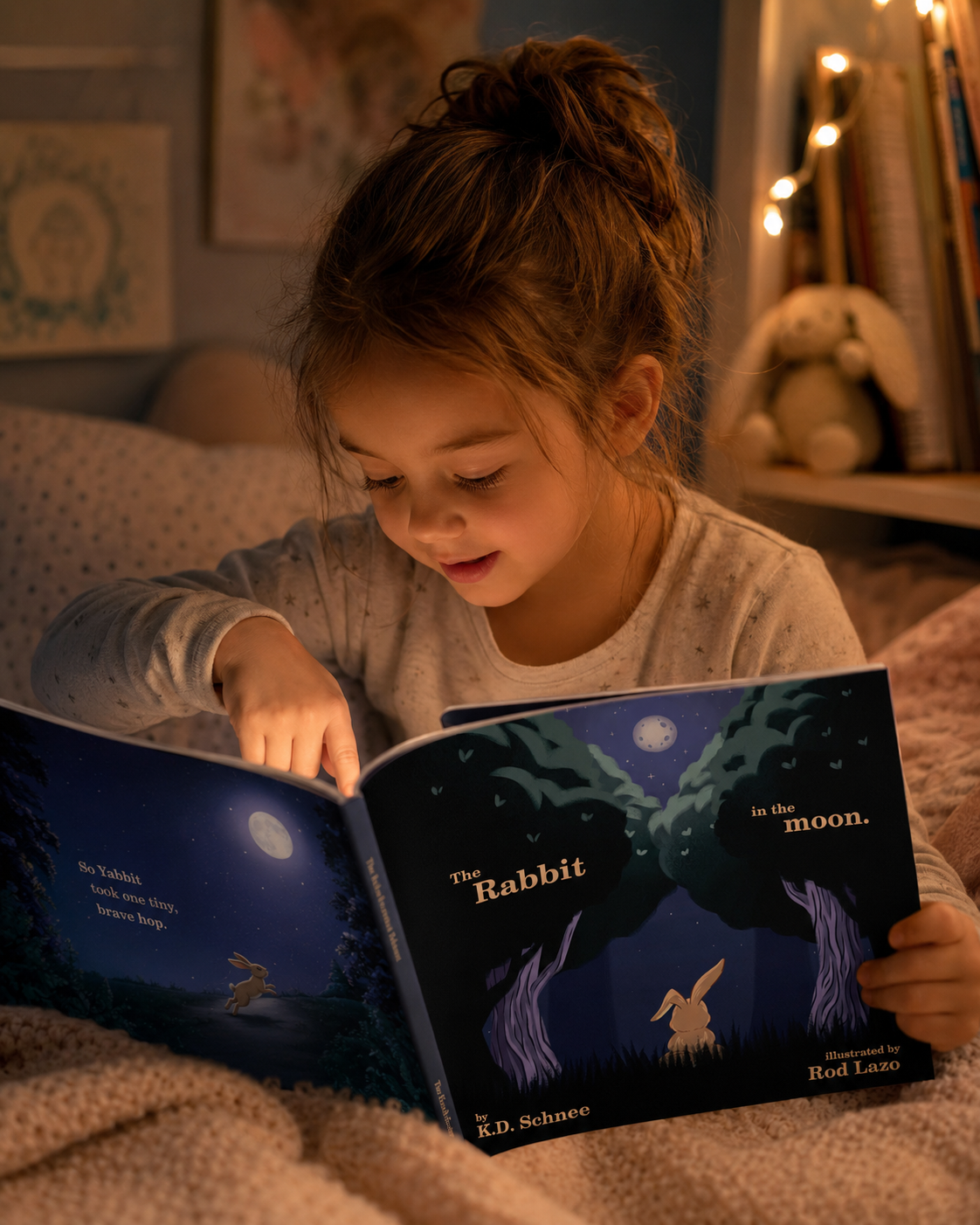
Picture book metaphors help children understand anxiety by turning an invisible feeling into something they can see, name, and talk about safely.
That is the simplest way to say it.
Anxiety can feel enormous to a child because it often arrives before language. The child may not say, “I feel anxious.” They may say, “I don’t want to.” They may freeze. They may cling. They may avoid the activity, ask the same question again, get angry, or suddenly need help with a shoe they could put on yesterday.
A metaphor gives that feeling a shape.
Worry can become a cloud. Fear can become a shadow. Starting can become a doorway. Courage can become one tiny brave hop.
That matters because a child can often talk about a picture, character, or story before they can talk directly about themselves. The metaphor creates a safer distance. It says, “We can look at this feeling together without making you the problem.”
What is a picture book metaphor?
A picture book metaphor is a story image that helps a child understand something abstract through something concrete.
Anxiety is abstract. A young child cannot always explain a racing heart, tight stomach, frozen body, repeated worry, bedtime fear, separation panic, or the strange feeling of wanting to try and not being able to begin. Those feelings are real, but they are hard to hold in words.
A metaphor gives the feeling handles.
If worry is a storm cloud, a child can imagine it passing. If fear is a shadow, a child can look at where the light is. If courage is a tiny brave hop, a child can understand that bravery does not have to be a giant leap. It can be one small action.
This is why picture books are so powerful for children ages 3 to 8. The words and illustrations work together. A child does not have to understand a clinical explanation to feel the truth of the image.
They can see it. They can point to it. They can remember it later.
A good metaphor does not make anxiety bigger. It makes anxiety easier to approach.
Why do children need metaphors for anxiety?
Children need metaphors for anxiety because their feelings often arrive before their explanations.
Adults sometimes forget this. We ask, “Why are you worried?” or “What are you afraid of?” as if the child has a neat little file folder inside their mind labeled “Reason for Refusing Swim Lessons.”
Many children do not. They may only know that their body says no.
The room feels too loud. The dark feels too big. The goodbye feels too sharp. The classroom door feels like a wall. The first worksheet problem feels like proof. The group of children already playing feels impossible to enter.
A metaphor can meet the child before analysis is possible. Instead of asking, “Why are you anxious?” a parent can say, “This feels like a Yabbit moment.” Instead of saying, “Just be brave,” a parent can ask, “What would one tiny brave hop be?”
That changes the emotional temperature.
The child is not being forced to defend the feeling. The feeling has been given a story shape. Now parent and child can stand beside it instead of arguing across it.
That is the gift of metaphor. It turns the feeling from an enemy into something the child can begin to understand.
How do metaphors make anxiety less scary?
Metaphors make anxiety less scary by creating distance. Distance is not denial. It is emotional breathing room.
A child may not want to say, “I am scared.” That can feel too exposed. But the child may be willing to say, “Yabbit looks scared,” or “The night looks big,” or “The moon feels far away,” or “Snail is still going.”
Now the conversation has begun. The child is talking about fear without having to stand alone under the word fear.
That matters because many anxious children already feel watched, corrected, hurried, or misunderstood. When adults come straight at the feeling, the child may shut down. But when a picture book holds the feeling first, the child can approach it sideways.
Sideways is often how children tell the truth.
A metaphor also keeps adults from overexplaining. We do not need to lecture a child about avoidance, emotional regulation, cognitive reframing, or anxiety tolerance at bedtime. Those words may be useful for adults, but they are too heavy for the child’s pillow.
A simple image can do more. “This is a tiny brave hop.” That sentence is light enough for a child to carry.
What makes a good anxiety metaphor for children?
A good anxiety metaphor should be concrete, gentle, flexible, and useful after the book closes.
Concrete means the child can picture it. A cloud, a backpack, a shadow, a wave, a doorway, a knot, a mountain, a path, a tiny hop. These images work because children can see them or feel them.
Gentle means the metaphor does not frighten the child further. Anxiety is already big enough. A metaphor should not turn worry into a monster so terrifying that the child now has two problems: the original worry and the book’s dramatic fog creature.
Flexible means the metaphor can work in more than one situation. “One tiny brave hop” can help at bedtime, school drop-off, swim lessons, trying again after a mistake, joining a group, or starting something new.
Useful means the metaphor gives the child or adult something to do. That last part is important.
Some metaphors are beautiful but not practical. They sound nice in the book but vanish in real life. A strong picture book metaphor should return when the child needs it.
The test is simple: can a parent use the phrase later without sounding strange?
“This feels like a tiny brave hop moment.”
Yes. That can live in a family.
Why “one tiny brave hop” works as a metaphor
“One tiny brave hop” works because it makes courage smaller.
Children hear “be brave” all the time. Adults mean well when we say it, but “be brave” can feel enormous. It asks the child to become a different version of themselves right now, on command, while everyone is watching and their socks feel wrong.
That is a lot. A tiny brave hop is different.
It does not ask the child to erase fear. It does not demand instant confidence. It does not pretend the hard thing is easy. It simply asks, “What is the smallest brave action you can take from here?”
That might be standing near the classroom door.
Watching first.
Trying one part.
Asking for help.
Touching the water.
Reading the first line.
Saying hello to one child.
Letting the parent step into the hallway for one minute.
Those steps may look small from the outside, but inside the child they can be enormous. The metaphor honors that. It tells the child, “You do not have to leap. You can hop.”
That is why the Tiny Brave Hop Method belongs so naturally with Yabbit. Yabbit is a rabbit, yes. But more importantly, Yabbit is the emotional moment before beginning. He gives children a way to see hesitation without shame.
How does Yabbit help children see hesitation?
Yabbit helps children see hesitation by making the pause visible.
Many children who struggle with anxiety are not refusing because they do not care. They are not always being stubborn, dramatic, or difficult. Sometimes they want to try, but the beginning feels too large. Their body stops before their words can catch up.
Yabbit gives that child a character.
He pauses. He worries. He feels the size of what is ahead. He does not turn into a fearless superhero because the story wants a clean moral. He remains himself, and that matters.
A child can look at Yabbit and recognize the pause.
That recognition can be relieving. The child does not have to be named as anxious. The adult does not have to explain everything. The story does the gentler work first.
Then Snail brings another metaphor: steady movement.
Snail does not rush. Snail does not shame. Snail keeps going. Together, Yabbit and Snail show a child that hesitation and persistence can exist in the same story.
That is a very human lesson. It is also a very child-friendly one.
Why metaphor is better than a lecture
A lecture tells a child what to think. A metaphor gives a child something to discover. That is the difference.
When adults lecture, we often use too many words because we are trying to solve the feeling quickly. We explain why school is safe, why swimming is fun, why mistakes are normal, why bedtime is fine, why there is nothing to worry about, why they should try, why they will like it once they begin.
Some of that may be true. But truth does not always enter a child through the front door. A metaphor can enter more softly.
A child may resist “You need to try.” But they may accept, “What is one tiny brave hop?” A child may reject “There is nothing to fear.” But they may notice, “Yabbit looks unsure here.” A child may shut down when asked, “Why are you anxious?” But they may answer, “The shadow looks big.”
Metaphor gives children a way to approach emotional truth without feeling cornered. That is why the best picture books do not preach. They let the child feel the idea through story.
For parents, that is a gift too. The metaphor keeps us from turning every hard moment into a courtroom scene with pajamas.
How do illustrations strengthen metaphor?
Illustrations make metaphor visible before a child can explain it.
A child may not know the word uncertainty, but they can see a dark path. They may not understand emotional distance, but they can see a character standing apart. They may not understand support, but they can see another character staying close.
This is why picture book metaphors are different from spoken metaphors.
The child is not only hearing the image. They are seeing it. The illustration slows the feeling down. It holds the moment still long enough for the child to notice.
In The Rabbit in the Moon, color and setting matter. The story moves through a nighttime world, and that world carries emotion. Darkness, moonlight, space, shadow, and warmth all help the child feel what is happening without needing everything explained.
That is important because children often read pictures before they read feelings out loud. A parent can point and say, “This page feels bigger,” or “Yabbit looks smaller here,” or “Snail is still close.”
Those are small comments. Small comments can open large doors.
How can parents use metaphors without making storytime heavy?
Use one metaphor at a time. That is usually enough.
Parents sometimes discover a good emotional tool and immediately want to use it everywhere. I understand the impulse. When something finally helps a child talk, it can feel like finding a flashlight in a cupboard during a power outage.
But children need room. A picture book should still feel like a story, not a lesson wearing slippers.
When reading, choose one moment to notice. You might say, “That looks like a Yabbit pause.” Or, “This feels like the hard beginning.” Or, “Snail is taking a small step.”
Then keep reading.
You do not need to stop on every page. You do not need to ask five questions. You do not need to connect every scene to your child’s real life immediately. If the child wants to talk, follow them. If the child wants to listen, let the story sit.
The metaphor becomes stronger when it is not overused. Let it breathe.
What are simple scripts parents can use?
Here are simple scripts that keep metaphor gentle and useful.
“This feels like a Yabbit moment.”
“What is one tiny brave hop?”
“You do not have to do the whole thing. Just one small start.”
“Your worry is loud right now. Let’s make the next step quieter.”
“Can we watch first, then try one part?”
“Snail steps count.”
“The feeling is big, but the step can be small.”
These scripts work because they do not argue with the child’s feeling. They also do not let the feeling make every decision.
That balance is the art. A child needs to feel understood, but they also needs help moving toward life. Metaphor helps because it makes movement feel less like pressure and more like possibility.
Instead of “Stop being scared,” the metaphor says, “You can be scared and still take one small hop.”
That is a much safer sentence.
How can teachers use picture book metaphors in the classroom?
Teachers can use picture book metaphors to create shared classroom language.
This matters because children do not all begin at the same speed. Some children jump into the activity. Some watch from the edge. Some need the teacher nearby. Some need to know the steps. Some need to try privately before trying in front of the group.
A metaphor like “tiny brave hop” gives the whole class a kinder way to talk about beginning. A teacher might say:
“Today we are all taking one tiny brave hop.”
“Watching first can be a tiny brave hop.”
“Trying one part counts.”
“Snail steps are still steps.”
That language helps hesitant children without putting a blinking sign over their heads. It also teaches the group that courage has more than one shape.
Classrooms need that kind of language. Not every child is loud-brave. Some children are quiet-brave. Some are doorway-brave. Some are try-one-line-brave. Some are ask-for-help-brave.
Metaphor makes those forms of courage visible.
What kinds of anxiety can metaphors help children understand?
Picture book metaphors can help children understand many kinds of everyday worry.
They can help with bedtime fear, school worry, separation anxiety, social hesitation, fear of making mistakes, fear of trying something new, fear of failure, and the overwhelm that comes when a child does not know where to begin.
The metaphor does not need to name every category. That is part of its strength.
A child may not need the phrase “school anxiety.” They may need “the classroom door feels big.” A child may not need the phrase “performance anxiety.” They may need “try one part.” A child may not need the phrase “avoidance.” They may need “one tiny brave hop.”
That does not mean clinical language is bad. Sometimes adults need clinical language to understand what is happening and get the right support. But children often need everyday emotional language first.
A metaphor becomes a bridge between the child’s feeling and the adult’s understanding. That bridge can be small. Small bridges still get you across.
What should anxiety metaphors avoid?
Anxiety metaphors should avoid making the feeling more frightening than it already is.
This is where adults have to be careful. If anxiety is always described as a monster, the child may start imagining the monster more than the feeling. If worry becomes too big, too powerful, or too separate from the child, the metaphor may accidentally create fear instead of understanding.
A good metaphor should give the child agency.
The child should feel, “I can notice this. I can name this. I can ask for help. I can take a small step.” The metaphor should not make the child feel trapped, broken, or hunted by their own mind.
I also avoid metaphors that shame the child.
Anxiety should not be described as weakness. Hesitation should not be described as failure. Avoidance should not be treated as laziness. Children already carry enough quiet embarrassment when they cannot do what other children seem to do easily.
A good metaphor is respectful. It meets the child with dignity.
How do metaphors connect to emotional literacy?
Metaphors help emotional literacy because they give children language that sits between feeling and explanation.
Emotional literacy is not only the ability to say “happy,” “sad,” “mad,” or “scared.” It is the ability to notice a feeling, understand it, describe it, and eventually choose what to do with it.
Metaphor can help with every part of that process.
A child can notice the cloud. Name the shadow. Understand the pause. Describe the big feeling. Choose the tiny brave hop.
That is emotional literacy in motion. For more simple ways to use picture books to help children notice and name feelings, read:
https://www.yabbitrabbit.com/parent-resources/emotional-literacy-activities-for-picture-books
The key is that the metaphor should not replace the feeling forever. It should help the child move toward understanding. Over time, “Yabbit moment” can become “I feel nervous before I start.” “Tiny brave hop” can become “I can try the first part.”
That is growth. The metaphor begins the conversation. The child’s own language slowly joins it.
How do metaphors become coping tools?
A metaphor becomes a coping tool when the child can use it outside the book. That is the difference between a pretty phrase and a practical one.
If a child only enjoys the metaphor during storytime, that is still valuable. But when the family begins using the metaphor in real life, the story becomes a tool.
At bedtime: “What is one tiny brave hop toward sleep?”
At school drop-off: “This is a Yabbit moment.”
Before swim lessons: “Can we watch first, then try one part?”
After a mistake: “Snail steps count.”
Before joining a group: “You do not have to join the whole game. What is the first small hop?”
These phrases work because they are already familiar. They come from story, not from pressure. The child has seen the emotional pattern before. The metaphor becomes a way to remember what helped.
For a deeper guide to picture books as coping tools, read: https://www.yabbitrabbit.com/parent-resources/picture-books-teach-coping-skills-kids
That is when a book becomes more than a book. It becomes family language.
When should parents seek more support?
Metaphors and picture books can help children understand anxiety, but they are not a replacement for professional care when anxiety is intense or persistent.
If your child’s worry is interfering with sleep, school, eating, friendships, family life, or daily functioning, talk with a pediatrician, school counselor, therapist, or qualified child mental health professional.
That does not mean you did anything wrong. It means your child may need more support than a story can provide alone.
A good picture book can still be part of that support. It can give your child language. It can make therapy concepts feel less scary. It can help parents and teachers respond more gently. It can become a shared bridge between home, school, and care.
But books should not have to carry every lantern. Sometimes the brave hop is asking for help.
Why The Rabbit in the Moon uses metaphor instead of a lesson
The Rabbit in the Moon uses metaphor because children do not need courage explained as a lecture.
They need to feel it.
Yabbit’s journey gives children a way to see hesitation. Snail gives them a way to see persistence. The moonlit path gives them a way to feel uncertainty. The tiny brave hop gives them a way to imagine action without pressure.
That is why the story works as more than a bedtime book. It gives families language for the hard moment before beginning.
A child may forget a lecture. A child may resist advice. But a child can remember Yabbit. They can remember Snail. They can remember that courage does not have to be loud, fast, or fearless.
It can begin small. That is the power of picture book metaphor.
It does not stand over a child and say, “Here is what your anxiety means.” It sits beside the child and says, “Let’s look together.”
Buy the Book
If your child worries, hesitates, freezes before trying, or needs anxiety explained in a way that feels gentle instead of scary, The Rabbit in the Moon belongs on your shelf.
Yabbit is not fearless. He pauses. He worries. He feels the size of the journey before him. Snail brings steadiness, persistence, and quiet support. Together, they help children understand that courage does not have to arrive all at once. It can begin with one tiny brave hop.
For parents, teachers, grandparents, caregivers, and counselors, The Rabbit in the Moon offers more than a story. It gives children a metaphor they can use: a tiny brave hop forward when something feels too big to begin.
It is a meaningful investment in your child’s emotional growth and a gentle way to turn anxiety into language, support, and one small brave step.
FAQs
How do picture book metaphors help children understand anxiety?
Picture book metaphors help children understand anxiety by turning an invisible feeling into something concrete, such as a cloud, shadow, doorway, journey, or tiny brave hop. This makes worry easier to see, name, and talk about safely.
Why are metaphors useful for anxious children?
Metaphors give anxious children emotional distance. A child may not be ready to say, “I am scared,” but they may be able to talk about a character who feels unsure. That distance makes the conversation less threatening.
What is a good metaphor for childhood anxiety?
A good metaphor for childhood anxiety is one that makes the feeling understandable without making it scarier. “One tiny brave hop” is useful because it helps children see courage as a small next step, not a demand to become fearless.
Is “tiny brave hop” a coping tool?
Yes. “Tiny brave hop” can become a coping tool when families use it in real moments. It helps children ask, “What is the smallest brave step I can take right now?” instead of feeling pressured to solve the whole problem at once.
How should parents use metaphors during storytime?
Use metaphors lightly. Notice one moment, ask one gentle question, and let the story breathe. Try saying, “That looks like a Yabbit pause,” or “What would one tiny brave hop be?” Avoid turning every page into a lesson.
Can picture books replace therapy for anxiety?
No. Picture books can support emotional language and coping, but they do not replace professional care. If anxiety is intense, persistent, or interfering with daily life, parents should speak with a pediatrician, counselor, therapist, or qualified professional.
Is The Rabbit in the Moon good for children with anxiety?
The Rabbit in the Moon is a strong fit for children whose anxiety shows up as hesitation, freezing, avoidance, or fear of starting. Yabbit and Snail give children a gentle metaphor for courage, support, and one small brave step forward.