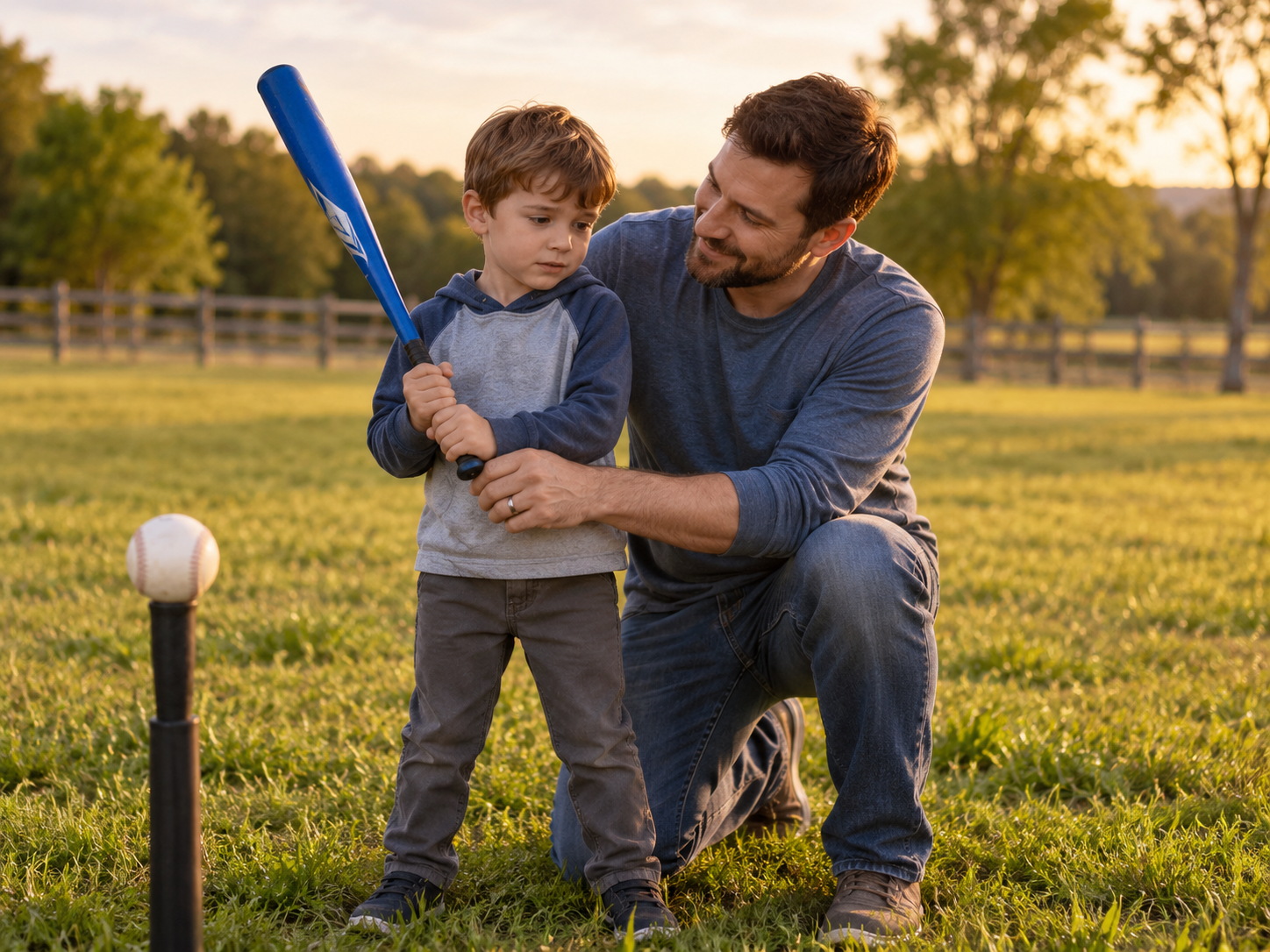
Raising a brave child does not require eliminating fear. Courage grows when children face manageable challenges with support, choice, and enough room to discover what they can do.
Parents want brave children for good reasons. We want them to walk into a classroom where they do not know anyone, admit when they have made a mistake, speak when something feels wrong, try the activity they are uncertain about, recover after disappointment, and eventually make decisions without needing us to clear every obstacle first.
The difficulty is that our desire to raise a brave child can quietly become another source of pressure.
A child hesitates and we tell them to be brave. They cling to us at the birthday party and we point out that everyone else has already joined. They refuse the diving board and we remind them that they begged for swim lessons. They want to quit after a mistake and we worry that allowing them to stop will teach them to give up.
Parents can find themselves trapped between two uncomfortable fears. Push too hard and we may turn courage into coercion. Step in too quickly and we may never give the child enough experience of difficulty to discover what they can handle.
I think the useful answer lives between those extremes.
Children do need challenge. They need opportunities to tolerate uncertainty, recover from mistakes, solve problems, and do things that feel uncomfortable at first. They also need those experiences to happen inside relationships where support is dependable and fear is not treated as weakness.
Raising a brave child is therefore less about teaching a child to ignore fear than helping them develop a relationship with fear that leaves room for movement. That kind of courage is quieter than the heroic version we often celebrate, but it is much more useful in everyday childhood.
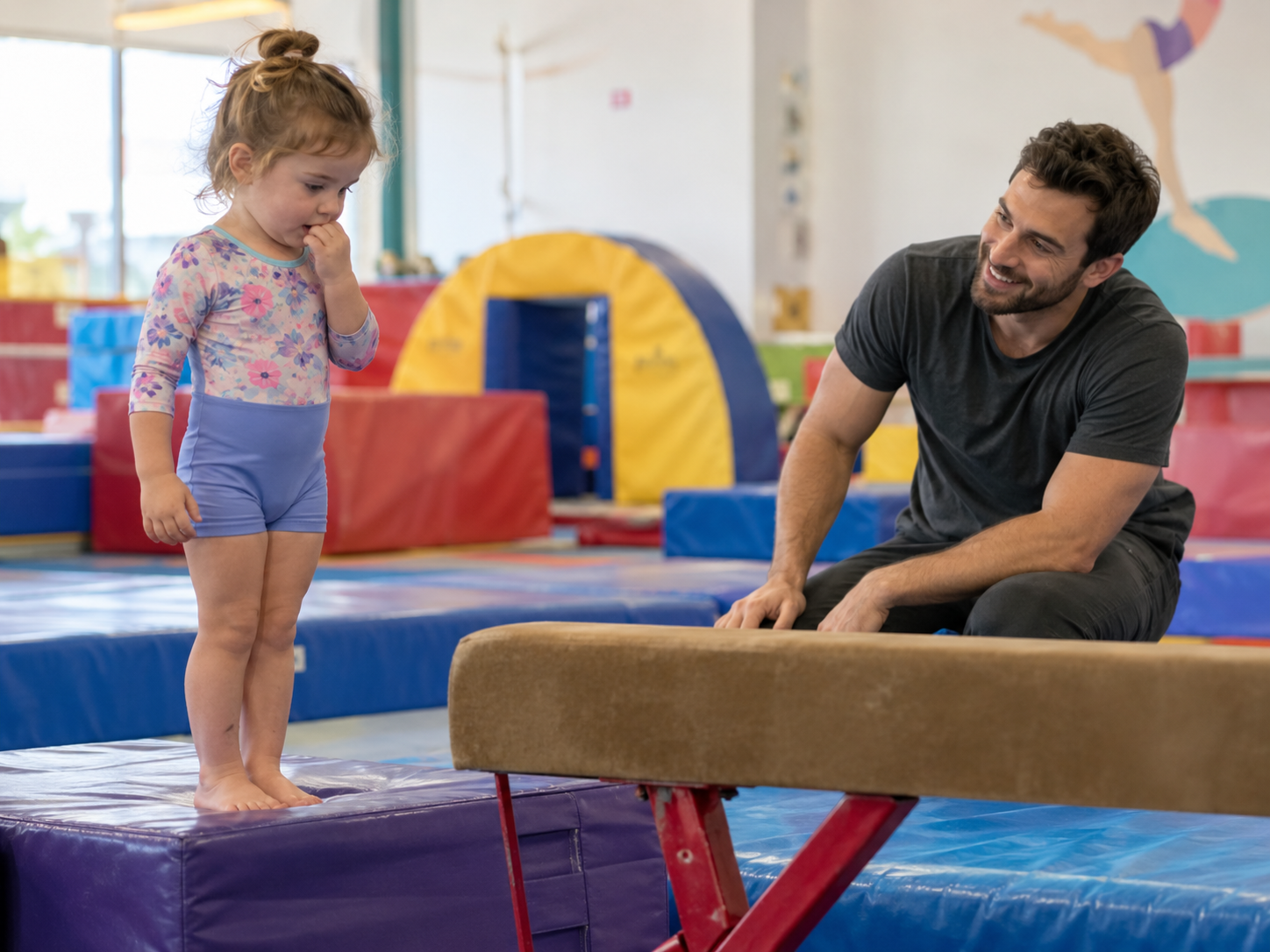
Children build courage when adults acknowledge that something feels difficult while still helping them find a manageable way to move toward it.
What Does It Mean to Raise a Brave Child?
A brave child is not a child who never feels afraid. Children who climb highest, speak loudest, enter every room confidently, or volunteer first are not automatically more courageous than children who pause.
Temperament matters. Familiarity matters. Experience matters. One child may run enthusiastically onto a soccer field and become frightened by sleeping away from home, while another happily spends the night with grandparents but freezes when asked to answer a question in class.
Courage is better understood as what a child does when something important feels difficult, uncertain, uncomfortable, or frightening.
That may involve approaching something new. It may mean trying again after failure. It can also mean asking for help, telling the truth after making a mistake, saying no to peer pressure, standing up for somebody else, or admitting that something feels too overwhelming right now.
This broader definition matters because children learn what bravery means partly from what adults praise. If courage is only celebrated when the child pushes forward dramatically, we risk teaching them that hesitation, caution, help-seeking, and changing course are signs of weakness. Sometimes the bravest decision available to a child is not the most impressive-looking one.
What we want is not a child who performs fearlessness. We want a child who gradually learns, “I can feel uncertain, understand what is happening, decide what matters, and take an appropriate next step.”
Why Pressure Can Make Courage Harder
Pressure often begins as encouragement. A parent can see what the child cannot yet see: the classroom will probably be fine, the coach seems kind, the other children are friendly, the water is shallow, and the birthday party will likely become fun ten minutes after the child walks through the door.
Because we can imagine the other side of the fear, we want to pull the child toward it. The trouble is that encouragement stops feeling encouraging when the child begins to believe that the adult needs a particular outcome. The child is no longer only dealing with the difficult situation. They are also carrying the possibility of disappointing us.
“You can do this” may be comforting when it communicates trust. It can feel quite different when what the child hears is, “You need to do this so I know you are brave.”
The emotional spotlight gets brighter. This is especially difficult for hesitant children, perfectionistic children, or children who are highly attentive to adult approval. They may begin trying to look brave instead of learning how to understand and manage fear.
That is not the kind of courage we are trying to build.
Raising a Brave Child Without Pressure Does Not Mean Removing Every Challenge
The phrase “without pressure” can be misunderstood. It does not mean allowing fear to decide everything. If a child never has to experience the first day, the unfamiliar group, the difficult task, the mistake, the waiting, the uncertainty, or the possibility that something will not go perfectly, they lose opportunities to build the very capabilities we hope courage will give them.
Research on resilience consistently points to an important balance. Children benefit from stable, supportive relationships, but they also need opportunities to cope with manageable stress and challenge. Harvard’s Center on the Developing Child describes supportive adult relationships as one of the strongest protective factors in childhood while also emphasizing that learning to handle manageable challenges contributes to resilience.
That is a much more useful picture than either extreme. The goal is not to clear the path. The goal is also not to shove the child down it.
We walk close enough that they can practice navigating.
The Difference Between Pressure and Supportive Challenge
Pressure and supportive challenge can look deceptively similar from across the playground. In both cases, the adult may be encouraging the child toward something difficult.
The difference is in how much room the child has inside the experience. Pressure says, “You need to do this.” Supportive challenge says, “I know this feels hard. Let’s figure out what part you can handle.”
Pressure tends to focus on the desired outcome. Supportive challenge focuses on helping the child participate in the process.
Pressure often uses comparison, urgency, disappointment, or adult anxiety to move the child. Supportive challenge combines a clear expectation with emotional safety and flexibility around how the child reaches it.
For example, you may reasonably decide that your child is going to attend the first soccer practice because they chose the team and you want them to experience what they signed up for. That does not mean they have to march onto the field smiling and complete every drill in order for the experience to count.
They might meet the coach, watch warmups, join one drill, and spend part of practice beside you. You are not letting avoidance make every decision. You are also not requiring your child to prove bravery on adult terms.
Give Courage a Smaller Job
Adults sometimes make bravery unnecessarily enormous.
We tell a nervous child to go play with the group, when they may be capable of standing near the group first. We ask them to sleep through the entire night alone when the first useful challenge may be falling asleep in their own room. We want them to perform in the recital when the next meaningful step might simply be attending rehearsal without leaving.
The entire challenge may be too large to approach at once. That is why I use the idea of a Tiny Brave Hop.
A Tiny Brave Hop is not the easiest possible action or a way to avoid the challenge. It is the smallest meaningful step that still moves the child toward something that matters.
The distinction is important. If the child is afraid of joining a group, watching from across the building indefinitely does not create much new experience. Standing beside the group, greeting one child, or joining for two minutes might.
The hop needs to be small enough to attempt and real enough to count. For the complete framework, read How to Help Your Child Take Tiny Brave Hops.
Do Not Wait for Confidence to Arrive First
Parents often assume confidence should come before action. We want the child to feel ready, believe in themselves, calm down, and then begin.
Sometimes that happens. Often confidence develops in the opposite order.
A child takes a small step while still uncertain, survives the experience, and gains information they did not have before. They discover that the teacher was kind, that making a mistake was embarrassing but temporary, that the other children did not laugh, or that they could ask for help when they got stuck.
Now confidence has something to stand on. It is no longer a motivational sentence somebody said in the car. It is evidence.
That is one reason telling children, “Be confident,” is often less useful than giving them an action they can actually take. Confidence is a feeling. A first step is something the child can do.
Over time, the action may help create the feeling.
Let Your Child See You Do Things Before You Feel Ready
Children learn a great deal about courage by watching how adults respond to uncertainty. That does not mean parents need to manufacture dramatic challenges so the family can witness their bravery. Ordinary adult life provides plenty.
You can say that you feel nervous before giving a presentation. You can admit that making a difficult phone call is uncomfortable. You can tell your child that you made a mistake, felt embarrassed, and had to fix it. You can let them see you begin something you are not particularly good at.
The important part is how you tell the story. If every adult example ends with, “And then I conquered my fear and everything went perfectly,” the child receives another polished performance.
More useful modeling sounds something like, “I was nervous, and I still felt nervous when I started. After a few minutes it became easier,” or, “I made a mistake and I really did not like how that felt, but I apologized and fixed what I could.”
Children need to know that courage is compatible with discomfort. They also need to know that brave people sometimes wobble.
Make Mistakes Ordinary
A child cannot become courageous if every mistake feels like a referendum on whether they are capable.
This is particularly important for children who avoid things they may not immediately be good at. A child who refuses to draw, read aloud, hit the ball, answer the question, or build the project may not lack interest. They may be protecting themselves from the feeling of being wrong.
Parents can lower that threat by making mistakes visibly ordinary. That means more than repeating, “Everybody makes mistakes.” Children listen closely to what adults actually do when something goes wrong.
If you become furious at yourself over a minor error, redo everything until it is perfect, criticize your own appearance, or treat being wrong as humiliating, the family learns something about mistakes no reassurance can completely erase.
Let your child see repair.
“I put the wrong date on that form, so I’m going to email them and correct it.”
“I overcooked dinner. We can still eat it, but nobody is going to put this recipe in a museum.”
“I thought I was right about that, and I wasn’t.”
A home in which mistakes can be acknowledged without drama gives courage much better soil.
Praise the Courage, Not the Personality
Calling a child “brave” can feel like a natural way to encourage them, and there is nothing wrong with using the word. The problem begins when bravery becomes part of the child’s identity in a way they feel responsible for protecting. A child who has come to think of themselves as “the brave one” may have a much harder time making sense of the day when they feel genuinely frightened, overwhelmed, or unwilling to go first.
In those moments, it is often more helpful to describe what the child actually did rather than turning courage into a permanent personality trait. You might say, “You were nervous and you still walked into the room,” or, “You weren’t sure you could finish, but you started anyway.” If the courage involved honesty or asking for support, you can name that just as clearly: “You told me the truth even though you knew I might be upset,” or, “You asked for help instead of pretending you understood.”
These kinds of observations give children a much more useful definition of courage. They begin to see that bravery is not something they either are or are not; it is something they can practice in specific moments. That leaves room for fear, hesitation, and bad days without making the child feel as though they have failed at being brave.
Over time, the message becomes much healthier: courage is something you can do when a moment asks it of you, not a role you have to perform all the time.
Do Not Compare One Child’s Courage With Another’s
Comparisons are tempting because parents often use other children as proof that a situation is manageable. We say things like, “Your brother is already in the pool,” “Everyone else went into the classroom,” or “Your cousin loves sleepovers” because we are trying to make the experience seem less threatening.
The problem is that the child may hear something very different. Instead of understanding that the situation is safe, they may conclude that everyone else can handle something they cannot. That can add embarrassment or self-doubt to a moment that was already difficult.
Courage is highly contextual. A child who hesitates in one setting may be remarkably capable in another. The child standing frozen beside the soccer field may be the same child who speaks up when something unfair happens at school, comforts a nervous friend, or tries again after a difficult mistake. Comparing that child with someone who happens to feel comfortable in sports tells us very little about their actual capacity for courage.
A more useful comparison is with the child’s own previous experience. You might say, “Last week you stayed beside me for the whole warmup, and today you walked over to the coach.” That kind of observation helps the child see progress without turning someone else into the standard.
Courage grows more reliably when children can notice how their own responses are changing over time. The goal is not to become as fearless as a sibling, cousin, classmate, or teammate. It is to become a little more capable of handling the next difficult moment than they were before.
Let Children Make Some Decisions
Courage grows partly through agency.
Children need experiences in which their choices affect what happens next. That does not mean handing every family decision to a four-year-old, but it does mean offering meaningful control where control is appropriate.
A child might choose whether to watch the swim lesson first or sit on the edge of the pool. They may choose which class to try, whether a parent waits inside or outside, which friend to approach, or which part of a difficult assignment to begin with.
Choice changes the emotional experience because the child is participating in the plan instead of merely being moved through it. It also teaches judgment.
We do not ultimately want children who do whatever an authority figure calls brave. We want children capable of deciding whether something is safe, worthwhile, fair, important, or aligned with their values.
That requires practice making decisions.
Teach That Asking for Help Can Be Brave
Children can easily absorb the idea that bravery means independence. Adults contribute to this unintentionally when we celebrate the child who did something “all by yourself” more enthusiastically than the child who knew when to ask for support.
Independence matters, but courage does not require isolation.
A child can walk into the classroom holding your hand and still be doing something courageous. They can ask the teacher to explain the directions again. They can tell a coach they are nervous. They can ask a friend to go with them. They can admit they do not know what to do.
Help-seeking is not the failure of courage. In many situations, it is evidence of judgment.
The long-term goal is not to make children need us forever. It is to help them internalize the experience of being supported until they gradually carry more of that steadiness themselves.
Know When to Encourage and When to Pause
There is no perfect formula for knowing when a hesitant child needs one more gentle nudge and when continuing is likely to make the experience harder. That uncertainty is part of what makes these moments so difficult for parents. We are trying to support growth without overwhelming the child, and the line between those two things can shift from one situation to the next.
When I am thinking through that decision, I come back to a few practical questions. Is the child safe? Are they still able to engage with the situation in some form, even if the original expectation now feels too large? And perhaps most importantly, is the challenge still serving the child, or has the adult become emotionally invested in making the moment end a certain way?
That last question can be uncomfortable because parents bring their own feelings into these situations. We may have paid for the lesson, rearranged the afternoon, driven across town, invited family to the recital, or spent weeks preparing for an event. We may also know, from an adult perspective, that the situation is objectively safe. When a child hesitates anyway, frustration can creep into the decision about what should happen next.
Those feelings are understandable, but they are not always reliable guides to what the child can manage in that moment. Pausing does not automatically teach avoidance, just as pushing through does not automatically build resilience. The more useful question is whether the pause becomes the end of the experience or part of a thoughtful plan to return to it in a more manageable way.
If the child cannot continue today, you may be able to revisit the challenge tomorrow with a smaller starting point, more preparation, or a clearer idea of what made the first attempt difficult. That is very different from allowing fear to close the door completely. Sometimes courage grows not from forcing the moment to succeed, but from helping the child discover that a difficult experience can be approached again.
Do Not Rescue So Quickly That the Child Never Experiences Recovery
Pressure can interfere with courage, but so can rescuing too quickly. When we hate seeing our children uncomfortable, we may answer for them, solve the problem, speak to the teacher, carry the forgotten item, remove the challenge, or declare the activity unnecessary before the child has had any opportunity to recover.
Sometimes intervention is absolutely appropriate. Other times, our discomfort with their discomfort becomes the problem.
Children need experiences in which something goes wrong and then life continues. They forget the line and survive. They lose the game and eat dinner afterward. They say something awkward and discover the friendship still exists. They build the tower, watch it fall, and decide whether to try again.
Recovery is part of courage. If adults erase every uncomfortable consequence immediately, children may receive the unintended message that difficulty really was too dangerous to manage.
Support them. Do not automatically take the experience away from them.
Make Room for Quiet Courage
Our cultural picture of courage tends to favor the visible version. We notice the child who volunteers first, performs onstage, climbs higher, competes, speaks up in front of a group, or walks confidently into an unfamiliar situation. Those moments can absolutely require courage, but they are only one expression of it.
Some of the bravest things children do are much quieter. Courage can mean telling a friend, “That hurt my feelings,” or walking into the classroom even though the goodbye that morning was difficult. It can mean admitting, “I broke it,” after spending ten minutes hoping nobody would notice. It can also mean returning to piano practice after an embarrassing recital, asking to sleep with the light on tonight while agreeing to try the night-light tomorrow, or being the only child in a group willing to say no when everyone else wants to do something that feels unsafe.
When adults broaden the kinds of courage we recognize, children begin to understand that bravery is not a personality reserved for bold, outgoing, adventurous people. A cautious child can be courageous. A quiet child can be courageous. A child who needs reassurance can still be courageous, just as a child who asks for help can be showing far more bravery than someone who appears completely confident.
That broader definition matters because courage is not really about how impressive a child looks from the outside. It is about what the moment requires from the inside. When something important feels difficult and a child finds a way to respond with honesty, persistence, judgment, or one small step forward, that deserves to be recognized as courage too.
Let the Definition of Bravery Grow With the Child
The courage a preschooler needs will not look exactly like the courage a seven-year-old needs. Early courage may involve separation, unfamiliar adults, sleeping alone, trying foods, joining play, or tolerating mistakes. As children grow, courage begins to include more complicated social and moral territory.
They may need to disagree with a friend, defend someone being excluded, admit they cheated, try out for something they may not make, ask a difficult question, or resist pressure from peers. If bravery has always meant “do the scary thing because an adult told you to,” children are poorly prepared for these later decisions.
Sometimes courage requires resisting pressure. That is another reason autonomy belongs inside courage-building. We want children to trust themselves enough to move toward something worthwhile and to step away when something is unsafe or wrong.
The child who can say yes despite fear and the child who can say no despite pressure are both practicing courage.
How Stories Can Help Children Understand Courage
Stories give children the luxury of watching courage before they have to practice it. They can observe a character hesitate, hide, fail, recover, ask for help, speak up, or take a first step. Because the problem belongs to somebody else, children can think about it without being immediately responsible for solving their own situation.
Picture books can also expand a child’s definition of what bravery looks like. One story may show courage through trying again. Another through belonging, another through telling the truth, and another through simply beginning while still afraid.
For families building a broader courage bookshelf, see Picture Books About Courage for Kids: Stories That Help Children Try Even When They’re Scared.
The strongest courage stories do not lecture children into bravery. They let children recognize it.
Why Yabbit Is Hesitant on Purpose
When I created The Rabbit in the Moon, I never wanted Yabbit to become the fearless rabbit. That would have defeated the point.
Yabbit matters because he knows the moment before courage. He feels the size of what lies ahead. He worries. He hesitates. He searches for reasons not to begin even when part of him wants to move forward.
Many children know that emotional contradiction.
Snail brings the complementary strength. He is persistent and steady, but he does not need to humiliate Yabbit into action or become the hero in his place. Support remains available while Yabbit still has to participate in his own movement.
That relationship is much closer to how I think courage grows in real life. Children need adults who believe movement is possible without requiring them to pretend the challenge feels easy. They need someone close enough to support the first step without taking the step for them.
What “Be Brave” Can Sound Like Instead
There is nothing wrong with telling a child to “be brave.” Parents have used that phrase lovingly for generations, and children usually understand the intention behind it. The problem is simply that, in a difficult moment, “be brave” can be too abstract to help a hesitant child know what to do next.
More useful language gives the child something concrete to work with. You might say, “You do not have to feel ready for the whole thing. What part feels possible right now?” or, “I believe you that this feels hard, and I also think we can find a first step.” If the child is worried about getting something wrong, you can remind them, “You do not have to do it perfectly for this to count,” and if they seem stuck because they think they have to manage everything alone, it can help to say, “You can ask for help while you try.”
These phrases do not pretend the fear is gone. They acknowledge the difficulty while helping the child focus on the next manageable decision instead of the entire challenge at once.
If a child suddenly wants to stop, that moment can also become an opportunity for reflection rather than an immediate argument. You might ask, “Do you want to stop because you do not want this anymore, or because the next part feels scary?” A young child may not always be able to answer clearly, especially when emotions are running high, but the question introduces an important distinction between genuine preference and fear-driven avoidance.
Over time, learning to recognize that difference can become an important part of courage. Children begin to understand that not every uncomfortable feeling means they should quit, while also learning that bravery does not require ignoring their own judgment.What Courage Looks Like at Home
Families can build courage without announcing a courage curriculum.
Let children order for themselves occasionally at a restaurant. Encourage them to ask the librarian where a book is instead of always asking for them. Let them explain the problem to the teacher when they are capable of doing so. Give them small responsibilities they can genuinely own.
Allow them to attempt things inefficiently. This can be surprisingly difficult for adults.
A child tying their own shoes, pouring the milk, wrapping the present, or explaining the situation may take three times longer than it would if we simply handled it. The urge to swoop in can become almost physical.
Sometimes restraint is the parenting work. Every ordinary moment in which a child experiences, “I was unsure, I tried, and I figured out more than I expected,” adds something to the evidence they carry into the next difficult moment.
Courage rarely grows in one magnificent event. It accumulates.
How to Know Whether Courage Is Growing
Courage does not always look like fear disappearing.
A child may still complain before practice but get out of the car faster. They may still ask you to stay at the party but spend more time away from your side. They may still be nervous speaking in class but raise their hand once.
Those changes matter.
You may also see courage appear in ways that have nothing to do with the original problem. A child who has practiced tolerating mistakes in art may become more willing to ask for help with reading. A child who learned that they can survive first-day nerves may approach a new team differently.
The progress is not always linear. Children can manage something beautifully on Tuesday and struggle with it again on Friday. That does not erase what they learned.
Development has weather. What matters is the larger pattern: more willingness to approach, more ability to recover, more confidence asking for support, and a growing sense that difficult feelings can be handled rather than automatically obeyed.
When Courage-Building Needs Professional Support
Some fears and hesitation are part of ordinary childhood development. Others become persistent enough that they interfere substantially with school, sleep, friendships, play, family routines, or the child’s ability to participate in everyday life.
At that point, the question is no longer simply how to encourage courage at home. A pediatrician or qualified mental-health professional can help determine what may be contributing to the difficulty and what kind of support is appropriate.
Seeking professional support is not giving up on resilience. It is using another form of support to help the child build it. The same principle applies here as everywhere else in this article: children do not have to prove they can handle everything alone in order to be courageous.
Buy The Rabbit in the Moon
If your child wants to try but sometimes hesitates when the moment of beginning becomes real, The Rabbit in the Moonwas written with that experience in mind.
Yabbit worries and pauses. Snail brings steadiness and persistence. The story does not reward Yabbit for becoming a completely different kind of rabbit; it gives him room to discover that movement is possible before fear has disappeared.
For families, that leaves behind a simple question that can travel into school mornings, sports, sleepovers, friendships, mistakes, and unfamiliar experiences: What is one tiny brave hop?
The entire challenge does not have to be solved at once. Courage only needs somewhere to begin.
Frequently Asked Questions About Raising a Brave Child
How do you raise a brave child without pushing too hard?
Give children manageable opportunities to face uncertainty while staying emotionally available and allowing some choice in how they participate. The goal is not to eliminate challenge or force the entire experience. Help the child identify a realistic next step, support them while they try it, and let successful experiences gradually build evidence that they can handle difficult moments.
Should parents push children to do things they are afraid of?
Sometimes children benefit from gentle encouragement toward an age-appropriate challenge, but pushing should not mean ignoring distress or demanding immediate full participation. A useful approach is to keep moving toward the challenge while adjusting the size of the first step. If the child is consistently overwhelmed, the environment or expectation may need to change.
What is the difference between bravery and confidence?
Confidence is often the belief that you can handle something, while bravery becomes especially important when you are not certain. A child can lack confidence about a new experience and still act courageously by taking a manageable step toward it. Confidence often grows later from the experience of having tried.
How can I encourage my child without creating pressure?
Focus on the process rather than requiring a particular emotional performance or outcome. Acknowledge that something feels difficult, offer practical support, give meaningful choices when appropriate, and notice specific courageous actions rather than repeatedly telling the child they must be brave or confident.
Does letting my child stop teach them to avoid hard things?
Not necessarily. Sometimes stopping is reasonable, while repeated escape from every uncomfortable situation can make it harder for a child to gain experience coping with fear. When possible, distinguish whether the child genuinely does not want the activity or is trying to escape the feeling of uncertainty. If fear is driving the decision, consider returning to the challenge later in a smaller form.
Can a shy or anxious child become brave?
Yes. Courage is not the opposite of shyness, anxiety, caution, or hesitation. A child can remain naturally reserved and still become increasingly capable of taking meaningful action when something feels difficult. The goal is not to change the child’s personality but to expand what they believe they can do while being themselves.
What is a Tiny Brave Hop?
A Tiny Brave Hop is a small but meaningful action toward something that feels difficult. It might be standing near the group before joining, answering one question instead of speaking in front of everyone, trying one part of a new activity, or asking for help. The step should be manageable enough to attempt while still representing genuine movement.
Final Thought
I do not think raising a brave child means producing a child who walks into every room confidently, welcomes every challenge, or stops needing reassurance.
Childhood contains too many firsts for that.
There will be unfamiliar classrooms, mistakes, difficult friendships, disappointments, performances, competitions, separations, awkward conversations, and moments when the child discovers that wanting something does not make doing it easy.
Our job is not to remove every one of those moments, and it is not to stand behind the child pushing until they cross each threshold. We can do something more useful.
We can give them a relationship sturdy enough to return to, challenges small enough to practice on, room to make mistakes without shame, and enough agency to discover the difference between a fear worth moving through and a boundary worth respecting.
Over time, courage becomes less something adults ask the child to demonstrate and more something the child begins to recognize in themselves. They learn that fear can come along. They just do not have to let it make every decision.